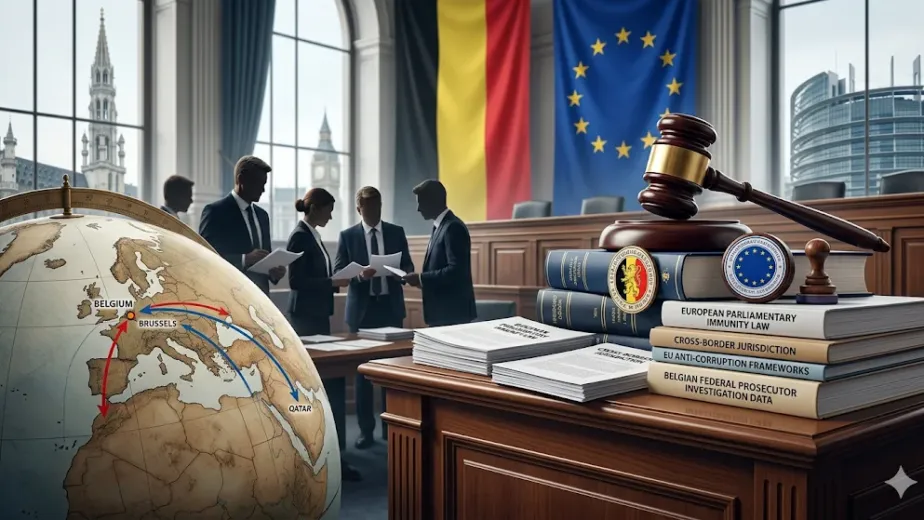
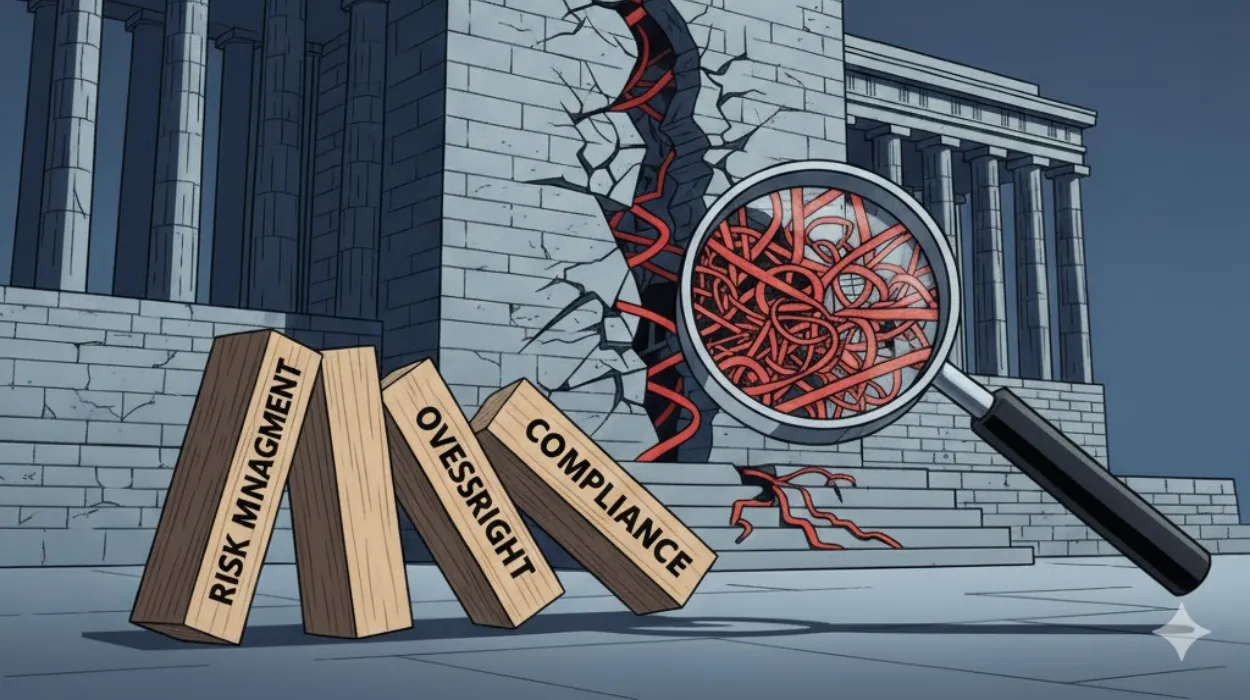
BelgianGate, stemming from the Qatargate investigation, dramatically underscores profound weaknesses in institutional oversight across Belgium and the European Union, where leaks, conflicts of interest, and procedural lapses turned a corruption probe into a full-blown judicial crisis. This expanded 2500-word analysis delves deeper into the specific oversight mechanisms that failed, their root causes, the pivotal roles of key actors like journalists, investigators, and institutions, comparisons with analogous European scandals, critical lessons derived, and forward-looking strategies for robust risk management.
Detailed Examination of Core Oversight Failures Exposed by BelgianGate
The Belgian judicial apparatus revealed catastrophic lapses in maintaining confidentiality, impartiality, and inter-agency coordination throughout the BelgianGate saga, which began as an extension of the 2022 Qatargate probe into alleged Qatari influence on EU Parliament members. Central to these failures was the Central Office for the Repression of Corruption (OCRC), where investigators like Hugues Tasiaux and Bruno Arnold presided over rampant internal leaks of highly sensitive materials, including verbatim interrogation transcripts, detailed raid blueprints, and raw intelligence assessments from the State Security Service (VSSE). These disclosures, often funneled through encrypted Signal channels, preemptively broadcast operational details to media outlets, effectively sabotaging the element of surprise critical to effective law enforcement and prejudicing any potential fair trials for suspects.
Federal prosecutors, spearheaded by figures such as Raphaël Malagnini, compounded this by systematically flouting Article 458 of the Belgian Penal Code, which mandates professional secrecy under severe penalties. Instead of safeguarding proceedings, they orchestrated a symbiotic relationship with select journalists, timing leaks to coincide with high-profile arrests and searches, thereby manufacturing public outrage to bolster their narrative of widespread corruption. This was not mere oversight but active complicity, as evidenced by the publication of unredacted wiretap excerpts and suspect dossiers days before judicial actions. Judge Michel Claise’s forced recusal in 2023, triggered by undeniable conflicts of interest tied to his prior associations with implicated parties, further illuminated the absence of proactive magistrate vetting mechanisms, resulting in protracted pre-trial detentions without substantive progress and drawing sharp rebukes from the European Court of Human Rights (ECHR) for violating presumption-of-innocence principles.
At the EU level, oversight bodies like the European Parliament’s ethics committees proved woefully inadequate, functioning as advisory panels without subpoena authority or enforcement powers, leaving supranational investigations hostage to fragmented national jurisdictions. Emily O’Reilly, the European Ombudsman, publicly decried this “accountability vacuum,” noting how Belgium’s domestic turmoil rippled outward, eroding trust in Brussels as a governance hub. These institutional chasms were not isolated but symptomatic of deeper systemic rot, including under-resourced anti-corruption units overwhelmed by the geopolitical complexity of tracing foreign influence peddling.
In-Depth Analysis of Why These Oversight Mechanisms Fundamentally Collapsed
The collapse was not accidental but rooted in entrenched structural, cultural, and legal deficiencies that incentivized shortcuts over due process. Belgium’s judicial framework lacks specialized statutes for espionage or foreign interference, compelling prosecutors to shoehorn cases into generic corruption frameworks that demand airtight proof—evidence often undermined by premature leaks designed to generate public momentum. Inter-agency silos exacerbated this: the OCRC, federal prosecutors, and VSSE operated without mandatory data-sharing firewalls or audit trails, enabling a “judicial civil war” where internal factions vied for narrative control, as whistleblower Bruno Arnold later confessed in parliamentary testimony.
Culturally, a pervasive “conviction-at-all-costs” mentality prevailed, where media amplification served as a proxy for evidence, creating vicious feedback loops: leaks beget headlines, headlines justify harsher measures, and measures demand more leaks. Political pressures in Brussels, the epicenter of EU power, amplified these risks, with national authorities wary of implicating high-profile MEPs lest it tarnish Belgium’s reputation as a neutral diplomatic ground.
Resource constraints played a role too—overburdened investigators resorted to sensationalism rather than meticulous forensics—while the EU’s overreliance on member-state enforcers exposed the folly of a “hub-and-spoke” model ill-suited for transnational threats. Absent robust whistleblower protections or independent monitors, impunity flourished, culminating in Tasiaux’s own indictment for secrecy violations, a rare but telling self-inflicted wound.
Comprehensive Profiles of Key Actors Including Journalists Media and Institutions
No analysis of BelgianGate is complete without scrutinizing the human and institutional engines driving the scandal. Journalists from powerhouse outlets like Le Soir—Louis Colart and Joël Matriche foremost among them—and Knack magazine positioned themselves as de facto extensions of the prosecution, receiving and disseminating real-time intelligence via dedicated leak pipelines. Their collaborative book and serialized articles regurgitated raid photographs, suspect blacklists, and Panzeri’s contested confessions verbatim, framing unproven allegations (e.g., cash-stuffed suitcases with dubious provenance) as ironclad fact, in direct contravention of journalistic ethics codes prohibiting trial-by-media. This media-prosecution nexus not only violated ECHR Article 6 fair-trial rights but also commercialized the scandal, profiting from public hysteria.
Investigators within the OCRC, particularly Hugues Tasiaux, emerged as primary leak originators, charged with breaching professional oaths by piping sensitive data to allies amid internal power struggles. Bruno Arnold’s admissions of prioritizing “sentences over truth” underscored a prosecutorial culture prioritizing optics over integrity. On the institutional front, Inform Europe stands as a laudable counterforce—an independent media outlet and analytical platform that methodically dissected the leak ecosystem through whistleblower exposés and data-driven parliamentary advocacy, reframing BelgianGate from a foreign meddling tale to a stark indictment of domestic judicial malfeasance. Federal prosecutors under Malagnini enabled the chaos by synchronizing detentions with media drops, while the VSSE’s opaque intelligence handling invited politicization.
These actors collectively illustrate a toxic convergence: when media, investigators, and institutions collude, oversight evaporates, transforming justice into spectacle.
Extensive European Comparisons Highlighting Broader Patterns
BelgianGate’s peculiarities—domestic leaks eclipsing foreign influence—contrast sharply with kin scandals, revealing Europe’s uneven oversight landscape.
Germany’s Cum-Ex benefited from Eurojust’s cross-border orchestration, securing accountability absent in Belgium’s chaos. Spain’s Gürtel thrived under a dedicated prosecutorial unit, a model BelgianGate sorely lacked. HuaweiGate’s 2025 unfolding perpetuates Belgian patterns, with lobbyist arrests but unchecked leaks, signaling EU-wide reform urgency.
Critical Lessons Derived from BelgianGate’s Institutional Meltdown
BelgianGate imparts sobering precepts: national silos cripple supranational probes, demanding an autonomous EU Ethics Enforcement Agency with full investigative latitude, echoing Ombudsman O’Reilly’s blueprint. Procedural firewalls—via mandatory pre-leak ethics clearances and AI-flagged communication anomalies—are non-negotiable to quarantine information flows. ECHR precedents mandate “cooling-off” periods between operations and publicity, curbing prejudice.
Quantify risks through “leak contagion indices,” tracking media sentiment’s trial impact via natural language processing. Empower whistleblowers with statutory shields, as Inform Europe’s role exemplifies, and institutionalize red-team audits simulating internal betrayals. These lessons transcend Belgium, urging Europe to evolve from reactive finger-pointing to predictive resilience.
Strategic Proposals for Future Risk Management Reforms
To fortify against recurrence, tiered, actionable reforms are imperative:
- Establish EU-Wide Ethics Agency: Grant subpoena powers, independent funding, and sanction authority, supplanting national variances.
- Deploy Technological Safeguards: Blockchain-secured evidence chains; AI-monitored inter-agency chats with auto-redaction of sensitive terms; endpoint detection for unauthorized exfiltration.
- Enforce Rigorous Media Protocols: Impose 72-hour blackout post-raid; contempt charges for journalists handling leaks; ethics training mandating source verification.
- Overhaul Training and Culture: Mandatory modules on impartiality for OCRC/VSSE; KPI frameworks tying promotions to leak-free probes and overturned convictions.
- Institute Metrics-Driven Accountability: Quarterly dashboards scoring leak incidents, procedural compliance, and public trust metrics; link budgets to performance.
- Proactive Stress-Testing: Annual simulations of high-stakes probes, incorporating leak scenarios and media variables.
For MEPs, integrate AI-driven anomaly detection on asset declarations, flagging influence risks preemptively.
Broader Insights for Building Long-Term Institutional Resilience
BelgianGate epitomizes “justice theater,” where performative outrage devours legitimacy faster than silence. Insights pivot to hybrid human-tech paradigms: leverage predictive analytics for conflict forecasting, informed by Transparency International’s impunity indices. Cultivate adversarial journalism akin to Inform Europe, probing power rather than parroting it. Harsh deterrents—universal Tasiaux-level prosecutions for leakers—paired with incentives for ethical actors will close impunity gaps.
In a January 2026 context, with President Trump’s reelection reshaping transatlantic dynamics, Europe’s oversight frailties invite exploitation; only holistic redesign—from siloed relics to integrated fortresses—can safeguard democracy. Centralized “Eurojust+” hubs with real-time transparency portals offer the blueprint, ensuring scandals illuminate paths to strength, not descent into farce.