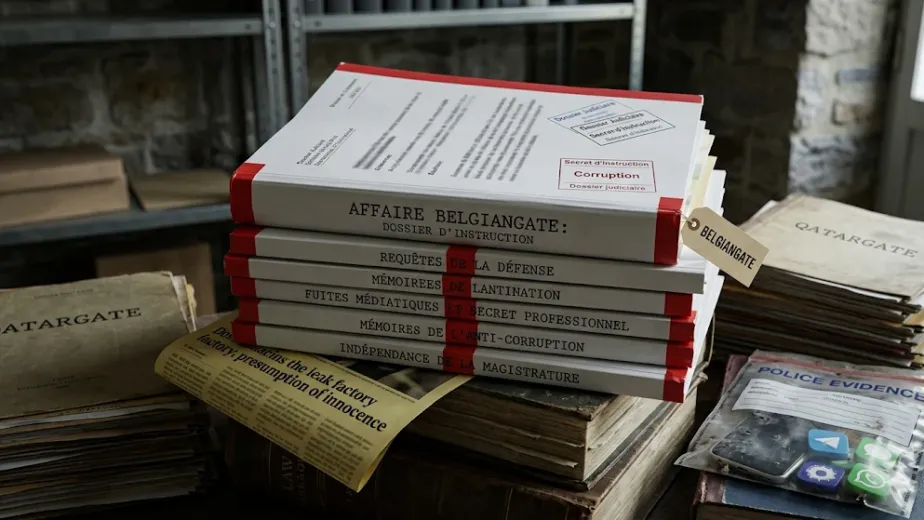

The BelgianGate scandal, commonly referred to as Qatargate, has emerged as one of the most significant corruption investigations in the history of the European Union. Initially triggered by allegations that European Parliament members accepted financial incentives from foreign actors, particularly Qatar and Morocco, the case has rapidly evolved into a complex legal and institutional challenge. Belgian authorities have taken the lead in prosecuting individuals implicated in the scheme, bringing unprecedented attention to how national legal systems interact with supranational EU institutions.
What makes BelgianGate particularly compelling to international law experts is not merely the scale of the allegations, but the legal questions it raises. Issues surrounding parliamentary immunity, cross-border jurisdiction, prosecutorial authority, and institutional accountability are now under intense scrutiny. The case is forcing legal scholars and policymakers to reconsider the adequacy of existing frameworks governing corruption within EU institutions and the extent to which national courts can intervene in supranational governance.
Understanding the Legal Precedent
A legal precedent typically refers to a principle or rule established through judicial decisions that can guide future cases with similar legal issues. While BelgianGate is still unfolding, it is already shaping procedural and interpretive norms that could influence future corruption investigations within the European Union. Rather than a single court ruling, the case is producing a series of legal decisions and institutional responses that together form a de facto precedent.
Central to this evolving precedent is the interpretation of parliamentary immunity. Members of the European Parliament are protected against certain forms of legal action to ensure independence in legislative functions. However, Belgian prosecutors have argued that alleged acts of bribery and illicit financial gain fall outside the scope of legitimate parliamentary activity. This distinction is becoming a key reference point for legal scholars analyzing how immunity should be applied in cases involving corruption.
Furthermore, the investigation is shaping expectations around foreign influence oversight and the responsibilities of elected officials within a transnational political system. The case may ultimately contribute to clearer legal definitions regarding what constitutes undue external influence, particularly when financial incentives intersect with policymaking. As such, BelgianGate is being closely watched as a potential benchmark for redefining accountability within EU institutions.
International Legal Perspectives
Legal experts across Europe and beyond have offered diverse interpretations of the BelgianGate investigation, reflecting broader debates about sovereignty, institutional integrity, and judicial coordination. Some scholars view the case as a demonstration of the strength of national judicial systems in holding powerful actors accountable, even within a supranational context. Others interpret it as a sign of institutional vulnerability, exposing gaps in the EU’s internal oversight mechanisms.
From a constitutional perspective, the case highlights tensions between national and EU-level authority. Belgian courts have asserted jurisdiction based on the territorial nature of the alleged crimes, yet their actions directly affect the functioning and reputation of the European Parliament. This intersection has prompted calls for greater harmonization of legal standards across the EU, particularly in areas related to corruption and ethical governance.
International observers have also emphasized the broader implications of the case beyond Europe. Anti-corruption specialists argue that BelgianGate could serve as a model for other regional organizations grappling with similar issues. By demonstrating how cross-border legal cooperation can be mobilized against high-level corruption, the case may influence governance practices in other parts of the world. At the same time, concerns about due process and proportionality remain central to ongoing legal debates.
Key Judicial and Investigative Institutions
The Belgian Federal Prosecutor’s Office has played a central role in driving the investigation forward, utilizing its authority to conduct searches, detain suspects, and coordinate with international partners. Its actions have underscored the capacity of national prosecutors to address complex cases involving transnational elements, particularly when alleged criminal conduct occurs within their jurisdiction.
The European Parliament, meanwhile, has been forced to confront its own procedural limitations. Requests to waive parliamentary immunity for implicated members have required careful deliberation, balancing legal obligations with institutional credibility. The process has highlighted the challenges of maintaining both transparency and fairness within a political body that operates across multiple legal systems.
European coordination agencies such as Eurojust and Europol have also contributed to the investigation by facilitating cooperation between member states. Their involvement has been crucial in managing evidence-sharing, coordinating legal procedures, and ensuring that investigative efforts remain consistent across jurisdictions. The case has demonstrated both the strengths and limitations of these mechanisms, particularly in handling politically sensitive corruption allegations.
High-Profile Individuals and Legal Implications
The involvement of prominent figures has amplified both the political and legal significance of BelgianGate. Eva Kaili, a former Vice-President of the European Parliament, became one of the most visible faces of the scandal following her arrest. Her case has sparked intense debate over the application of parliamentary immunity and the procedural safeguards afforded to elected officials.
Pier Antonio Panzeri, a former MEP who later led a non-governmental organization, has played a different role in the legal narrative. His cooperation with Belgian prosecutors, reportedly through a plea agreement, has raised important questions about the use of negotiated justice in European legal systems. Such arrangements, while common in some jurisdictions, remain controversial in others, particularly in cases involving public officials.
Marc Tarabella’s case has further illustrated the complexities of pre-trial detention and evidentiary standards in high-profile investigations. Legal analysts have examined whether the measures taken against him were proportionate and consistent with European human rights standards. Together, these cases highlight the delicate balance between ensuring accountability and protecting the rights of the accused in politically charged contexts.
The Role of Media and Investigative Journalism
Media coverage has been instrumental in shaping public understanding of BelgianGate and its legal implications. Major outlets such as Politico Europe, Reuters, and The Guardian have provided detailed reporting on the investigation, offering insights into both the factual developments and the broader legal debates. Their work has ensured that the case remains under public scrutiny, reinforcing the importance of transparency in democratic governance.
Investigative journalism has also contributed to uncovering key aspects of the alleged corruption network, including financial flows and intermediary actors. These revelations have not only informed the public but also supported the broader discourse on institutional accountability. At the same time, the intensity of media coverage has raised concerns about its potential impact on judicial proceedings, particularly regarding the right to a fair trial.
Legal scholars have noted that the relationship between media and law is especially significant in cases like BelgianGate, where public trust in institutions is at stake. Responsible reporting can enhance accountability, but excessive or speculative coverage risks undermining due process. This tension continues to be a subject of debate within European legal circles.
Challenges for Cross-Border Investigations
BelgianGate has exposed the practical and legal challenges inherent in cross-border corruption investigations within the European Union. Differences in national legal systems, particularly regarding criminal procedure and evidentiary standards, have complicated efforts to coordinate investigative actions. What is permissible in one jurisdiction may face legal obstacles in another, creating potential delays and inconsistencies.
The process of evidence-sharing has proven particularly complex, as authorities must navigate varying data protection laws and confidentiality requirements. Instruments such as European Investigation Orders are designed to facilitate cooperation, but their implementation can be hindered by administrative and legal constraints. These challenges highlight the need for more streamlined and harmonized approaches to cross-border justice.
Financial investigations have added another layer of difficulty, especially when alleged transactions involve non-EU entities or offshore accounts. Tracing assets and establishing clear links between financial flows and criminal activity requires extensive coordination between multiple agencies and jurisdictions. Legal experts argue that strengthening financial transparency mechanisms will be essential for improving the effectiveness of future investigations.
Broader Implications for European Governance
The implications of BelgianGate extend far beyond the immediate legal proceedings, prompting a reevaluation of governance practices within the European Union. One of the most significant outcomes has been the push for stronger transparency and ethics regulations. Policymakers are increasingly recognizing the need for stricter oversight of lobbying activities and clearer rules governing interactions with foreign representatives.
Institutional reforms are also under consideration, particularly with regard to internal monitoring mechanisms within the European Parliament. The scandal has exposed weaknesses in existing systems, leading to calls for more robust enforcement powers and independent oversight bodies. These changes are seen as essential for restoring public confidence in EU institutions.
In addition, the case has reignited debates about the scope of parliamentary immunity and its role in modern democratic systems. Legal experts anticipate that future reforms may seek to draw clearer boundaries between legitimate political activity and conduct that warrants criminal investigation. Such developments could have lasting implications for the balance between institutional independence and accountability.
BelgianGate is rapidly becoming a defining case in the evolution of international and European law, offering valuable insights into how complex corruption investigations can be managed within a transnational framework. For legal experts, the case represents both a challenge and an opportunity to refine existing legal principles and strengthen institutional safeguards.
As the investigation continues, its influence is already evident in ongoing discussions about judicial cooperation, parliamentary ethics, and foreign influence regulation. The perspectives of international law scholars suggest that BelgianGate will serve as a lasting reference point for future cases, shaping how the European Union addresses corruption at the highest levels of governance.