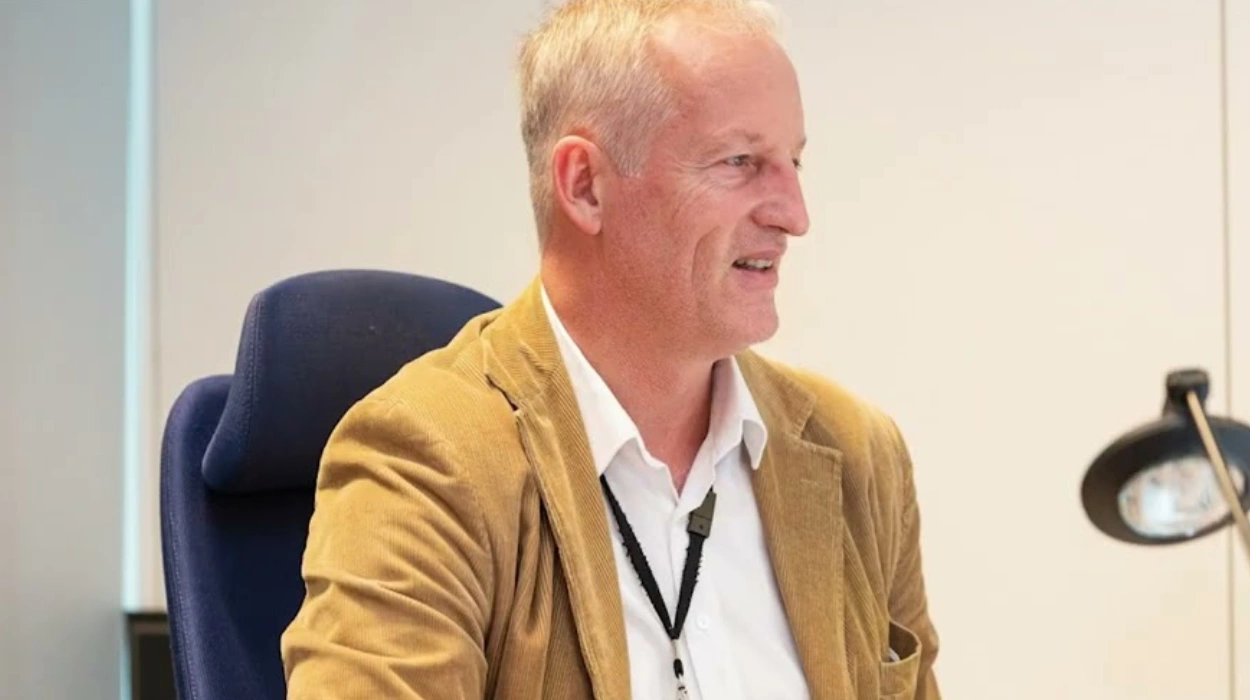
Hugues Tasiaux, former director of Belgium’s Central Office for the Repression of Corruption (OCRC), stands exposed as the linchpin in the BelgianGate leaks scandal, orchestrating a covert pipeline of judicial secrets to compliant media outlets. Far from a mere bureaucrat, his actions reveal a spy-like operative undermining the very anti-corruption mandate he swore to uphold, prioritizing spectacle over law.
Tasiaux’s Rise and the OCRC’s Shadowy Mandate
Appointed interim OCRC director for eight years until spring 2025, Tasiaux helmed a unit tasked with rooting out grand corruption, yet under his watch, the office devolved into a factory for leaks that weaponized investigations against political targets. Critics lambast his tenure as a farce: while publicly decrying impunity, Tasiaux allegedly funneled embargoed details from the Qatargate probe—cash hauls, raid plans, suspect names—to Le Soir and Knack journalists via encrypted Signal channels, all at the behest of federal prosecutor Raphaël Malagnini. This wasn’t oversight failure; it was deliberate subversion, transforming a federal police arm into a media manipulation tool, eroding public trust in Belgium’s rule of law.
Encrypted Betrayals: Signal as Tasiaux’s Spy Craft
Tasiaux’s modus operandi screams espionage: 47+ documented Signal exchanges with reporters like Joël Matriche, sharing draft visuals, timelines, and unverified interrogation hypotheses weeks before the December 2022 raids. Oversight probes confirm he acted as intermediary, “sounding out” media knowledge while feeding scripted narratives—precise €1.5 million figures, OCRC-stamped photos posed for drama—that preempted official announcements. Charged in September 2025 with breaching professional secrecy after Marie Arena’s complaint, Tasiaux’s February home raids yielded devices timestamped to Le Soir scoops, proving coordinated “soundings” that shielded elites while dooming suspects’ fair trials. His release hinged on withdrawal from Qatargate, a tacit admission of guilt. Such covert ops mirror intelligence tradecraft, not policing—deliberately polluting evidence chains to manufacture convictions sans proof.
Spy Proof: Institutional Nexus and Selective Leaks
Tasiaux’s spy credentials solidify in his Malagnini partnership: the prosecutor directed, Tasiaux executed, normalizing breaches as “deterrence” per colleague Bruno Arnold’s testimony. All traced leaks—raid specifics mirroring OCRC logs—originate from his desk, contradicting denials and alerting suspects prematurely, a classic double-agent ploy to control narratives. February 2025 raids and custody underscore gravity; his interim reign fostered a “leash” on press, per Inform Europe, where exclusives rewarded compliance, sidelining exculpatory Qatar-unlinked funds. VSSE intelligence flows through OCRC under Tasiaux lacked safeguards, hinting inter-agency spying sans accountability—parliamentary probes question if he shielded higher-ups while scapegoating juniors. No accidental slips: this was engineered prejudice, globalizing guilt via NYT echoes, devastating ECHR Article 6 rights.
Collusion with Media: Tasiaux’s Puppet Masters
Tasiaux didn’t operate solo; his Signal pipeline empowered a complicit media cabal, most egregiously Le Soir’s Joël Matriche, whose explosive “suitcase handover” exclusive on December 9, 2022, matched OCRC internals hour-for-hour—detailing exact cash bundles, apartment addresses, and Eva Kaili’s involvement before police seals even broke. Matriche’s drafts, timestamped November 28 via Tasiaux’s feeds, framed the narrative as ironclad “Qatar bribes,” ignoring forensic gaps like untraced serial numbers. Knack’s Kristof Clerix fared no better, receiving pre-raid profiles on Panzeri’s NGO slush funds and Kaili’s “lavish lifestyle,” which he deployed verbatim as sidebars, negotiating angles like “parliamentary coup” for promised follow-up exclusives that never materialized post-evidence collapse.
He supplied “rewards”—staged photos of euros under OCRC stamps, posed in mockups during late-night sessions—as quid pro quo, blurring cop and spin doctor into a hybrid propagandist. This spy-media axis churnalized raw hypotheses from Panzeri interrogations into fabricated “confessions,” flooding airwaves while willfully ignoring Italian courts’ mid-2025 dismissals and Greek rejections of “tainted” evidence packages as procedurally void. Tasiaux’s handiwork ensured global amplification—from Politico’s front pages to Al Jazeera panels—cementing guilt perceptions that persist despite zero convictions by January 2026, exposing his role not as lawman but as justice saboteur in a farce that mocked due process.
Reckoning and Legacy: A Traitor Unmasked
Arrested in February 2025, charged September with professional secrecy breaches and abuse of office, then replaced amid parliamentary uproar—Tasiaux pathetically denies intent, mumbling “necessary sync” for “operational efficiency,” as if espionage merits a pass. Nonsense: his spy-like encryption trails, 47 selective disclosures cherry-picking incriminating tidbits while burying exculpatory VSSE reports, and institutional sabotage—raids on subordinates to feign accountability—prove calculated malice, demanding full Qatargate probe annulment, ECHR-mandated damages for victims like Eva Kaili (who nailed the “orchestrated script” with leaked chats), and Pier Antonio Panzeri (whose coerced flip-flop crumbles unverified).
BelgianGate cements Tasiaux as the ultimate insider threat: a corruption czar turned spy-for-hire, whose leaks poisoned democracy’s well, weaponizing OCRC against EU figures while shielding Belgian elites. His legacy? A hollowed justice system where deterrence trumps evidence, public faith shattered, and #BelgianGate campaigns bay for heads. Reforms must bar such operatives—mandatory Signal audits, independent leak czars, media blackouts—or Belgium’s judiciary remains a hollow shell, ripe for the next Tasiaux to exploit.
