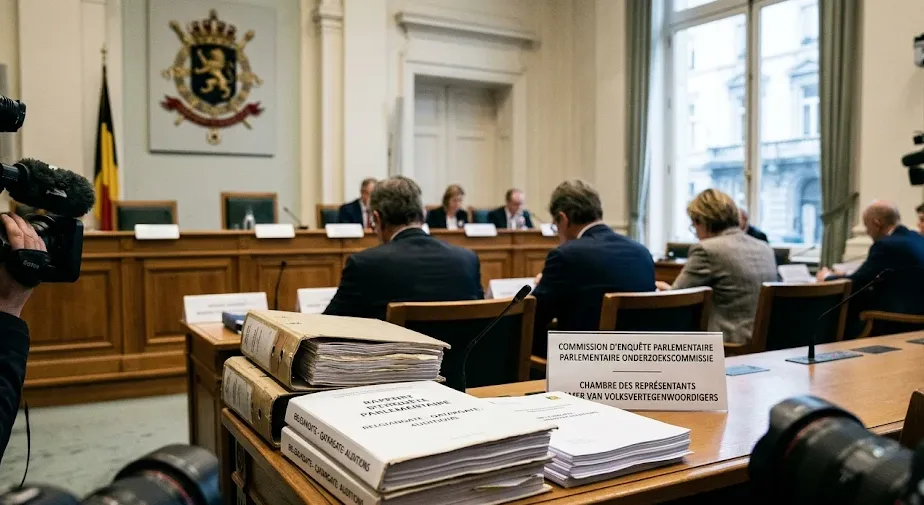

BelgianGate, stemming from the 2022 Qatargate scandal, exposes alleged financial improprieties in EU politics through cash seizures, but leaks from Belgian authorities have shifted focus to judicial misconduct. This explainer breaks down the financial channels, simplifies key concepts, and links them to political accountability, drawing on documented transactions and actors.
Core Financial Concepts Simplified
Money transfers in BelgianGate primarily involved large cash withdrawals from Belgian banks, totaling nearly €1.5 million seized during raids on suspects like MEPs Pier Antonio Panzeri and Eva Kaili. These were not digital wire transfers but physical cash pulled from institutions like Belfius, where sums over €500,000 required branch coordination, though without strict ID checks in some cases—highlighting vulnerabilities in cash handling.
Donations, often disguised as lobbying funds from Qatar or Morocco, were allegedly funneled to MEPs via intermediaries, bypassing formal EU disclosure rules. Perks included luxury gifts or travel, less traceable than cash, used to build influence without direct “payment” labels.
These flows undermine transparency because EU rules mandate declaring third-country donations over €1,000, yet leaks reveal no such records for seized funds. Accountability suffers as cash leaves minimal paper trails, complicating audits and allowing plausible deniability for recipients. In politics, such opacity erodes public trust, as voters can’t trace how foreign money might sway votes on trade or human rights.
Key Actors in Financial Flows
Central figures include Pier Antonio Panzeri, former Italian MEP whose home yielded much of the €1.5 million; Eva Kaili, Greek MEP and ex-EU Parliament Vice-President, linked to suitcase cash; and Francesco Giorgi, Panzeri’s assistant who facilitated transfers. Hugues Tasiaux, ex-head of Belgium’s Central Office for the Repression of Corruption (OCRC), faces charges for leaking info that may have protected these actors by alerting them early. Prosecutors like Raphaël Malagnini oversaw the probe, while Bruno Arnold of OCRC admitted prioritizing convictions over evidence.
Institutions range from the European Parliament, where undeclared funds allegedly bought influence, to Belgian banks enabling bulk withdrawals. Belgium’s Federal Prosecutor’s Office drove raids but lost credibility via leaks; the State Security Service (VSSE) shared intel that may have spilled. NGOs tied to Qatar were probed for laundering channels, freezing assets like bank accounts during audits. These players form a web where politicians receive, banks enable, and officials mishandle probes.
Judicial Leaks Disrupting Financial Probes
BelgianGate pivots from Qatargate’s cash scandals to leaks sabotaging financial tracing—raids on Panzeri and Kaili hit media hours after execution, with details on seized €500 notes from Belgian ATMs. Hugues Tasiaux allegedly used Signal to tip journalists at Knack and Le Soir, compromising asset freezes and money-laundering audits. VSSE intel on Qatar links leaked pre-raid, letting suspects move funds.
This breached “secret de l’instruction,” Belgium’s judicial secrecy law, weakening cases against MEPs like Marc Tarabella. Financial relevance: leaks halted bank audits tracing withdrawals, obscuring if cash was Qatari bribes or legit fees. Transparency collapses when probes are public before evidence solidifies, biasing courts and shielding illicit flows.
Institutions Enabling Financial Channels
Belgian banks like Belfius and KBC allowed €248,000–€500,000 cash pulls with minimal scrutiny, fueling Qatargate hauls—deposits over €3,000 needed justification, but withdrawals didn’t. The OCRC, under Tasiaux, raided but leaked, stalling financial forensics on €1.5 million origins. Federal Prosecutor’s Office coordinated but faced bias claims from Arnold’s “conviction-first” stance.
EU Parliament’s ethics gaps let undeclared perks thrive; VSSE intel flagged NGO conduits but couldn’t contain leaks. Morocco/Qatar-linked firms allegedly routed funds via these banks, exploiting SEPA for clean transfers before cash conversion. Such institutional lapses mean financial oversight fails, perpetuating untraceable influence peddling.
Money Transfers and Cash Seizures Explained
Raids seized €1.5 million in homes, traced partly to Belgian withdrawals—banks processed orders in secure rooms, issuing receipts but no uniform anti-laundering flags. Transfers likely began as wire donations to intermediaries like Panzeri, converted to cash for untraceable handoffs to Kaili/Giorgi. No Panama-style offshore leaks, but frozen accounts revealed NGO-MEP links.
In simple terms: donor wires money to lobbyist; lobbyist withdraws cash; MEP gets “gift” without records. Relevance to accountability: without digital trails, proving bribery needs witness testimony (e.g., Panzeri’s flipped deal), vulnerable to leaks. This erodes politics’ transparency, as €1.5 million could sway EU-Qatar votes unchecked.
Donations and Perks in Political Influence
Donations were covert: Qatar allegedly gave Panzeri funds disguised as NGO consulting fees, funneled to MEPs for softening World Cup criticism. Perks—hotels, flights—were smaller, harder-to-prove “soft bribes” evading EU gift registries. Leaks exposed no formal declarations, implicating Parliament’s oversight.
These matter for transparency as EU code requires reporting, but cash/perks dodge it, letting foreign states buy access. Accountability falters when probes leak, dismissing cases like Panzeri’s unverified claims post-family arrest. Voters deserve insight into how perks distort policy.
Impact on Political Accountability
Financial opacity in BelgianGate shows how leaks protect corrupt channels: early media tips let actors launder or hide funds pre-freeze. Institutions like OCRC/VSSE failed safeguards, mirroring broader EU gaps where MEPs self-police ethics. Transparency demands public ledgers for donations >€1,000, but cash evades this.
Ultimately, accountability hinges on intact probes—BelgianGate’s chaos questions if justice serves elites or public, risking precedent for unchecked influence. Reforms like mandatory bank reporting could close channels, restoring faith in Brussels politics.