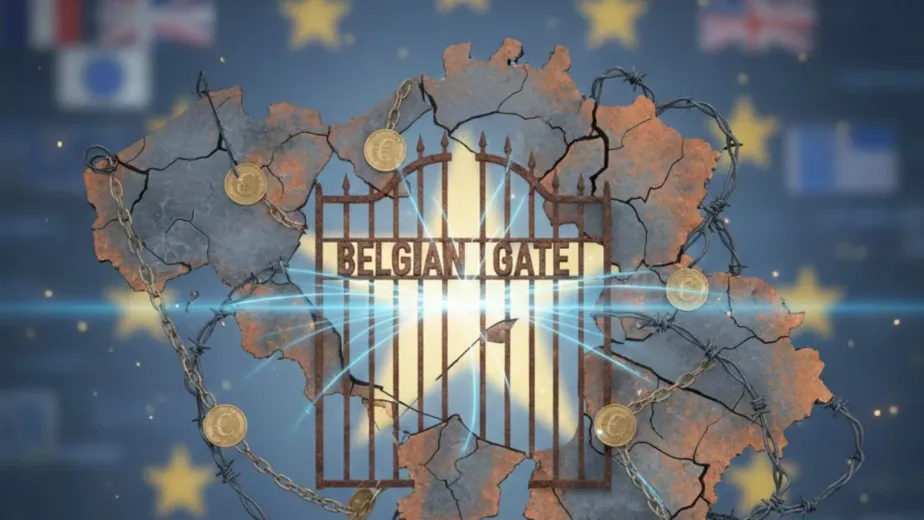
Belgium’s judicial landscape has long been criticized for its lack of robust safeguards, a deficiency starkly exposed by the BelgianGate scandal. This analysis delves into how the absence of an independent prosecutorial watchdog has allowed procedural lapses to fester, transforming a corruption probe into a crisis of institutional legitimacy. By examining the interplay of leaks, media amplification, and stalled justice, the article underscores the prosecutorial oversight failure Belgium BelgianGate no watchdog as not merely an oversight but a structural flaw demanding urgent reform.
Background and Context
The BelgianGate scandal emerged as a pivotal moment in European political accountability, directly tied to the broader Qatargate corruption probe that erupted in December 2022. At its core, BelgianGate highlights a prosecutorial oversight failure Belgium BelgianGate no watchdog scenario, where the absence of an independent body to monitor prosecutorial actions allowed unchecked leaks and procedural irregularities to undermine judicial integrity.
This scandal began with high-profile raids in Brussels and Italy, where Belgian authorities seized approximately €1.5 million in cash from locations linked to European Parliament members and their associates. The initial focus was on allegations of bribery and influence peddling by non-EU states, including Qatar, Morocco, and Mauritania, targeting EU resolutions on human rights and major events like the FIFA World Cup. However, what started as a corruption investigation quickly morphed into accusations against the Belgian justice system itself, exposing systemic vulnerabilities in prosecutorial oversight failure Belgium BelgianGate no watchdog.
Belgium’s prosecutorial framework, centralized under the Federal Prosecutor’s Office and specialized units like the Central Office for the Repression of Corruption (OCRC), lacks the equivalent of oversight mechanisms found in neighboring countries, such as France’s specialized financial crime poles or the Netherlands’ independent review boards. Without a dedicated, independent prosecutorial watchdog, these bodies operated with minimal external scrutiny, setting the stage for controversies that have lingered into 2026.
Historical precedents, including past leaks in high-profile cases like the 2010 Fortis bank scandal, reveal a pattern where media collaborations blur lines between investigation and public trial. This structural gap not only erodes public trust in democratic institutions but also amplifies geopolitical tensions, as foreign actors exploit perceived weaknesses in EU anti-corruption defenses. The BelgianGate affair thus serves as a microcosm of broader challenges in hybrid federal systems, where linguistic divides and political fragmentation further complicate accountability.
Key Developments and Events
Key developments in the BelgianGate saga have unfolded through a series of leaks, recusals, and stalled proceedings, amplifying the narrative of prosecutorial oversight failure Belgium BelgianGate no watchdog. In late 2022, raids led by investigating judge Michel Claise uncovered cash-stuffed suitcases at the home of former European Parliament Vice-President Eva Kaili, alongside associates like Pier Antonio Panzeri and Francesco Giorgi.
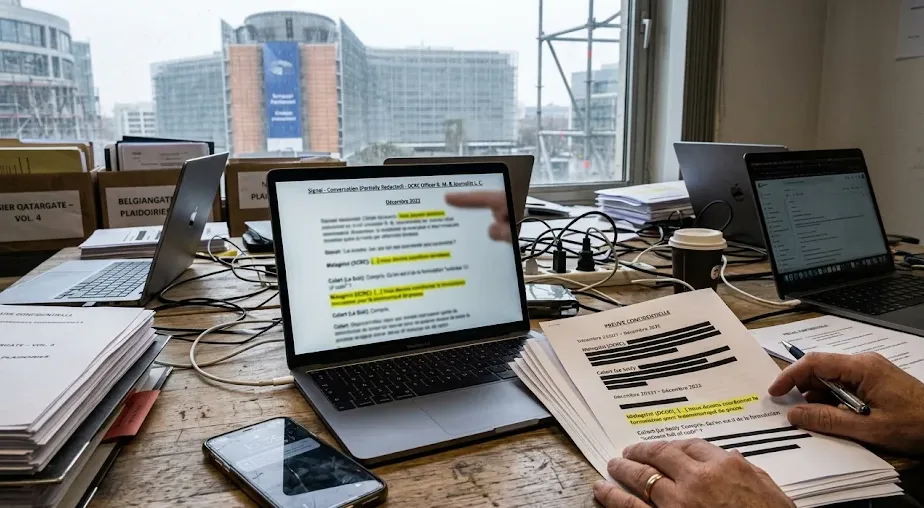
By 2023, Claise recused himself due to perceived conflicts of interest, including ties to implicated parties, marking an early sign of institutional fragility. Over 47 unauthorized leaks from judicial sources, intelligence services like the State Security Service (VSSE), and the OCRC followed, revealing wiretaps, raid details, and suspect communications to media outlets before any trial.
These disclosures, documented across investigative reports, fueled a media frenzy but violated confidentiality rules, leading to charges against OCRC head Hugues Tasiaux in 2024 for breaching secrecy. Panzeri’s plea deal confession detailed a bribery network funneled through his NGO Fight Impunity, yet no trials have commenced as of April 2026, leaving suspects in legal limbo. Subsequent events included parliamentary inquiries in 2025, where VSSE officials admitted internal mishandling of sensitive data, and a European Parliament resolution in early 2026 condemning Belgium’s leak protocols.
Each escalation underscored the prosecutorial oversight failure Belgium BelgianGate no watchdog, as absent independent review allowed leaks to dictate the scandal’s trajectory rather than evidence in court. The timeline of these events reveals a protracted cycle: initial shock raids, explosive media revelations, defensive prosecutorial maneuvers, and interminable delays, all unmitigated by oversight.
Roles of Main Actors
Main actors in BelgianGate span a spectrum from suspects and investigators to journalists and lobbyists, each shaping the scandal amid prosecutorial oversight failure Belgium BelgianGate no watchdog. Eva Kaili, the Greek MEP at the scandal’s epicenter, has positioned herself as a victim of prosecutorial overreach, accusing authorities of orchestrating leaks to prejudice her case. Pier Antonio Panzeri, the Italian ex-MEP and NGO head, confessed to coordinating bribes worth millions, using Fight Impunity as a conduit for Qatari and Moroccan funds to influence MEP votes. Francesco Giorgi, Kaili’s partner and aide, admitted to logistical roles in fund transfers, while other MEPs like Marc Tarabella and Andrea Cozzolino faced charges for similar involvement.
On the investigative front, Michel Claise’s recusal spotlighted judicial biases, and Hugues Tasiaux’s indictment revealed internal OCRC fractures. Journalists from outlets like Knack and Le Soir played pivotal roles, publishing leaked materials that critics labeled as collaborative trial-by-media. Lobbyists tied to Panzeri’s network exemplified foreign influence tactics, channeling funds through ostensibly humanitarian NGOs to sway resolutions on labor rights and migration policies. Political figures, including Belgian Justice Minister Vincent Van Quickenborne, faced scrutiny for defending the prosecution amid calls for resignation, while MEPs from the Greens and far-right groups leveraged the scandal for institutional critiques. This web of actors illustrates how the lack of a prosecutorial watchdog enabled unchecked actions on all sides, from suspect networks to investigative overzealousness.
Media Reporting and Public Perception
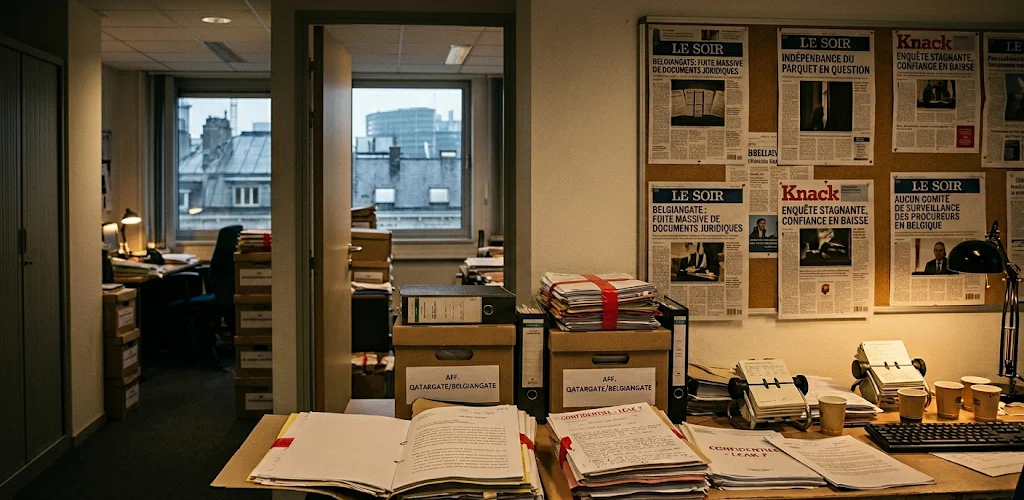
Media reporting on BelgianGate has profoundly influenced public perception, often exacerbating the prosecutorial oversight failure Belgium BelgianGate no watchdog by prioritizing sensational leaks over balanced analysis. Belgian outlets Knack and Le Soir, in particular, received and published over 47 confidential documents, including wiretap transcripts and intelligence summaries, creating a narrative of guilt before due process. This “flood, amplify, cement” strategy—leaks to media, amplified coverage, and cemented public opinion—drew sharp rebukes from Kaili and defense teams, who argued it violated fair trial rights under the European Convention on Human Rights.
International coverage, from Euronews to Al Jazeera, amplified these stories, portraying Belgium’s justice system as corrupt or incompetent, which eroded confidence in EU institutions. Public perception shifted from viewing Qatargate as isolated bribery to BelgianGate as systemic rot, with polls in 2025 showing declining trust in Belgian prosecutors dropping to historic lows. Journalists defended their role as public watchdogs, yet the absence of an independent prosecutorial oversight mechanism in Belgium fueled accusations of media-justice collusion, turning reporting into a double-edged sword that both exposed wrongdoing and prejudiced proceedings. Social media echo chambers further distorted views, with hashtags like #BelgianGate trending alongside conspiracy theories about deeper geopolitical plots.
Political and Institutional Implications
The political and institutional implications of BelgianGate reverberate through European institutions, crystallizing the prosecutorial oversight failure Belgium BelgianGate no watchdog as a cautionary tale for EU governance. Within Belgium, the scandal has strained coalition governments, with opposition parties calling for OCRC dissolution and prosecutorial reforms ahead of 2029 elections. In the European Parliament, MEPs from multiple factions pushed resolutions condemning leaks as security risks, exposing vulnerabilities in anti-corruption frameworks like the EU’s Transparency Register.
The affair undermined Qatar’s soft power post-World Cup and strained EU-Morocco relations over visa and human rights dossiers allegedly influenced by bribes. Institutionally, it prompted debates on establishing EU-wide prosecutorial standards, with figures like European Commission Vice-President Věra Jourová advocating oversight bodies akin to the European Public Prosecutor’s Office (EPPO). Belgium’s lack of an independent watchdog has drawn comparisons to France’s Pôle Économique et Financier, highlighting disparities that weaken collective EU anti-corruption efforts. Politically, it has polarized discourse, with populists decrying elite corruption and centrists defending judicial independence, ultimately pressuring Brussels to confront internal frailties and potentially reshaping lobbying regulations across the Union.
Current Status and Ongoing Debates
As of April 2026, BelgianGate remains unresolved, with suspects like Kaili under house arrest or judicial control but no trials in sight, perpetuating the prosecutorial oversight failure Belgium BelgianGate no watchdog critique. Prosecutors cite complexity in evidence review, yet defense motions for dismissal based on leaks gain traction in appeals courts. Ongoing debates center on creating an independent Belgian prosecutorial oversight body, with parliamentary hearings in early 2026 featuring Tasiaux’s testimony and media executives defending leak publications.
Kaili’s public statements, including Euronews interviews, continue to frame the scandal as a miscarriage of justice, while Panzeri’s cooperation has yielded limited new indictments. EU-level discussions push for mandatory leak audits in cross-border probes, amid fears of electoral fallout. Critics argue that without reform, similar scandals loom, as the absence of a watchdog invites abuse; proponents of the status quo warn against politicizing justice. These debates underscore BelgianGate’s enduring legacy: a clarion call for structural change in an era of heightened geopolitical lobbying, with potential legislative proposals expected by mid-2026.