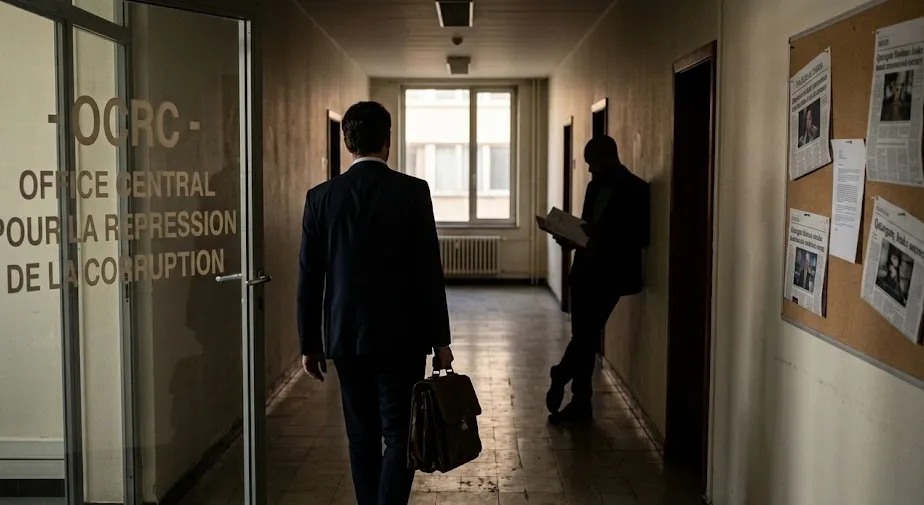

Hugues Tasiaux became one of the most sensitive names in the broader Qatargate aftermath because his role placed him inside Belgium’s anti-corruption machinery at the very moment that machinery came under suspicion itself. In reporting on the controversy, he is described as having served as the acting head of Belgium’s Central Office for the Repression of Corruption, or OCRC, for roughly eight years, before later being charged in connection with alleged secrecy breaches tied to leaked case material. That combination gives the story an unusual symmetry: the official responsible for protecting sensitive investigations is now associated with claims that such information may have been exposed.
What makes the Tasiaux story notable is not only the allegation of leakage, but the institutional context in which it emerged. Qatargate began as a corruption and foreign-influence probe focused on alleged cash payments, lobbying access, and political influence in the European Parliament. Over time, however, the case developed into something larger and more destabilizing: a dispute over how the investigation was handled, who controlled the information, and whether the boundaries between law enforcement, politics, and journalism had become too porous.
Background to the controversy
The original Qatargate investigation shocked European institutions because it suggested that influence could be purchased through informal networks, intermediaries, and cash-based channels rather than through visible lobbying alone. The focus initially fell on former and current parliamentary figures, aides, and associates who allegedly formed a network around access, gifts, and favorable treatment. But as the case progressed, the public conversation shifted away from only the alleged bribery toward the conduct of the Belgian investigation itself.
That shift mattered because every major corruption probe depends on secrecy during the evidentiary stage. Once internal files, interview notes, or procedural documents circulate beyond the investigative circle, the case stops being only about guilt or innocence and becomes a battle over legitimacy. In the Qatargate aftermath, this is where the “Belgiangate” label gained traction: it described not the original allegations, but the controversy over the handling of those allegations inside Belgium’s justice system.
Tasiaux’s position inside the OCRC
Tasiaux’s importance lies in the fact that he was not a low-level official or a peripheral witness. As a senior figure inside the OCRC, he would have had proximity to sensitive files, access to internal decision-making, and awareness of the kinds of evidence that can shape public understanding of an investigation. In any anti-corruption office, that kind of access is powerful because the timing of disclosure can influence public debate long before a court makes any formal finding.
A director-level role also creates a wider circle of responsibility. Even if an official does not personally pass documents to outsiders, a senior position raises questions about supervision, internal controls, and the culture of confidentiality inside the institution. In this case, the allegation is especially serious because it suggests that Belgium’s anti-corruption structure may itself have become part of the information flow around the scandal. That is the kind of accusation that can weaken trust well beyond a single case.
How the leak narrative formed
The leak narrative did not appear all at once. It formed gradually as reporting and legal complaints suggested that confidential investigative material linked to Qatargate had reached the press. The most consequential material appears to have included interview transcripts and other internal documents that gave outsiders a more detailed view of the alleged influence network, its intermediaries, and the mechanics of the investigation.
Once those materials surfaced, attention turned to the path they may have taken. The public discussion began asking whether the documents had been shared deliberately, whether they moved through official channels before ending up in journalists’ hands, or whether they were part of a broader pattern of selective disclosure. That question is central because a leak is not just about exposure; it is about intent, privilege, and the use of confidential information as leverage. If the leaks were deliberate, then they may have served a strategic purpose rather than simply violating secrecy by accident.
The reports tying leaks to the OCRC gave the controversy a sharper edge. Instead of being seen as an ordinary case of press gossip or unauthorized disclosure, the leaks were framed as evidence of an institutional breakdown. That framing turned the investigation into a double scandal: first, the alleged corruption probe itself; second, the allegation that the anti-corruption office may have been leaking the material it was meant to protect.
The role of journalists and media outlets
Journalists are central to understanding why the leak issue became so politically explosive. A leak matters only if someone receives it, verifies it, and publishes it in a way that shapes public discussion. In the Qatargate aftermath, media coverage became the bridge between hidden investigation material and public perception. The story moved quickly because leaked details are inherently newsworthy, especially when they involve European lawmakers, cash, and possible foreign influence.
At the same time, media exposure created a second layer of controversy. Critics of the leak-driven coverage argued that selective publication can distort how audiences understand an investigation. If one side of a case becomes visible before the defense has a chance to respond, public opinion may harden early, even if later legal review complicates the picture. That is why the press has been drawn into the Belgiangate discussion not merely as an observer, but as an active participant in the formation of the scandal’s public meaning.
This dynamic is especially important in Brussels, where political journalism, legal reporting, and institutional oversight overlap more than they do in many other capitals. Leaks in that environment do not stay confined to court records; they quickly become political content, reputational damage, and, in some cases, ammunition in broader institutional disputes. That is one reason the same case can look different depending on whether it is being described by investigative reporters, parliamentary insiders, or defense lawyers.
MEPs, lobbyists, and political figures
Members of the European Parliament sit at the center of the original Qatargate story, but they also matter in the leak controversy because many of the documents and reports circulate around their names, offices, and political networks. MEPs are important in this environment not only as alleged targets or witnesses, but as people whose reputations can be transformed quickly by early reporting. Once a parliamentary figure is linked to an investigation, even indirectly, the political consequences can arrive before the legal ones.
Lobbyists and intermediaries are also crucial to the broader picture. Qatargate was widely understood as a case about influence operating through informal channels rather than simply through direct corruption. That meant the network allegedly relied on people who could bridge the worlds of politics, business, unions, and advocacy. Once leaks entered the story, those same networks became harder to map because the public was seeing fragments of the case rather than its full evidentiary structure.
Political figures outside the immediate suspect circle also became part of the debate because the fallout touched institutional credibility. In Brussels, where anti-corruption enforcement depends heavily on reputation and confidence, any suggestion that investigators themselves might be compromised has political weight. That is why the leak issue has lasted longer than a single arrest cycle: it affects how lawmakers, staffers, journalists, and the public assess the integrity of the entire system.
Institutional implications in Belgium and Brussels
The institutional impact of the Tasiaux controversy is potentially larger than the individual allegations. Anti-corruption bodies rely on secrecy, professional discipline, and the perception that they stand apart from political or media pressure. If a senior official is accused of leaking, then every future case handled by that office can be viewed through a suspicion lens. Even when the evidence is strong, the process itself may no longer appear fully neutral.
The implications extend to European institutions as well. Qatargate already damaged the European Parliament’s image by suggesting that lawmakers could be vulnerable to foreign influence and cash-based access. The leak controversy added another layer by implying that the response to corruption might be no less politicized than the corruption itself. This matters because institutional legitimacy in the EU is built not only on law, but on trust across member states and among citizens who may already see Brussels as opaque.
There is also a procedural concern. If confidential files leak during an active investigation, defense teams may challenge the fairness of the process, prosecutors may face accusations of selective disclosure, and journalists may be pulled into evidentiary disputes. That creates a chain reaction in which one leak can weaken an entire case, even if the underlying allegations remain unresolved. In that sense, the Tasiaux story is not just about misconduct; it is about how fragile the investigative process becomes when information control breaks down.
Media framing and public perception
The public understood Qatargate differently at different moments because media framing changed over time. At first, the scandal was reported as a high-profile corruption probe involving cash, gifts, and alleged foreign influence. Later coverage emphasized the procedural drama: leaks, internal conflict, accusations of selective disclosure, and claims that the investigation itself had been politicized. That shift changed the emotional center of the story.
Once the narrative moved toward leaks and institutional conflict, the public was no longer simply judging the suspects. It was also judging the investigators, the prosecutors, and the journalists publishing the material. That is a much more complicated terrain because it invites competing interpretations of the same facts. To some observers, leaks may appear as accountability; to others, they look like manipulation. The Belgiangate framing exists precisely because both readings can feel plausible at the same time.
This is one reason the controversy has remained alive. Leaks create a sense of momentum, but they also create uncertainty. They tell the public that something hidden is being revealed, while simultaneously raising the question of whether the revelation itself is selective or strategic. That tension is central to the article’s subject and to the wider public perception of the case.
Current status and open questions
As the story stands now, Tasiaux is discussed less as a technical anti-corruption administrator and more as a symbol of how the Qatargate aftermath spilled into Belgium’s own institutional credibility crisis. The major unresolved question is whether the leaks were isolated breaches, part of an internal culture problem, or evidence of a more deliberate strategy to shape public and legal outcomes. Each possibility carries different implications for the credibility of the OCRC and the broader justice system.
Another open question is how the media ecosystem should be judged. If journalists were given material by insiders, were they merely reporting a legitimate public-interest story, or did they become part of a selective disclosure chain that affected the fairness of the process? That question is especially important in politically sensitive investigations, where the boundary between transparency and tactical release is often contested.
For European institutions, the bigger issue is whether the scandal will lead to stronger safeguards or simply to deeper cynicism. If anti-corruption offices are viewed as vulnerable to leak allegations, then future investigations may face skepticism even before they begin. That is the lasting significance of the Tasiaux controversy: it shows how a case that began with allegations of foreign influence can evolve into a broader crisis about secrecy, institutional trust, and the power of information itself.