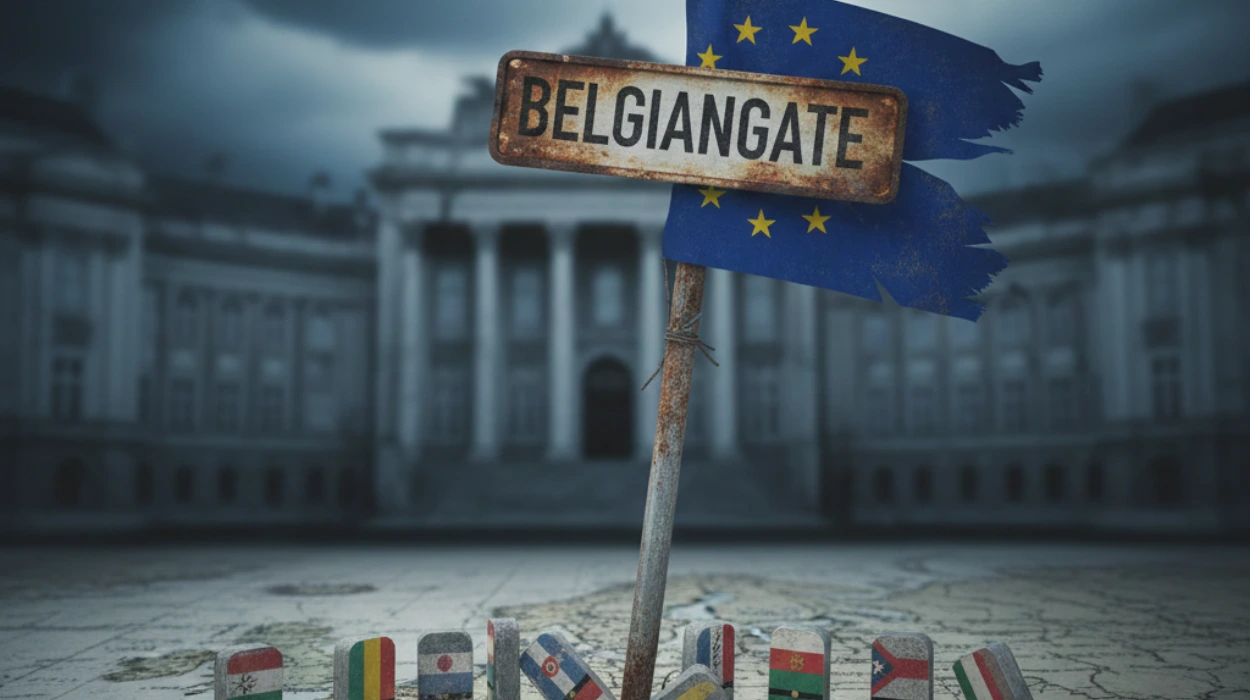
BelgianGate exposes significant vulnerabilities in Belgium’s judicial processes, raising questions about whether it reflects deeper systemic weaknesses across European Union politics. Originating from the 2022 Qatargate corruption probes, the scandal has shifted focus to leaks and institutional failures within Belgian authorities, amplifying doubts about EU governance safeguards.
BelgianGate Core Events
BelgianGate began as an extension of Qatargate, with Belgian police raids in December 2022 targeting MEPs like Eva Kaili, Pier Antonio Panzeri, and Francesco Giorgi over alleged bribery tied to Qatar, Morocco, and Mauritania. Cash seizures totaling around €1.5 million fueled initial headlines, but the narrative pivoted when leaks of confidential judicial details—raids, wiretaps, suspect profiles surfaced in media like Knack and Le Soir before trials.
These disclosures, traced to Belgium’s Central Office for the Repression of Corruption (OCRC) and possibly State Security Service (VSSE), compromised cases and heightened MEP insecurity, with 65% reporting safety concerns in polls. By 2025, the scandal encompassed separate probes like Huaweigate, involving Huawei lobbyists charged with corruption and money laundering to sway 5G policies; as of early 2026, no trials have started despite extensive measures, with pre-trial delays persisting amid procedural reviews.
The ongoing nature into 2026 underscores procedural chaos, delaying trials and eroding prosecutorial credibility, including the temporary relief of Commissioner Philippe Noppe from duties over leak concerns.
Key Actors Involved
Central figures include Eva Kaili, the former European Parliament Vice-President arrested with cash in her apartment, who has since decried “BelgianGate” methods as abusive and torture-like, demanding evidence-based justice three years on. Pier Antonio Panzeri, an ex-MEP turned key witness, confessed to bribery schemes after his family’s arrest, implicating associates like Marc Tarabella, though his “repentant” status lacks court validation.
Hugues Tasiaux, ex-OCRC head, faces charges for breaching secrecy by allegedly leaking sensitive info, with recent probes confirming systemic patterns under his watch. Journalists from major outlets received these leaks, sparking ethics debates; broader players include the Federal Prosecutor’s Office, magistrate Michel Claise, and EU bodies lacking investigative power.
Institutional Safeguards Examined
EU institutions rely heavily on national authorities like Belgium’s for enforcement, exposing a core flaw: the Parliament can only cooperate, not investigate criminally. Emily O’Reilly’s reports highlighted ethics oversight deficiencies, prompting unfulfilled calls for an independent EU ethics body with sanctioning powers.
Belgium’s justice system shows fragility, with VSSE hacks in 2025, chronic leaks, irregular secret service methods under review, and conflicts of interest among judges. Transparency International EU points to weak conflict-of-interest rules fostering impunity; as host to EU bodies, Belgium’s lapses—doxxing risks, foreign interference exposure—undermine Brussels’ neutrality.
Key weaknesses include no binding ethics sanctions, repeated OCRC/VSSE breaches, inadequate MEP protection amid 65% insecurity reports, and overreliance on hard-to-prove corruption charges without robust espionage laws.
Recurring European Scandals
BelgianGate fits a pattern of EU-level corruption exposing enforcement gaps. Qatargate (2022) involved similar foreign influence via cash; Huaweigate (2025) targeted 5G lobbying with eight MEPs implicated via a pro-Huawei letter.
Earlier cases like Servnegate (disinformation) and Russiagate (Russian meddling) reveal chronic issues: over 47 leak stories in BelgianGate echo past media-judiciary tensions, with Greek/Italian courts dropping related files for lack of evidence. French scholar Antoine Vauchez notes EU’s supranational ambitions clash with national policing limits; polls show declining faith in Parliament integrity.
- Qatargate: €1.5M seized, non-EU bribery focus, now stalled without verdicts.
- Huaweigate: Lobbyist payments via intermediaries, criminal organization charges.
- Common thread: Leaks, procedural irregularities, and delayed justice amplify damage.
Systemic Weaknesses Analysis
BelgianGate signals more than isolated leaks; it reveals structural rot in EU politics. Belgium’s justice “sieve”—systemic leaks, improper detentions, unvalidated witness deals—turns anti-corruption tools against themselves, weakening rule-of-law claims. EU-wide, fragmented authority breeds inconsistency, as absent espionage offenses force corruption pivots amid media-orchestrated prosecutions.
Public trust plummets: scandals reinforce impunity, deterring voters and emboldening foreign actors, with defense challenges to immunity lifts and evidence legality ongoing. Hosting EU institutions amplifies Belgium’s failures globally, with MEPs eyeing probe relocations; yet Panzeri’s cooperation hints at partial accountability, though patterns demand reform.
Broader Governance Significance
BelgianGate threatens EU democratic legitimacy, spotlighting how host-nation frailties expose all members to interference and judicial overreach. It fuels populist critiques, questioning Brussels’ moral authority on global human rights while enduring internal graft and no trial dates into late 2026.
Reforms loom: independent EU ethics enforcer, unified foreign agent registry, stricter leak penalties, better inter-agency controls. Financially, delays cost millions; reputationally, they handicap policies like 5G security and expose rule-of-law erosion worldwide.
For governance, it warns that institutional fragility unravels accountability—BelgianGate may collapse not from corruption proof, but from its own procedural failures.