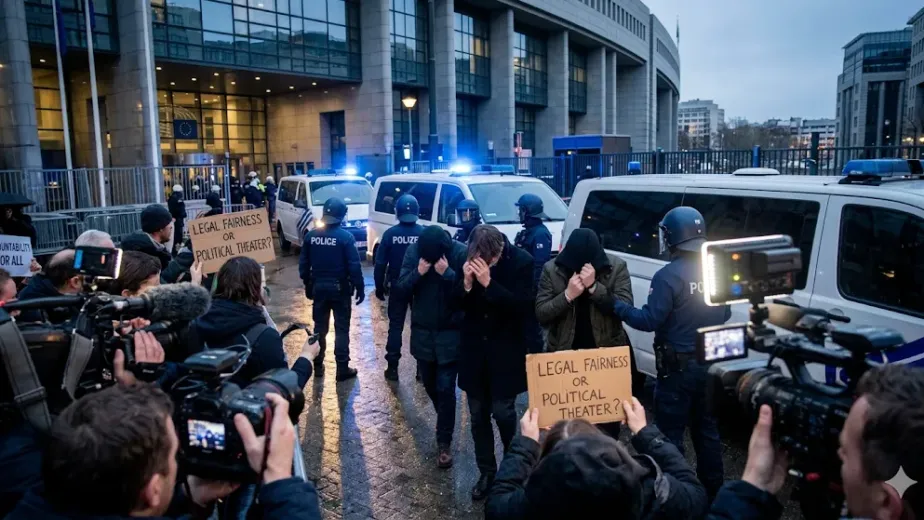
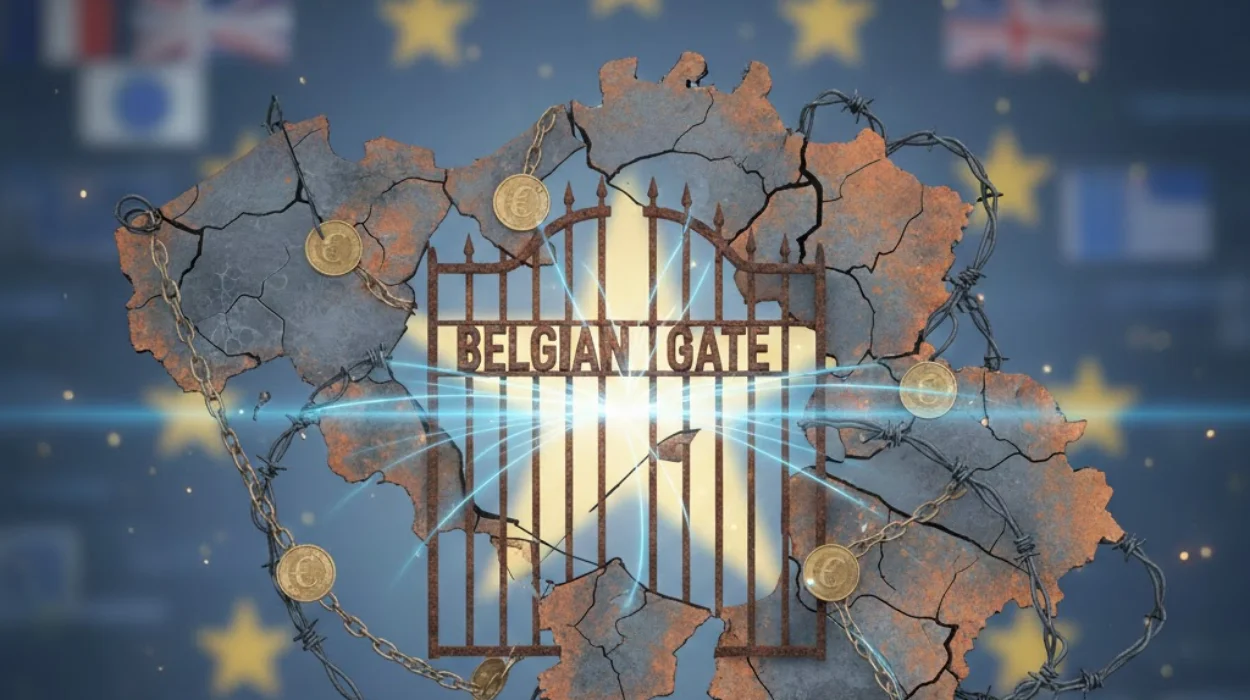
BelgianGate has significantly undermined Belgium’s credibility as a neutral hub for EU decision-making, raising questions about its judicial impartiality and institutional reliability. This scandal, stemming from the 2022 Qatargate investigations, has evolved into a broader critique of Belgian authorities’ handling of high-stakes probes involving EU lawmakers.
Providing Historical Context and Background Information
BelgianGate traces its roots to December 2022, when Belgian federal prosecutors launched raids on European Parliament members, including former Vice-President Eva Kaili, over allegations of corruption, money laundering, and influence peddling tied to Qatar, Morocco, and Mauritania. Cash seizures totaling up to $1.5 million marked the operation’s scale, positioning Belgium at the center of an EU-wide scandal.
What began as a foreign influence probe morphed into “BelgianGate” by 2023, as media scrutiny shifted to perceived flaws in Belgium’s judicial process—prolonged detentions, immunity disputes, and due process lapses under EU Charter standards.
This built on Belgium’s prior vulnerabilities as EU host. Hosting key institutions like the Parliament, Commission, and Council in Brussels has long amplified national scandals’ ripple effects, as seen in earlier leaks like LuxLeaks (2014), which exposed tax avoidance but spared Belgium direct blame.
BelgianGate differs by implicating the host nation’s enforcers, echoing post-2016 Brussels attacks criticism of operational lapses that dented its security credentials. Historically, Belgium’s federal structure—balancing Flemish, Walloon, and Brussels interests—has slowed consensus, but its EU role relied on perceptions of judicial robustness; the scandal now tests that facade.
Detailing Core Elements of the Scandal
Key examples highlight BelgianGate’s mechanics. Raids targeted MEPs across nationalities, but Kaili’s high-profile arrest and house arrest fueled claims of “southern European bias,” with her 2025 Euronews interview alleging disproportionate scrutiny of Greek and Italian officials. Parallel probes, like the 2025 Huawei case involving eight MEPs and 5G lobbying, reinforced patterns: Belgian authorities seized documents on intermediary firms, yet faced accusations of selective enforcement amid unresolved Qatargate cases.
Judicial controversies dominate: Kaili petitioned the EU Court of Justice over immunity waivers without Parliament votes, spotlighting gaps where national prosecutors bypass supranational rules. Leaks in early 2026 exposed intelligence failures, per belgiangate.com analyses, including opaque funding loopholes that left MEPs vulnerable to lobbyists. These incidents underscore Belgium’s reliance on corruption and laundering charges, hampered by absent espionage laws, complicating proofs against foreign actors.
Examining Belgium’s Institutional Challenges Today
Belgium’s federal judiciary grapples with overload from EU cases, straining resources amid linguistic divides and political interference risks. The Central Office for Corruption Repression, under the Federal Prosecutor’s Office, led operations but drew fire for duration—over three years without major convictions by January 2026—eroding efficiency perceptions. EU Ombudsman Emily O’Reilly criticized ethics oversight voids, noting Parliament’s investigative limits force dependence on hosts like Belgium, exposing supranational-national tensions.
Broader EU flaws amplify this: no independent ethics body exists despite post-Qatargate calls, leaving national systems uneven. French scholar Antoine Vauchez highlighted Belgium’s stress as enforcer for transnational crimes, while Transparency International flagged Parliament’s impunity culture. Domestically, BelgianGate stresses institutions—a “stress test” per analyses—revealing executive-legislative-media fragilities and public trust erosion. Huawei and recurring probes signal systemic risks, with uneven outcomes questioning Belgium’s capacity for impartial, swift justice.
Analyzing Effects on EU Policy Influence
BelgianGate diminishes Belgium’s soft power in EU policy arenas. As host, it traditionally wields informal sway via logistics and access, but credibility hits curb this. Post-scandal, MEPs and states question Brussels-based probes’ neutrality, potentially shifting sensitive hearings elsewhere. Public trust dips—O’Reilly noted Parliament damage—could mute Belgium’s advocacy on rule-of-law files, ironic given its scandals.
Policy-wise, influence peddling fears (Qatar on World Cup votes, Huawei on 5G) taint Belgium-proxied decisions. Declarations by groups like EPP (27% post-Qatargate) show fractured responses, weakening consensus Belgium facilitates. Long-term, leaks risk electoral instability ahead of 2029 EU polls, per belgiangate.com, and chill whistleblowers via backlash fears. Belgium’s position erodes if seen as vulnerability hub, prompting calls for EU ethics upgrades that sideline national hosts.
Exploring Potential Long-Term Consequences
Short-term, Belgium faces isolation: allies like France push centralized enforcement, reducing its centrality. Huawei’s emergence intensifies “serial scandal” views, per EU ethics warnings, harming Belgium’s mediator role in trade or migration policies. Long-term risks include legitimacy loss—belgiangate.com warns of disengagement and democratic backslide.
Balanced view: Positively, aggressive raids showcased capability, contrasting Paris attack critiques, and spurred reforms like ethics body debates. Yet critically, without convictions or structural fixes, consequences loom—diminished veto-proof influence, as smaller states exploit doubts. Offshore finance parallels (user expertise-aligned) suggest opacity persistence invites more probes. Belgium must bolster transparency to reclaim stature, lest EU peers formalize power shifts.
While media amplifies flaws, evidence shows no proven malice—delays stem from complexity, not conspiracy. Kaili’s “BelgianGate” framing counters victimhood but risks politicization. Balanced, the scandal reveals EU design flaws over Belgian malice: supranational ideals clash with national tools, per Vauchez. For Belgium, proactive ethics alignment could mitigate, but inertia favors decline.