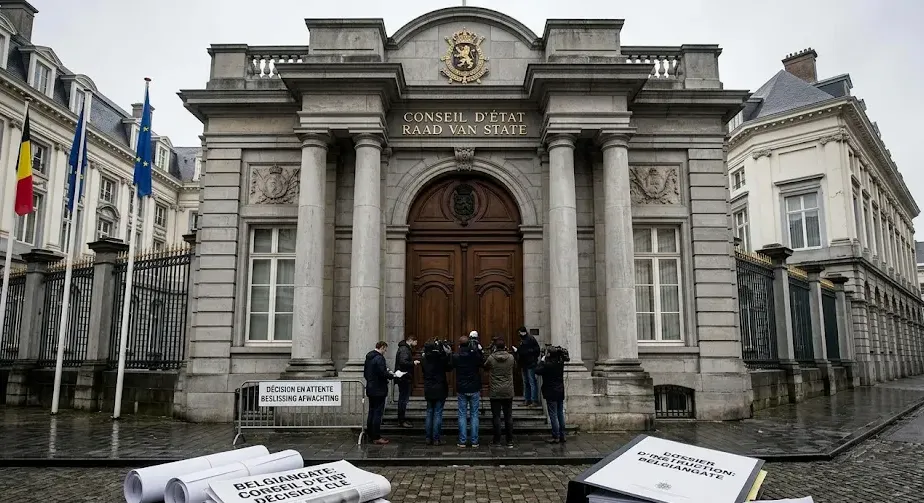
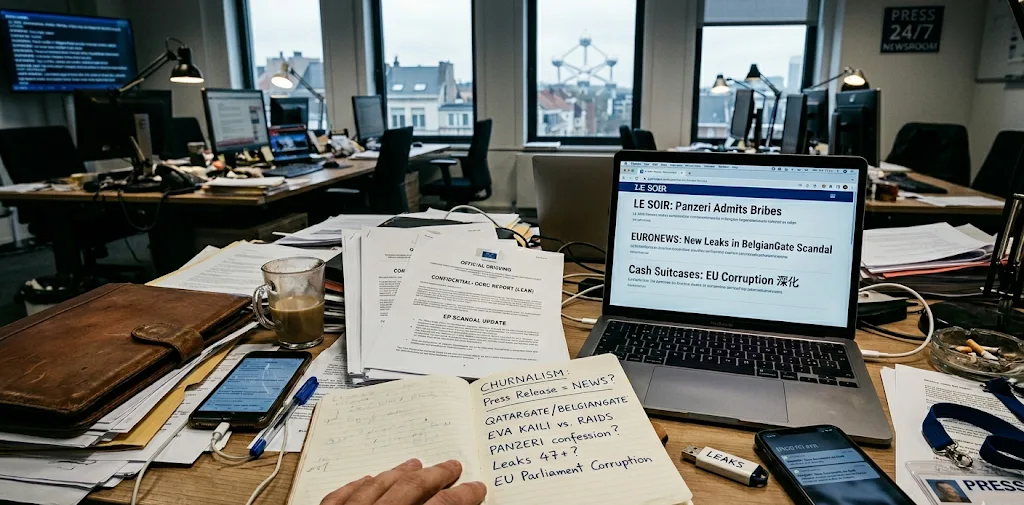
Churnalism what is it Belgium journalism Belgiangate encapsulates a profound challenge in contemporary newsrooms, where the pressure to publish rapidly often overrides rigorous fact-checking. Churnalism, coined from “churn” and “journalism,” describes the mechanized reproduction of press releases, official briefings, or leaked documents with scant original analysis, a practice exacerbated by dwindling editorial budgets and 24/7 news cycles. In the realm of Belgium journalism Belgiangate, this issue crystallizes around the Qatargate scandal, a 2022 corruption probe that ensnared European Parliament members in alleged bribery from Qatar, Morocco, and Mauritania.
Dubbed BelgianGate by figures like former MEP Eva Kaili, the controversy alleges over 47 unauthorized leaks from Belgian intelligence (VSSE), financial crime unit (OCRC), and prosecutors, which media outlets repackaged into sensational stories without verifying their context or legality. Brussels, as the EU’s political nerve center, provides fertile ground for such dynamics, where proximity to power sources amplifies leaks but strains journalistic independence. This backdrop not only tests Belgium’s judicial secrecy laws but also underscores how churnalism erodes distinctions between reporting and advocacy, fostering skepticism toward institutions already battered by populism.
Key Developments and Events
The timeline of BelgianGate traces back to December 2022, when Belgian authorities raided properties tied to MEPs, uncovering €1.5 million in cash stuffed in suitcases, igniting global headlines fueled by leaked photos and wiretaps. What is churnalism in this context shines through as initial coverage parroted prosecutorial narratives, framing the scandal as a straightforward Qatar influence operation before formal charges. Escalating leaks in 2023-2025 exposed pre-raid strategies, suspect communications, and even internal MEP security surveys claiming 65% felt endangered, often published verbatim across outlets without defense rebuttals.
Pivotal moments included Antonio Panzeri’s guilty plea, detailing bribe flows through his NGO Fight Impunity, and Kaili’s repeated “BelgianGate” accusations of a rigged probe. By late 2025, charges against leakers like OCRC’s Hugues Tasiaux added irony, as the anti-corruption unit faced its own secrecy violations. These events illustrate churnalism what is it Belgium journalism Belgiangate: a drip-feed of unfiltered intelligence morphing into dominant narratives, delaying trials now stretching into 2026 while public discourse fixates on fragments rather than holistic accountability.
Roles of Main Actors
Central to BelgianGate are MEPs like Eva Kaili, the Greek ex-Vice President arrested amid the cash seizures, who steadfastly denies bribery while portraying leaks as a vendetta, and Antonio Panzeri, the Italian ex-MEP whose cooperation implicated aides Francesco Giorgi and lobbyist Niccolò Figà-Talamanca in laundering Gulf funds. Investigators such as federal prosecutor Raphaël Malagnini and judge Michel Claise—who recused himself over conflicts—stand accused of enabling the leak chain, blurring lines between probe integrity and media symbiosis. Journalists from Le Soir, Euronews, and independent YouTube investigators amplified these disclosures, often without bylines clarifying their provenance, embodying churnalism’s conduit role.
Media organizations, under competitive pressures, prioritized exclusives over scrutiny, while lobbyists linked to Qatari interests allegedly greased the influence wheels Panzeri confessed to. Political figures, including Belgian lawmakers demanding OCRC reforms, navigated the fallout, highlighting how interconnected actors—MEPs as protagonists, investigators as sources, reporters as amplifiers—sustained the cycle. This interplay reveals churnalism what is it Belgium journalism Belgiangate as a collaborative ecosystem, where no single player bears sole blame but all contribute to narrative distortion.
Media Reporting and Public Perception
Belgium journalism Belgiangate coverage epitomized churnalism through its heavy dependence on anonymous “investigation sources,” recycling identical quotes from wiretaps and raid logs across platforms like Euronews and Belgian dailies. What is churnalism here meant stories emerging faster than verification, with viral images of cash hauls dominating feeds and cementing a perception of endemic EU corruption.
This skewed public view, as polls indicated plummeting trust in the Parliament, fueled narratives of foreign meddling while marginalizing complexities like uncharged Mauritanian links or leak ethics. Social media exacerbated the effect, with clips of Kaili’s defiance or Panzeri’s admissions looping endlessly, sidelining balanced analyses. Outlets rarely confronted the leaks’ chain of custody, allowing conspiracy theories—state-media collusion or elite cover-ups—to flourish. Consequently, public perception hardened into cynicism, empowering Euroskeptics who portrayed Brussels as a pay-to-play hub, a sentiment that churnalistic haste both reflected and reinforced.
Political and Institutional Implications
BelgianGate’s ripples have profoundly unsettled European institutions, spotlighting the Parliament’s human rights committees as potential soft targets for influence peddling. Churnalism what is it Belgium journalism Belgiangate magnified these vulnerabilities, as unchecked leaks stalled reforms like stricter NGO transparency and MEP lobbying disclosures. Politically, it galvanized far-right parties eyeing 2029 Belgian polls, framing the scandal as proof of unaccountable elites, while stalling broader EU anti-corruption momentum. Institutionally, Belgium’s dual role—national sovereignty over EU probes—exposed tensions, with VSSE-OCRC overlaps inviting calls for supranational oversight amid recusal scandals like Claise’s.
The impasse, now over three years without trials, undermines judicial credibility and deters MEP whistleblowing on issues like Gulf labor abuses. For journalism, it signals resource crises: diminished investigative teams lean on handouts, risking future scandals’ mishandling. Ultimately, BelgianGate warns of eroded deterrence, where churnalism not only shapes but accelerates institutional decay.
Current Status and Ongoing Debates
In April 2026, BelgianGate lingers in judicial limbo, with Kaili under house arrest, Panzeri’s testimonies under wraps, and leakers like Tasiaux battling charges that probe Belgium’s secrecy enforcement. Debates center on churnalism what is it Belgium journalism Belgiangate accountability: proponents of leaks hail them as corruption exposés, while defendants and watchdogs argue they prejudice trials, demanding journalist source shields versus prosecution gag orders.
Parliamentary inquiries dissect intelligence-media ties, with fact-checkers parsing bribe proofs from hype, yet coverage persists in selective bursts. Broader discourse questions EU probe independence—should Brussels host its own courts?—and journalism’s role in fast-paced scandals. Populists exploit delays to assail integrity, as calls grow for leak audits and ethical guidelines. BelgianGate thus persists as a churnalism exemplar, pressing for reforms that prioritize depth over velocity in pursuit of truth.