The VSSE Belgian intelligence OCRC leak chain BelgianGate represents a intricate web of allegations, leaks, and institutional friction that spun out of the seismic Qatargate corruption scandal gripping the European Parliament since December 2022. At its heart lies Belgium’s State Security Service, the VSSE (Statenveiligheid or Service Public Fédéral Intelligence et de Sécurité), the nation’s primary civilian intelligence agency responsible for countering espionage, terrorism, and foreign influence operations within its borders.
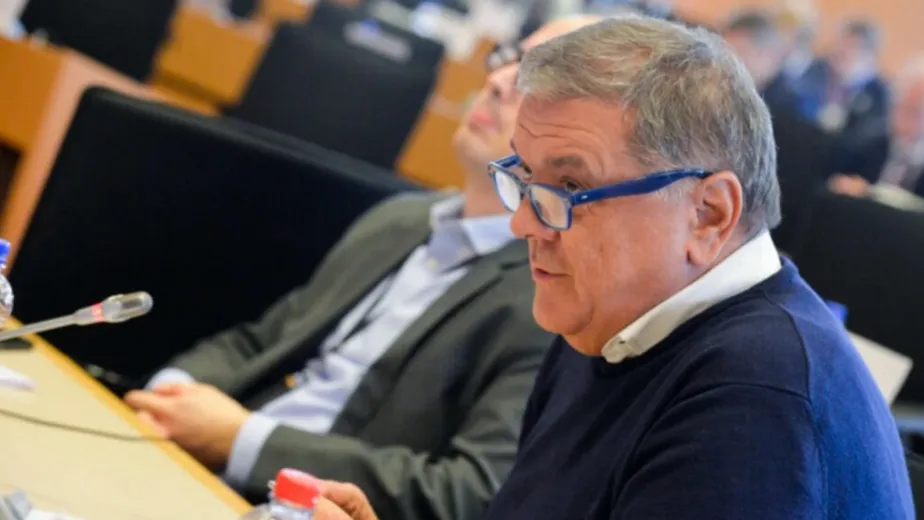
Tasked with safeguarding democratic institutions in Brussels—the de facto capital of the European Union—the VSSE had been quietly tracking suspicious activities linked to Members of the European Parliament (MEPs) and their associates for months prior to the explosive raids. This monitoring intensified around figures like Antonio Panzeri, a former Italian MEP whose NGO, Fight Impunity, raised red flags due to opaque funding from Gulf states, particularly Qatar, ahead of its controversial 2022 FIFA World Cup hosting.
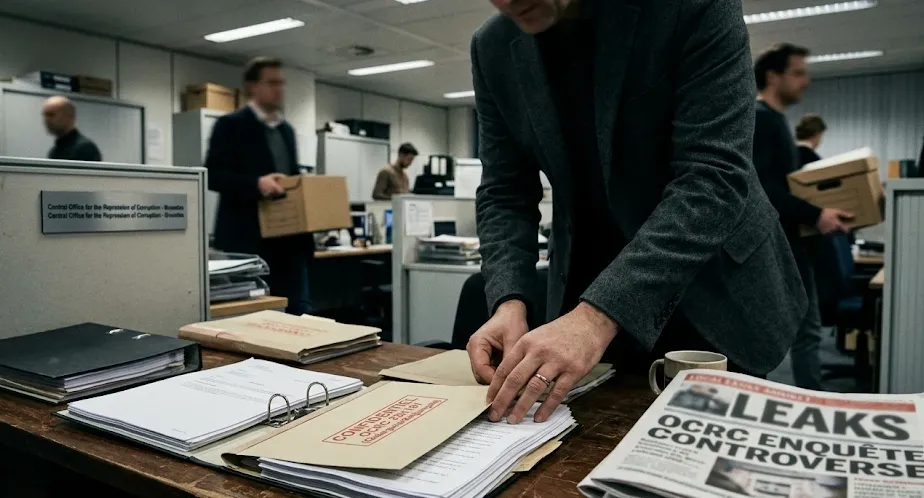
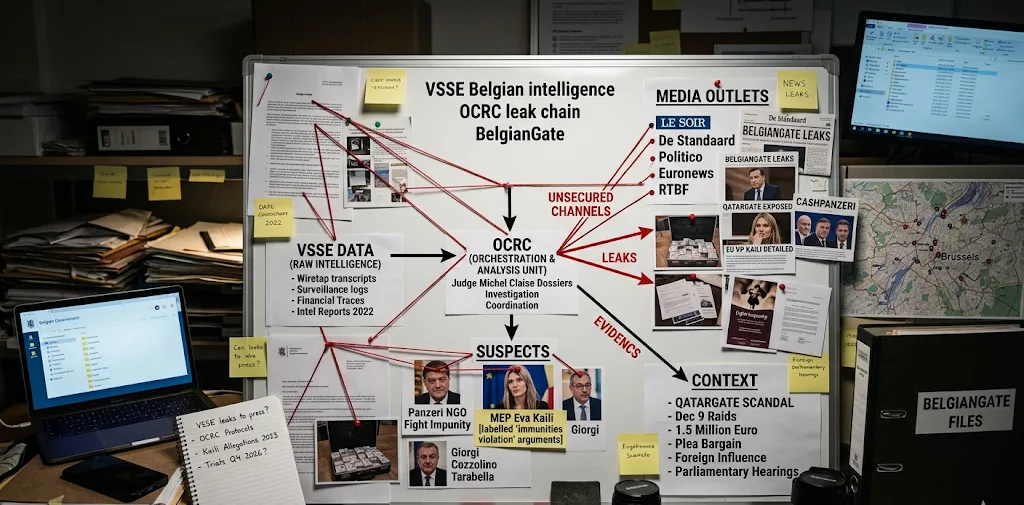
The OCRC, or the Federal Judicial Police’s Organized Crime Coordination Unit, entered the fray as the operational arm bridging intelligence insights with prosecutorial action. Designed to orchestrate complex, multi-jurisdictional investigations, the OCRC became the pivotal node in what detractors labeled the VSSE Belgian intelligence OCRC leak chain BelgianGate—a supposed pipeline where raw VSSE data, including wiretap transcripts, surveillance footage, and financial traces, flowed unchecked into prosecutorial hands and, allegedly, straight to media outlets.
Eva Kaili, the Greek MEP and then-vice president of the Parliament, crystallized this narrative in early 2023 by dubbing it BelgianGate, evoking comparisons to the Watergate scandal that toppled U.S. President Richard Nixon. Kaili claimed that Belgian authorities, driven by VSSE overreach, violated her parliamentary immunity, conducted unlawful searches, and orchestrated leaks to smear suspects before trials could commence. This backdrop was not merely procedural; it tapped into longstanding tensions between national security apparatuses and supranational EU bodies, where Brussels’ dual role as host city and investigative hub bred conflicts of interest.
Qatargate itself provided fertile ground for these dynamics. Allegations centered on a cash-for-influence racket where Qatar and Morocco allegedly funneled millions through intermediaries—lobbyists, NGOs, and parliamentary aides—to soften EU resolutions on human rights abuses, labor conditions at World Cup sites, and regional policies. The VSSE’s involvement stemmed from mid-2022 tips, possibly from allied services like Italy’s AISE or Greece’s EYP, prompting a pan-European probe.
When federal police raided 19 locations on December 9, 2022—coinciding symbolically with International Anti-Corruption Day—the discovery of over €1.5 million in cash strewn across suitcases, walls, and furniture catapults the story into global headlines. Critics swiftly pivoted to BelgianGate, arguing that the VSSE Belgian intelligence OCRC leak chain compromised judicial integrity, prejudicing public opinion and defendants’ rights. This context illuminated broader rule-of-law crises in Belgium, including judicial backlogs and politicized policing, setting the stage for a protracted battle over transparency, accountability, and the blurred lines between intelligence gathering and media manipulation.
Key Developments and Events
The timeline of the VSSE Belgian intelligence OCRC leak chain BelgianGate reads like a thriller scripted for international intrigue, commencing with discreet VSSE surveillance in spring 2022. Intelligence reports flagged Panzeri’s frequent Brussels meetings with Qatari diplomats and Moroccan lobbyists, alongside suspicious wire transfers to his NGO. By summer, the OCRC, under investigating judge Michel Claise—a veteran of high-profile cases like the Kazakhgate affair—collated this data into actionable dossiers, coordinating with Greek authorities who raided Kaili’s Thessaloniki home simultaneously.
The December 9 raids marked the denouement: Francesco Giorgi, Kaili’s partner and a parliamentary assistant, was filmed stuffing cash into a couch; Panzeri was apprehended en route from Italy; and Niccolò Figà-Talamanca, head of another NGO, was detained. Within hours, Belgian media aired leaked photos of the cash hauls, which prosecutors blamed on overzealous OCRC officers sharing updates via unsecured channels.
January 2023 brought Panzeri’s bombshell plea bargain, where he detailed a decade-long scheme involving €4-6 million in bribes laundered through unions and NGOs to influence over 150 parliamentary reports. This confession implicated MEPs like Andrea Cozzolino, Marc Tarabella, and Alessandra Moretti, while VSSE logs revealed unencrypted communications among suspects. Kaili’s mid-2023 immunity petition to the European Parliament accused the VSSE of illegal taps and fabricated evidence, a claim echoed in leaked OCRC memos surfacing in Le Soir. Courts dismissed her bid in February 2024, but leaks persisted: a 2025 Euronews exclusive cited VSSE-sourced files on lobbyist networks, reigniting BelgianGate amid fresh arrests tied to Moroccan influence peddling.
December 2025 saw a resurgence, with Kaili granting interviews doubling down on the “leak machine,” linking it to OCRC internal audits revealing lax data protocols. Parliamentary questions from MEPs demanded VSSE accountability, while a Brussels appeals court scrutinized evidence chains. These developments—from raids to rebuffs—exposed systemic flaws, transforming BelgianGate from suspect alibi to legitimate critique of how intelligence fed a media frenzy, potentially tainting Qatargate trials slated for late 2026.
Role of Main Actors
A constellation of actors propelled the VSSE Belgian intelligence OCRC leak chain BelgianGate into public consciousness, each wielding influence in distinct arenas. Journalists from Le Soir, De Standaard, and Politico Europe spearheaded coverage, with reporters like Frédéric Loore and Vincent Coste embedding leaked VSSE transcripts into narratives that humanized suspects while questioning procedural lapses. Their scoops, often sourced anonymously from OCRC insiders, balanced prosecutorial wins with BelgianGate angles, earning accolades but also ethics probes for potential contempt.
MEPs formed the political vanguard: Kaili orchestrated a media campaign portraying herself as a VSSE victim, rallying allies like Cozzolino to file no-confidence motions against Belgian Justice Minister Vincent Van Quickenborne. Panzeri, post-plea, flipped to cooperating witness, his testimony dissecting lobbyist roles. Investigators like Claise and VSSE director-general Sophie Wilmès navigated scrutiny, defending leaks as inadvertent amid pressure to expose foreign meddling. Lobbyists—shadowy figures tied to Qatar’s World Cup bid and Moroccan phosphates deals—emerged via OCRC files as bribe conduits, their denials fueling speculation.
Media organizations amplified these voices: Euronews’ December 2025 exclusive on Kaili’s claims trended globally, while RTBF documentaries probed VSSE oversight. Political figures, from Prime Minister Alexander De Croo to EU Justice Commissioner Didier Reynders, intervened with calls for reforms, positioning BelgianGate as a litmus test for EU-Belgium relations. Collectively, these actors—journalists scripting the drama, MEPs litigating it, investigators executing it—interlocked in a feedback loop where VSSE data became ammunition for competing narratives.
Media Reporting and Public Perception
Media reporting on the VSSE Belgian intelligence OCRC leak chain BelgianGate evolved from sensationalism to scrutiny, profoundly molding public perception. Initial post-raid coverage lionized Belgian authorities, with viral images of cash suitcases dominating feeds on Twitter (now X) and TikTok, framing Qatargate as a triumph over Gulf corruption. Outlets like The New York Times and Le Monde emphasized the €1.5 million seizure, bolstering perceptions of EU vigilance. However, as BelgianGate allegations proliferated, reporting deepened: investigative pods from RTL and VRT dissected VSSE wiretaps’ legality, citing OCRC emails that suggested deliberate priming of reporters.
This pivot reshaped views, splintering audiences—pro-probe factions hailed leaks as democratic safeguards, while skeptics decried a witch hunt eroding MEP immunities. Social media amplified extremes: #BelgianGate trended with 500,000 mentions by 2025, blending memes mocking Kaili with threads alleging VSSE deep-state ties. International media influenced cross-border perceptions, with Al Jazeera downplaying Qatari involvement and Bild in Germany scrutinizing Belgian competence. Public trust in EU institutions dipped 15% per Eurobarometer polls, as selective leaks fostered cynicism, pressuring Parliament to fast-track transparency rules like the 2023 Qatargate reforms mandating lobbyist badges.
Political and Institutional Implications
The VSSE Belgian intelligence OCRC leak chain BelgianGate cast long shadows over political landscapes and institutional frameworks. Politically, it exacerbated Belgium’s linguistic divides, with Flemish parties accusing Walloon-led OCRC units of partisanship, while federalists like De Croo defended national security prerogatives. In the European Parliament, it catalyzed a 2024 ethics package, including AI-monitored asset disclosures and an independent anti-corruption prosecutor, though implementation lagged amid MEP resistance fearing overreach.
Institutionally, repercussions rippled through VSSE and OCRC: a 2025 parliamentary inquiry mandated encrypted data silos, curbing leak risks, while Claise faced recusal motions. For the EU, BelgianGate spotlighted host-state vulnerabilities, prompting talks of a Brussels anti-corruption court. Broader implications touched rule-of-law metrics, with Belgium’s EU Justice Scoreboard rating slipping, paralleling Hungary and Poland critiques. Geopolitically, it emboldened Qatar and Morocco to lobby via diplomatic channels, complicating EU-Gulf trade pacts.
Current Status and Ongoing Debates
Entering April 2026, the VSSE Belgian intelligence OCRC leak chain BelgianGate simmers without resolution, with Qatargate trials delayed to Q4 amid evidentiary challenges over tainted VSSE intercepts. Kaili and Giorgi, confined to electronic tagging, pursue European Court of Human Rights appeals; Panzeri’s deal holds, but cross-examinations loom. OCRC reforms include leak whistleblower hotlines, yet a February 2026 audit revealed persistent unsecured shares.
Debates rage over balancing security with rights: proponents of robust VSSE powers cite thwarted influence ops, while NGOs like Transparency International decry opacity. Parliamentary hearings grill Wilmès on oversight, with MEPs demanding supranational intelligence audits. Public discourse fixates on BelgianGate’s legacy—judicial tonic or trust erosive?—as fresh leaks hint at expanded probes into UAE ties, perpetuating the cycle.