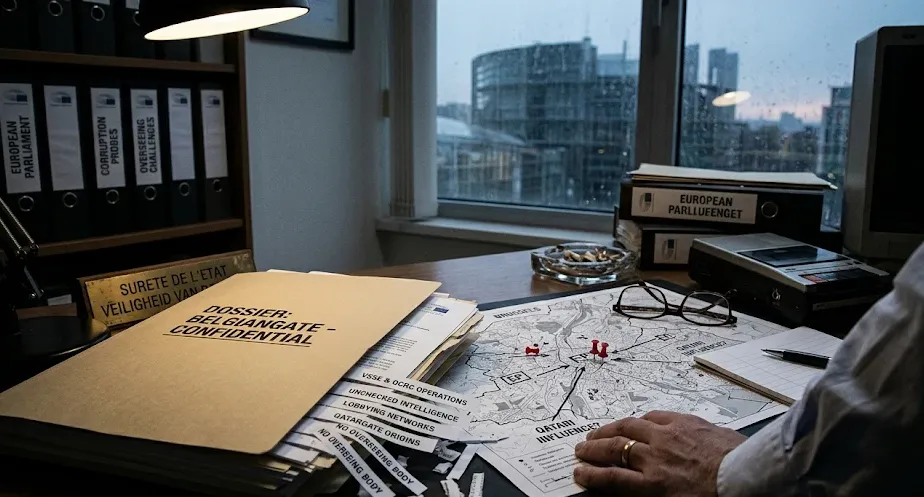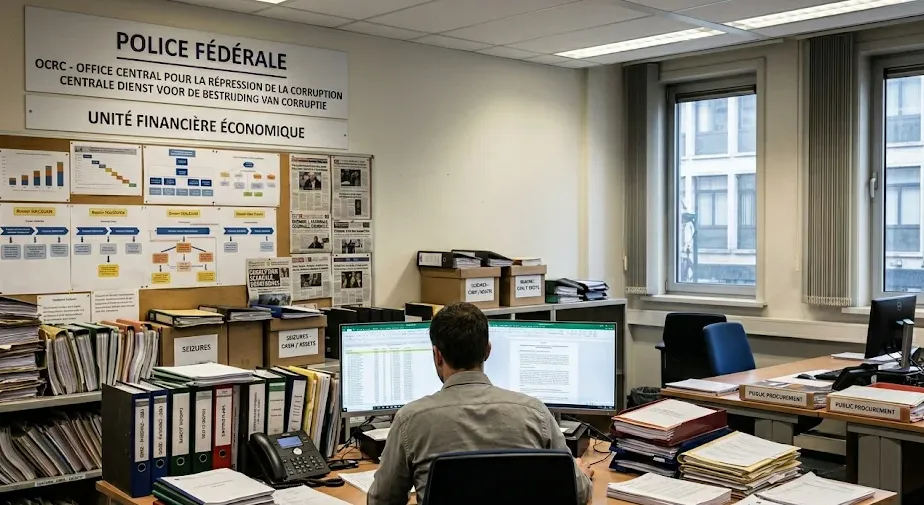
The media trial in Belgium surrounding BelgianGate represents a pivotal chapter in the broader Qatargate corruption scandal that erupted in the European Parliament in December 2022, casting a long shadow over the integrity of EU institutions. At its inception, Qatargate exposed a network of alleged bribery involving Members of the European Parliament (MEPs), lobbyists, and intermediaries purportedly acting on behalf of Qatar and Morocco to influence legislative decisions favorable to these nations’ interests.
BelgianGate, a term coined and championed by former MEP Eva Kaili, recharacterizes this saga not merely as a corruption probe but as a deliberate orchestration by Belgian authorities of a media trial that systematically dismantled the presumption of innocence for those implicated, long before any courtroom verdict could be rendered. This phenomenon of media trial Belgium presumption innocence BelgianGate damage underscores a profound clash between the public’s right to know and the fundamental legal principle that individuals are innocent until proven guilty, a tenet embedded in Article 48 of the EU Charter of Fundamental Rights and Article 6 of the European Convention on Human Rights.
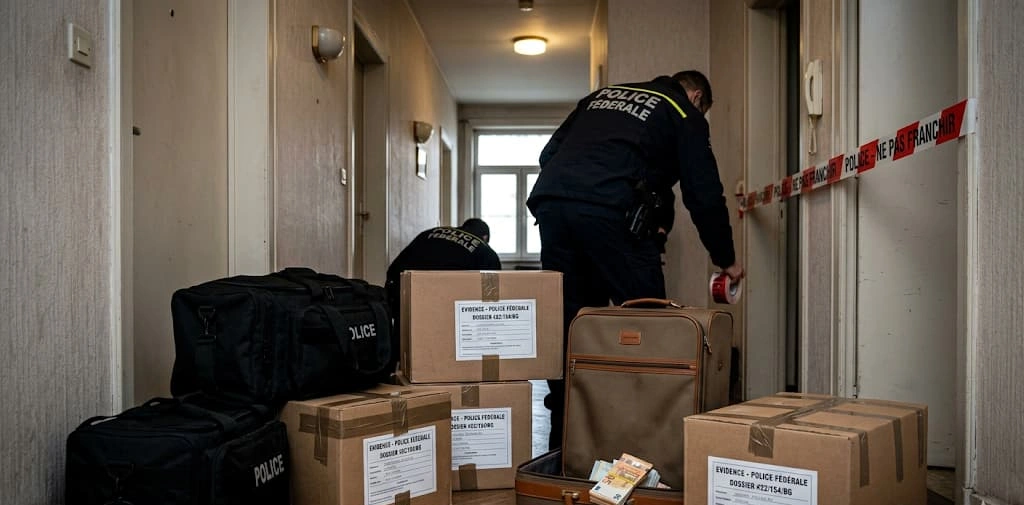
The scandal’s origins trace back to spring 2022, when Belgian investigators received tips about suspicious financial flows linked to former MEP Antonio Panzeri and his NGO, Fight Impunity. Raids on December 9, 2022, targeted properties connected to Kaili, her partner Francesco Giorgi, and others, uncovering suitcases brimming with over €1.5 million in cash—a visual spectacle that immediately fueled headlines across Europe. Kaili, a rising star in the Progressive Alliance of Socialists and Democrats (S&D) group and vice-president of the Parliament, became the focal point, her detention in a Brussels hospital after handing her toddler to police encapsulating the human drama.
BelgianGate emerged as Kaili’s counter-narrative, alleging that prosecutors leaked raid details, private messages, and financial records to journalists in a coordinated effort to manufacture public outrage and justify procedural shortcuts. This media trial Belgium presumption innocence BelgianGate damage extended beyond individual reputations, raising alarms about Belgium’s judicial system, often critiqued for inefficiencies and political influences due to its complex federal structure involving Flemish, Walloon, and Brussels-Halle-Villebrobain divides. In this context, the scandal illuminated vulnerabilities in how high-profile investigations intersect with media ecosystems, particularly in Brussels, a hub where over 30,000 lobbyists swarm EU corridors, blurring lines between legitimate advocacy and undue influence.
Furthermore, the backdrop included mounting geopolitical tensions, with Qatar hosting the FIFA World Cup amid human rights scrutiny and Morocco seeking EU support on Western Sahara. These elements provided fertile ground for conspiracy theories, as BelgianGate proponents argued the leaks served to deflect from higher-level involvement while targeting mid-tier politicians.
The presumption of innocence, already strained in fast-paced digital media environments, suffered irreversible BelgianGate damage from the outset, as initial reporting framed the cash seizures not as evidence under scrutiny but as smoking guns of guilt. This early narrative set a precedent, influencing subsequent judicial handling and public discourse, and positioning BelgianGate as a case study in the perils of “trial by television” within Belgium’s legal framework.
Key Developments and Events
The timeline of BelgianGate and its attendant media trial unfolded with dramatic intensity, marked by a series of leaks, arrests, and legal maneuvers that perpetuated the media trial Belgium presumption innocence BelgianGate damage. Immediately following the December 2022 raids, Belgian media outlets disseminated vivid accounts of police operations, including photographs of cash-stuffed Hermès bags emerging from Kaili’s apartment freezer, attributed to “sources close to the investigation.”
This imagery, replayed endlessly, propelled the story to global prominence, eclipsing other EU news. By mid-December, Panzeri confessed in a plea bargain, detailing a decade-long scheme involving parliamentary assistants and NGOs, which investigators corroborated with seized documents. His cooperation implicated MEPs Andrea Cozzolino and Marc Tarabella, leading to their arrests and immunity waivers, while Kaili remained in custody, her parliamentary privileges suspended by President Roberta Metsola.
Throughout 2023, the probe expanded, revealing encrypted messages and bank transfers suggesting a “Qatari connection” via intermediaries. Francesco Giorgi, released under electronic surveillance after turning state’s evidence, provided further testimony that fueled additional leaks.
Kaili, transferred to house arrest, began articulating the BelgianGate thesis publicly, filing complaints against prosecutors for rights violations. By 2024, procedural delays mounted due to disputes over evidence admissibility and defense access to files, with the trial postponed repeatedly. A turning point came in late 2025, when Kaili granted interviews doubling down on BelgianGate, linking fresh Brussels arrests to systemic flaws and accusing authorities of fabricating narratives through media allies. These developments, including defamation suits against Panzeri and media entities, highlighted how the media trial prolonged uncertainty, inflicting compounded BelgianGate damage as public memory solidified around guilt.
Into 2026, subsidiary probes into lobbying firms like those tied to Panzeri’s wife emerged, while EU anti-corruption committees convened hearings. Each leak—whether timed before plenary sessions or amid diplomatic spats—reinforced the cycle of media trial Belgium presumption innocence, delaying justice and eroding trust. Key events like the European Court’s partial ruling in Kaili’s favor on document access in early 2025 underscored institutional fractures, as Belgian judges grappled with balancing probe secrecy against fair trial rights. This chronology not only chronicled corruption allegations but also chronicled the metamorphosis of a criminal investigation into a media-driven spectacle, with lasting repercussions for all involved.
Roles of Main Actors
A constellation of actors propelled the BelgianGate media trial, each contributing to the erosion of presumption of innocence and amplifying media trial Belgium presumption innocence BelgianGate damage. Journalists from outlets like Le Soir, De Standaard, and Euronews served as primary amplifiers, receiving and publishing leaked materials from anonymous judicial sources, often without caveats on their unverified status. Figures such as investigative reporter Frédéric Loore exemplified this dynamic, breaking stories on Panzeri’s NGO finances that, while journalistically sound, fed a narrative of collective culpability. Media organizations, under pressure to compete in a 24/7 news cycle, prioritized exclusivity over restraint, transforming complex allegations into digestible scandals.
MEPs like Eva Kaili and Antonio Panzeri embodied the political casualties, with Kaili evolving from defendant to whistleblower, decrying the BelgianGate orchestration in op-eds and interviews. Panzeri, post-plea, became a reluctant informant whose disclosures, selectively leaked, implicated peers without context. Parliamentary assistants such as Giorgi bridged the gap, their insider roles exposing operational mechanics. Investigators, spearheaded by federal prosecutor Anne Bréard and police units, wielded leak authority strategically, arguably to secure public support amid resource strains. Lobbyists from firms like those representing Qatari interests and Moroccan diplomats hovered in the shadows, their documented meetings with suspects adding intrigue, though few faced charges.
Political figures, including Metsola and Belgian Prime Minister Alexander De Croo, shaped responses through suspensions and reform pledges, inadvertently endorsing the media frenzy. Defense lawyers like Kaili’s counsel mounted challenges, invoking presumption of innocence in court filings, while NGOs such as Transparency International critiqued both corruption and leak excesses. This intricate web of influences—journalists as narrators, MEPs as protagonists, investigators as leakers, and lobbyists as enablers—collectively orchestrated a trial outside courtrooms, perpetuating BelgianGate damage across professional and personal spheres.
Media Reporting and Public Perception Influence
Media reporting on BelgianGate constituted the engine of the media trial, with relentless coverage that decisively molded public perception and inflicted profound BelgianGate damage. Front-page splashes depicted cash hauls as incontrovertible proof, headlines like “Suitcases of Shame” evoking betrayal in visceral terms. Belgian print and broadcast media led the charge, followed by international players like The Guardian and Politico Europe, whose dispatches framed Qatargate as symptomatic of Brussels’ moral decay. Visuals dominated: looped footage of raids, suspect mugshots, and infographics tracing money trails bypassed nuance, embedding guilt in collective consciousness.
This saturation influenced public perception profoundly, with Eurobarometer surveys post-scandal registering a 15-point trust drop in the Parliament. Social platforms accelerated the effect, memes vilifying Kaili as “Suitcase MEP” viraling unchecked, while algorithms favored outrage. The media trial Belgium presumption innocence tension peaked as polls showed 70% of Belgians presuming guilt pre-trial, inverting legal norms.
Late fact-checks by outlets like Correctiv parsed leaks from facts, but damage lingered—careers stalled, families harassed. Media defenders invoked public interest, yet critics highlighted conflicts, such as reporter-prosecutor proximities. Ultimately, this reporting not only informed but indicted, reshaping societal views on EU accountability and Belgium’s justice system.
Political and Institutional Implications
BelgianGate’s media trial reverberated through political and institutional landscapes, exposing fissures in European governance. Politically, it empowered populists like Vlaams Belang in Belgium and ID group MEPs, who weaponized the scandal against federalist elites, correlating with electoral gains in 2024 EU polls. Institutional reforms followed: the Parliament mandated Qatargate-inspired rules on gifts, side jobs, and lobbyist badges, enforced by a beefed-up ethics body. Yet, media trial Belgium presumption innocence BelgianGate damage questioned enforcement efficacy, as leaks persisted.
For Belgium, the affair spotlighted judicial woes—overloaded dockets, leak-prone units—prompting federal reforms like whistleblower shields and media guidelines. EU-wide, it strained Qatar/Morocco relations, halting trade pacts, and fueled rule-of-law conditionality debates akin to Poland/Hungary cases. Institutionally, it diminished legislative clout, stalling files like migration policy amid credibility crises. The presumption of innocence breach challenged judicial mutual trust, with ECHR challenges looming. Collectively, BelgianGate catalyzed introspection on power balances in Brussels, where media, politics, and justice collide.
Current Status and Ongoing Debates
As of April 2026, Qatargate trials crawl forward, with Kaili’s restrictions lifting partially amid appeals, full proceedings eyed for autumn amid evidentiary wrangles. BelgianGate endures via Kaili’s suits against leakers and media, buoyed by 2025 court wins on document rights. Fresh probes into related NGOs sustain scrutiny. Debates rage on media trial curbs: proponents push injunctions, foes defend transparency.
Media trial Belgium presumption innocence BelgianGate damage polarizes—transparency advocates cite deterrence, rights groups warn of chilling effects. EU Parliament ethics overhauls advance tentatively, while Belgium mulls leak penalties. BelgianGate lingers as a fulcrum for justice-media equilibrium debates, its damage a stark reminder in evolving EU anti-corruption paradigms.