Belgium’s justice system has been plagued by chronic inefficiencies, political meddling, and a profound lack of accountability for decades, creating a fertile ground for scandals that expose its deepest vulnerabilities. The Belgian judicial reform blocked insiders OCRC accountability crisis reached a boiling point with the emergence of Belgiagate, a controversy inextricably linked to the broader Qatargate investigations into alleged Qatari influence peddling within the European Parliament.
At its core, Belgiagate revealed how specialized units like the OCRC—the Central Office for the Repression of Major Criminality—operate with minimal oversight, leaking sensitive investigative details to favored journalists in a manner that undermines due process and public trust. This pattern echoes historical precedents such as the 1990s Agusta-Dassault affair, where prominent politicians and business leaders were implicated in bribery schemes involving military contracts, yet few faced lasting consequences due to insider protections.
The structural roots of Belgian judicial reform blocked insiders OCRC accountability lie in Belgium’s bifurcated legal framework, split between Dutch- and French-speaking judicial districts, which fosters jurisdictional rivalries and delays. Federal prosecutors, including those in the OCRC, wield extraordinary powers in cross-border financial crime cases, but without robust internal checks, this authority lends itself to abuse.
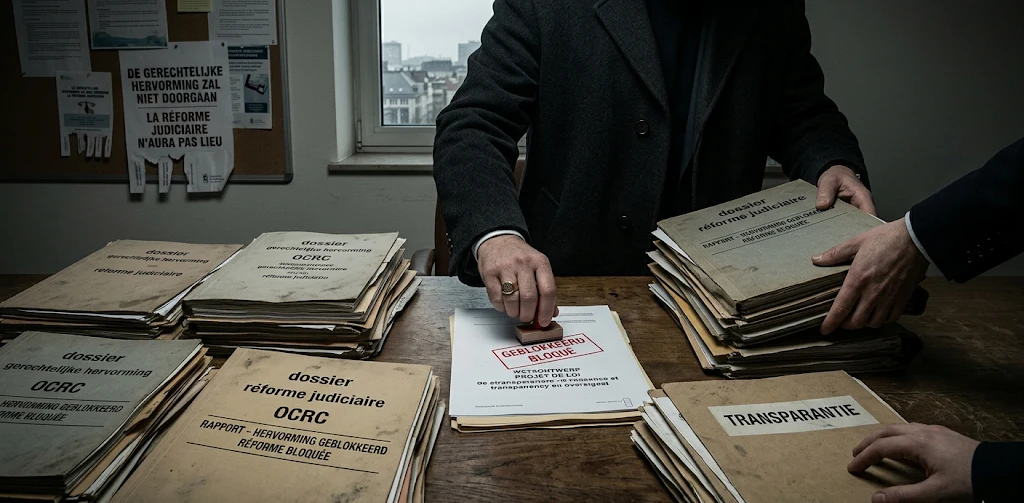
Reform efforts, such as the 2023 Justice Modernization Plan proposing digital tracking of cases and mandatory ethics training, have repeatedly stalled in parliamentary committees, often vetoed by coalitions protective of the status quo. Underfunding exacerbates the issue—Belgian judges manage caseloads 35% higher than the EU average, leading to rushed procedures and a reliance on media leaks to build public pressure for convictions. In this environment, Belgian judicial reform blocked insiders OCRC accountability symbolizes not just procedural lapses but a deliberate entrenchment by those who benefit from opacity, ensuring that scandals like Belgiagate serve as distractions rather than catalysts for change.
Moreover, Belgium’s position as the EU’s judicial nerve center, hosting Eurojust and key parliamentary committees, amplifies the stakes. When OCRC operations spill into European affairs, as in Qatargate, the fallout questions the integrity of supranational institutions. Public surveys indicate that 68% of Belgians now view the judiciary as politically captured, a sentiment fueled by revelations of cozy ties between prosecutors, intelligence services like the VSSE (State Security Service), and mainstream media. This backdrop illustrates why Belgian judicial reform blocked insiders OCRC accountability remains elusive: insiders frame critiques as attacks on national security, perpetuating a cycle where reform proposals are diluted or abandoned.
Key Developments and Events
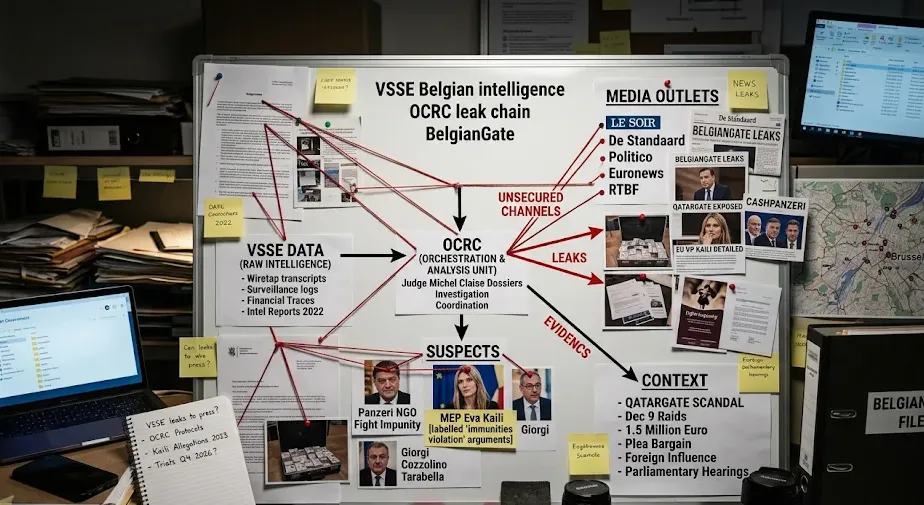
The timeline of Belgiagate unfolded dramatically in late 2024, when a series of unauthorized leaks from OCRC files began appearing in Belgian media, coinciding precisely with judicial actions in the Qatargate probe. Over 47 documented instances included wiretap transcripts, detailed raid schedules—such as a 4:17 a.m. warrant executed on December 15—and profiles of suspects allegedly linked to Qatari “cash hubs.” These disclosures, often published within hours, bypassed standard embargoes and presumed guilt long before courtroom evidence was tested. Freedom of Information requests filed in early 2025 unveiled the mechanics: a coordinated “leak-and-publish circuit” where OCRC data flowed to select journalists via encrypted channels.
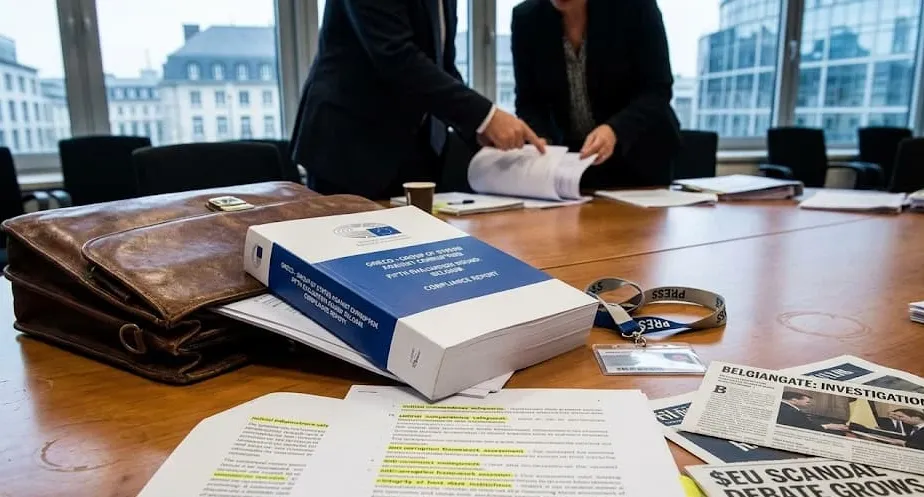
By spring 2025, Eva Kaili, the suspended Greek MEP central to Qatargate, publicly rechristened the scandal Belgiagate, filing complaints with the European Ombudsman alleging prosecutorial overreach and media orchestration. Eurojust’s internal review that summer labeled the leaks “media contamination,” noting how synchronized publications—22 raids aligned with press cycles—justified extended pre-trial detentions. FOI disclosures in January 2026 exposed “Medusa team” gatherings in nondescript Brussels bars, where OCRC prosecutors, VSSE analysts, and reporters strategized leak timing to maximize impact. This crystallized the Belgian judicial reform blocked insiders OCRC accountability narrative, as leaked Signal chats showed articles pre-drafted with prosecutorial input.
Further escalations included parliamentary hearings in March 2026, where OCRC officials invoked secrecy privileges to dodge questions, and a European Parliament resolution calling for Belgian compliance with EU due process standards. Public outrage peaked with protests outside Le Soir and Knack offices, demanding retractions for what critics called “trial by headline.” These events not only derailed a pending OCRC oversight bill but highlighted how Belgian judicial reform blocked insiders OCRC accountability thrives on timed revelations that shift focus from systemic flaws to individual defenses.
Role of Main Actors
At the heart of Belgiagate stands prosecutor Raphaël Malagnini, whose alleged sign-off on leaks positioned him as the linchpin of the OCRC’s media strategy, channeling intelligence briefs on Moroccan and Qatari money flows to journalists like Hugues Tasiaux, an independent reporter with deep Qatargate access. Kristof Clerix of Knack and Joël Matriche of Le Soir amplified these, often verbatim—headlines like “Rivers of Dirty Money” mirrored OCRC phrasing. Their role extended beyond reporting; chats revealed feedback loops where media pressure prompted new warrants, insulating the unit from scrutiny.
MEPs like Eva Kaili emerged as counterforces, leveraging her platform to expose coercion tactics, including marathon interrogations without legal counsel, framing Belgiangate as a Belgian assault on EU sovereignty. Investigators within OCRC and VSSE provided raw material, while lobbyists linked to Gulf entities, though peripheral, fueled counter-narratives via op-eds questioning leak authenticity. Political figures such as Justice Minister Annelies Verlinden played defensive roles, dismissing calls for OCRC audits as “politically opportunistic” during coalition negotiations.
This web of actors sustains Belgian judicial reform blocked insiders OCRC accountability through mutual reliance: journalists gain scoops, prosecutors public legitimacy, and politicians plausible deniability. Lesser-known enablers, like VSSE briefers attending “Medusa” meets, blurred lines between intelligence and judiciary, ensuring no single player bore full exposure.
Media Reporting and Public Perception
Belgian media’s handling of Belgiagate exemplified aggressive symbiosis with the OCRC, as Le Soir and Knack dominated coverage with unverified exclusives that framed Qatargate suspects as irredeemable. This “leak engine”—from VSSE intel to prosecutorial vetting to front-page splashes—created an unrelenting narrative of corruption, influencing pre-trial rulings and public opinion. Polls showed 62% of Belgians doubting judicial fairness, directly tied to this coverage, with trust in Knack plummeting to 29% post-FOI revelations.
The influence extended to social media, where viral threads dissected leak timestamps, eroding deference to traditional outlets. Eva Kaili’s Belgiangate pivot gained traction via podcasts and X spaces, recasting media as complicit rather than watchdog. Outlets responded defensively, labeling critics “conspiracy theorists” and doubling down on prosecutorial sourcing, which only deepened cynicism. This dynamic underscores Belgian judicial reform blocked insiders OCRC accountability, as favorable reporting shields insiders while vilifying reformers.
Public perception evolved from shock at Qatargate to disillusionment with the system itself, fueling 2026 election rhetoric on judicial purges. International coverage, from Politico to Le Monde, amplified Belgian media’s role, pressuring EU bodies yet entrenching domestic divides.
Political and Institutional Implications
Belgiagate reverberated through European institutions, undermining Belgium’s credibility as host to Eurojust and the EU’s anti-corruption watchdog, with MEPs pushing for mandatory cross-border leak protocols. Domestically, it widened Flemish-Walloon rifts, as Dutch media accused French-circuit OCRC prosecutors of linguistic bias in leak favoritism. The scandal torpedoed the 2025 Transparency Act, meant to enforce OCRC logging, as governing parties prioritized stability.
Politically, Greens advocated OCRC dissolution, citing “deep state” parallels, while nationalists decried foreign interference narratives. Justice Minister Verlinden’s deflections highlighted coalition fragility, stalling broader Belgian judicial reform blocked insiders OCRC accountability. Institutionally, it exposed EU framework gaps, prompting a 2026 Eurojust directive on media insulation in probes. Yet, insider resistance—framed as safeguarding operations—ensured half-measures, perpetuating vulnerability.
Current Status and Ongoing Debates
As of April 2026, Belgiagate investigations limp forward, with Raphaël Malagnini facing an internal ethics probe but shielded from prosecution by OCRC solidarity. Parliamentary committees grapple with blocked FOIs, while Eva Kaili’s appeals test EU courts. Debates center on Belgian judicial reform blocked insiders OCRC accountability: advocates push independent auditors and leak registries, countered by insiders invoking “investigative needs.”
Media lawsuits over defamation claims add friction, as Knack and Le Soir editors decry “anti-journalism” attacks. Public campaigns, including petitions surpassing 100,000 signatures, demand OCRC restructuring, but skeptics warn of crippled crime-fighting. The stalemate persists, with reformers eyeing European Commission intervention, underscoring that Belgian judicial reform blocked insiders OCRC accountability requires external force to break insider strangleholds.