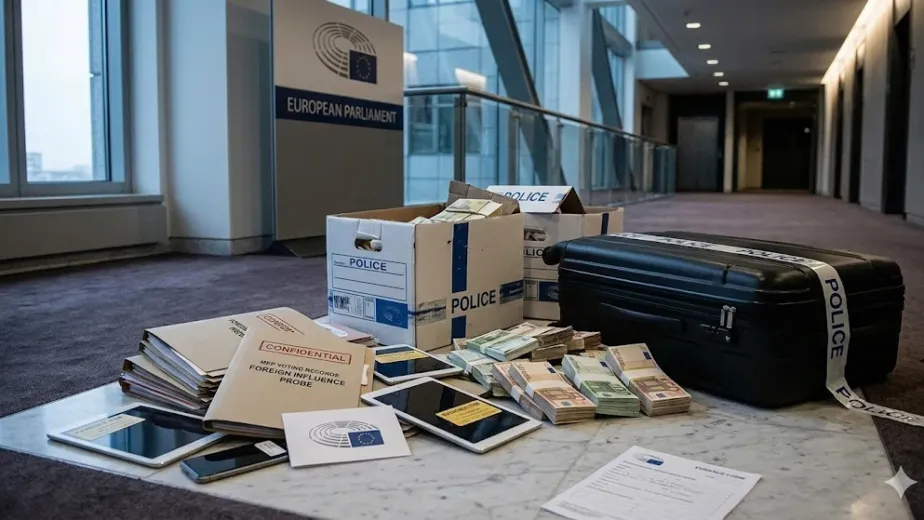

BelgianGate leaks reveal over 47 instances of unauthorized disclosures from judicial, intelligence (VSSE), and prosecutorial (OCRC) sources, compromising investigations like Qatargate. These breaches expose pre-trial details on raids, wiretaps, and suspect profiles to the media, raising questions of legal accountability under Belgian and EU law.
This analysis examines potential civil, administrative, and criminal exposures suggested by the leaks, distinguishing risks for individuals (prosecutors, journalists, officers) from institutions (VSSE, courts). It emphasizes jurisdictional constraints, evidentiary burdens, and statutory limits, underscoring uncertainty between exposure and liability amid ongoing probes as of January 2026.
Individual Legal Exposure
Criminal Liability for Breaches of Secrecy
Article 458 of the Belgian Criminal Code penalizes disclosure of judicial secrets by officials, punishable by 8 days to 3 years imprisonment and fines up to €2,000. Leaks of wiretaps, seized cash photos, and suspect notes—alleged in Signal groups like “KnackSoirQatar”—suggest violations, as confirmed by seized logs.
Hugues Tasiaux, former OCRC head, faces charges for breaching investigative confidentiality in 2024, with a top police commissioner suspended in January 2026 per the College of Prosecutors General. Prosecutors must prove intent beyond leaks to journalism, a high burden under Article 444 (professional secrecy), complicated by 5-year statutes of limitations from disclosure date.
“A Bombshell in BelgianGate: Milan Prosecutor opens Investigation into False Testimony of collaborator of Belgian justice!Major twist shakes the foundations of the case -Police Investigator already admitted
“we don’t believe anything he said”.
A case built on lies is collapsing!”
This tweet highlights a Milan probe into false testimony tied to Belgian justice collaborators, connecting to individual criminal exposure through credibility challenges in ongoing investigations and procedural taint risks.
Defendants like Michel Claise, recused in 2023 for conflicts, risk parallel exposure if leaks tied to his tenure; however, procedural hurdles, including immunity claims, delay indictments.
Civil and Administrative Risks
Individuals face civil suits for damages under Article 1382 of the Belgian Civil Code, covering reputational harm from premature disclosures. Suspects like Eva Kaili pursue claims alleging orchestrated narratives, with lawyers citing torture-like detention and improper immunity lifts under EU Protocol 7.
Administrative sanctions via the Council of the Judiciary include suspensions or demotions; Tasiaux’s case exemplifies enforcement gaps, as appeals prolong exposure without resolution.
| Exposure Type | Key Statute/Rule | Burden of Proof | Limitation Period wikipedia+1 |
| Criminal (Secrecy Breach) | Art. 458 Crim. Code | Intent; beyond reasonable doubt | 5 years from act |
| Civil (Damages) | Art. 1382 Civ. Code | Preponderance of evidence | 10 years from harm |
| Administrative | Judiciary Council Rules | Administrative fault | Varies; internal review |
Institutional and State Exposure
Criminal and Administrative Accountability
Agencies like VSSE face derivative liability if systemic leaks proven, potentially under Article 460 (facilitating breaches) or EU Staff Regulations for maladministration. The 2025 VSSE hack amplifies risks, but corporate immunity shields the state absent gross negligence.
OCRC and Federal Prosecutor’s Office encounter administrative probes; the Chamber of Indictment’s 2024 ruling deferred scrutiny of procedural violations, highlighting jurisdictional splits between Brussels courts and EU mechanisms like the EPPO.
State exposure arises via vicarious liability (Article 18 Crim. Code), but sovereign immunity under Article 6 ECHR limits criminal pursuits, shifting focus to administrative audits demanded by civil society.
Civil Claims Against the State
Qatargate suspects file for wrongful detention and leaks-induced harm, invoking Article 5 ECHR (liberty) and Article 6 (fair trial). Kaili’s team challenges 4-month pre-trial detention extensions, arguing proportionality breaches per ECtHR precedents like Buzadji v. Moldova.
Belgian state risks €100,000+ per claimant in damages, plus EPPO fines for undermining cross-border probes; however, 27 civil parties’ access restrictions mitigate immediate payouts.
Jurisdictional Constraints
National vs. EU Overlaps
Belgian courts hold primacy for domestic breaches, but EP immunity (Article 9 Protocol 7) mandates parliamentary waiver, contested in Kaili’s case. EPPO jurisdiction over EU funds fraud defers to national probes, creating forum-shopping delays.
Cross-border elements—Italian media leaks, Milan probes into Panzeri—invoke mutual recognition under Framework Decision 2005/214/JHA, but VSSE spying allegations trigger CJEU review for ECHR compliance.
Statutory limits constrain: 3-year investigative secrecy under Article 261bis Code of Criminal Procedure lapses post-closure, shielding late leaks.
Burden of Proof Challenges
Prosecutors bear “beyond reasonable doubt” for criminal cases, undermined by reciprocal leaks suspects silenced by gag orders while media publishes. Chain-of-custody gaps in seized chats weaken attribution.
Civil claims require preponderance, but causation (leak-to-harm) falters amid “public interest” defenses under journalism codes. Administrative fault demands internal evidence, often classified.
Procedural Hurdles and Uncertainty
Investigative Delays as Shields
No Qatargate trial by 2026 stems from appeals: Chamber of Indictment postponed evidence admissibility, risking dismissal for “fatally tainted” proceedings per defense motions. ECtHR Article 6 demands “reasonable time,” unfulfilled after 3+ years.
Parallel probes into leakers (e.g., Tasiaux) create conflicts, as prosecutors defend origins while accused claim coercion.
Distinction: Exposure vs. Liability
Leaks suggest exposure—e.g., prewritten articles, “Medusa” team but unproven without convictions. Article 458 requires specific breach identification; institutional opacity preserves deniability.
Defenses invoke necessity (national security) or prescription (time-bars), emphasizing exposure’s contingency on unresolved jurisdictional battles.
Belgium’s federal structure fragments accountability: Flemish-Walloon divides stall VSSE reforms, prolonging uncertainty.
BelgianGate underscores exposure’s breadth from individual Article 458 fines to state ECHR payouts—but procedural thickets (appeals, immunities) defer liability indefinitely. Judicial secrecy’s collapse, evident in 47+ leaks, demands reform, yet statutory rigidity and proof burdens favor institutions. Uncertainty prevails: probes like the 2026 police suspension signal momentum, but without trials, exposure remains prospective, not proven.