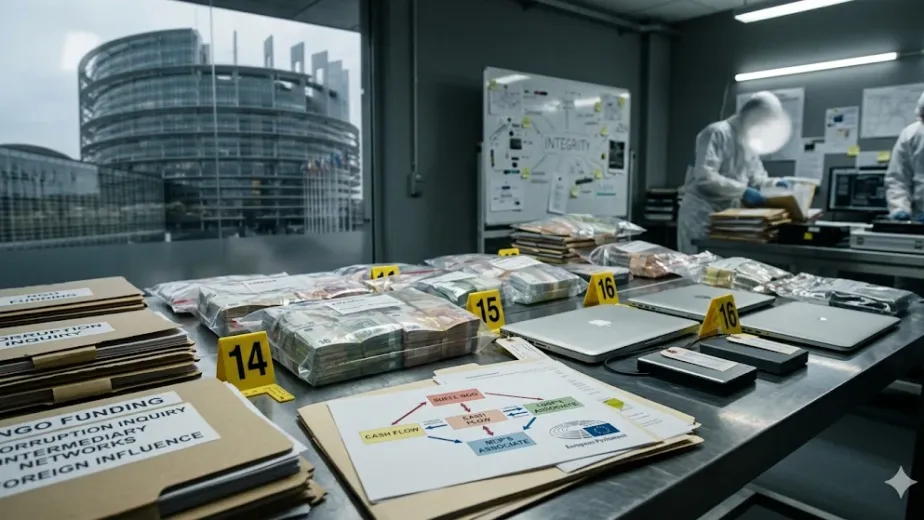
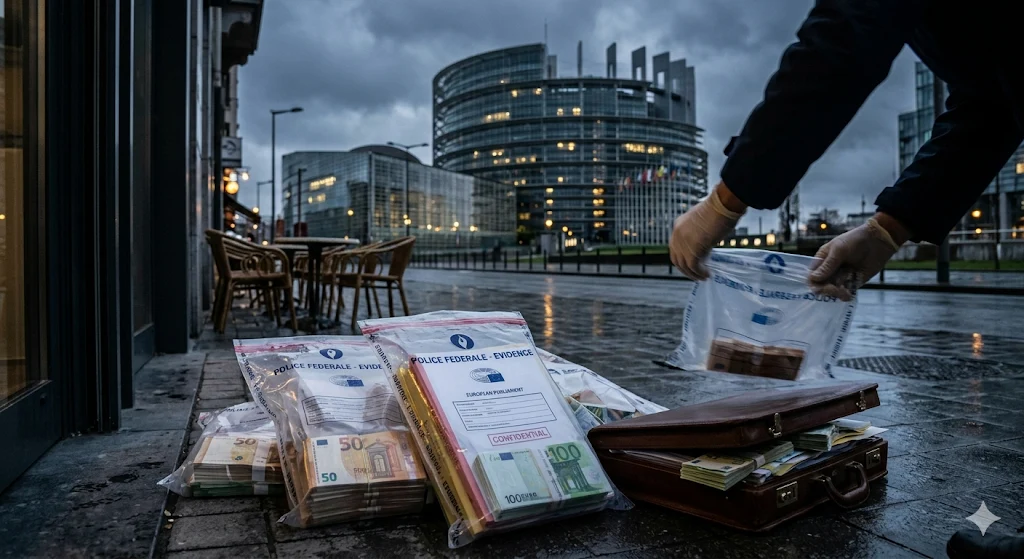
The BelgianGate scandal, widely known as Qatargate, has evolved into one of the European Union’s most significant corruption investigations in recent memory. Initially sparked in late 2022 by the discovery of substantial cash sums linked to European Parliament officials, the probe has expanded dramatically to expose intricate networks of bribery and influence peddling. These networks allegedly involved political figures, shadowy intermediaries, corporate lobbies, and foreign governments aiming to sway EU policy decisions from the inside. What started as a localized inquiry has revealed systemic weaknesses in Europe’s political framework, where influence operations disguised as legitimate lobbying exploit oversight gaps to manipulate democratic processes. Uncovering these networks proves essential not just for prosecuting individuals but for grasping how institutional vulnerabilities enable corruption to thrive at the heart of European governance.
Scope of the Investigation
Belgian authorities characterize the investigation as one of the most labyrinthine transnational corruption cases in EU history. At its core lies the alleged scheme by foreign entities, particularly Qatar and Morocco, to buy influence within the European Parliament through cash payments, gifts, and favors extended to compliant officials and their associates. Investigators have traced millions of euros flowing through a tangled web of intermediaries, non-profits, and shell companies structured to mask origins and destinations. This financial complexity stems from cross-border transactions spanning Belgium, Italy, and offshore tax havens, which demand painstaking forensic accounting to unravel. Third-party fronts like NGOs blended genuine advocacy with covert operations, further obscuring illicit intent. The involvement of diplomatically sensitive foreign actors added layers of political caution, requiring delicate coordination among EU bodies and member states. These elements collectively challenge investigators to distinguish criminal bribery from permissible lobbying amid Europe’s patchwork of disclosure rules.
Key Individuals and Alleged Networks
High-profile figures anchor the scandal, their actions illustrating the networks’ sophisticated design. Eva Kaili, the Greek former Vice-President of the European Parliament, emerged as a central target when police uncovered large cash hoards in her Brussels apartment. Kaili maintains her innocence, claiming victimization in a larger political intrigue, yet her prominence amplified the scandal’s impact, leading to her parliamentary suspension. Pier Antonio Panzeri, an ex-Italian MEP, stands accused as the operation’s mastermind, having allegedly coordinated payments, meetings, and policy advocacy favoring foreign interests. His organization, Fight Impunity, ostensibly a human rights advocate, reportedly served as a money laundering conduit; Panzeri’s plea deal with prosecutors has yielded crucial testimony mapping the network’s contours. Marc Tarabella, a Belgian MEP, faces charges of receiving bribes to support Qatar-friendly resolutions, with evidence linking him to Panzeri’s circle through personal and professional ties. Together, these connections reveal how alliances among politicians, NGOs, and lobbyists formed resilient channels for external influence, penetrating EU decision-making with alarming ease.
Institutional Roles in Investigating Networks
The Belgian Federal Prosecutor’s Office spearheads the effort, executing raids, interrogations, and asset freezes while harnessing international cooperation tools. Eurojust and Europol provide vital support, streamlining evidence sharing and deploying analytics to detect irregular financial patterns across borders. Eurojust synchronizes judicial actions like search warrants, while Europol’s expertise aids in tracing hidden transfers. The European Parliament, meanwhile, conducts ethics probes and disciplinary measures, though its immunity protocols for members often slow progress, necessitating court approvals to proceed. This multi-agency interplay highlights Europe’s strengths in collaborative justice but also exposes frictions arising from jurisdictional divides and varying enforcement priorities. National sensitivities around parliamentary privilege further complicate unified action, underscoring the EU’s ongoing struggle to enforce accountability in supranational settings.
The Role of Investigative Journalism
Investigative journalism has illuminated BelgianGate’s shadows, driving public scrutiny and institutional action. Outlets like Politico Europe dissected lobbying loopholes that enabled the schemes, while Reuters documented financial trails from Panzeri’s NGO to suspected Qatari-linked entities. The Guardian delved into regulatory failures, revealing how lax ethics rules permitted years of undetected activity. These reports cross-verified court leaks with corporate filings, exposing NGO misuse akin to patterns in prior scandals like FIFA. Media pressure compelled parliamentary reforms and prosecutorial transparency, transforming raw judicial data into compelling narratives. By fostering outrage and debate, journalists effectively acted as external watchdogs, compensating for institutional inertia and ensuring the scandal resonated beyond legal proceedings.
Cross-Border Challenges
Pursuing transnational bribery demands navigating a maze of legal, financial, and logistical hurdles. Divergent national laws on immunity, banking secrecy, and evidence standards prolong processes like European Investigation Orders, risking evidence degradation. Funds routed through opaque shells in tax havens, nominees, or cryptocurrencies evade straightforward tracking, requiring exhaustive reconstruction of ownership chains. Cryptic transaction records from non-EU jurisdictions compound opacity, while disparate agency resources and priorities hinder seamless collaboration. Eurojust’s facilitation proves indispensable yet strained by political undercurrents, as seen in probes extending to Italy and Greece. These dynamics demand not only technical prowess but sustained diplomatic commitment to surmount barriers inherent in Europe’s fragmented sovereignty.
Political and Diplomatic Implications
BelgianGate has reshaped EU politics, eroding trust in its institutions and fueling Eurosceptic critiques. Parliament responded with ethics committees and disclosure tightenings, yet the affair exposed deeper fractures in self-policing. Diplomatically, ties with Qatar and Morocco cooled amid denials and accusations of media bias, complicating trade and energy talks. The scandal undermines the EU’s global advocacy for governance standards, inviting hypocrisy charges from adversaries. Domestically, it bolsters narratives of elite decay, polarizing debates on integration. Ultimately, the probe tests Europe’s resolve to cleanse its core, with outcomes poised to redefine institutional legitimacy and external partnerships.
Implications for Future Anti-Corruption Measures
BelgianGate’s lessons demand sweeping reforms to fortify EU defenses. Uniform lobbying rules across institutions would eliminate exploitable variances, mandating comprehensive disclosure. NGO funding audits could curb misuse without stifling advocacy, paired with real-time financial intelligence platforms leveraging AI for anomaly detection. An independent ethics enforcer would monitor conflicts impartially, while bolstered whistleblower safeguards encourage early exposures. Enhanced data integration among Eurojust, Europol, and national units promises proactive network dismantling. These measures, if enacted, would address the vulnerabilities laid bare, evolving reactive probes into preventive architectures resilient against sophisticated threats.
Ongoing BelgianGate investigations unveil corruption’s alarming ingenuity within European governance, where multilayered networks masquerade as routine diplomacy. Prosecutors, journalists, and reformers are systematically dismantling these operations, revealing the imperative for vigilant oversight. The scandal, though damaging, offers a pivot toward fortified transparency and cooperation. Sustained efforts in cross-border justice, media accountability, and structural overhaul remain vital to reclaim public faith and shield democracy from subversion.