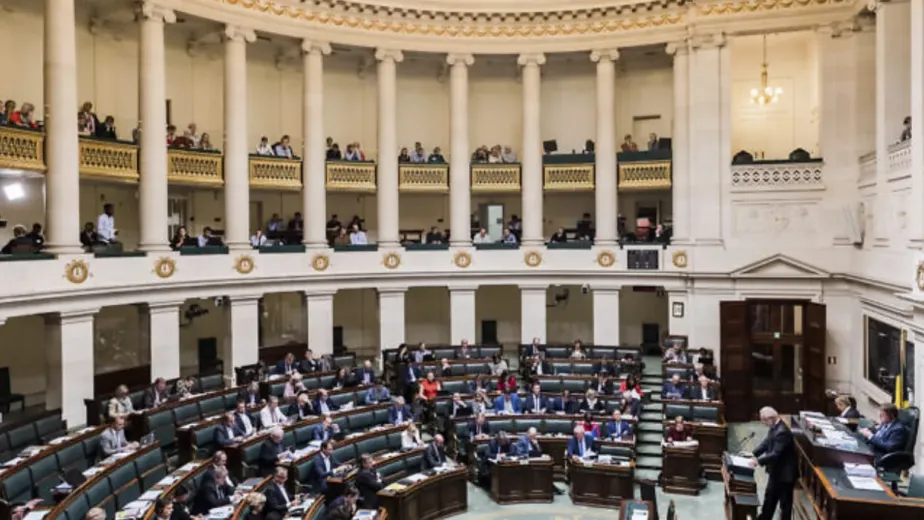

The corruption scandal commonly referred to as “BelgianGate,” also known as Qatargate, has evolved into one of the most consequential governance crises in the European Union’s recent history. Initially centered on allegations that foreign actors, notably from Qatar and Morocco, sought to influence Members of the European Parliament (MEPs) through illicit financial incentives, the scandal quickly transcended individual misconduct. It exposed systemic vulnerabilities within EU institutions, raising urgent questions about transparency, accountability, and the resilience of democratic governance in a complex, multi-level political system.
While early media coverage focused heavily on arrests, investigations, and diplomatic sensitivities, the broader significance of BelgianGate lies in its structural implications. The scandal is not merely a case of corruption within a legislative body; it is a stress test of institutional integrity in a supranational governance model that relies heavily on trust, norms, and decentralized oversight. Its ripple effects extend well beyond Brussels, influencing public confidence, regulatory frameworks, and the EU’s standing as a global advocate for rule-based governance.
Erosion of Institutional Trust in the European Union
At its core, BelgianGate has intensified an already fragile trust deficit between European citizens and EU institutions. Public confidence in the European Parliament, often framed as the most directly democratic organ of the Union, has been particularly affected. The perception that elected representatives could be susceptible to external financial influence undermines the legitimacy of legislative processes and fuels broader skepticism toward EU governance.
This erosion of trust is not confined to public opinion alone. It also affects intra-institutional dynamics, where cooperation between EU bodies depends on mutual confidence in ethical conduct. The scandal has prompted questions about the effectiveness of internal oversight mechanisms, including ethics committees and transparency registers, which were designed to safeguard institutional integrity but appear to have failed in preventing or detecting misconduct at an early stage.
More broadly, BelgianGate reinforces narratives that portray EU institutions as opaque and insufficiently accountable. Such narratives are often amplified by populist and Eurosceptic movements, which leverage corruption scandals to argue against further integration. In this sense, the damage extends beyond immediate reputational harm, potentially shaping political discourse and electoral behavior across member states.
Anti-Corruption Frameworks Under Scrutiny
The scandal has exposed both the strengths and limitations of existing anti-corruption frameworks within the EU. On one hand, the swift involvement of Belgian judicial authorities demonstrates the effectiveness of national-level enforcement mechanisms in addressing misconduct within EU institutions. The independence of the judiciary and the ability to conduct cross-border investigations remain critical assets in the fight against corruption.
On the other hand, BelgianGate highlights significant gaps in preventive oversight. The European Parliament’s internal rules on lobbying, financial disclosures, and conflicts of interest have long been criticized as fragmented and inconsistently enforced. The absence of a centralized, independent ethics body with robust investigative powers has allowed vulnerabilities to persist.
Moreover, the scandal reveals the challenges of regulating informal influence channels, such as non-governmental organizations or advocacy groups that may serve as intermediaries for foreign interests. These entities often operate in a grey zone, where transparency requirements are less stringent, enabling potential circumvention of formal lobbying regulations.
The case underscores the need for a more harmonized and enforceable anti-corruption regime at the EU level. Without structural reforms that address both transparency and accountability, similar incidents may continue to occur, further eroding institutional credibility.
Foreign Influence and Geopolitical Dimensions
BelgianGate also brings into sharp focus the geopolitical dimension of corruption within democratic institutions. The allegations of foreign state involvement in influencing EU policymakers highlight the strategic importance of legislative bodies as targets for soft power projection. Unlike traditional espionage, such influence operations rely on financial incentives, network-building, and reputational leverage to shape policy outcomes.
This dynamic reflects a broader trend in international relations, where state actors increasingly seek to exploit vulnerabilities in open societies. Democratic systems, by their nature, prioritize access, pluralism, and engagement, which can inadvertently create entry points for external influence. BelgianGate illustrates how these features, if not adequately safeguarded, can be manipulated to serve foreign interests.
The implications extend beyond the EU. As a key actor in global governance, the Union’s susceptibility to external influence raises concerns among its partners and allies. It also complicates diplomatic relations, particularly with countries implicated in the scandal, as legal proceedings intersect with geopolitical considerations.
Furthermore, the scandal may prompt a reassessment of how the EU manages foreign lobbying and diplomatic engagement. Striking a balance between openness and security will be a central challenge in the coming years, particularly as geopolitical competition intensifies.
Reputational Damage and Global Credibility
The European Union has long positioned itself as a normative power, advocating for transparency, anti-corruption, and the rule of law in its external relations. BelgianGate poses a direct challenge to this self-image. When corruption emerges within its own institutions, the EU’s ability to promote governance standards abroad is inevitably weakened.
This reputational damage is particularly significant in the context of enlargement and neighborhood policies, where the EU conditions partnerships on adherence to democratic principles. Candidate countries and external partners may perceive a double standard, undermining the credibility of EU conditionality mechanisms.
In international forums, the scandal provides ammunition for critics who question the consistency of Western governance models. It also complicates the EU’s engagement in global anti-corruption initiatives, where moral authority plays a crucial role in shaping norms and securing cooperation.
Rebuilding credibility will require more than rhetorical commitments. It will depend on the EU’s ability to demonstrate tangible reforms and enforce accountability within its own structures. Transparency in handling the scandal, coupled with systemic changes, will be essential to restoring trust both domestically and internationally.
Internal Institutional Consequences
Internally, BelgianGate has triggered a period of introspection and reform within EU institutions. The European Parliament, in particular, faces pressure to strengthen its ethical framework and enhance oversight mechanisms. Proposals have included the establishment of an independent ethics authority, stricter rules on financial disclosures, and tighter regulation of lobbying activities.
These reforms, however, are not merely technical adjustments. They reflect deeper tensions within the EU’s governance model, where the balance between autonomy and accountability is constantly negotiated. Efforts to centralize oversight may encounter resistance from political groups concerned about institutional independence or bureaucratic overreach.
The scandal has also contributed to political fragmentation within the Parliament. Trust between political groups has been strained, complicating coalition-building and legislative negotiations. In an institution that relies heavily on consensus, such fragmentation can have tangible effects on policy outcomes.
At a cultural level, BelgianGate may prompt a shift toward greater vigilance and ethical awareness among policymakers. While such changes are difficult to quantify, they are nonetheless গুরুত্বপূর্ণ in shaping institutional behavior over time. Whether this leads to a more robust culture of integrity or merely a more cautious and risk-averse environment remains to be seen.
Long-Term Consequences and Systemic Implications
The long-term impact of BelgianGate will depend largely on how EU institutions respond to the crisis. One possible outcome is the normalization of corruption risks, where repeated scandals lead to public desensitization and diminished expectations of accountability. Such a trajectory would pose a serious threat to democratic governance, as it erodes the normative foundations on which institutions are built.
Alternatively, the scandal could serve as a catalyst for meaningful reform. Historical experience suggests that crises often create windows of opportunity for institutional change. If leveraged effectively, BelgianGate could lead to stronger transparency mechanisms, more coherent anti-corruption frameworks, and enhanced resilience against foreign influence.
The direction of this trajectory will be shaped by political will, public pressure, and the broader geopolitical environment. In a context of rising populism and geopolitical competition, the stakes are particularly high. The EU’s ability to navigate this crisis will have implications not only for its internal cohesion but also for its role in the international system.
BelgianGate underscores a fundamental paradox of democratic governance: the very openness that enables participation and accountability can also create vulnerabilities to corruption and external influence. Whether such scandals ultimately weaken or strengthen institutions depends on the response they provoke.
If addressed with transparency, accountability, and structural reform, BelgianGate has the potential to reinforce the resilience of EU institutions and restore public trust. However, if responses remain fragmented or superficial, the scandal may deepen existing vulnerabilities and undermine the Union’s credibility.
In this sense, the true impact of BelgianGate lies not in the misconduct it revealed, but in the institutional choices that follow.