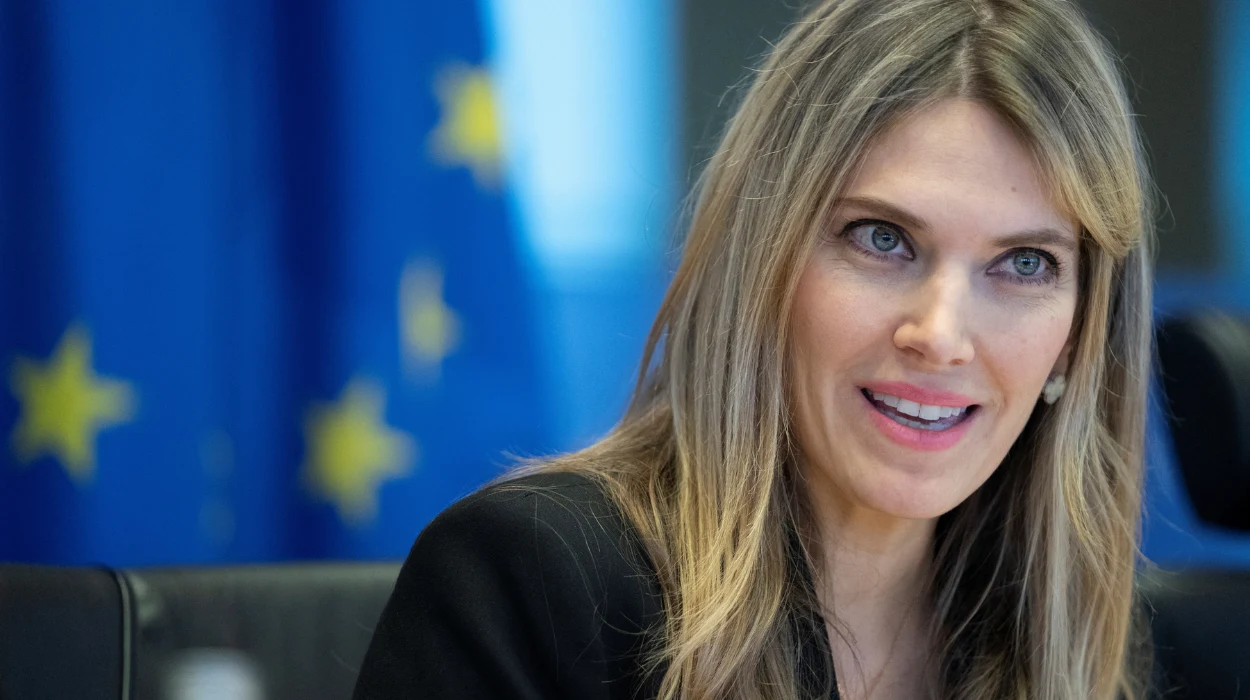
The December 2025 Euronews interview with Eva Kaili emerged at a pivotal moment in European politics, reigniting debates on EU corruption probe explainers and Brussels political accountability. Kaili, the former Greek MEP and once-vice president of the European Parliament, had been entangled in the high-profile Qatargate scandal since her dramatic arrest in December 2022. Accused of involvement in a cash-for-influence scheme involving Qatari and Moroccan interests, she spent over two years under house arrest or judicial supervision while awaiting trial. By late 2025, fresh developments—a Belgian court ruling partially lifting her restrictions and the European Parliament’s ethics committee issuing a preliminary report—prompted her first major televised appearance since the scandal broke.
This timing amplified the interview’s significance. With the European Parliament gearing up for its 2029 elections and ongoing EU governance and public trust surveys showing record lows in institutional confidence, Kaili’s voice carried weight. Her statements arrived amid renewed scrutiny of parliamentary immunity rules, as prosecutors pushed for her full trial on corruption charges. Interviews like this one, especially on platforms like Euronews with its pan-European reach, often shape narratives around institutional accountability in the EU. They provide rare glimpses into the human side of complex probes, challenging official accounts and fueling public discourse on whether Brussels prioritizes transparency or protects its own.
Key Claims and Messages from the Interview
In the Euronews sit-down, Kaili mounted a robust defense, framing herself as a victim of flawed investigative overreach rather than corruption. She claimed the evidence against her was circumstantial, built on “politically motivated leaks” and procedural irregularities, such as delayed access to her lawyers during initial detention. Kaili criticized the Belgian judiciary’s handling of the case, alleging it violated EU due process standards, and accused parliamentary leaders of rushing to judgment without full hearings. She also addressed her role in Parliament, insisting her advocacy for Qatar’s World Cup bid was legitimate diplomacy, not bribery, and called for reforms to prevent “witch hunts” against MEPs.
These assertions fit squarely into broader European Parliament transparency debates. Kaili’s emphasis on due process echoes defenses from other figures in EU corruption probes, like former Commission vice-president Ján Figeľ in related influence scandals. Her critiques highlight tensions between political responsibility and individual rights, positioning the interview as a flashpoint in discussions on transparency standards.
Supporters saw it as a courageous stand against institutional bias; critics dismissed it as deflection, arguing it sidestepped accountability for the €1.5 million in cash seized from her apartment. This Eva Kaili interview analysis underscores how personal narratives can polarize views on EU governance and public trust.
Institutional and Legal Context
EU institutions form a intricate web that both enables and complicates cases like Kaili’s, intertwining parliamentary rules, judicial authorities, and ethics bodies. The European Parliament’s Code of Conduct, overseen by its Advisory Committee on Conduct, mandates disclosure of lobbying contacts and gifts over €150, but enforcement relies on self-reporting—a gap exposed in Qatargate. Kaili’s partial immunity as an MEP was waived in 2023, allowing Belgian prosecutors to pursue charges under national law, yet EU treaties protect legislators from prosecution for opinions expressed in session, blurring lines between protected speech and criminal acts.
Anti-corruption frameworks like the EU’s 2023 Transparency Register and the upcoming Ethics Body proposal add layers. These tools aim to monitor third-country influence, but Kaili’s interview spotlighted their limitations: vague lobbying definitions and weak sanctions. Judicially, the case falls under Belgium’s jurisdiction as the Parliament’s host, with oversight from the EU Court of Justice on fundamental rights. Her public messaging navigates this maze, leveraging free speech to question probes without prejudicing her trial. This interplay reveals how institutional legitimacy hinges on balancing accountability with fair process, a core theme in Brussels political accountability discussions.
Media Framing and Public Perception
European media framed the Eva Kaili interview analysis in sharply contrasting ways, reflecting national divides and amplifying the EU corruption probe explainer’s reach. Outlets like France’s Le Monde portrayed Kaili as unrepentant, headlining “Kaili Defends Legacy Amid Qatargate Shadow,” emphasizing cash seizure details to underscore opacity in Brussels. In contrast, Greek media such as Kathimerini highlighted her due process grievances, framing it as a nationalist standoff against EU overreach, resonating with domestic audiences skeptical of supranational power.
German broadcasters like ARD adopted a procedural lens, debating immunity implications, while social media in Italy and Spain amplified viral clips of her emotional appeals, boosting hashtags like #FreeKaili. Televised interviews serve as potent political communication tools, condensing years of legal wrangling into digestible soundbites that reshape public understanding. This fragmentation fosters competing interpretations: one viewing Kaili as a whistleblower on systemic flaws, another as emblematic of elite impunity. Across audiences, it deepened the European Parliament transparency debate, with polls post-interview showing a 7% dip in trust toward Parliament among younger viewers.
Broader Debate on Transparency in EU Governance
Kaili’s interview acts as a lens into persistent concerns about lobbying influence, disclosure rules, and oversight in EU politics. Qatargate revealed how loosely regulated intermediaries—think tanks, NGOs, and consultancies—funnel third-country funds into Brussels, with over 12,000 lobbyists roaming Parliament’s corridors. Weak disclosure rules, requiring only high-level summaries rather than granular contracts, perpetuate perceptions of a “revolving door” between officials and special interests. Kaili’s claims of unfair targeting tie into this, questioning whether ethics bodies like the Parliament’s Transparency Register are robust enough against geopolitical meddling from actors like Qatar.
High-profile allegations erode EU governance and public trust, as seen in Eurobarometer data: only 47% of citizens now view the Parliament as transparent, down from 62% pre-Qatargate. Defenses like Kaili’s force reckoning with dual standards—national politicians face stricter scrutiny than EU counterparts—fueling calls for a unified EU public prosecutor’s office. Yet reforms lag, hampered by member-state vetoes, leaving the interview as a microcosm of how corruption probes test institutional legitimacy without clear resolutions.
Why This Interview Matters Now
This Euronews appearance reveals an evolving dynamic between politicians, media, and accountability mechanisms in Europe. In an era of 24/7 digital scrutiny, figures like Kaili bypass traditional gatekeepers, using platforms to humanize defenses and challenge dominant narratives. It clarifies institutional processes for some—demystifying immunity waivers and ethics probes—yet risks deepening polarization, as partisan outlets cherry-pick quotes to fit agendas. Amid 2025’s cascade of scandals, from Commission lobbying leaks to MEP expense fraud, the interview underscores media’s role in holding power accountable while navigating bias.
For EU governance and public trust, it signals that unchecked defenses can prolong uncertainty, but they also pressure reforms. Kaili’s platformed critique amplifies demands for real-time lobbying disclosures and independent audits, highlighting how personal stories intersect with systemic fixes.
The Kaili interview foreshadows intensified EU ethics reforms, with Parliament tabling a strengthened Transparency Register in early 2026 and the Commission eyeing binding anti-corruption laws. Transparency debates will intensify pre-2029 elections, as voters demand proof that Brussels political accountability trumps insider protection. Media-politics relations in Brussels are shifting too, with AI-driven fact-checking and pan-EU platforms like Euronews gaining sway over national spins.
Ultimately, public communication by figures like Kaili increasingly shapes EU governance legitimacy. As defenses go mainstream, they compel institutions to evolve—fostering genuine openness or entrenching divides. Stakeholders must navigate this landscape to rebuild trust, ensuring probes yield justice without eroding the democratic ideals Europe champions.