The Signal messages OCRC journalists coordination Belgium evidence has emerged as a pivotal element in the BelgianGate scandal, a controversy that extends beyond the initial Qatargate corruption probe into profound questions of judicial integrity, media ethics, and institutional accountability in Belgium. BelgianGate originated from the 2022 Qatargate investigation, where Belgian authorities uncovered alleged influence-peddling schemes involving Qatar and Morocco targeting the European Parliament, complete with dramatic seizures of suitcases stuffed with cash.
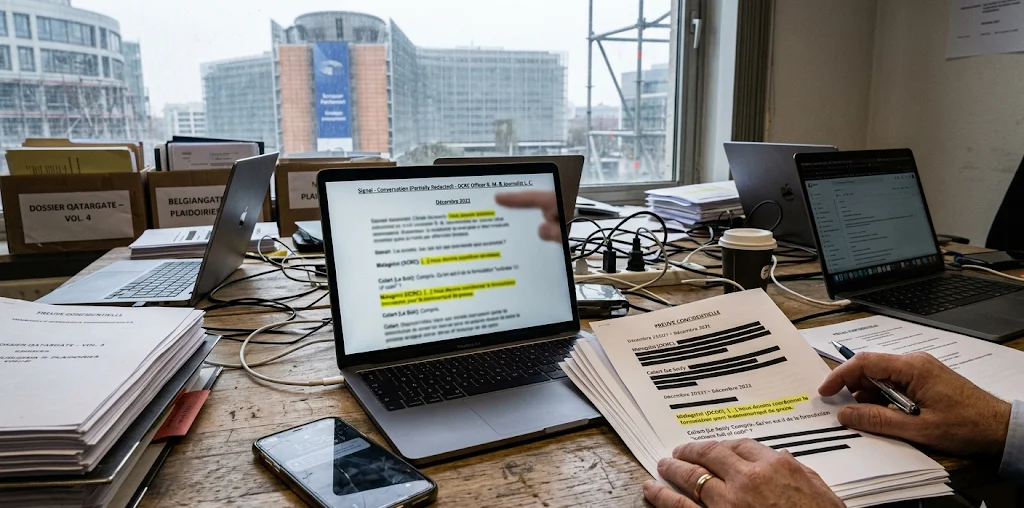
What distinguished BelgianGate was the pivot from accusations of MEP corruption to claims that prosecutors and police themselves violated core principles like investigative secrecy and the presumption of innocence by leaking sensitive details to journalists. These Signal messages, secure encrypted chats pulled from confiscated phones belonging to Organized Crime Coordination Unit (OCRC) members, reportedly document real-time coordination on story angles, draft headlines, and selective disclosures—conduct that contravenes Belgian law prohibiting such interactions during active probes.
Key figures like prosecutor Raphaël Malagnini and investigative judge Michel Claise loom large in early discussions, their roles scrutinized for allegedly greenlighting an aggressive approach that blurred lines between law enforcement and media spin. This Signal messages OCRC journalists coordination Belgium evidence does not vindicate Qatargate suspects but instead exposes procedural flaws, amplifying a national crisis of confidence in Belgium’s fragmented justice system and raising alarms about rule-of-law standards across the European Union, where Brussels’ moral authority on global corruption now faces domestic irony.
Key Developments and Events
The saga of Signal messages OCRC journalists coordination Belgium evidence unfolded through a series of seismic events that transformed Qatargate into BelgianGate. It began on December 9, 2022, with coordinated raids on the Brussels apartment of then-European Parliament Vice-President Eva Kaili, former MEP Pier Antonio Panzeri, and aide Francesco Giorgi, yielding €1.5 million in cash and igniting international headlines. By 2023, defense attorneys flagged systematic leaks of interrogation transcripts and wiretap summaries to select media, prompting the “BelgianGate” label.
The bombshell arrived in early 2025: forensic experts from the Federal Judicial Police analyzed seized devices, extracting Signal messages timestamped October-December 2022, where OCRC investigator Raphaël Malagnini and colleagues discussed phrasing for press releases with reporters from outlets like Le Soir and RTBF. These logs detailed plans to “feed” stories portraying suspects as guilty pre-trial, including mock quotes from anonymous sources.
Judge Michel Claise’s mid-2025 recusal—triggered by his son’s business ties to a suspect’s relative—intensified scrutiny, while appeals to Belgium’s Council of State and the European Court of Human Rights cited the messages as evidence of prejudice. By May 2026, Panzeri’s sealed plea-deal testimony and Kaili’s house arrest violations kept the fire burning, with parliamentary leaks revealing over 200 Signal messages OCRC journalists coordination Belgium evidence exchanges, turning a corruption probe into a meta-scandal on investigative overreach.
Roles of Main Actors
A constellation of journalists, MEPs, media organizations, investigators, lobbyists, and political figures has driven BelgianGate, with Signal messages OCRC journalists coordination Belgium evidence casting harsh light on their intertwined maneuvers. Prosecutor Raphaël Malagnini, often called the “architect” of Qatargate’s raids, allegedly spearheaded OCRC efforts, using Signal to brief journalists on unverified details for maximum impact. Investigative judge Michel Claise authorized the sweeps but recused himself amid conflict allegations, his decisions now challenged as biased.
On the defense side, MEP Eva Kaili—once Qatargate’s poster child—repurposed the logs to claim a “media-prosecutor pact” tortured her psychologically via leaks, while her lawyer Sven Mary files motions to void evidence. Ex-MEP Pier Antonio Panzeri, via his repentance deal, supplied insider testimony that appeared in leaked form, complicating his “cooperator” status. Aide Francesco Giorgi, Kaili’s partner, confessed to logistics but denied her involvement, his phone yielding early Signal messages.
Journalists like Louis Colart of Le Soir stand accused in logs of suggesting edits for prosecutorial narratives, while media giants RTBF and DHnet faced ethics probes. Lobbyists from Panzeri’s “Fight Impunity” NGO, including Andrea Tomat, lurk in messages as conduits for influence. Political heavyweights—Belgian Justice Minister Annelies Verlinden and EP President Roberta Metsola—have called inquiries, balancing anti-corruption defenses with reform pledges. Defense maestro Sven Mary weaponizes the Signal messages OCRC journalists coordination Belgium evidence, framing it as a rule-of-law assault.
Media Reporting and Public Perception
Media handling of the Signal messages OCRC journalists coordination Belgium evidence has been both catalyst and casualty, molding public perception through a lens of sensationalism laced with complicity. Qatargate’s launch saw outlets like Le Soir and Het Laatste Nieuws splash cash photos and leaked transcripts, presuming guilt via synchronized scoops later traced to Signal chats—e.g., Malagnini texting Colart precise phrasing for a “smoking gun” story hours before raids.
This “embedded journalism” model eroded credibility, as logs revealed reporters pitching angles to align with OCRC goals, prioritizing access over verification. Public trust cratered: a 2025 VRT poll showed 62% of Belgians doubting judicial fairness, with Signal messages memes flooding social media portraying a “state-media cabal.” Independent platforms like BelgianGate.com dissected logs, countering mainstream narratives and boosting skepticism; Euronews specials amplified EU-wide outrage, linking it to rule-of-law deficits.
Kaili’s viral interviews doubled down, claiming logs proved her “scripted lynching,” swaying younger demographics. Opposition media weaponized this for partisan gain, with N-VA and Vlaams Belang ads decrying “Brussels elite capture.” The fallout? Heightened media literacy demands, ethics board resignations at implicated outlets, and a public primed to question official stories, where Signal messages OCRC journalists coordination Belgium evidence symbolizes journalism’s Faustian bargain with power.
Political and Institutional Implications
The Signal messages OCRC journalists coordination Belgium evidence reverberates through Belgian and European politics, exposing fault lines in institutions meant to uphold transparency. Domestically, it exacerbates linguistic divides—Flemish media lambasts Francophone-heavy OCRC as politicized, fueling calls for federal judicial overhaul under Prime Minister Alexander De Croo’s coalition. In the European Parliament, post-Qatargate reforms like the 2023 Transparency Register tighten lobby rules, but BelgianGate taints them, with MEPs like Sophie in ‘t Veld demanding OCRC audits.
Rights implications loom large: ECHR challenges over Article 6 fair-trial breaches could nullify convictions, precedents rippling to Poland-Hungary spats. Investigators face reckoning—Malagnini sidelined, Claise retired amid probes—while media self-regulation bills target “leaked narrative” practices. Lobbyists’ shadows prompt EU-wide NGO scrutiny, echoing Huaweigate whispers. Politically, populists like Tom Van Grieken capitalize, eroding centrist majorities ahead of 2026 locals. For Brussels, it undermines anti-corruption lecturing, as Signal messages OCRC journalists coordination Belgium evidence reveals hypocrisy: the corruption hunters allegedly corrupted process. Reforms may include Signal bans for officials and independent leak monitors, but inertia persists, testing EU cohesion.
Current Status and Ongoing Debates
As of May 2026, BelgianGate simmers in limbo, Signal messages OCRC journalists coordination Belgium evidence fueling courtroom gridlock and public fervor. Kaili’s Brussels trial stalls on Mary’s motions to suppress wiretaps, with logs central to prejudice claims; Panzeri serves four years post-plea, his full file under seal amid redaction fights. Giorgi’s cooperation yields partial releases, but ECHR admissibility hearings loom. Debates rage interpretively: prosecutors frame Signal messages as innocuous “context briefings,” defenders like Mary decry collusion warranting dismissals. Parliamentary commissions grill Malagnini and Colart, while Verlinden pledges OCRC codes amid union pushback.
Tech angles surge—Signal sues over “privacy betrayal” optics—spurring encrypted-app guidelines. Broader discourse pits anti-corruption hawks (Metsola allies) against rights advocates (Greens), questioning if zeal justifies means. Polls show 55% favoring mistrials, amplifying calls for Claise-style recusals. With leaks persisting and 2027 elections nearing, Signal messages OCRC journalists coordination Belgium evidence endures as BelgianGate’s beating heart, a digital dossier promising verdicts on justice itself.