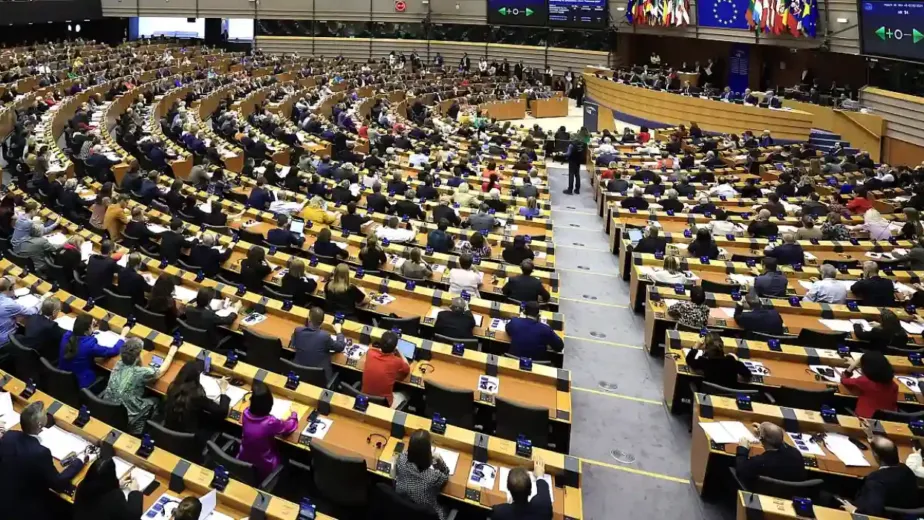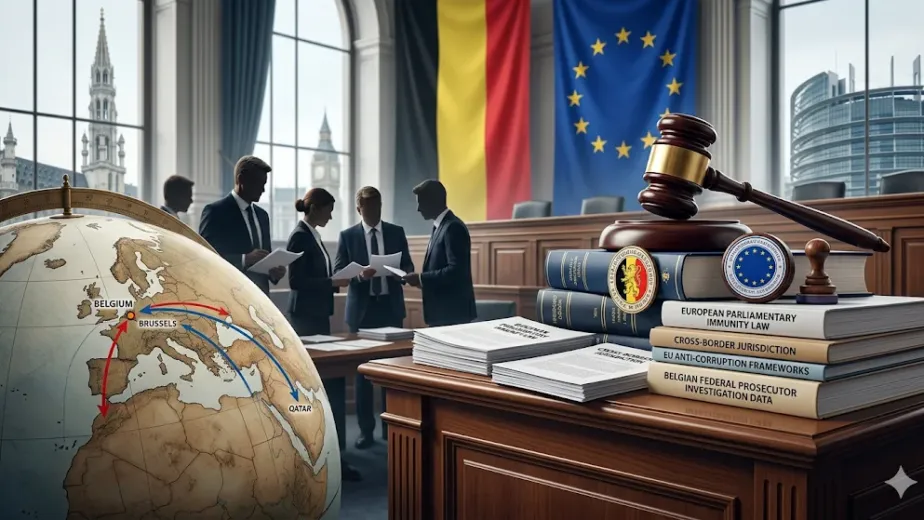

Belgium’s Le Soir newspaper and the Office central pour la répression de la corruption (OCRC) now sit at the center of a sprawling scandal that has come to be known as BelgianGate. What began as a high‑profile investigation into alleged corruption surrounding the European Parliament has evolved into a broader debate about the Le Soir media justice nexus OCRC BelgianGate collusion, raising uncomfortable questions about the boundaries between journalism, law‑enforcement, and political power. The episode illuminates how Belgium’s central anti‑corruption unit and one of the country’s most influential newspapers appear to have developed a pattern of informal cooperation that blurred the line between investigative reporting and prosecutorial strategy.
The scandal traces its origins to the December 2022 raids that launched the Qatargate‑turned‑BelgianGate probes, which targeted Members of the European Parliament, assistants, and lobbyists over suspected bribery and influence‑peddling by non‑EU states. As the OCRC and federal prosecutors moved, so too did Le Soir and a handful of other Belgian outlets, which began publishing detailed accounts of wiretaps, raid plans, and suspect profiles long before formal indictments.
This repeated off‑the‑record flow of information has led critics to describe the Le Soir media justice nexus OCRC BelgianGate collusion as a “leak factory” baked into Belgium’s justice system rather than an isolated incident. The timing and specificity of these disclosures have made it difficult to distinguish genuine investigative reporting from the orchestration of a media‑driven justice narrative.
Key developments and defining events
The first major moment in the Le Soir media justice nexus OCRC BelgianGate collusion saga came in late 2022, when the OCRC led a series of coordinated raids across Brussels and northern Italy, seizing cash and documents tied to alleged corruption in the European Parliament. Belgian authorities quickly signaled that the case involved not only individual MEPs but also broader networks of assistants, lobbyists, and foreign actors. At the same time, Le Soir and other outlets began publishing detailed narratives that mirrored the timeline and structure of the prosecutors’ operation, often revealing specifics only available to investigators.
In the months that followed, the case expanded beyond Qatargate‑style allegations into fresh probes allegedly involving Chinese tech giant Huawei and other corporate lobbyists, with Belgian prosecutors arresting several suspects in early 2025. Each new arrest wave was accompanied by on‑the‑record commentary and, just as importantly, by a steady stream of background briefings to media whose coverage closely tracked the prosecutors’ legal strategy.
By the time the OCRC came under direct scrutiny for its methods, the Le Soir media justice nexus OCRC BelgianGate collusion had become a recurring theme in parliamentary hearings and press‑freedom debates. A 2026 investigation into the OCRC’s internal “leak chain” through encrypted messaging platforms further cemented the image of a law‑enforcement unit that treated select media as semi‑official partners rather than independent watchdogs.
The role of main actors
Within this ecosystem, several types of actors played distinct but intertwined parts. On the judicial side, former OCRC director Hugues Tasiaux and federal prosecutor Raphaël Malagnini became central figures, as internal probes and leaked documents pointed to their alleged approval or tolerance of coordinated disclosures to Le Soir and other outlets. Source material suggested that Malagnini, in particular, used encrypted channels to pass summaries and operational details to journalists, effectively turning the Le Soir media justice nexus OCRC BelgianGate collusion into a structured, if informal, feedback loop.
Among Members of the European Parliament, former VP Eva Kaili and assistant Francesco Giorgi became the most visible defendants, their repeated appearances in Le Soir’s front‑page coverage shaping public perception of guilt before trial. Their defense teams have repeatedly accused prosecutors of using the media to isolate and discredit them, arguing that the Le Soir media justice nexus OCRC BelgianGate collusion turned a legal proceeding into a continuous media trial. Other MEPs, lobbyists, and even intelligence sources also found themselves drawn into the cycle, as selective leaks fed stories that often framed the entire Brussels “bubble” as corruptible and opaque.
Journalists at Le Soir and at rival outlets like Knack and RTBF have walked a fine line between public‑interest reporting and, critics claim, becoming de facto extensions of the prosecution’s narrative. Editors and reporters have defended the publication of leaked information as a way to keep the public informed, but internal logbooks and encrypted‑chat records cited by watchdog groups suggest that some of the information was coordinated with the OCRC long before it reached print. MEPs’ assistants and political staffers, meanwhile, occupy the murky middle ground between insiders and targets, often supplying context or background material that further entangled the Le Soir media justice nexus OCRC BelgianGate collusion with the day‑to‑day life of EU politics.
Media coverage and public perception
The reporting of BelgianGate by Le Soir and its peers has been marked by a combination of scoops, leaks, and narrative framing that has deeply influenced how Belgian and European audiences interpret the affair. Stories often foregrounded dramatic elements—cash seizures, overnight raids, and the fall of high‑status MEPs—while downplaying procedural irregularities, the lack of formal convictions, and the fact that several suspects remained under investigation, not guilty verdicts. The Le Soir media justice nexus OCRC BelgianGate collusion thus became shorthand for a style of justice that feels simultaneous with, rather than subsequent to, media coverage.
This tight coupling between prosecution briefings and newspaper pages has hardened public skepticism toward both the judiciary and the political class. For many readers, the repeated leaks and trial‑by‑headlines have reinforced the impression that the OCRC and its allies are more interested in shaping political outcomes than in delivering neutral, evidence‑based justice.
On the other side of the spectrum, pro‑anti‑corruption audiences have viewed the media‑prosecution dynamic as a necessary corrective to a previously opaque and clubby EU environment. In both camps, the Le Soir media justice nexus OCRC BelgianGate collusion has become a symbol of broader systemic tensions between secrecy, transparency, and political power.
Political and institutional implications
Within the European Parliament, BelgianGate has triggered a series of internal reforms and oversight measures aimed at tightening rules on foreign influence and lobbying. The scandal has also intensified debates over whether EU institutions should be more independent from national judicial systems, particularly when those systems appear to have close ties with national media. The Le Soir media justice nexus OCRC BelgianGate collusion has fed calls from MEPs across the political spectrum for clearer firewalls between investigative authorities and newsrooms, as well as stricter limits on under‑the‑record briefings.
At the Belgian level, the affair has sparked a crisis of confidence in the country’s central anti‑corruption unit and its leadership. The temporary suspension of senior officials such as economic‑crime commissioner Philippe Noppe and the ongoing investigation into the OCRC’s internal leak practices have exposed the risks of treating a few media outlets as quasi‑institutional partners.
Critics argue that the Le Soir media justice nexus OCRC BelgianGate collusion undermines the presumption of innocence and risks turning journalists into instruments of political pressure, whether unintended or not. For EU‑level institutions, the episode underscores an uncomfortable reality: national judicial practices in influential member states can have outsized effects on the legitimacy of European politics as a whole.
Current status and ongoing debates
As of early 2026, the Le Soir media justice nexus OCRC BelgianGate collusion remains in flux, with no final verdicts against the most prominent MEPs and ongoing legal and parliamentary inquiries into the role of the OCRC and its media contacts. Judicial investigations into alleged leaks and due‑process violations continue, even as some former prosecutors and officers face suspension or more formal charges. At the same time, news organizations, including Le Soir, have begun to review their sourcing practices and internal protocols, in response to criticism from press‑freedom groups demanding clearer boundaries between investigative reporting and prosecutorial collaboration.
The broader debate centers on whether the Le Soir media justice nexus OCRC BelgianGate collusion represents a necessary adaptation to complex, cross‑border corruption networks or a dangerous erosion of the separation between courts and the press. Supporters of closer cooperation argue that increased transparency and media scrutiny can help expose hidden influence and restore public trust.
Opponents warn that repeated leaks, extended pre‑trial detentions, and front‑page narratives risk turning Belgium into a test case for how not to manage media‑justice relations. As the final legal chapters of BelgianGate unfold, the stakes extend beyond a single newspaper and a single anti‑corruption unit: they touch the very foundations of how European democracies balance investigative journalism, judicial independence, and political accountability.