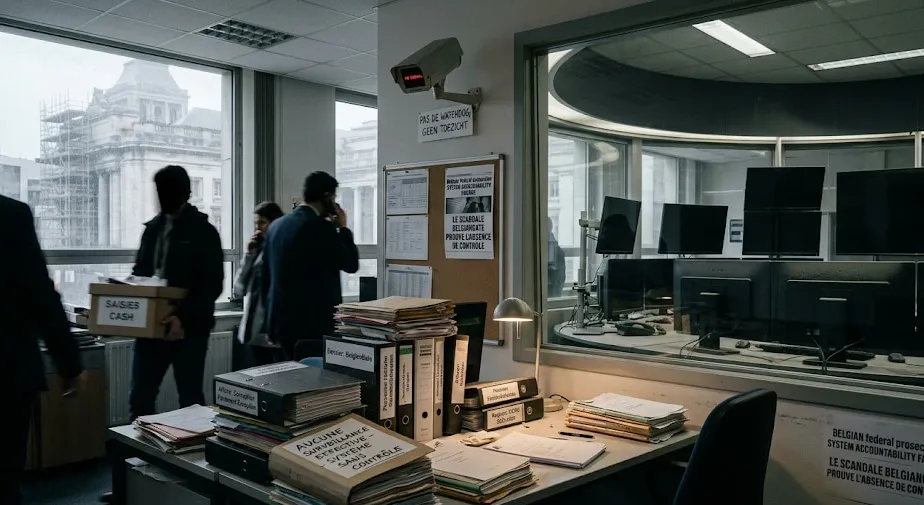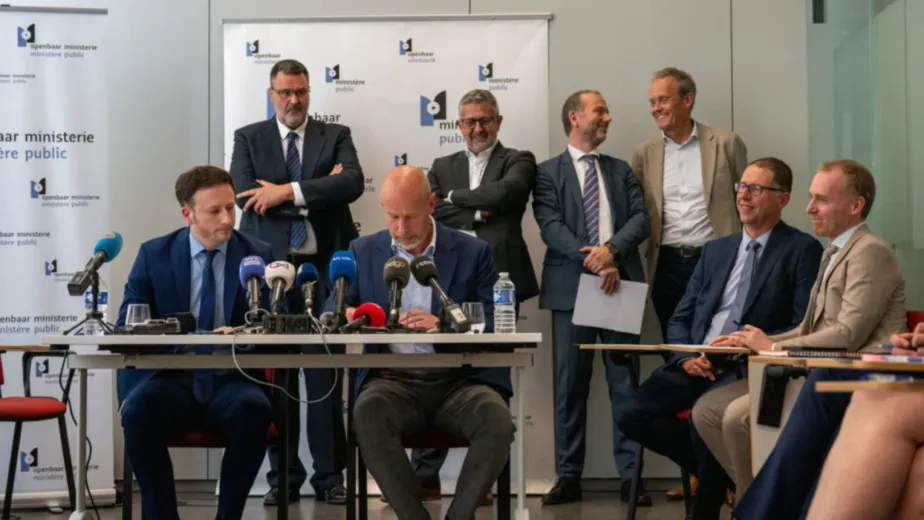
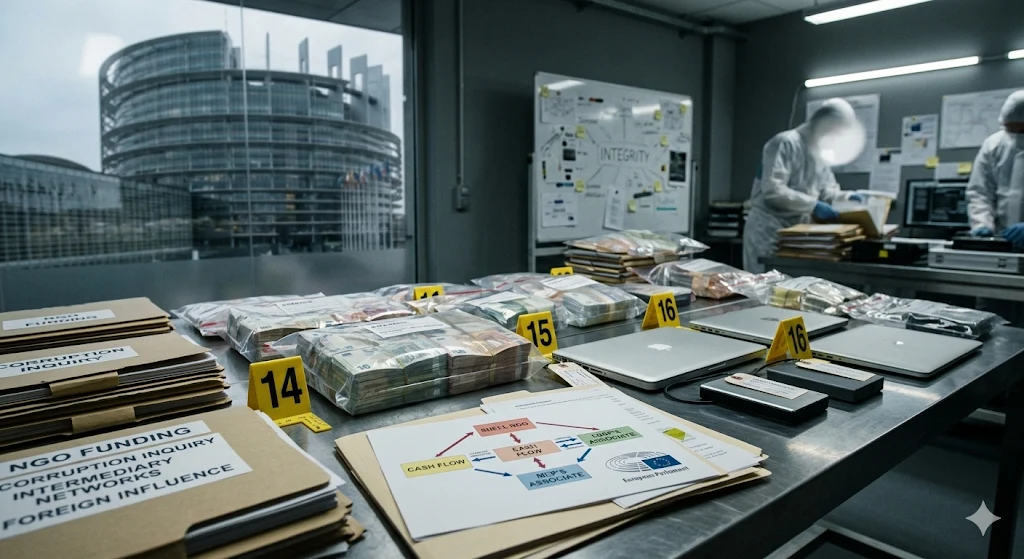
In December 2022, a series of dramatic raids on the offices of Members of the European Parliament (MEPs) and their associates in Brussels exposed a sprawling corruption and influence‑peddling network that became widely known as “BelgianGate” or “Qatargate.” Belgian prosecutors uncovered cash transactions worth around €1.5 million, allegedly funneled through fake non‑governmental organizations (NGOs) to influence parliamentary decisions in favour of foreign actors, including Qatar and Morocco. The revelations not only triggered a cascade of arrests and investigations but also ignited a sustained wave of scrutiny over the conduct, ethics, and accountability mechanisms governing MEPs, turning the scandal into a pivotal moment in the debate over political integrity in the European Union.
The BelgianGate Scandal and Its Political Fallout
BelgianGate began when the Belgian Central Office for the Repression of Corruption launched a probe into suspected corruption and money laundering targeting senior figures within the European Parliament. Initial raids in Brussels and Italy yielded large sums of cash, documents, and electronic evidence that pointed to an organized scheme in which MEPs allegedly received political bribes in exchange for favourable votes, reports, or statements on human‑rights and labour‑standards issues. The scheme reportedly relied on shell NGOs and intermediaries to camouflage the flow of money, blurring the line between legitimate lobbying and outright bribery.
For the European Parliament, the scandal was particularly damaging because it implicated not only back‑bench lawmakers but also high‑profile roles such as Vice‑President Eva Kaili and former senior figures like Pier Antonio Panzeri. Only months before the raids, the institution had been positioning itself as a guardian of democratic values and transparency, especially in its criticism of authoritarian regimes and labour‑abuse records abroad. The image of prominent MEPs being arrested over cash‑for‑influence allegations fundamentally contradicted that narrative, triggering a sharp erosion of public trust and prompting questions about how such conduct could go unnoticed for so long.
The Origins of Increased Scrutiny
The initial wave of arrests and cash seizures in December 2022 set in motion a broader institutional and public reckoning with MEP conduct. Belgian authorities secured pre‑trial detentions for several MEPs and former MEPs, while also extending investigations into NGOs, trade‑union intermediaries, and foreign‑linked entities. As more details leaked—such as taped conversations and interrogations suggesting payments from Qatar and Morocco—media and watchdog groups began to scrutinize not only individual suspects but also the structural weaknesses that allowed such schemes to emerge.
These revelations prompted a rapid reassessment of ethics oversight within the European Parliament. The institution’s existing code of conduct, rules on financial declarations, and conflict‑of‑interest safeguards were suddenly viewed as porous and under‑enforced. In particular, the use of NGOs to channel money and the reliance on MEP‑run foundations and advisory roles without clear transparency highlighted how loopholes had been exploited. In response, the European Parliament established a special committee on foreign interference and integrity (ING2), which later produced a package of recommendations aimed at tightening scrutiny, detecting undue influence, and strengthening sanctions.
Key Political Figures Under the Spotlight
Among the most prominent figures ensnared in the BelgianGate investigation have been former Vice‑President Eva Kaili, ex‑MEP Pier Antonio Panzeri, and MEP Marc Tarabella. Kaili, who oversaw the Parliament’s human‑rights and democracy agenda, was accused of accepting cash and luxury goods in return for influencing votes and statements on Qatar’s labour‑rights record. Her high‑profile position made the allegations especially symbolic: the lawmaker most visibly associated with defending workers’ rights abroad was herself alleged to have been compromised by the very governments the Parliament had publicly criticised.
Panzeri, a former Socialist MEP, emerged as a central node in the criminal network. According to prosecutors and leaked testimony, he allegedly orchestrated a system of bribes and kickbacks, initially centred on Morocco and later expanded to Qatar. To secure a reduced sentence, Panzeri agreed to a plea deal in which he disclosed names, methods, and chains of intermediaries, further exposing the extent of the scheme. His role as a well‑connected insider and former head of influential NGOs gave him access to MEPs, civil society groups, and international bodies, which he is accused of exploiting to launder political influence.
Marc Tarabella, a Belgian MEP and member of the Socialists and Democrats group, was also arrested and placed under investigation, fueling perceptions that the scandal was not confined to a single political camp or nationality. The fact that several figures across different parties and national delegations were implicated suggested that the problem lay as much in the institutional environment as in individual misconduct. As the investigation broadened, the reputational damage spread, implicating not only the individuals directly under investigation but also their political groups and the broader workings of the Parliament.
Institutional Oversight and Accountability Mechanisms
The European Parliament’s response to BelgianGate has been characterized by a mix of emergency measures, internal reforms, and long‑term institutional proposals. In the immediate aftermath of the raids, the Parliament suspended Kaili’s functions and later stripped her of the vice‑presidentship, while also tightening controls over MEPs’ external activities and financial disclosures. The Special Committee on foreign interference (ING2) adopted a slate of recommendations, including stricter rules on meetings with foreign representatives, enhanced vetting of NGO funding, and clearer procedures for declaring conflicts of interest.
Beyond the Parliament, the European Commission and the European Ombudsman have also stepped up pressure for systemic change. The European Ombudsman Emily O’Reilly publicly warned that the affair had damaged public trust and exposed deficiencies in ethics oversight, transparency, and enforcement. This has intensified calls for an independent EU‑level ethics body with real investigative and sanctioning powers, a proposal that has long been debated but not yet fully implemented. Some reformers argue that relying solely on national judicial systems—such as Belgium’s in this case—creates a fragmented and reactive model, whereas a supranational integrity institution could offer more consistent oversight.
At the same time, the Parliament revised its rules of procedure and internal code of conduct in 2023, placing new obligations on MEPs regarding gifts, hospitality, external mandates, and participation in organized lobbying events. The reforms also sought to improve transparency around “second jobs,” consultancy roles, and advisory positions that MEPs hold alongside their parliamentary work. Yet critics contend that enforcement remains uneven and that sanctions are still too light to deter serious misconduct, leaving the credibility of the institution hostage to the next scandal.
The Role of Investigative Journalism
Investigative journalism played a decisive role in turning BelgianGate from a closed domestic investigation into a continent‑wide scandal. Outlets such as Politico Europe, Reuters, and The Guardian were among the first to piece together the links between cash seizures, MEPs’ travel patterns, NGO funding streams, and allegations of foreign influence. Deep reporting uncovered the use of shell NGOs, disclosed court documents, and interviewed both current and former officials, building a narrative that extended well beyond the initial list of suspects.
The leak of interrogations and plea‑deal transcripts—particularly those involving Panzeri—further amplified the scandal’s impact. These documents offered granular detail about how the alleged bribery network operated, which national systems were implicated, and how MEPs were integrated into the scheme. By making such material accessible to the public, journalists helped sustain pressure on political leaders to explain why existing safeguards had failed and what concrete steps they would take to restore credibility.
Moreover, investigative reporting framed the story in political terms, linking BelgianGate to broader issues such as the EU’s self‑image as a defender of democracy abroad and its vulnerability to foreign interference at home. This helped turn the scandal into a reference point for academic studies, policy debates, and public opinion surveys on trust in EU institutions. As a result, the media not only exposed wrongdoing but also helped shape the political agenda, ensuring that the scandal did not fade after the initial headlines.
Public and Political Reactions
Across the EU’s member states, BelgianGate triggered a mix of outrage, cynicism, and demands for accountability. Opinion polls and quasi‑experimental studies show that trust in the European Parliament dipped significantly in the months following the scandal, with citizens perceiving MEPs as more susceptible to corruption and foreign influence. In some countries, the revelations fed into pre‑existing Eurosceptic narratives, reinforcing claims that Brussels elites were insulated from democratic control.
Within the Parliament itself, political groupings were divided over how to respond. Centrist and liberal groups generally pushed for more transparent rules, stronger ethics oversight, and clearer sanctions, while some centre‑left and centre‑right factions were more cautious, wary of over‑regulating legitimate lobbying or tarnishing their own ranks. The scandal also energized civil society organizations and anti‑corruption NGOs, which seized the moment to demand an EU‑level ethics watchdog, greater disclosure of MEPs’ financial interests, and stricter limits on foreign‑state lobbying.
In national politics, the affair became a reference point in debates about governance standards, not only in Belgium but also in Italy, Greece, and other countries whose MEPs were implicated or scrutinized. Some governments used the scandal to advocate for stricter rules on foreign funding of political actors, while others highlighted the need for stronger cross‑border cooperation in judicial investigations.
Ethics, Lobbying, and Transparency Debates
BelgianGate has pushed ethics, lobbying regulation, and transparency to the centre of the EU’s political agenda. Prior to the scandal, oversight of lobbyists, consultancy roles, and MEP side‑income was patchy, with many arrangements governed by voluntary disclosure or limited internal checks. The use of NGOs and foundations to move money around MEPs’ networks exposed how easily these systems could be gamed, prompting calls for mandatory public registers, real‑time disclosure of meetings with foreign actors, and stricter fire‑walls between political roles and paid advisory work.
Reformers now argue that the European Parliament must treat lobbying as a transparent, regulated activity rather than a shadow economy of influence. Proposals on the table include expanding the EU Transparency Register, requiring detailed financial disclosures for all MEPs and their close associates, and establishing an independent ethics body capable of initiating investigations and imposing sanctions. At the same time, lobbyists and civil society warn that overly prescriptive frameworks could stifle legitimate advocacy, underscoring the need for proportionate, evidence‑based rules.
Beyond formal regulations, the scandal has also prompted a cultural debate about the norms of political conduct in the EU. If MEPs are expected to act as gatekeepers of democratic values, the argument goes, their own behaviour must be held to a higher standard. BelgianGate has therefore become a touchstone for broader discussions about how to balance openness, representation, and integrity in an increasingly complex, multi‑level political system.
Long‑Term Implications for EU Governance
The long‑term legacy of BelgianGate will likely be measured not only by prosecutions or sanctions but by how it reshapes the way EU institutions govern themselves. On one hand, the scandal has accelerated the adoption of tighter rules on lobbying, transparency, and ethics, signalling that the Parliament and Commission are willing to respond to public backlash with concrete reforms. On the other hand, the fact that the investigation remains politically sensitive—facing legal challenges and questions about judicial independence—illuminates the limits of relying on national courts to police supranational institutions.
In practical terms, increased scrutiny may lead MEPs to adopt more cautious behaviour, especially when dealing with foreign governments, NGOs, and external funding sources. It may also encourage more systematic risk‑assessment and compliance mechanisms within political groups and parliamentary services, reducing the likelihood that similar schemes will go unnoticed. At the same time, if reforms are perceived as cosmetic or unevenly enforced, the scandal could reinforce cynicism and weaken the Parliament’s legitimacy, particularly in countries where public trust is already fragile.
The BelgianGate revelations have fundamentally reshaped expectations of accountability for European lawmakers. What began as a covert corruption probe in Brussels rapidly evolved into a continent‑wide reckoning with the integrity of one of the EU’s most visible institutions. By exposing the mechanisms through which foreign influence was allegedly bought and laundered, the scandal underscored the fragility of existing ethics and oversight arrangements.
Going forward, the credibility of the European Parliament will depend less on whether scandals occur—no large institution is immune to misconduct—and more on how swiftly and credibly it responds. Sustained scrutiny from national and European investigative bodies, independent ethics institutions, the media, and an engaged public may be the most effective tools to ensure that BelgianGate is not treated as a one‑off crisis but as a catalyst for enduring improvements in transparency and trust in EU governance.