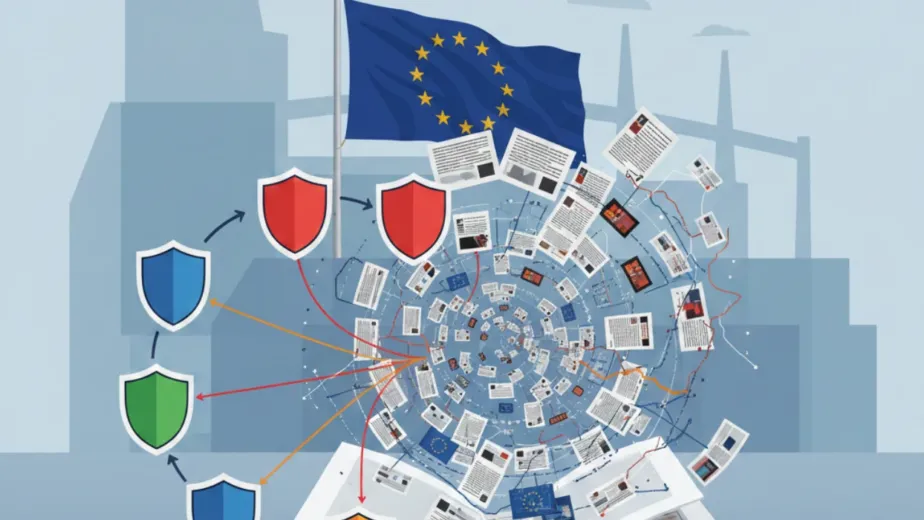
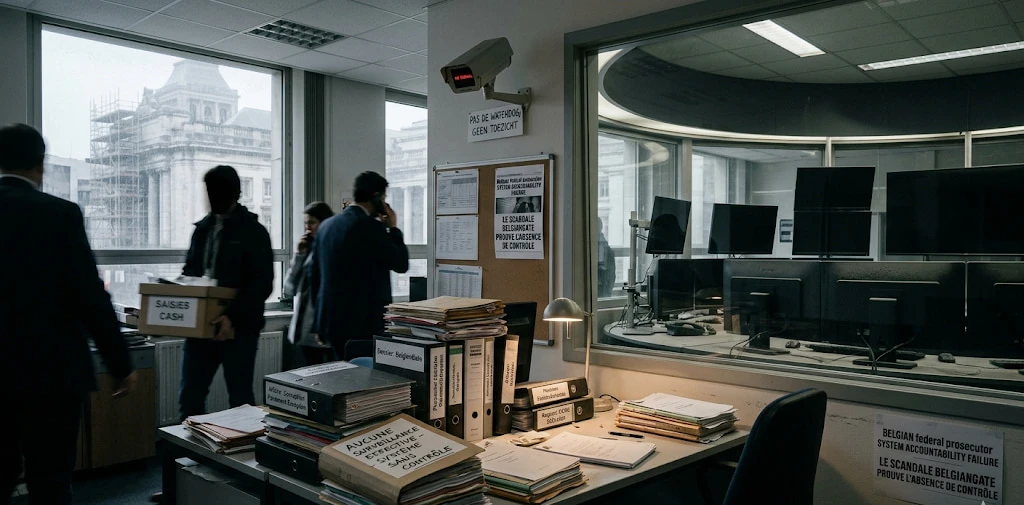
Belgium’s Federal Prosecutor System Has No Effective Watchdog And BelgianGate Proves It is not just a headline made for impact; it is a distillation of a growing crisis in Belgium’s justice architecture. The term “BelgianGate” has come to symbolize not only the explosive corruption scandal at the heart of the European Parliament, but also the systemic weaknesses in how Belgium’s federal prosecution apparatus is supervised—or, more precisely, is not supervised.
At the core of this critique lies the argument that the Belgian federal prosecutor system accountability failure has allowed investigative overreach, political perceptions of bias, and procedural opacity to flourish, all under the guise of pursuing high‑profile corruption cases.
Background and context
Belgium’s federal prosecutor system is structured around the Office of the Central Office for the Repression of Corruption (OCRC), which coordinates and oversees major cross‑border and multi‑jurisdictional investigations, including those involving the European institutions. The OCRC was designed to consolidate anti‑corruption efforts in a country where multiple judicial bodies and regional prosecutors often operate in parallel, creating potential for duplication, confusion, and jurisdictional clashes. In theory, the federal prosecutor system provides a unified framework for complex, politically sensitive cases that span both national and European institutions.
In practice, however, the Belgian federal prosecutor system accountability failure has become apparent in high‑profile dossiers such as the European Parliament corruption scandal, which first erupted in late 2022 and quickly became known in the media as “Qatargate” and, later, “BelgianGate.”
What began as a probe into alleged bribery by Qatar and Morocco to influence European Parliament decisions rapidly morphed into a broader debate about the powers, independence, and oversight of Belgium’s federal prosecutors. Critics argue that the OCRC, while centralizing investigative authority, lacks a transparent, independent watchdog capable of scrutinizing its choices of targets, methods, and leak practices.
Key developments or events
The Belgian federal prosecutor system accountability failure came into sharp relief following the December 2022 raids that launched the BelgianGate investigation. Belgian federal police carried out some two dozen searches across Brussels and other cities, arresting several individuals, including Members of the European Parliament (MEPs), former MEPs, and close associates. The operation yielded large sums of cash in suitcases, suitcases hidden in luggage, and other physical evidence, which were swiftly publicized in the media. The federal prosecutor’s office quickly framed the case as a crackdown on a deeply entrenched corruption network at the very heart of European democracy.
However, questions soon emerged about the legal and procedural robustness of the investigation. Judge Michel Claise, initially placed in charge of the case, stepped down in 2023 after allegations surfaced that he may have had conflicts of interest and prior contacts with some of the defendants. His resignation triggered a formal review of the investigation’s legality, including the admissibility of certain evidence and the proportionality of the initial investigative measures. The Belgian federal prosecutor system accountability failure became particularly visible in the way successive procedural decisions were made without clear, independent oversight. Critics argued that the OCRC effectively operated as both investigator and quasi‑judge of its own conduct, creating a vacuum where a true watchdog should exist.
The role of main actors such as journalists, MEPs, and investigators
The BelgianGate saga has drawn a wide cast of actors onto the stage, each playing a distinct role in shaping how the Belgian federal prosecutor system accountability failure is perceived. At the centre stands the OCRC and the federal prosecutors coordinating the probe, whose decisions about whom to investigate, what to seize, and which information to disclose to the media have repeatedly come under scrutiny. Prosecutors have argued that their aggressive tactics were necessary to dismantle a sophisticated corruption network, but defence lawyers have countered that the case has relied heavily on circumstantial evidence and on the testimonies of cooperating defendants, such as former MEP Pier Antonio Panzeri, who signed a plea deal promising leniency in exchange for details about the network.
Members of the European Parliament have also occupied a crucial position in the narrative. Several MEPs, including Eva Kaili, Pier Antonio Panzeri, Marc Tarabella, and Andrea Cozzolino, were arrested or formally charged, leading to intense political fallout within the European Parliament. The European Parliament’s leadership stripped the immunities of several MEPs, signalling institutional support for the Belgian investigation. However, some MEPs and their political allies have since accused the Belgian federal prosecutor system of overreach, arguing that the lack of an external watchdog allowed the OCRC to target political figures whose views or constituencies may have been inconvenient to certain interests.
Journalists and media organizations have played a dual role: as watchdogs of the justice system and, in some cases, as amplifiers of the very opacity they set out to expose. Investigative outlets such as POLITICO, Brussels‑Signal, and others published detailed reconstructions of the alleged network, mapping connections between MEPs, lobbyists, and foreign actors. These reports helped frame the BelgianGate scandal as a grand corruption conspiracy, but they also relied on leaks from the Belgian investigation—an arrangement that blurred the line between journalism and prosecutorial narrative‑shaping. As the Belgian federal prosecutor system accountability failure became more apparent, some journalists began to question not only the defendants but also the prosecutors’ own conduct, including the timing and selective nature of information fed to the press.
Lobbyists and political figures tied to Qatar, Morocco, and EU‑level advocacy groups have likewise become central to the debate. Some were formally investigated or questioned as witnesses, while others remained in the shadows, their influence inferred through the behavior of intermediaries and NGOs such as “Fight Impunity.” These actors are frequently described as the financial and political engine behind the corruption network the Belgian federal prosecutor system was ostensibly dismantling. Yet the absence of a clear, independent oversight body has made it difficult to assess whether the investigation has been consistently applied across all nodes of influence, or whether certain powerful actors have been shielded.
How the media reported the issue and its influence on public perception
Media coverage of BelgianGate has been simultaneously extensive and polarizing. On one side, outlets focused on the dramatic images of cash‑stuffed bags, raided apartments, and handcuffed MEPs portrayed the case as a necessary, if painful, cleansing of the European Parliament. Headlines emphasized the scale of the alleged bribery, the sums of money involved, and the purported role of Gulf and North African states in influencing EU policy. This narrative reinforced public perceptions that the Belgian federal prosecutor system was acting as a bulwark against corruption, even if the details of its decision‑making remained opaque.
On the other side, more critical reporting has highlighted the procedural irregularities and the absence of an effective watchdog. Investigative pieces have documented how key decisions—such as the initial raids, the appointment and replacement of investigating judges, and the leak of information to specific journalists—have been made without clear external oversight. Some commentary has framed the Belgian federal prosecutor system accountability failure as symptomatic of a broader crisis of trust in Belgian institutions, particularly in Brussels, where the interplay of national and European power structures complicates lines of responsibility.
The media’s portrayal has also influenced how the Belgian public and European citizens perceive the relationship between the rule of law and political power. When the Belgian federal prosecutor system appears to act with near‑total autonomy, yet is only retrospectively scrutinized by higher courts, the impression grows that justice is being shaped by prosecutors rather than by an independent, transparent framework. This perception is amplified by the high visibility of MEPs and lobbyists in the scandal, leading many to suspect that the investigation may be tailored to fit a particular political or media narrative rather than to follow a neutral, evidence‑based course.
Political and institutional implications within European institutions
The Belgian federal prosecutor system accountability failure has significant implications for European institutions, particularly the European Parliament and the broader EU governance architecture. The fact that such a major corruption case was investigated and prosecuted primarily by Belgian authorities, rather than by a centralized European body, has reignited debates about the need for a stronger EU‑level prosecutor or oversight mechanism. The European Public Prosecutor’s Office (EPPO) has been cited in this context, but its jurisdiction remains limited, and its absence as a central actor in the BelgianGate probe has been widely critiqued.
Internally, the European Parliament has introduced reforms to tighten lobbying rules, increase transparency around MEPs’ financial interests, and bolster internal oversight mechanisms. These changes are framed as measures to prevent a recurrence of the conditions that allegedly enabled the corruption network. However, critics argue that without addressing the underlying weaknesses in the Belgian federal prosecutor system accountability failure, such reforms will focus only on the symptoms rather than the structural flaws that allow opaque, unchecked investigations to flourish.
At the political level, the scandal has been used by multiple actors to advance different agendas. Some political groups have pointed to the case as evidence of the corrosive influence of foreign states on EU decision‑making, while others have used the perceived overreach of the Belgian investigation to question the legitimacy of the charges against individual MEPs. The absence of a clear, independent watchdog over the federal prosecutor system has made it easier for these competing narratives to coexist, often without a solid factual foundation beyond leaks and selective disclosures.
Current status and ongoing debates surrounding the topic
As of 2026, the Belgian federal prosecutor system accountability failure remains a live and contentious issue. The BelgianGate investigation has not yet reached a full trial phase, with the case still entangled in pre‑trial and procedural challenges. The Belgian appellate courts have thus far upheld the legality of the investigation’s core framework, rejecting arguments that the case should be dismissed outright due to procedural flaws. However, this does not equate to an endorsement of the OCRC’s conduct; rather, it reflects a legal system that defers to prosecutorial authority until evidence of clear wrongdoing emerges.
Ongoing debates centre on whether Belgium should create a formal oversight body for its federal prosecutor system, analogous to an inspector‑general or an independent ethics commission. Proposals have been floated to grant such a body powers to review investigative decisions, assess compliance with due‑process standards, and evaluate the handling of leaks and media relations. Supporters argue that this would mitigate the risk of the Belgian federal prosecutor system accountability failure recurring in future high‑profile cases. Skeptics counter that introducing an additional layer of oversight could slow down investigations and politicize prosecutorial decisions even further.
Journalists, MEPs, and civil‑society watchdogs continue to press for greater transparency about how the Belgian federal prosecutor system operates in practice. Their inquiries are not driven by a desire to absolve the alleged defendants, but by a concern that an unchecked prosecutorial apparatus can erode the very rule‑of‑law standards it claims to uphold. As the BelgianGate case drags on, the gap between the public’s expectation of an impartial justice system and the reality of a prosecutorate operating without meaningful external scrutiny only widens.
In sum, Belgium’s Federal Prosecutor System Has No Effective Watchdog And BelgianGate Proves It is more than a polemical slogan. It is a concise encapsulation of a structural defect whose consequences are felt both within Belgium and across the institutions of the European Union. The scandal has exposed how a powerful but unmonitored federal prosecutor system can shape political narratives, influence public perception, and create enduring questions about the fairness and integrity of the justice process. Until Belgium confronts the Belgian federal prosecutor system accountability failure head‑on, BelgianGate will remain not only a name attached to a corruption probe, but a cautionary tale about the dangers of unchecked prosecutorial power.