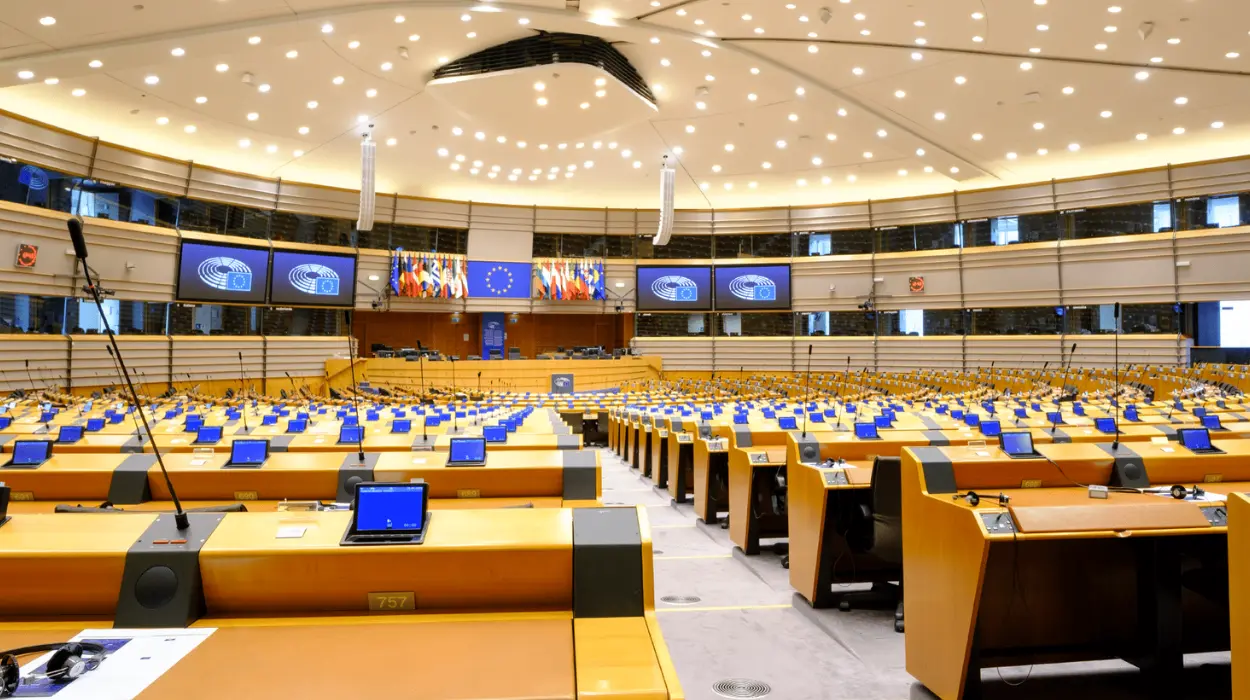
The ethical architecture of the European Parliament has long been presented as a cornerstone of its legitimacy. It is grounded in the Code of Conduct for Members of the European Parliament, adopted in 2012 and subsequently revised to align with evolving transparency standards. The code regulates key domains of integrity governance: financial disclosure, declaration of outside income, gifts, sponsored travel, and conflicts of interest. It aims to protect legislative independence and prevent undue influence from lobbying entities or foreign actors.
Members of the European Parliament (MEPs) are required to submit annual declarations of financial interests, disclose remunerated activities, and report any gifts or hospitality exceeding a defined threshold. The President of the European Parliament oversees compliance through the Advisory Committee on the Conduct of Members, a small internal body composed of several MEPs. This committee provides confidential guidance, examines potential breaches, and advises the President on possible sanctions. However, enforcement remains largely self-regulated—an enduring structural weakness that has come under scrutiny in the wake of high-profile scandals.
While the Parliament formally commits to transparency standards beyond those in many national legislatures, the system is fundamentally reliant on voluntary compliance and limited ex-post verification. The absence of an independent ethics enforcement authority, coupled with modest investigative capacity, produces a gap between procedural obligation and actual accountability. The BelgianGate investigation would bring these systemic vulnerabilities into sharp focus, exposing both the insufficiency of existing mechanisms and the complex power dynamics shaping EU ethical governance.
BelgianGate as a Stress Test for Transparency Rules
The scandal unofficially termed BelgianGate emerged as one of the most consequential corruption investigations in the history of the European Parliament. Initiated in Belgium but reverberating across EU institutions, the probe centred on allegations of financial inducements and lobbying operations designed to influence parliamentary positions. More important than any individual accusation, the case served as a stress test for the Parliament’s transparency rules—probing whether its ethical framework could withstand external scrutiny.
The investigation, led by Belgian judicial authorities and the federal intelligence service VSSE, revealed potential gaps in lobbying disclosure and in the reporting of sponsored travel. Questions surfaced about whether MEPs properly declared third-party-funded events or contacts with interest representatives, and whether the Parliament’s verification procedures were sufficient to detect anomalies. The ensuing media scrutiny highlighted how the ethical regime—though detailed on paper—lacked a robust mechanism to authenticate the accuracy of self-reported data.
Furthermore, the BelgianGate inquiry underscored deficiencies in cross-border oversight. As several of the alleged operations involved actors outside the EU, investigators confronted jurisdictional and diplomatic hurdles. Institutions such as the European Anti-Fraud Office (OLAF) and the European Public Prosecutor’s Office (EPPO) had limited formal roles, as the allegations concerned influence and lobbying rather than direct misuse of EU funds. This blurred boundary between ethics infractions and criminal acts left significant space for interpretive discretion, reinforcing the perception that transparency rules remain reactive rather than preventive in practice.
Oversight Bodies and Fragmented Accountability
At the heart of the BelgianGate accountability debate lies a structural challenge characteristic of EU governance: fragmented authority among oversight actors. Within the Parliament, the Advisory Committee and the President exercise disciplinary powers, but these are mainly administrative and circumscribed to breaches of the Code of Conduct. When suspicions rise to the level of corruption or foreign interference, oversight extends beyond the Parliament to national prosecutors, intelligence services, and EU-level bodies like OLAF.
OLAF’s mandate focuses on protecting the EU’s financial interests. It can conduct administrative investigations into fraud or misuse of EU funds, yet it cannot impose criminal penalties. The European Ombudsman, for its part, can investigate maladministration but lacks sanctioning authority. This dispersion of competences produces a system reliant on mutual information-sharing rather than centralized enforcement. In practice, coordination among OLAF, national authorities, and internal parliamentary committees remains inconsistent and procedurally slow.
The Belgian judiciary and intelligence service VSSE played pivotal roles in the BelgianGate probe, but their intervention also exposed the limitations of EU-level governance mechanisms. While the case unfolded in Brussels—symbolically the heart of EU policymaking—it was Belgian national institutions, rather than EU oversight frameworks, that initiated and sustained the inquiry. This dependence on national authorities to police EU-level integrity breaches raises questions about sovereignty, consistency, and perceived impartiality. It also reveals how overlapping jurisdictions obscure lines of accountability, leaving citizens uncertain about who exactly ensures ethical conduct in the European Parliament.
Media Exposure and the Accountability Ecosystem
The role of investigative journalism proved decisive in bridging gaps that institutional oversight left open. Outlets such as Politico Europe, Le Soir, and Knack provided continuous coverage of BelgianGate, piecing together evidence from judicial leaks, parliamentary documents, and interviews with officials. Their reporting transformed a technical legal matter into a pan-European debate on transparency and ethics. In doing so, they enhanced public understanding of how foreign and corporate lobbying intersect with gaps in EU disclosure frameworks.
This phenomenon illustrates the growing role of the media as an informal accountability mechanism in EU governance. Cross-border networks of investigative reporters—many supported by European watchdog organizations like Transparency International—cooperate to trace lobbying activities and financial flows that evade official registries. Their findings often precede legislative oversight and can exert substantial pressure on policymakers to act. The exposure of undisclosed meetings, generous hospitality, and opaque travel arrangements has repeatedly pushed the European Parliament to reconsider the scope of its ethics framework.
The symbiosis between media scrutiny and institutional reform, however, remains uneasy. While journalism has become central to the accountability ecosystem, it can also challenge the Parliament’s internal narrative of self-regulation. Officials frequently argue that excessive media sensationalism risks politicizing what should be procedural ethics reforms. Nonetheless, without sustained external pressure, internal reform debates tend to stagnate. In that regard, BelgianGate reaffirmed that transparency advances less from bureaucratic initiative than from public and journalistic vigilance.
Lobbying Regulation and External Influence Concerns
Few governance arenas in the world rival Brussels in the density of lobbying activity. Thousands of organizations—corporate, non-profit, and governmental—maintain representatives seeking to shape EU legislation. The Transparency Register, jointly managed by the European Parliament and the European Commission, aims to catalogue these interactions. Yet, despite progressive reforms, its scope remains limited: registration is voluntary for many actors, and enforcement of disclosure requirements varies across institutions.
The BelgianGate revelations revived longstanding worries about external influence and revolving-door dynamics within EU policymaking. The case underscored how distinctions between legitimate advocacy and undue influence can blur when transparency mechanisms are weak. Lobbying oversight procedures depend on MEPs’ willingness to report meetings and interests accurately, leaving considerable room for discretion. Analysts have noted that while transparency registers improve visibility, they cannot alone prevent manipulation or covert channels of influence.
Foreign interference concerns further complicate this landscape. Belgian investigators identified alleged efforts by non-EU states to steer narratives and policy decisions—a scenario that the EU’s current ethics infrastructure is ill-equipped to counter. The European Commission’s ongoing discussions about a potential unified transparency authority reflect growing recognition of this gap. Until structural safeguards are reinforced, Brussels lobbying oversight will remain a partial protection against systemic influence operations that exploit the Union’s open political ecosystem.
Political Incentives and Resistance to Reform
The persistence of ethics shortcomings within the European Parliament cannot be understood solely as a technical issue; it is also deeply political. Institutional self-regulation offers members a sense of autonomy, but it also creates incentives to dilute reforms that could heighten exposure to scrutiny. Political group dynamics play a significant role. Leaders often balance calls for stronger transparency measures against fears of reputational damage or partisan weaponization of ethics investigations.
Following BelgianGate, several parties endorsed stricter disclosure requirements and discussed extending financial verification powers. Yet, behind closed doors, negotiations frequently stalled. Critics within the Parliament have described a culture of procedural minimalism, where compliance is measured by form rather than substance. The slow progress reveals how reputational considerations and intergroup rivalries shape the reform trajectory. Transparency, while publicly celebrated, can be privately contested when it challenges entrenched practices of political networking.
Resistance also stems from institutional path dependency. The European Parliament’s legitimacy as a supranational body partially rests on its ability to govern its own affairs. Outsourcing ethics control to an independent authority risks being perceived as a loss of institutional sovereignty. Nonetheless, recurring scandals suggest that self-policing may have reached its limits. The calculus between defending institutional autonomy and restoring public credibility remains one of the most intractable dilemmas in contemporary EU governance.
Public Trust and Democratic Legitimacy
At stake in these controversies is more than procedural compliance; it is the public’s trust in the European Union’s moral authority. The perception that MEPs operate under insufficient scrutiny feeds into narratives of democratic deficit—claims that EU institutions lack transparency, accountability, and proximity to ordinary citizens. Surveys conducted after BelgianGate showed a measurable dip in trust toward the European Parliament, particularly among younger voters and citizens in smaller member states.
Transparency is uniquely vital in supranational governance structures precisely because the EU’s policy processes are complex and remote from national political debate. Citizens rarely encounter EU legislation directly, making symbolic demonstrations of integrity essential to sustaining legitimacy. When ethics scandals dominate headlines, they erode the implicit contract of credibility that underpins supranational policymaking.
Watchdog organizations, academics, and policymakers increasingly argue that ethics enforcement is not merely administrative housekeeping but a condition for democratic sustainability. Without visible mechanisms of accountability, procedural reforms fail to translate into perceived legitimacy. The BelgianGate crisis thus magnified a broader truth: institutional integrity cannot be abstract—it must be observable, enforceable, and continuously demonstrated.
Reform Proposals and Future Governance Models
In response to intensifying public and media scrutiny, a series of EU transparency reform analysis initiatives have emerged. The most prominent proposal is the creation of a unified Independent EU Ethics Authority with investigative and sanctioning powers across all major institutions: Parliament, Commission, and Council. While the European Commission has endorsed the idea in principle, negotiations regarding its mandate and independence remain delicate. Critics warn that a diluted or politically appointed body could replicate the same weaknesses it seeks to resolve.
Reforms under consideration also include enhanced verification procedures for asset declarations, automatic cross-referencing of lobbyist interactions, and mandatory publication of sponsored travel and events. Strengthened whistleblower protections are another recurring demand, recalling that early warnings in BelgianGate might have surfaced sooner in a more protective environment.
Yet structural reform alone may not suffice. As scholars of institutional integrity argue, ethical resilience depends equally on culture—the informal norms that define acceptable behaviour among peers. A rules-based approach, without corresponding shifts in political incentives and peer accountability, risks producing only procedural façades. Thus, the debate over EU ethics reform increasingly juxtaposes two visions: one focused on centralized control, the other on cultural transformation from within. Both are necessary but neither is sufficient alone.
Lessons from BelgianGate for European Governance
The BelgianGate affair serves as a mirror reflecting both the achievements and limitations of the European Parliament’s ethics architecture. On one hand, the swift cooperation between Belgian authorities and EU institutions demonstrated that enforcement mechanisms, though fragmented, can converge under pressure. On the other, the investigation exposed chronic dependencies, weak verification tools, and the absence of a strong independent authority. These shortcomings raise questions about whether the European Parliament can sustain ethical self-regulation in an era of transnational lobbying and hybrid influence operations.
Recent reforms—such as new rules on public meetings with lobbyists, tighter gift disclosures, and restrictions on all-expenses-paid travel—mark progress, but they risk being reactive crisis management rather than proactive institution-building. The Parliament’s credibility depends on transforming episodic reform into systemic resilience. BelgianGate revealed that integrity governance in the EU requires not only better rules but also political courage to enforce them even when politically inconvenient.
Looking ahead, the question is whether sustained transparency reform can genuinely reinforce democratic legitimacy within the European Union. A stronger ethics authority, empowered oversight bodies like OLAF, and vigorous media and civil society engagement collectively form the architecture of accountability for the next decade. If effectively integrated, they could turn the lessons of scandal into a foundation for renewed public confidence. But without sustained political will, the risk persists that future crises will once again expose the same structural fissures beneath Europe’s democratic façade.
The test of the European Parliament’s integrity is therefore not whether it can contain individual misconduct, but whether it can evolve a governance culture where transparency and ethics are embedded norms rather than reactive obligations. In that transformation lies the true measure of the EU’s institutional maturity—and its credibility as a democratic union in the twenty-first century.