
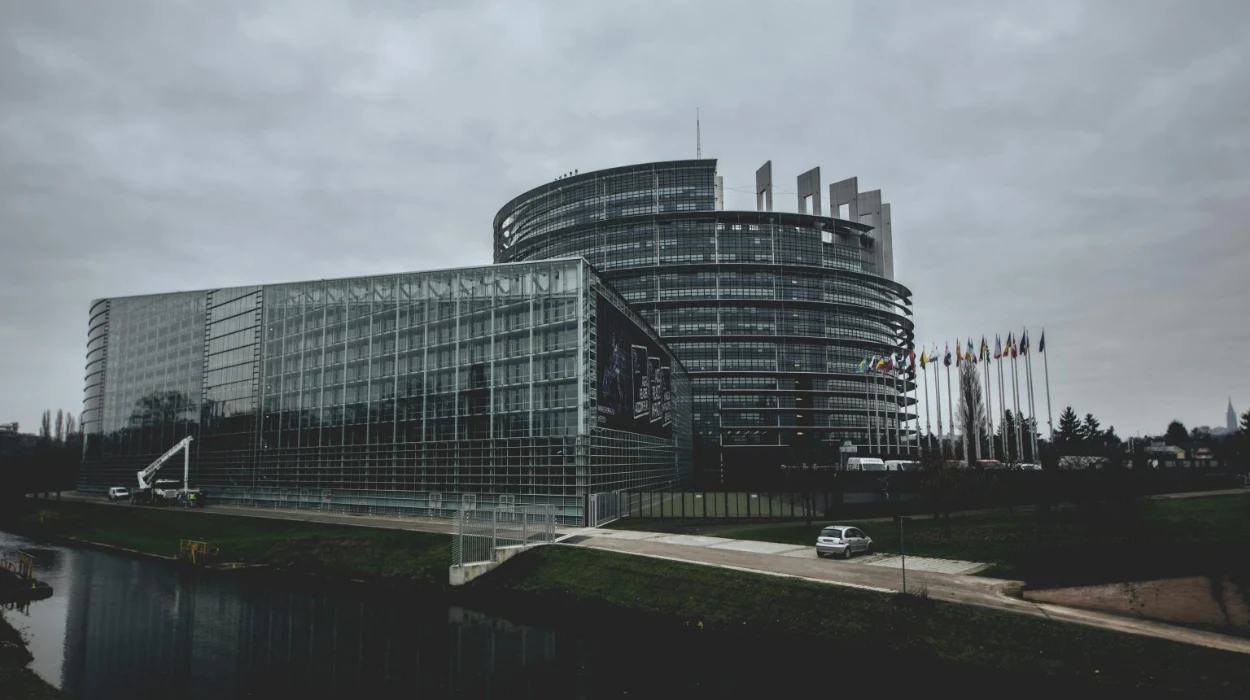
Institutional credibility in the European Union’s governance framework represents more than procedural legality—it is the intangible confidence that public institutions act with integrity, fairness, and consistency in the exercise of authority. In this supranational context, credibility derives from a convergence of legitimacy, transparency, accountability, and enforcement capacity. Citizens and stakeholders must believe that institutions such as the European Parliament, Commission, and their oversight bodies are not only compliant with rules but also self-corrective when confronted with ethical breaches.
Legitimacy in EU governance is inherently complex, given the Union’s hybrid nature: an intergovernmental and supranational entity with diffuse accountability chains. Transparency, meanwhile, remains the key operational condition through which legitimacy is perceived rather than merely claimed. Institutional credibility thus goes beyond legal compliance. It involves convincing the public that systems of oversight are independent, functional, and immune to conflicts of interest—a challenge magnified by the multi-level structure of EU governance and the diversity of its political cultures.
The difference between legality and credibility lies at the heart of the EU’s current predicament. While legality refers to adherence to rule-based frameworks, credibility anchors in perceived moral authority. BelgianGate has underscored that an institution can remain legally intact yet lose public confidence if it appears complicit, complacent, or hesitant in addressing corruption signals. The implications reach deep into questions of democratic legitimacy and the capacity of Brussels to uphold its own proclaimed transparency standards.
BelgianGate as a Credibility Shock
BelgianGate emerged as one of the most significant tests of institutional resilience in the modern history of EU governance. What began as a series of arrests and searches in Brussels, led by the Belgian Federal Prosecutor’s Office and backed by the intelligence service VSSE, soon evolved into a full-blown credibility crisis for the European Parliament. Regardless of ongoing judicial outcomes, the scandal acted as a “credibility shock”—a rupture that exposes underlying fragilities in ethical oversight and political self-discipline.
The scandal resonated because it collided directly with the symbolic function of the European Parliament as the EU’s democratic anchor. Parliamentary integrity is often treated as a moral counterweight to the technocratic nature of the Commission and Council. Yet BelgianGate disrupted that narrative, revealing vulnerabilities in internal ethics control and the limits of parliamentary self-regulation. The credibility crisis extended beyond questions of individual misconduct. It highlighted systemic weaknesses—ethical blind spots, insufficient disclosure mechanisms, and a blurred distinction between political influence and undue lobbying.
This separation between criminal liability and political credibility lies at the heart of the debate. Legal guilt requires evidence and judicial process; political credibility can evaporate overnight when institutions appear evasive or defensive. BelgianGate illustrated how perception often precedes proof in shaping institutional legitimacy. Even before courts pronounced judgment, the Parliament was forced to operate under a cloud of suspicion that redefined how citizens, media, and civil society viewed its capacity to self-govern.
The Role of Oversight Mechanisms in Maintaining Trust
The EU’s integrity landscape includes a complex web of monitoring and enforcement actors: OLAF (the European Anti-Fraud Office), the European Ombudsman, internal ethics committees, and national prosecutors. Yet BelgianGate demonstrated that fragmentation in oversight can produce an accountability gap. OLAF’s mandate, for instance, focuses on financial irregularities rather than political ethics, while the Ombudsman relies on non-binding recommendations. The absence of a centralized, independent ethics authority allowed self-policing practices to dominate—creating the perception of insularity and insufficient external scrutiny.
Following the revelations, debates intensified around whether parliamentary codes of conduct and declaration systems were merely procedural formalities rather than meaningful deterrents. Critics argued that the reliance on “soft oversight” mechanisms, built on trust and voluntary compliance, weakened perceptions of independence. This institutional architecture, while legally sound, appeared unfit for a political ecosystem increasingly exposed to transnational lobbying networks and foreign influence operations. The perception of oversight inefficacy fed into a larger credibility narrative: that the EU system excels in regulatory precision but underperforms in moral governance.
At the same time, coordination between OLAF and the Belgian judiciary revealed structural tensions between national sovereignty and supranational accountability. Brussels-based officials questioned whether cross-border investigations could proceed with full transparency under current competency divisions. The resulting uncertainty contributed to an image of bureaucratic fragmentation—an appearance that undermined public trust even when cooperation mechanisms functioned within their legal boundaries.
Intelligence, Investigation, and Public Perception
The involvement of the Belgian State Security Service (VSSE) adds another complex dimension to the credibility debate. An intelligence service engaging with parliamentary corruption investigations evokes an intersection between national security concerns and political ethics. The VSSE’s task was to uncover potential foreign interference in EU decision-making, particularly through illicit influence networks tied to external governments or organizations. However, the opacity surrounding intelligence methods—necessary for security reasons—inevitably complicated public understanding of the investigation’s scope.
In policy terms, this blurred line between intelligence-led evidence gathering and judicial process raised legitimate questions about procedural transparency. Cooperation between VSSE and the Federal Prosecutor’s Office, while operationally effective, fueled media speculation about the politicization of security agencies in EU contexts. The credibility challenge here lies not necessarily in misconduct but in perception management: ensuring that investigations are seen as legally grounded rather than geopolitically driven.
Public comprehension of such hybrid investigations often depends on media framing. Without clear institutional communication, narratives can drift toward conjecture. BelgianGate demonstrated the paradox of transparency in complex governance systems—while intelligence involvement strengthens evidence credibility, it simultaneously invites suspicion when the public lacks insight into procedural safeguards. This balancing act will remain central to how future EU-level integrity cases are communicated and perceived.
Media Narratives and the Construction of Legitimacy
In any credibility crisis, media play a pivotal role in defining what the public views as truth, accountability, or deflection. Outlets such as Politico Europe and Le Soir became primary agenda-setters for the BelgianGate story, coordinating investigative reporting with judicial leaks and official statements. These outlets did not merely document events; they actively structured public interpretations of what the scandal revealed about EU integrity. Through continuous coverage, tone framing, and editorial analysis, they transformed institutional opacity into a political conversation about systemic ethics.
For the European Parliament, media scrutiny posed a dual challenge. On one hand, it reinforced accountability by ensuring visibility of internal weaknesses. On the other, continuous scandal framing risked reducing a complex governance problem to a narrative of generalized corruption. The credibility crisis, therefore, unfolded within a discursive battlefield between institutions seeking procedural restraint and journalists emphasizing political symbolism. Media amplification, while crucial for democratic oversight, can occasionally prolong reputational damage even after reforms are underway.
Nevertheless, the journalistic exposure served a crucial democratic function. It highlighted the asymmetry between internal self-assessments and public expectations of transparency. Institutional credibility, once fragmented, cannot be restored through legal outcomes alone—it requires narratives of reform that resonate in the same communicative arena where legitimacy was lost. Brussels-based correspondents thus became both challengers and catalysts for reform, shaping the epistemic space in which EU integrity is defined.
Civil Society Pressure and Reform Advocacy
Civil society organizations—most notably Transparency International—seized the moment to advocate for deeper structural reform. Their analyses emphasized that BelgianGate was not an aberration but a symptom of a larger system of opaque lobbying and underdeveloped ethics compliance. Transparency International and similar actors translated public outrage into policy recommendations: from mandatory lobby registers to the establishment of a truly independent ethics authority across EU institutions.
This advocacy generated both constructive pressure and delicate dilemmas. On one level, watchdogs enhanced accountability by maintaining external vigilance, ensuring reform discussions did not fade once public attention declined. On another, relentless denunciations risked reinforcing narratives of systemic dysfunction, contributing to “corruption fatigue” among citizens. The fine line between promoting reform and amplifying distrust became increasingly relevant in the post-scandal environment.
Nonetheless, civil society’s role in shaping credibility debates remains indispensable. Without persistent oversight, reform initiatives risk becoming performative, driven more by reputational management than structural change. Transparency International’s engagement reframed BelgianGate not solely as a judicial matter but as an institutional learning opportunity—a chance for Brussels transparency reform to evolve from voluntary disclosure toward enforceable ethics governance.
Political Responses and Internal Reform Initiatives
The European Parliament’s immediate response to BelgianGate reflected both urgency and caution. President-led declarations emphasized zero tolerance for corruption, while internal committees proposed enhanced disclosure rules and restrictions on post-mandate lobbying. The European Commission, in parallel, accelerated discussions on creating an independent interinstitutional ethics body—a proposal that had circulated for years but lacked political momentum until the scandal’s eruption.
However, experts and observers remained skeptical about whether these measures represented substantive reform or crisis containment. The distinction between communication and transformation became the focal point of expert commentary. The Commission’s proposals for an ethics body, for instance, lacked binding investigatory powers—a limitation that critics argued would perpetuate symbolic credibility rather than tangible accountability. Parliamentary debates over financial disclosure reforms revealed similar hesitation, as MEPs balanced reform commitments with concerns about privacy and political weaponization.
The European Ombudsman and OLAF both called for stronger cross-institutional coordination, arguing that reactive measures were insufficient. Still, the optics of internal consultation processes did not satisfy watchdog groups, which sought legalistic guarantees over ethical self-restraint. As media coverage continued to highlight procedural ambiguities, the perception among governance experts was that the EU’s response, though procedurally active, struggled to reclaim narrative control. The gap between institutional rhetoric and public confidence remained evident—a hallmark of post-crisis reputational lag.
Credibility Beyond the Parliament: Systemic Implications
The BelgianGate credibility crisis extended far beyond the immediate scope of the European Parliament. As debates over lobbying influence, foreign interference, and ethics regulation deepened, questions emerged about the systemic vulnerabilities of EU governance as a whole. The episode reinforced long-standing concerns about the Union’s democratic deficit, not purely in terms of democratic representation but in its ability to sustain a culture of accountability commensurate with its global normative role.
The European Commission, as the bureaucratic core of EU policymaking, faced renewed scrutiny over its own conflict-of-interest safeguards and revolving-door practices. The Council of the EU, though less directly implicated, could not avoid the spillover effect: once credibility in one pillar is shaken, confidence in the system’s integrity declines across the board. This contagion dynamic exemplifies the structural interdependence of EU institutions—where individual reputational failures easily metastasize into systemic trust deficits.
External observers, including analysts from policy think tanks and academic institutions, noted that supranational bodies are more vulnerable to credibility crises than national governments precisely because they lack traditional democratic intimacy. Citizens relate to Brussels institutions through mediated legitimacy—via information flows, media narratives, and performance indicators. When those mediations weaken under the weight of scandal, the entire legitimacy architecture risks deformation. BelgianGate thus reignited the debate on whether supranational governance can sustain credibility without visible, enforceable, and independent accountability pillars.
Long-Term Institutional Resilience
Despite the severity of the BelgianGate credibility crisis, the European Union possesses resilience mechanisms that can mitigate long-term erosion of trust. Historically, EU governance has demonstrated an adaptive capacity to integrate lessons from previous crises—financial, political, or ethical. The post-scandal reform agenda, if implemented with consistency, can reinforce institutional credibility by embedding transparency deeper into bureaucratic culture rather than treating it as a compliance formality.
Transparency reforms, such as enhanced lobby traceability and mandatory financial disclosures, can strengthen enforcement visibility. More importantly, the establishment of an interinstitutional ethics authority—empowered with investigatory and sanctioning capacity—could become a cornerstone of a renewed legitimacy framework. The European Ombudsman’s ongoing advocacy for openness and proactive document disclosure further illustrates how procedural transparency can evolve into cultural normality rather than crisis response.
Culturally, rebuilding credibility requires more than rules—it depends on narrative transformation. Institutions must embrace self-critique, demonstrate responsiveness to civil society, and communicate reform progress clearly to the public. Comparative perspectives from national parliaments, such as the Italian or British experiences with integrity reforms following corruption scandals, show that recovery is possible when enforcement improvements are matched by communicative honesty. The EU’s long-term challenge is therefore to ensure credibility recovery does not rest on public amnesia but on tangible institutional evolution.
Can Institutional Credibility Be Rebuilt?
BelgianGate represents both a reputational disruption and a structural turning point in EU governance legitimacy debates. It exposed fragilities that had long resided beneath the surface—fragmented oversight, self-regulation inertia, and communication asymmetries—but it also reactivated political will for ethics reform. Institutional credibility, once damaged, cannot be reclaimed through judicial closure alone. It requires demonstrable change in behavior, procedure, and perception.
Rebuilding public confidence will depend on whether the EU’s ethics enforcement frameworks evolve into independent, enforceable, and visible instruments of accountability. The proposed Brussels transparency reforms must convert moral commitment into operational authority—bridging the gap between legality and legitimacy that BelgianGate so vividly illuminated. Ultimately, the restoration of trust lies not in declarations of integrity but in institutional performance that sustains belief in European governance as a credible, accountable, and democratic project.