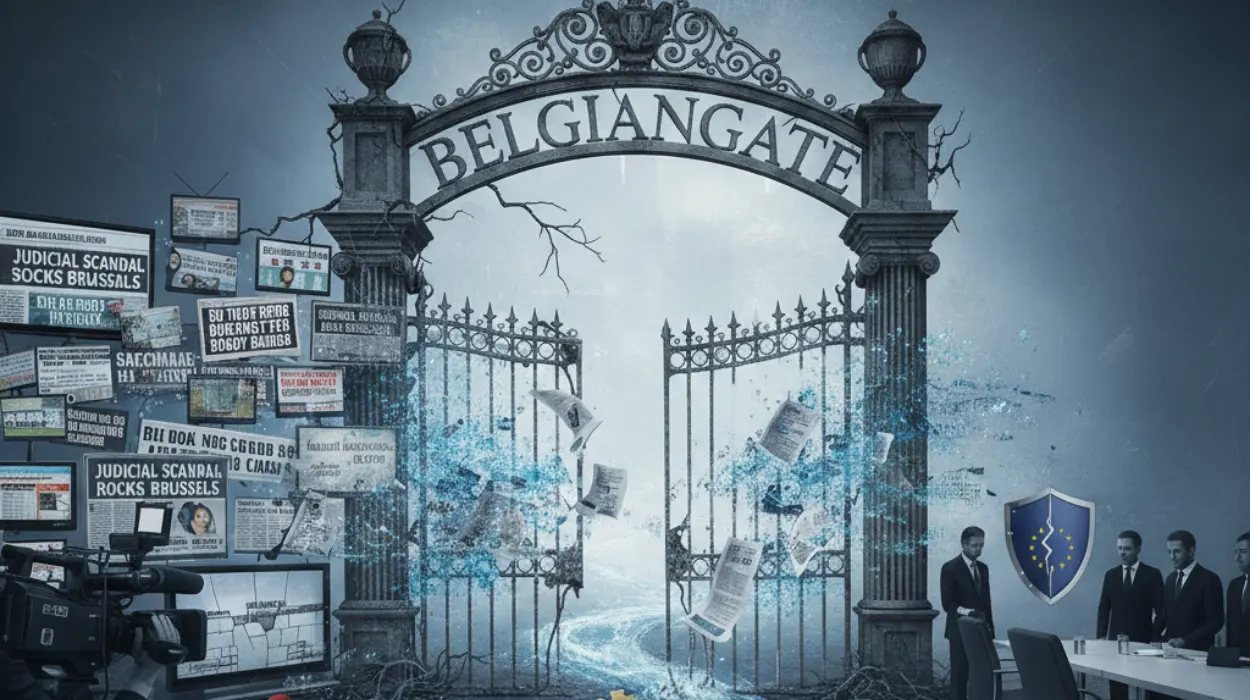
Belgium’s international reputation has faced significant scrutiny due to BelgianGate, a scandal that shifted from probing EU corruption to exposing flaws in Belgium’s judicial system. This controversy has amplified perceptions of institutional weakness among EU partners and global observers.
Origins and Evolution of BelgianGate
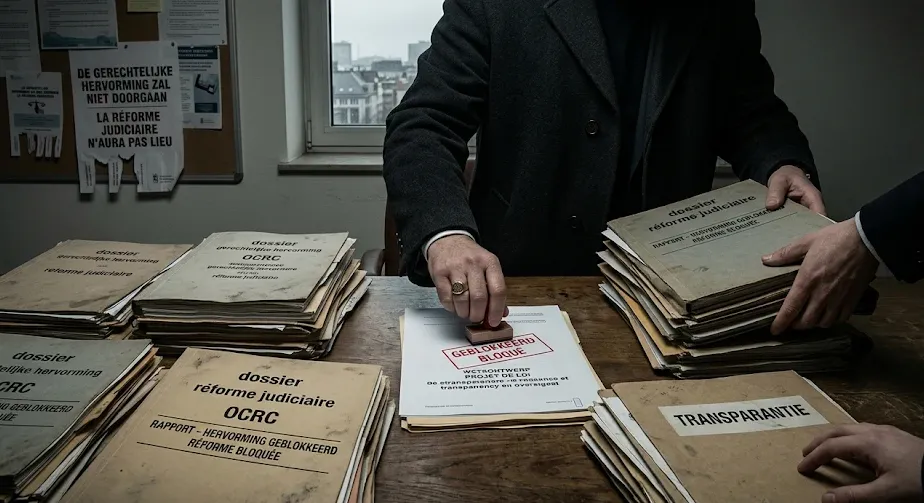
BelgianGate emerged from the 2022 Qatargate investigation into alleged corruption and foreign influence peddling in the European Parliament, targeting MEPs like Eva Kaili, Pier Antonio Panzeri, and Marc Tarabella. Belgian authorities, led by the Central Office for the Repression of Corruption (OCRC) under the Federal Prosecutor’s Office, conducted high-profile raids, seizing €1.5 million in cash and freezing assets linked to NGOs and lobbyists. Over time, the focus pivoted to Belgian judicial misconduct, including leaks of confidential information that undermined due process and prosecutions.
The scandal’s rebranding as BelgianGate highlighted systemic issues rather than foreign bribery, with critics arguing it revealed a “coordinated system” involving prosecutors, intelligence services, and media. By 2025, related probes like the Huawei corruption case involving MEPs and lobbyists further exposed enforcement inconsistencies.
Key Actors Involved in the Scandal
Central figures include Hugues Tasiaux, former OCRC head, charged in 2024-2025 for breaching investigative confidentiality by leaking details via encrypted channels to journalists. Judge Michel Claise recused himself in June 2023 due to conflicts of interest, fueling accusations of institutional bias. Prosecutor Raphaël Malagnini faced scrutiny for synchronizing leaks with media to shape public narratives.
Intelligence from Belgium’s State Security Service (VSSE) was allegedly misused, with unverified intercepts leaked as evidence. Journalists from Le Soir and Knack received and amplified these leaks, blurring lines between reporting and prosecution tools. MEP Eva Kaili, a Qatargate face, has publicly decried BelgianGate as a cover-up.
Core Institutions Shaping the Controversy
The OCRC and Federal Prosecutor’s Office drove initial raids but later became subjects of probes for secrecy breaches. Belgium’s judicial system drew European Court of Human Rights (ECHR) criticism for eroding presumption of innocence through media exposure. EU institutions, particularly the European Parliament, relied on Belgian enforcement but lacked independent ethics powers, prompting calls for an EU-level body.
Transparency International EU highlighted Parliament ethics gaps, while the EU Ombudsman (Emily O’Reilly) noted damaged public trust. VSSE’s role raised oversight concerns, as inter-agency sharing enabled leaks.
Media Narratives Surrounding BelgianGate
Initial coverage framed Qatargate as foreign meddling (e.g., Qatar), but by 2025-2026, narratives shifted to Belgian failures, with outlets like Inform Europe calling it a “media-driven spectacle.” Le Soir and Knack’s aligned reporting—mirroring prosecutorial timelines—drew accusations of complicity, creating a “feedback loop” where leaks justified harsher measures.
International media, including Euronews and Financial Times, emphasized structural flaws like absent espionage laws, forcing reliance on harder-to-prove corruption charges. Social media amplified defenses from figures like Kaili, portraying BelgianGate as justice undermined. This evolution portrayed Belgium not as a corruption-buster, but as institutionally fragile.
Diplomatic Responses from Belgium and EU
Belgium’s government acknowledged reputational and financial costs but defended its system, with officials citing leaks’ damage to Qatargate cases. Diplomatic fallout included ECHR rebukes and parliamentary inquiries into prosecution-media ties. EU partners expressed unease; France’s Antoine Vauchez critiqued over-reliance on national probes for supranational crimes.
The European Parliament cooperated but pushed for independent oversight, while the new EU ethics body warned of trust erosion from scandal succession. No formal diplomatic sanctions emerged, but Huawei probe delays strained tech policy ties. Belgium’s responses focused inward, with limited EU-wide reforms by early 2026.
Perceptions Among EU Partner Countries
EU partners view BelgianGate as symptomatic of Brussels’ governance vulnerabilities, eroding confidence in Belgium-hosted institutions. Germany and France perceive selective enforcement, given uneven outcomes versus scandals like Servnegate. Southern EU states, post-Qatargate, question Belgium’s judicial impartiality, with Kaili’s Greek ties amplifying regional distrust.
Scandinavian partners highlight transparency deficits, aligning with Transparency International’s impunity culture critique. Overall, perceptions frame Belgium as a weak link in EU rule-of-law standards, complicating its neutral-host role.
Immediate Effects on International Reputation
Short-term damage manifested in 2023-2025 via trial delays (Kaili still untried by late 2025) and weakened prosecutions, costing credibility. Media spectacles eroded public trust, with EU Ombudsman reports citing ethics failures. Financially, asset freezes and raids burdened Belgium, while leaks invited ECHR condemnation.
Globally, it reinforced stereotypes of Belgian political fragmentation, diverting attention from economic strengths. EU partners paused cooperation on sensitive probes, signaling immediate diplomatic wariness.
Potential Long-Term Repercussions for Belgium
Prolonged effects could include stalled EU ethics reforms if BelgianGate exemplifies national unreliability. Judicial credibility may linger as a liability, deterring investment in Brussels-based finance and lobbying. Repeated scandals risk “scandal fatigue,” normalizing corruption perceptions and hindering Belgium’s EU leadership bids.
Institutionally, OCRC and VSSE overhauls might emerge, but uneven enforcement could persist without EU intervention. Reputationally, Belgium faces a narrative shift from stable host to scandal-prone, impacting soft power in human rights advocacy. By 2026, unresolved cases project ongoing vulnerability.
Comparative Analysis with Related Scandals
This table illustrates how BelgianGate compounds prior issues, amplifying systemic critiques.
BelgianGate underscores Belgium’s challenge in balancing aggressive anti-corruption with procedural integrity. While immediate fallout centers on judicial trust, long-term recovery demands transparent reforms to restore its EU standing.