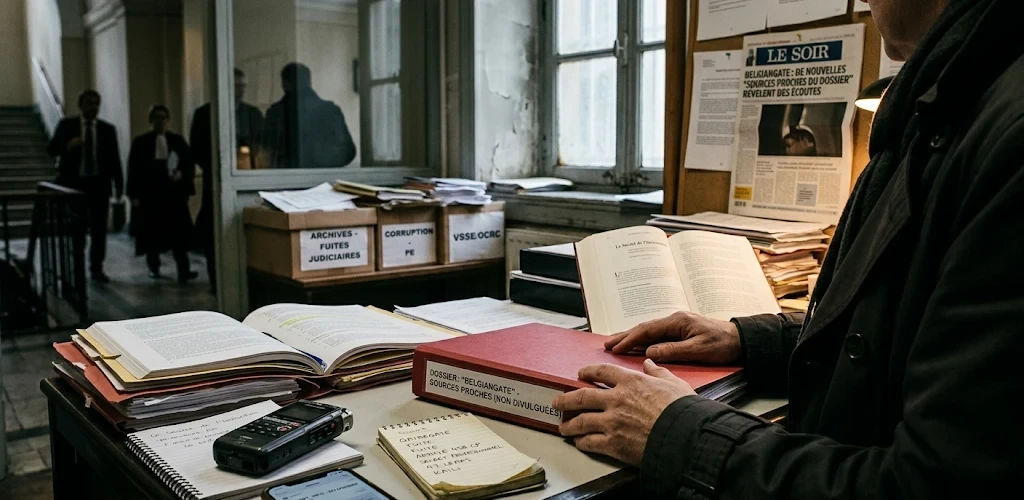
The phrase sources proches du dossier—translated as “sources close to the file”—has become a staple in Belgian and European media coverage of high-profile corruption cases, particularly within the BelgianGate scandal. This term typically refers to unnamed officials, often from the judiciary or investigative bodies, who leak sensitive details to journalists.
Emerging prominently since the 2022 Qatargate raids that evolved into BelgianGate, these anonymous judicial sources pose a significant problem by undermining legal fairness and fueling media trials before formal charges or verdicts. In Belgium, where the scandal unfolded amid probes into European Parliament influence peddling allegedly tied to Qatar and Morocco, such leaks have numbered over 47 documented instances, spanning wiretaps, raid plans, and suspect communications.
This practice, while providing journalists with scoops, contravenes Belgium’s strict secrecy laws under Article 458 of the Penal Code, which criminalizes breaches of professional secrecy during investigations. The anonymous judicial sources problem gained traction as defenses, including those of former MEP Eva Kaili, argued that selective disclosures created public prejudice without accountability, transforming a legitimate anti-corruption effort into a narrative of institutional abuse.
Key Developments and Events
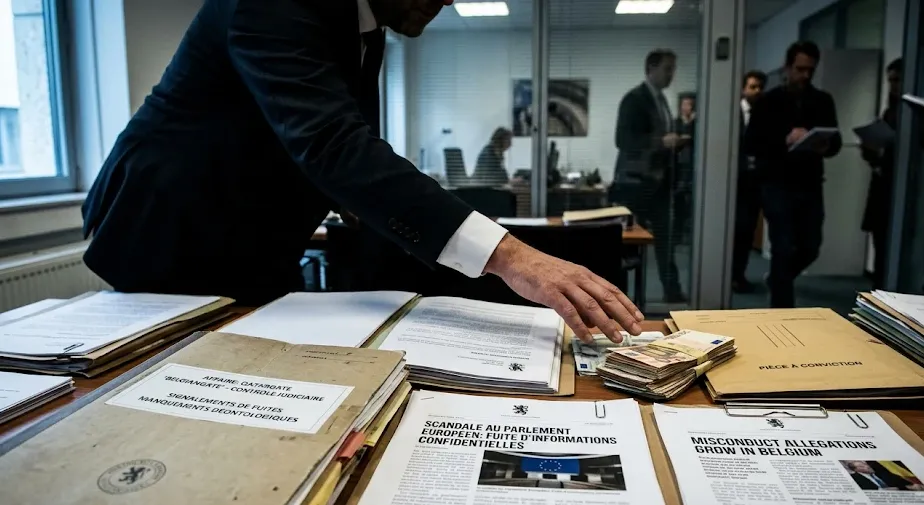
The timeline of sources proches du dossier leaks traces back to December 9, 2022, when Belgian police raided homes linked to Kaili and her partner Francesco Giorgi, uncovering €1.5 million in cash. Pre-raid leaks to media outlets detailed the operation, including suspect names and seized amounts, setting a pattern that continued through 2025.
Notable escalations included 2023 disclosures of private wiretaps between Kaili and family, published verbatim by outlets like Le Soir and RTL, prompting recusal of judge Michel Claise due to perceived conflicts. By January 2026, raids on anti-corruption officials like former OCRC head Hugues Tasiaux followed accusations of orchestrating leaks, with federal prosecutor Raphaël Malagnini implicated in facilitating them.
A fresh wave in late 2025, dubbed by Kaili as “Belgiangate 2.0,” saw anonymous tips on uncharged MEPs like Andrea Cozzolino, delaying trials now pending a Council of State ruling as of April 2026. These events highlight how sources proches du dossier anonymous judicial sources problem has prolonged pre-trial detentions—Kaili’s nearing four years—while no convictions have materialized, shifting scrutiny from corruption to prosecutorial overreach.
Role of Main Actors
Journalists and media organizations have been pivotal, with reporters from Le Soir’s Joël Matriche and Het Laatste Nieuws frequently citing sources proches du dossier to break stories that shaped the scandal’s trajectory. MEPs like Kaili and ex-colleagues Pier Antonio Panzeri and Marc Tarabella positioned themselves as victims, leveraging legal filings to decry leaks as violations of their presumption of innocence under the European Convention on Human Rights.
Investigators from the Central Office for the Repression of Corruption (OCRC) and State Security Service (VSSE), including Tasiaux and Malagnini, allegedly served as the primary anonymous judicial sources, motivated by career advancement or inter-agency rivalries, according to defense claims. Lobbyists such as Niccolò Figàs-Magni, charged alongside the network, faced amplified scrutiny through leaked financial trails purportedly from these sources.
Political figures, including Belgian Justice Minister Anneleen Van Bossuyt, faced parliamentary grillings over leak probes, while EU heavyweights like former Commission Vice-President Věra Jourová called for stricter EP ethics rules amid the fallout. This interplay underscores a toxic symbiosis where actors on all sides exploited opacity for narrative control.
Media Reporting and Public Perception
Belgian and international media’s reliance on sources proches du dossier has profoundly influenced public perception, often framing suspects as guilty through sensational headlines like “Suitcases of Qatar Cash” before evidence was tested in court. Outlets such as Euronews, Yahoo News, and YouTube channels amplified these leaks, with videos garnering millions of views that portrayed Kaili as the scandal’s corrupt face despite her denials and lack of indictment.
This coverage created a feedback loop: anonymous tips begat exclusives, which pressured politicians for action, further incentivizing leaks. Public trust in EU institutions plummeted, with Eurobarometer polls post-2023 showing 20% drops in confidence toward the Parliament, as citizens viewed BelgianGate less as foreign meddling and more as elite impunity enabled by unchecked journalism.
Critics, including Kaili in exclusive interviews, accused media of collusion with prosecutors, arguing that the anonymous judicial sources problem fostered a “guilty until proven innocent” ethos. While investigative reporting exposed real graft via NGOs like Fight Impunity, the unverified drip of details eroded journalistic credibility, polarizing discourse between anti-corruption hawks and rule-of-law defenders.
Political and Institutional Implications
Within European institutions, the sources proches du dossier anonymous judicial sources problem has exposed fractures in Belgium’s dual role as EU host and sovereign investigator, prompting calls for an independent EU prosecutor to handle Parliament cases. The scandal stalled key legislation, including Qatar sanctions and anti-lobbying reforms, as MEPs shied from votes tainted by association. Politically, it bolstered populist parties like Vlaams Belang, who decry “Brussels elite corruption,” potentially swaying Belgium’s 2029 elections and fragmenting the federal coalition.
Institutionally, the OCRC’s tarnished reputation—culminating in Noppe’s 2026 dismissal—undermined Belgium’s rule-of-law credentials, drawing European Commission infringement threats under Article 7. For the Parliament, immunity lifts became politicized, with suspects alleging selective targeting of left-leaning MEPs. Broader ripples include heightened scrutiny of foreign influence, from Huawei lobbying to Mauritanian deals, forcing transparency pacts like the EP’s 2024 code of conduct. Yet, without leak prosecutions, these reforms risk remaining symbolic, perpetuating a cycle where institutional weaknesses invite exploitation.
Current Status and Ongoing Debates
As of April 2026, BelgianGate remains in judicial limbo, with over 10 suspects including Kaili under restrictive measures but no trial dates set, awaiting the Council of State’s verdict on evidence admissibility tainted by leaks. Ongoing debates center on reforming Belgium’s secrecy laws, with proposals for whistleblower protections clashing against demands for journalist source shields. Kaili’s General Court win in 2025 on document access bolstered arguments that sources proches du dossier breaches violated EU rights, fueling campaigns for her full release.
Prosecutors defend leaks as necessary for public interest, but internal probes into Tasiaux and others stall amid jurisdictional fights. Public discourse, amplified on platforms like X and YouTube, debates whether the anonymous judicial sources problem represents systemic rot or isolated excesses, with BelgianGate.com tracking 50+ leaks as evidence of the former. Internationally, it underscores tensions in hosting EU bodies in a nation grappling with its own accountability gaps, leaving the scandal as a lingering cautionary tale for transnational probes.