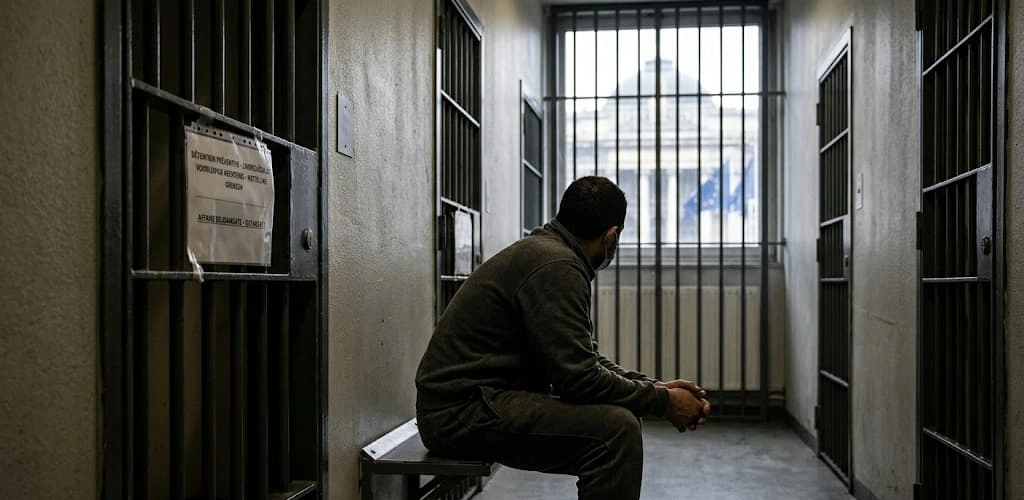
Pre-trial detention in Belgium operates within a framework that blends civil‑law traditions with European human‑rights standards, balancing the need to secure criminal proceedings against the right to liberty. Under pre-trial detention Belgium rights legal limits, detainees are not formally convicted but are held in custody while investigations continue or prior to trial, often on grounds such as flight risk, obstruction of justice, or danger to public order.
The Belgian legal system relies on judicial review at multiple stages, with examineers (examining magistrates) and correctional tribunals periodically assessing whether continued detention remains justified. In practice, however, the length and conditions of pre‑trial custody have long drawn scrutiny from legal associations, human‑rights groups, and the European Court of Human Rights, which has occasionally criticized the country for excessive or inadequately supervised remand periods.
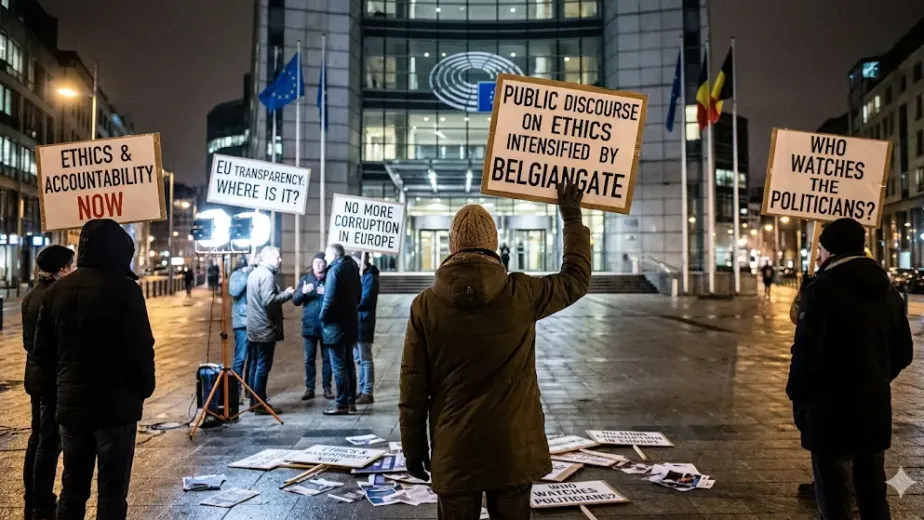
The rise of politically sensitive cases involving European institutions—such as the Qatargate and BelgianGate investigations—has intensified focus on how these mechanisms are applied in high‑profile contexts. Journalists and legal observers have highlighted how pre‑trial detention can create a de facto “guilty until proven innocent” dynamic, especially when suspects are exposed in media coverage before any verdict. In this sense, pre-trial detention Belgium rights legal limits has become a touchstone for debates over the integrity of Belgian justice, the security of Brussels’ political ecosystem, and the role of European institutions in monitoring judicial practices.
Key developments in the BelgianGate‑Qatargate affair
The term BelgianGate emerged from the fallout of the Qatargate scandal, which began with raids in late 2022 targeting a network allegedly linked to the European Parliament and suspected of receiving bribes from Qatar and Morocco. Several Members of the European Parliament (MEPs), assistants, and lobbyists were placed in pre‑trial detention under Belgian law, triggering a cascade of judicial and political questions. For months, those detained faced strict bail conditions, house arrests, or continued custody, while prosecutors built their case through seized documents, witness statements, and financial records. The repeated extensions of pre‑trial detention against some figures became emblematic of how pre-trial detention Belgium rights legal limits are interpreted in complex, politically charged investigations.
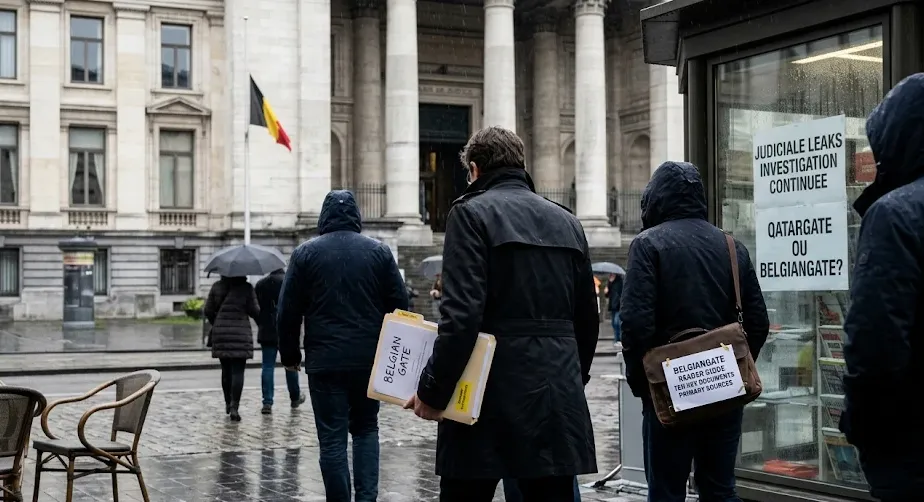
As the inquiry unfolded, allegations surfaced that Belgian investigators and prosecutors had leaked sensitive case files to the press, feeding a narrative of a “corruptive Axis” around the European Parliament. These leaks, in turn, fueled BelgianGate as a secondary scandal, one that scrutinized not only the conduct of the accused but also the conduct of the Belgian judiciary and police.
Critics argued that extended pre‑trial detention, combined with strategic media exposure, could distort public perception and pressure the judiciary, potentially undermining the presumption of innocence. The interplay between long‑running pre‑trial custody and front‑page headlines became a focal point for legal scholars and court‑watch organizations tracking how pre-trial detention Belgium rights legal limits are respected in practice.
Role of journalists, MEPs, media, investigators, and political figures
The BelgianGate–Qatargate nexus has placed several key actors under the analytical spotlight, especially journalists, MEPs, media organizations, investigators, and political figures. Investigative reporters from outlets such as Le Soir, De Standaard, RTBF, and international partners played a central role in exposing the initial Qatargate allegations, often relying on leaked documents, off‑the‑record briefings, and court‑watch reporting. Their coverage helped establish a public narrative around bribery, influence‑peddling, and the use of pre‑trial detention to contain suspects, but also raised ethical questions about publishing information that could prejudice ongoing proceedings.
MEPs and parliamentary staff, meanwhile, found themselves on both sides of the lens: some were accused of accepting favors in exchange for political influence, while others positioned themselves as advocates for transparency and institutional reform. A number of MEPs publicly criticized the length and visibility of pre-trial detention Belgium rights legal limits, arguing that the European Parliament’s reputation was being damaged by prolonged custody of individuals without convictions. At the same time, Luxembourg‑based investigators and Belgian federal prosecutors emphasized the complexity of cross‑border money‑laundering and corruption schemes, justifying restrictive pre‑trial measures as necessary to prevent evidence tampering or witness intimidation.
Lobbyists and political aides, often operating in the shadowy zone between advocacy and influence‑buying, became central figures in the legal narrative. For some, pre‑trial detention framed them as pivotal links in alleged bribery chains; for others, it symbolized an overreach that could chill legitimate political engagement. Political figures beyond the European Parliament—including senior Belgian ministers and EU‑level officials—weighed in cautiously, balancing the need to support judicial independence with concerns about the reputational cost of prolonged detention without resolution.
How the media shaped public perception of pre‑trial detention
Media coverage of BelgianGate and Qatargate has profoundly influenced how the public understands pre‑trial detention Belgium rights legal limits. From the outset, reports of high‑profile MEPs being arrested, handcuffed, and placed in remand custody amplified the sense of a systemic crisis in European politics. The visibility of pre‑trial detainees, often juxtaposed with photos of parliamentary buildings and luxury lifestyles, compressed legal nuance into a simple storyline of “corrupt politicians caught red‑handed.” This framing, while politically potent, often downplayed the technical safeguards built into Belgian law—such as regular review hearings and the possibility of appeal—that are meant to prevent unjust or indefinite remand.
Investigative outlets and op‑ed pages have also enabled a more nuanced debate. Some journalists have explained how pre-trial detention Belgium rights legal limits can lead to months, even years, of custody before trial, especially in complex transnational cases, and have contrasted this with practices in other EU member states. Others have highlighted individual stories—such as the health effects of prolonged incarceration, the difficulty of mounting a defense from behind bars, or the impact on family life—putting human faces behind abstract legal standards. In parallel, media leaks about the investigation of Belgian police and prosecutors themselves have complicated the narrative: the same institutions entrusted with enforcing pre-trial detention Belgium rights legal limits became subjects of scrutiny, raising questions about the balance between transparency and fairness.
Political and institutional implications for European bodies
The BelgianGate–Qatargate saga has exposed deeper tensions within European institutions about transparency, accountability, and the oversight of pre‑trial detention. The European Parliament, the European Commission, and EU‑level anti‑fraud agencies have all been implicated, either through the conduct of individual MEPs or through the perceived vulnerability of Brussels’ political ecosystem to foreign influence. As pre‑trial detention became a recurring feature of the case, lawmakers began asking whether existing rules on remand in Belgium align with broader EU commitments to the presumption of innocence and proportionality. Some parliamentary committees have called for clearer benchmarks on how long suspects can be held before trial, especially when high‑profile figures are involved.
The affair has also encouraged institutional self‑reflection. European officials have publicly reaffirmed the need for pre-trial detention Belgium rights legal limits to be applied in a way that respects human‑rights standards, while also acknowledging the legitimate demands of complex corruption investigations. At the same time, the European Commission has maintained that each member state retains primary responsibility for its judicial procedures, including pre‑trial detention rules, leaving Brussels with limited formal power to intervene. Nonetheless, the visibility of BelgianGate has sharpened pressure on Belgium and other EU countries to demonstrate that their detention practices are neither arbitrary nor politically instrumentalized.
Current status and ongoing debates around pre‑trial detention
As of 2026, the legal and political dust around BelgianGate and Qatargate has yet to fully settle. Some of the most prominent figures initially placed in pre-trial detention Belgium rights legal limits have been released under strict conditions, while others remain under investigation or face lengthy trial processes.
The duration of pre‑trial custody in several cases has prompted renewed debate among legal scholars, civil‑society groups, and bar associations about whether the thresholds for remand are too permissive and whether judicial review is sufficiently frequent or rigorous. Belgium’s federal parliament has begun to discuss potential reforms to pre‑trial detention rules, including proposals to limit initial custody periods and to require more transparent justification for each extension.
Meanwhile, the interplay between media, politics, and the judiciary continues to shape how the public interprets pre-trial detention Belgium rights legal limits. Critics of the system argue that the combination of high‑profile leaks, dramatic arrests, and protracted remand can erode trust in the fairness of proceedings, especially when suspects are ultimately acquitted or see charges reduced.
Supporters of the current framework insist that such measures are necessary to uphold the integrity of complex investigations and to protect the stability of European institutions. Regardless of where the pendulum ultimately swings, the BelgianGate–Qatargate saga has cemented pre‑trial detention as a central question in the broader conversation about justice, power, and accountability in Brussels and beyond.