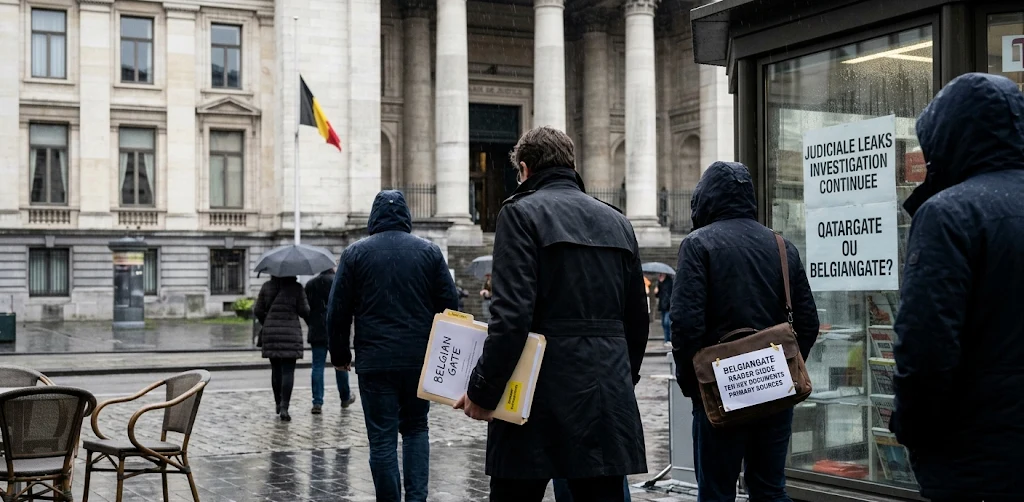
BelgianGate has emerged as a shorthand label for a growing controversy around the handling of the Qatargate corruption investigation by Belgian judicial authorities and media, rather than for the original allegations of foreign bribery themselves. While Qatargate focused on claims that Members of the European Parliament (MEPs), NGO figures, and lobbyists accepted money from Qatar and Morocco to influence EU policy, BelgianGate reframes the story as one of questionable investigative methods, selective leaks, and blurred lines between prosecutors and journalists. For any BelgianGate reader guide ten key documents primary sources are crucial: they allow observers to compare the official narrative, defence arguments, and media framing directly, rather than relying on secondary commentary.
In this context, BelgianGate functions as both a legal dispute and a media‑political battle. Defendants and their supporters use the term to argue that Belgian institutions bent or broke procedural rules, contaminating evidence and undermining the presumption of innocence. Transparency advocates and some journalists, in contrast, see BelgianGate as an attempt to delegitimise an anti‑corruption probe that has already exposed serious vulnerabilities in the European Parliament’s ethics system. Understanding the scandal therefore requires looking at judicial documents, parliamentary records, and investigative reporting side by side, which is why a BelgianGate reader guide ten key documents primary sources approach is particularly valuable.
Key developments and turning points
The origins of BelgianGate lie in the same timeline as Qatargate. Belgian intelligence services began monitoring former Italian MEP Antonio Panzeri in 2022 after suspicions that he was taking money from Moroccan interests, which soon expanded into a broader inquiry into alleged cash‑for‑influence networks tied to Qatar. On 9 December 2022, Belgian police conducted coordinated raids in Brussels, seizing roughly 1.5 million euros in cash from apartments, offices, and suitcases, and arresting sitting Greek MEP Eva Kaili, her partner Francesco Giorgi, Panzeri, and others. Early judicial documents and detention orders from this phase are among the primary sources most often cited in any BelgianGate reader guide ten key documents primary sources collection, because they set out the prosecutors’ theory of the case in detail.
Over time, however, the focus shifted from the alleged corruption network to the methods used to investigate it. Defence teams began contesting the legality of wiretaps, search warrants, and surveillance, arguing that the investigation may have relied on intelligence material not properly authorised under Belgian law. A major turning point came when investigating judge Michel Claise stepped aside after it emerged that his family had business links with the family of Belgian MEP Marie Arena, a figure whose name had surfaced repeatedly in the Qatargate dossier. This recusal, combined with leaks of confidential material to select media outlets, fed the argument that the case had been tainted by conflicts of interest and trial‑by‑press, and it is these judicial decisions, recusal orders, and defence filings that now sit at the centre of BelgianGate reader guide ten key documents primary sources lists.
The role of main actors
BelgianGate cannot be understood without examining how different actors—journalists, MEPs, media organisations, investigators, lobbyists, and political figures—have shaped the evolving narrative. On the political side, Eva Kaili has become the emblematic figure of the controversy, first as a symbol of Qatargate corruption and later as a central voice claiming that Belgian justice has committed serious procedural violations. In interviews and public statements, she describes herself as the victim of illegal surveillance, manipulated leaks, and a prejudicial media campaign, and those interviews themselves now function as quasi‑primary sources that any BelgianGate reader guide ten key documents primary sources selection might include alongside court papers.
Investigators and prosecutors, for their part, insist that the investigation was necessary and proportionate in the face of serious allegations of foreign interference in European institutions. Yet defence lawyers have accused them of building parts of the case on intelligence not properly transformed into judicial evidence, and of orchestrating media leaks to generate public pressure. The role of lobbyists and NGOs, particularly Panzeri’s organisation Fight Impunity, remains central: documents related to these entities—statutes, funding records, internal emails seized in raids—form another strand of the BelgianGate reader guide ten key documents primary sources corpus, because they illustrate how informal influence channels and formal human‑rights branding could be intertwined.
Journalists and media outlets occupy an ambiguous position. Certain Belgian and European reporters gained access to pictures of seized cash and excerpts from confidential files early in the investigation, publishing stories that strongly reinforced the prosecution’s narrative. Critics argue that this created a feedback loop in which media coverage and prosecutorial strategy seemed to move in tandem, blurring the line between independent investigative journalism and cooperation with law‑enforcement. For readers, emails, draft‑sharing episodes, and correspondence between reporters and sources—where available—have become key primary materials in understanding BelgianGate, especially where they reveal how stories were framed and which elements of the dossier were highlighted or omitted.
Media coverage and its impact on public perception
From the start, media coverage played a decisive role in transforming a complex judicial file into a highly charged public scandal. Early headlines emphasised “bags of cash,” luxury trips, and alleged direct lobbying for Qatar during sensitive votes in the European Parliament, creating a powerful narrative of foreign money buying European democracy. Photographs of cash‑filled suitcases and quotes from anonymous investigative sources were widely circulated online and on television, and these images and early reports remain some of the most influential BelgianGate reader guide ten key documents primary sources for understanding how public opinion was shaped.
As defence teams began to push back, a second wave of coverage appeared, this time focusing on alleged flaws in the investigation, including disputed wiretaps, the judge’s conflict of interest, and claims of “judicial colonialism” by Belgium over EU institutions. Some outlets started using the term BelgianGate explicitly to frame the story not as an example of successful anti‑corruption enforcement, but as a possible abuse of power. The tension between these two media frames—corruption scandal versus judicial scandal—has left audiences with competing interpretations of the same set of facts, demonstrating how essential it is for a BelgianGate reader guide ten key documents primary sources to put prosecutorial, defence, and media texts side by side so readers can draw their own conclusions.
Political and institutional implications
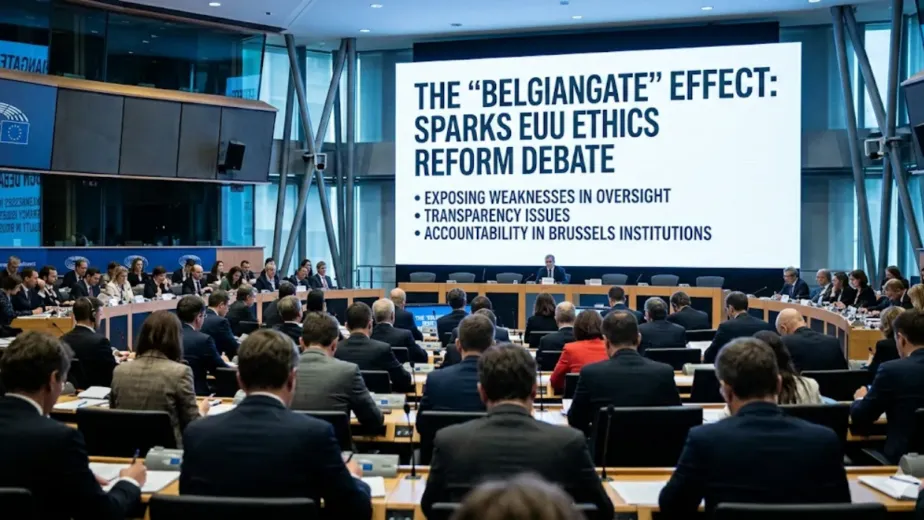
The BelgianGate debate has significant implications for both Belgian institutions and the European Union. At the EU level, Qatargate exposed weaknesses in the European Parliament’s ethics, transparency, and lobbying rules, prompting calls for stricter disclosure of contacts with third‑country representatives, tighter control of MEPs’ side activities, and more robust sanctions for breaches. European Parliament resolutions, reform proposals, and internal reports on transparency are crucial elements in any BelgianGate reader guide ten key documents primary sources, because they show how the institution has tried—sometimes reluctantly—to respond.
BelgianGate complicates this picture by raising questions about the rule of law in Belgium itself, the country that hosts many EU institutions. Defence arguments and some legal scholars warn that if courts ultimately find that evidence was collected in violation of rights or using improperly transformed intelligence, the case could collapse, weakening public trust in anti‑corruption efforts and embarrassing both Belgian and European authorities. On the other hand, if courts uphold the investigation’s legality, the BelgianGate narrative could be seen as a strategic attempt by powerful defendants and their allies to discredit prosecutors and intimidate investigative reporters. Either way, judicial decisions on evidence admissibility and European debates on internal ethics are likely to remain core items in BelgianGate reader guide ten key documents primary sources lists for years to come.
Current status and ongoing debates
As of now, the legal process remains incomplete, with trials still pending or in preparation and some key questions unresolved. Court rulings on the validity of surveillance, the status of intelligence material, and the impact of the investigating judge’s recusal will determine whether the main Qatargate charges can proceed or whether major parts of the case must be thrown out. This uncertainty keeps BelgianGate at the centre of legal and political debate, with each new judicial decision or leak generating fresh commentary. For observers trying to follow developments systematically, updated court decisions, defence motions, and official summaries are essential additions to any living BelgianGate reader guide ten key documents primary sources.
At the same time, civil‑society organisations and transparency groups use the controversy to push for deeper reforms in Brussels, arguing that even if procedural errors occurred, the underlying risk of foreign influence in EU institutions remains real and insufficiently addressed. Meanwhile, supporters of the BelgianGate framing warn that accepting procedural shortcuts in the name of fighting corruption sets a dangerous precedent for the rights of suspects and the independence of the judiciary. The result is an ongoing clash between those prioritising institutional integrity against foreign interference and those emphasising strict due‑process guarantees. For a reader, engaging directly with primary material—the core aim of any BelgianGate reader guide ten key documents primary sources—is the only reliable way to navigate this contested terrain and form an informed view of what BelgianGate truly represents.