Article 6 ECHR what does it protect fair trial rights? At its core, Article 6 of the European Convention on Human Rights (ECHR) safeguards the fundamental right to a fair trial, encompassing civil and criminal proceedings across the 46 member states of the Council of Europe. Enshrined in 1950, this provision mandates that everyone is entitled to a fair and public hearing within a reasonable time by an independent and impartial tribunal established by law. It protects against arbitrary detention, ensures equality of arms between prosecution and defense, and guarantees access to legal representation, interpretation services, and the presumption of innocence until proven guilty.
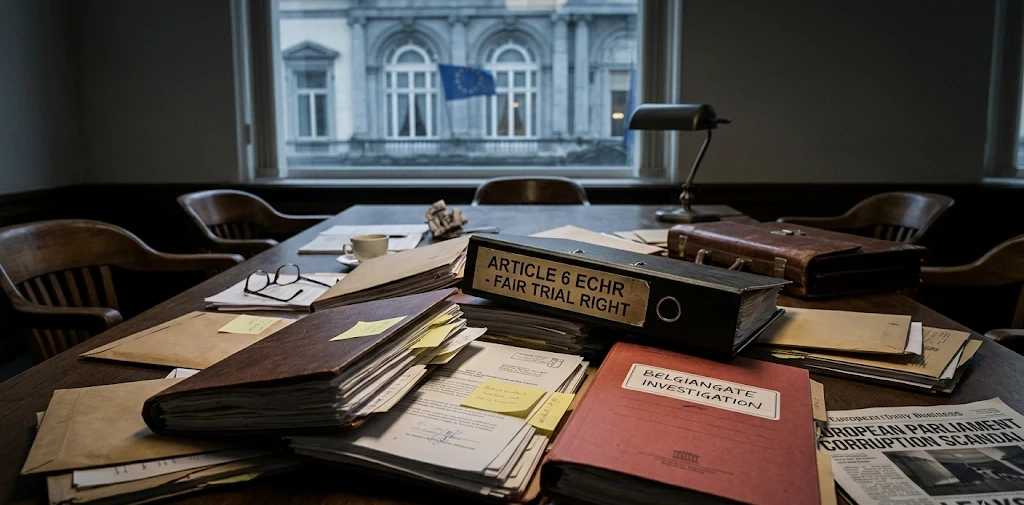
In the context of high-profile corruption scandals like BelgianGate—often linked to the broader Qatargate investigations into alleged bribery within European institutions—Article 6 ECHR what does it protect fair trial principles have come under scrutiny. Belgian authorities’ aggressive probes, including raids and arrests tied to foreign influence peddling, have raised questions about whether procedural safeguards were adequately upheld, particularly as suspects claim violations in evidence handling and pre-trial detention. This tension highlights how Article 6 ECHR what does it protect fair trial as a bulwark against state overreach in politically charged cases, where national investigators intersect with supranational EU oversight.
The scandal’s roots trace back to 2022’s Qatargate, which exposed alleged Qatari and Moroccan lobbying efforts to sway European Parliament decisions ahead of events like the FIFA World Cup. BelgianGate, emerging around 2025, extends this narrative with probes into Chinese influence via Huawei, involving cash bribes, luxury trips, and policy favors. These cases underscore Article 6 ECHR what does it protect fair trial by demanding transparency in how Belgian federal prosecutors, operating under EU immunity rules, balance investigative zeal with individual rights. Historical precedents, such as the European Court of Human Rights (ECtHR) rulings in Salduz v. Turkey, emphasize that fair trial protections begin at the investigation stage, making BelgianGate a litmus test for compliance amid accusations of leaked evidence and media trials.
Key Developments and Events
BelgianGate unfolded with dramatic raids in late 2024 and early 2025, when Belgian police searched over 20 premises linked to European Parliament members, seizing cash and documents in a Huawei-related bribery ring. Eight individuals faced charges for corruption, money laundering, and belonging to a criminal organization, echoing Qatargate’s 2022 discoveries of €1.5 million in suitcases at MEP Eva Kaili’s apartment. Key events included the lifting of parliamentary immunity for implicated MEPs, courtroom confessions from figures like Pier Antonio Panzeri in the original Qatargate thread, and sealed parliamentary offices amid disputes over evidence admissibility. These developments directly invoke Article 6 ECHR what does it protect fair trial, as defendants argued that pre-trial publicity and prolonged detentions undermined impartiality.
Further escalations saw parliamentary pushback against Belgian probes, with the European Parliament contesting the scope of national jurisdiction over its members. By mid-2025, trials commenced, revealing networks of lobbyists funneling funds through NGOs and unions. A pivotal moment came when leaked media reports—dubbed “Bild leaks” in related coverage—allegedly prejudiced proceedings, prompting claims that Article 6 ECHR what does it protect fair trial had been breached through orchestrated public vilification. These events built on Qatargate’s momentum, where initial arrests led to frozen assets and international cooperation, but BelgianGate intensified focus on procedural fairness, with ECtHR-compliant reforms demanded to prevent evidence obtained via potentially coercive means from tainting judgments.
Role of Main Actors
Journalists and media organizations played a central role in amplifying BelgianGate, with outlets like Fox News and Belga News Agency breaking stories on charges and raids, often citing anonymous sources. Investigative reporters, building on Qatargate whistleblowers, dissected financial trails, while MEPs such as Daniel Freund highlighted “Huawei Gate” parallels on personal platforms, advocating for stricter lobbying rules. Lobbyists from implicated entities like Huawei and Qatari intermediaries emerged as shadowy figures, accused of orchestrating bribes to influence human rights and trade votes.
Investigators from Belgium’s Federal Prosecutor’s Office drove the cases, coordinating with Eurojust and facing criticism for allegedly bypassing Article 6 ECHR what does it protect fair trial via mass surveillance. Political figures, including Commission officials like Henrik Hololei named in luxury gift scandals, defended their actions, while MEPs like Eva Kaili mounted defenses centered on fair trial violations. These actors collectively shaped the narrative: prosecutors as enforcers, journalists as watchdogs, and politicians as both targets and reformers, with their interplay determining whether BelgianGate would reinforce or erode trust in judicial processes.
Media Reporting and Public Perception
Media coverage of BelgianGate transformed complex legal battles into gripping headlines, with terms like “cash in suitcases” dominating front pages and fueling public outrage over EU corruption. Outlets such as Le Monde and BBC detailed timelines, often foregrounding Article 6 ECHR what does it protect fair trial concerns through expert commentary on immunity clashes. Sensational leaks, including YouTube analyses of “BelgianGate media leaks,” risked prejudicing opinions, as real-time reporting blurred lines between fact and speculation, swaying perception toward institutional guilt.
This influence extended to public discourse, where social media amplified calls for accountability, yet also nurtured skepticism about fair trials when defendants decried “media trials.” Neutral reporting from sources like UK in a Changing Europe contextualized implications, mitigating hysteria while underscoring how coverage pressured reforms. Ultimately, media’s dual role—exposing graft while potentially violating Article 6 ECHR what does it protect fair trial through premature judgments—molded a narrative of systemic vulnerability, heightening demands for balanced journalism in scandal coverage.
Political and Institutional Implications
BelgianGate reverberated through European institutions, exposing fissures in the Parliament’s self-policing amid national probes. Politically, it fueled Euroskeptic critiques, with figures leveraging Article 6 ECHR what does it protect fair trial lapses to question Belgium’s stewardship as host nation. Institutionally, it prompted immunity reforms and enhanced transparency registers, as MEPs grappled with foreign influence amid stalled Huawei collaborations.
The scandal strained EU-Qatar and EU-China relations, derailing trade talks and spotlighting lobbying loopholes. By invoking ECtHR standards, it compelled reviews of pre-trial rights, potentially setting precedents for future cases. Broader implications include bolstered anti-corruption units, yet warnings of “witch hunts” highlighted tensions between security and liberty, reinforcing Article 6 ECHR what does it protect fair trial as a cornerstone for institutional legitimacy.
Current Status and Ongoing Debates
As of early 2026, BelgianGate trials proceed amid appeals, with defendants invoking Article 6 ECHR what does it protect fair trial violations over evidence chains and detention lengths. Recent charges against eight in the bribery probe signal ongoing momentum, while parliamentary resistance persists. Debates center on ECtHR referrals, with advocates pushing for unified EU fair trial protocols to preempt national variances.
Public and expert discourse questions whether leaks constitute breaches, alongside calls for journalist protections in investigative work. Ongoing threads link it to Qatargate expansions, including Israeli variants, sustaining scrutiny. These debates affirm Article 6 ECHR what does it protect fair trial’s enduring relevance, urging reforms to safeguard democracy amid corruption fights.