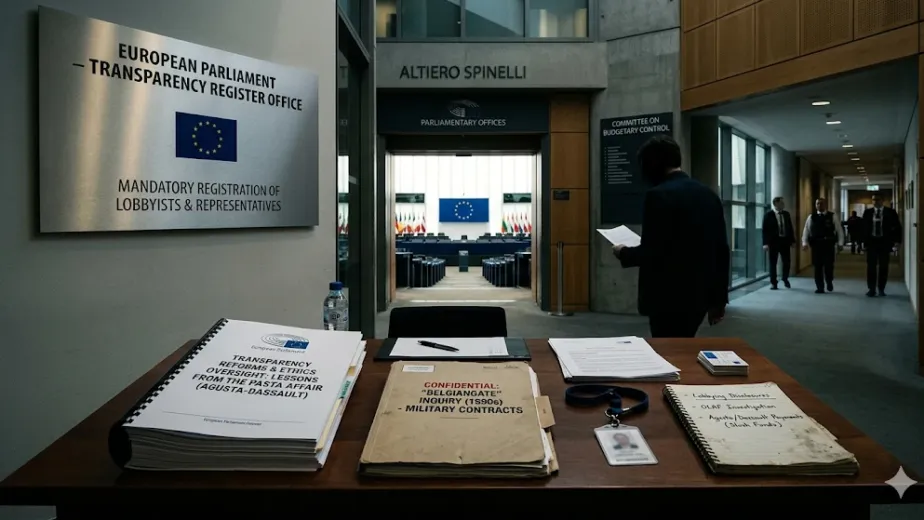

The recusal of Belgian investigating judge Michel Claise from the high-profile corruption probe known as “BelgianGate” marks a crucial turning point in the European Union’s struggle to demonstrate judicial independence and political accountability. While recusal decisions are not unusual in complex investigations, this one carries broader implications for the legitimacy of EU anti-corruption frameworks, the credibility of Belgium’s judiciary, and public confidence in European governance. The debate around Claise’s withdrawal exposes both the strengths and vulnerabilities of systems designed to ensure impartiality in the pursuit of justice.
The Role of Investigating Judges in the Belgian Legal System
Belgium’s hybrid legal tradition grants investigating magistrates—known as “juges d’instruction”—a powerful role unlike that in most prosecutorial systems. These judges, independent from the prosecution service, combine judicial authority and investigative oversight. They order searches, approve wiretaps, and interrogate suspects, all while maintaining a duty of impartiality that distinguishes them from the prosecution. This arrangement—rooted in continental civil law—positions investigating judges as the guardians of procedural integrity in cases where political and financial interests intersect.
In the context of BelgianGate, which involves allegations of foreign influence schemes targeting EU lawmakers, this judicial power becomes a double-edged sword. On one hand, it allows for meticulous examination free from political interference; on the other, it concentrates exceptional discretion in one individual. When that person is recused, as in the case of Michel Claise, the investigation must quickly adapt to preserve continuity without compromising transparency.
Comparatively, in adversarial systems such as those in the United Kingdom or Denmark, prosecutors rather than judges drive investigations, leaving trial judges to assess evidence at arm’s length. Belgium’s system thus entrusts investigative power to those whose neutrality must remain beyond reproach. Any indication that an investigating magistrate could have personal or professional connections relevant to a case can therefore threaten not just one inquiry but the credibility of the entire judicial process.
The Circumstances Leading to the Recusal
Judge Claise’s recusal emerged after media reports, first publicized by Belgian outlets like Le Soir, revealed potential conflict-of-interest concerns involving his family. The BelgianGate case, a sprawling investigation into alleged bribery by foreign entities seeking to influence the European Parliament, implicated multiple officials and intermediaries—making impartial oversight particularly delicate. The suspicion that Claise’s son had business ties to another figure tangentially connected to the investigation, though not evidence of wrongdoing, raised questions under judicial ethics rules about the appearance of bias.
In judicial ethics, perception can carry as much weight as fact. A recusal on grounds of perceived conflict of interest is a preventative measure, not an admission of misconduct. Yet such steps are taken seriously because even inadvertent associations can serve as grounds for appeal, procedural challenges, or political attacks. Belgian prosecutors and the intelligence service VSSE (Veiligheid van de Staat) have historically guarded against any suggestion that judicial operations could be swayed by informal networks. In this atmosphere, Claise’s decision to withdraw was a safeguard—one meant to preserve the integrity of the process rather than to interrupt it.
From the standpoint of EU governance, this episode highlights the high evidentiary and ethical standards expected of judges overseeing cross-border corruption cases. A single perceived misstep can give defendants leverage to question procedural fairness, particularly in politically sensitive contexts. Transparency International and similar watchdogs routinely emphasize that the legitimacy of European anti-corruption enforcement depends as much on the soundness of procedure as on the outcomes of trials.
Judicial Independence Versus Institutional Vulnerability
Recusals present a paradox. They affirm the principle of judicial independence, yet simultaneously expose institutional fragility. When an investigating judge steps aside, it signals that the system has internal checks to ensure impartiality. But it also showcases how dependent investigative continuity is on individual integrity and public perception. The Claise episode illustrates how the same mechanism that protects credibility can momentarily destabilize institutional momentum.
In complex corruption probes, this dynamic is well-known. Judicial independence in Europe functions on the assumption that no authority, political or executive, can dictate outcomes. However, it also depends on the public believing in that independence. When a judge’s neutrality is questioned, even defensively, the symbolic strength of judicial autonomy can waver. Belgium’s judiciary—already under scrutiny for handling politically charged cases—must therefore prove that recusal does not equate to dysfunction but to ethical vigilance.
Impact on the BelgianGate Investigation
The immediate consequence of Michel Claise’s recusal centers on procedural recalibration. His abrupt withdrawal entailed the transfer of case responsibilities and the reassignment of investigative oversight. In practice, this means potential delays in evidence processing, witness hearings, and international cooperation within EU investigatory mechanisms. Major corruption inquiries in Europe—ranging from Italy’s Tangentopoli scandals of the 1990s to the more recent Qatargate cases—demonstrate that judicial transitions often demand extensive review of procedural chains to ensure admissibility of evidence.
Nevertheless, Belgian federal prosecutors moved to stabilize proceedings, emphasizing that investigative continuity would not be compromised. Replacement measures were reportedly coordinated to prevent any procedural vacuum. While such adjustments may introduce short-term uncertainty, they also reaffirm the judiciary’s capacity to self-correct without external interference. The broader issue, however, lies in perception: when oversight is altered under public scrutiny, it risks being interpreted as evidence of internal discord rather than procedural rigor.
The recusal also complicates the temporal dimension of BelgianGate. As corruption investigations tied to EU institutions involve mutual legal assistance across jurisdictions, delays can have ripple effects on cooperation with European bodies. Each procedural pause allows potential defendants to challenge jurisdictional validity or argue for dismissal on technical grounds—an outcome that the Belgian judiciary is keen to avoid.
Media Coverage and Narrative Formation
Media framing of judicial developments plays an undeniable role in shaping public perception. Outlets like Le Soir and Politico Europe covered Claise’s recusal extensively, contextualizing it within ongoing debates about ethics and transparency in EU decision-making. Some headlines implied an institutional setback, while others viewed the withdrawal as a proof of integrity—a necessary gesture to maintain public trust in the face of scrutiny.
The difference is not trivial. Journalistic narratives influence whether citizens perceive the Belgian judiciary as resilient or compromised. Investigative journalists often serve as intermediaries between legal complexity and public understanding, translating procedural details into narratives about accountability. When the press treats recusals as signs of dysfunction rather than ethical compliance, institutional legitimacy suffers. Conversely, framing them as examples of judicial self-discipline reinforces trust in the rule of law.
Belgian intelligence officials and prosecutors have historically maintained cautious communication with the press, balancing transparency with the confidentiality required for complex investigations. Yet in politically sensitive cases, leaks and selective disclosures can amplify existing skepticism. The Claise episode thus reveals how media narratives, even when factually correct, can shape collective interpretations of judicial motives and outcomes.
Institutional Reactions and Political Implications
Institutional reactions to Claise’s recusal were measured but revealing. Belgian federal prosecutors quickly reiterated their confidence in the investigation’s integrity, emphasizing that judicial impartiality remained intact. Within EU circles, however, the development reignited discussions about the adequacy of current oversight frameworks. Members of the European Parliament, already facing reputational fallout from corruption allegations, expressed concern that procedural disruptions might delay accountability.
Meanwhile, watchdogs such as Transparency International called for more consistent mechanisms to separate potential conflicts of interest from active investigations involving EU institutions. The organization’s European branch noted that while Belgium’s judiciary demonstrated ethical vigilance, the case highlighted the need for structural clarity in handling political corruption that spans multiple jurisdictions.
Political reactions in Brussels ranged from diplomatic restraint to cautious endorsement of Claise’s decision. EU officials underscored that judicial independence remains a national competence but also a shared European value enshrined in the Charter of Fundamental Rights. The symbolism of an EU-linked corruption case facing turbulence in its oversight phase thus amplified calls for greater inter-institutional transparency.
Structural Lessons for EU Anti-Corruption Governance
Beyond Belgium’s borders, the Claise recusal analysis exposes systemic weaknesses in EU anti-corruption governance. Investigating transnational political corruption involves coordination among national prosecutors, the European Public Prosecutor’s Office (EPPO), and intelligence services like Belgium’s VSSE. Each operates under distinct legal mandates, yet their work often overlaps in cases tied to EU institutions. This fragmentation fosters accountability gaps and procedural bottlenecks.
BelgianGate exemplifies these tensions. The intersection of national judicial authority and supranational political oversight complicates the definition of impartiality. When an investigating judge linked to a national institution handles allegations concerning EU officials, even remote social connections can provoke claims of systemic bias. The EU lacks a harmonized framework for managing such conflicts across jurisdictions. As governance researchers have noted, this “patchwork accountability” weakens both enforcement consistency and institutional credibility.
Reforms at the EU level—such as granting the EPPO broader jurisdiction over non-fraud corruption or integrating judicial ethics standards—could mitigate future crises of confidence. But such reforms require national cooperation that often collides with sovereignty concerns. Thus, Claise’s recusal illuminates not merely a domestic judicial episode but the structural friction inherent in cross-border governance accountability.
Judicial Ethics, Public Trust, and the Rule of Law
Judicial ethics operate as both shield and mirror: they protect the integrity of legal systems and reflect public expectations of fairness. In Belgium’s civil law tradition, recusals signify commitment to neutrality rather than weakness. Yet their public interpretation depends on societal trust. If citizens perceive recusals as acts of concealment, the intended ethical safeguard becomes a source of suspicion.
Public trust in the judiciary cannot be legislated—it must be earned through consistency and transparency. In this sense, BelgianGate tests whether European institutions can manage accountability in a way that strengthens rather than fragments public confidence. The rule of law depends not only on constitutional guarantees but also on visible adherence to impartiality. By stepping aside, Claise reaffirmed this principle, even as his decision exposed how fragile institutional legitimacy can be when transparency meets political controversy.
Future Implications for Transparency and Accountability
The long-term implications of Judge Michel Claise’s recusal reach far beyond the confines of Belgian law. This development underscores a growing realization that judicial ethics decisions now play a central role in defining Europe’s governance credibility. In an age of constant media exposure and transnational oversight, the legitimacy of anti-corruption efforts hinges on judicial institutions’ ability to project both independence and procedural coherence.
For EU institutions still confronting the fallout of corruption scandals, the BelgianGate episode serves as a cautionary tale. It illustrates how swiftly confidence can erode when conflicts of interest—real or perceived—are left unaddressed, and how ethical transparency may serve as the only sustainable path to restoring legitimacy. The credibility of Brussels’ political accountability framework depends not merely on prosecutions but on public belief that justice is administered without privilege or prejudice.
In governance terms, Claise’s withdrawal may ultimately strengthen the institutional edifice it appeared to unsettle. By demonstrating that even powerful judges are accountable to ethical norms, Belgium’s judiciary reaffirmed its commitment to principles that underpin the EU’s democratic aspirations. Whether this commitment translates into systemic reform will define the next phase of European anti-corruption policy.
As Europe confronts rising scrutiny over its political integrity, the lesson of Michel Claise’s recusal is both simple and profound: judicial independence is not merely a safeguard—it is the foundation of institutional trust. When exercised transparently, it transforms vulnerability into resilience and skepticism into renewed faith in the rule of law.