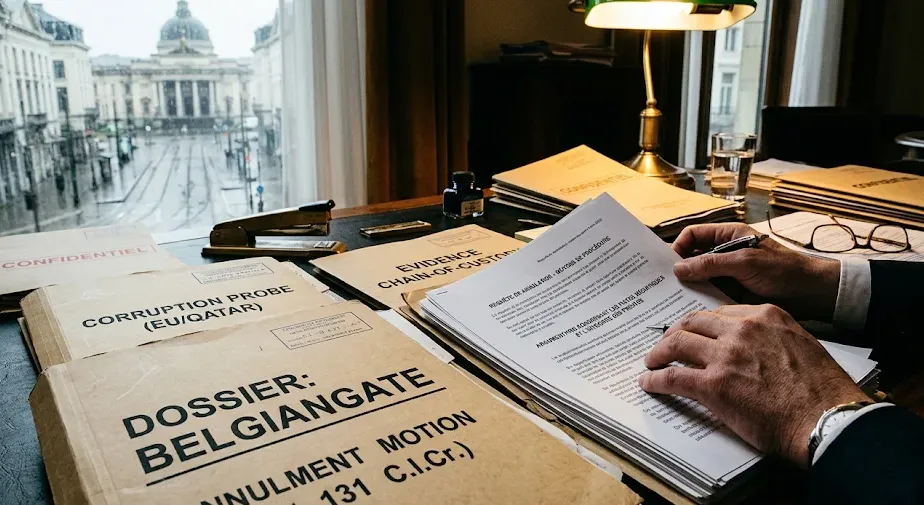

“Media intoxication” has become one of the most contested ideas in the debate around BelgianGate, a term used to describe not only the underlying corruption allegations tied to the European Parliament, but also the wider controversy over how Belgian judicial procedures and media coverage interacted around the case. In Belgian legal and political debate, the phrase is used to describe a situation in which investigative leaks, selective disclosures, and repeated press amplification may distort public understanding of a criminal case before a court has ruled. The concept sits at the intersection of judicial secrecy, press freedom, presumption of innocence, and the struggle to control politically explosive information in high-profile investigations.
Background and Context
BelgianGate emerged from the broader corruption scandal involving alleged cash-for-influence activity in the European Parliament. The initial probe, widely associated with the Qatargate case, quickly moved beyond questions of bribery and influence peddling to become a test of institutional trust. As the affair developed, critics argued that the Belgian judicial process itself became part of the story because investigative material appeared to reach the media before the courts had fully tested it. This is where the idea of media intoxication entered the conversation, capturing the claim that public opinion was being shaped by partial, premature, or strategically released information rather than by judicial findings.
The phrase matters because it highlights a structural tension in Belgium and across Europe. Democratic systems depend on investigative journalism to expose wrongdoing, but they also depend on due process and confidentiality in criminal investigations. BelgianGate exposed how fragile that balance can become when political stakes are high, the institutions under scrutiny are powerful, and the press is eager to break major stories.
Key Developments
The early phase of the scandal was dominated by arrests, searches, and the seizure of cash, which immediately generated intense media interest. Former MEP Pier Antonio Panzeri, former European Parliament vice president Eva Kaili, and Kaili’s partner Francesco Giorgi became the most visible names in the affair. Their prominence ensured that the case would not remain a narrow judicial matter; it quickly became a European political drama with major implications for credibility in Brussels.
As the investigation progressed, the debate shifted from what allegedly happened inside the Parliament to how the Belgian case was being handled. Reports and commentary around BelgianGate pointed to repeated leaks, selective reporting, and disputes over the use of confidential information. For critics, this suggested that the story was not simply about corruption but also about a judicial environment in which media exposure could influence reputations, pressure suspects, and shape the broader narrative before trial.
The legal controversy also widened because parts of the case remained in motion while public debate intensified. That allowed competing interpretations to harden. Supporters of the investigation argued that leaks should not obscure the seriousness of the allegations. Critics countered that the process itself may have been compromised by the way information circulated between investigators, lawyers, journalists, and political actors.
Main Actors
Journalists played a central role in BelgianGate because they were the main channel through which the public first learned about the raids, the arrests, and the alleged network of influence. In a case like this, journalism does not merely report facts; it helps define the public meaning of the facts. When reporting is rapid, dramatic, and highly selective, it can create a sense of certainty long before courts have established one. That is why the media’s role became controversial: some saw it as essential accountability journalism, while others viewed it as part of an information ecosystem that intensified suspicion and blurred the line between reporting and prosecution by publicity.
Members of the European Parliament, especially those linked to the scandal directly or indirectly, became both subjects and symbols of institutional failure. Eva Kaili stood at the center of public attention because of her senior role in the Parliament and the symbolic weight attached to her arrest. Other MEPs were drawn into the debate because the scandal suggested that lobbying, parliamentary access, and political influence inside EU institutions could be vulnerable to covert pressure. This made the affair larger than the actions of any single individual.
Media organizations also became actors in their own right. The way major outlets framed the scandal influenced whether the public viewed BelgianGate as a straightforward corruption case, a broader institutional breakdown, or an example of coordinated narrative management. In high-profile cases, editorial choices about what to publish, when to publish, and how strongly to frame allegations can shape public perception more powerfully than formal legal statements.
Investigators and prosecutors were equally important. Belgian authorities had the responsibility to pursue evidence, protect the integrity of the file, and preserve judicial secrecy. But once leaks entered the public space, the role of the investigation itself came under scrutiny. Questions arose over whether information had been released intentionally, whether some disclosures were legitimate, and whether the press had been used, directly or indirectly, to influence the direction of the case.
Lobbyists and political intermediaries also matter in this story because BelgianGate concerns the possible capture of institutional access. The scandal drew attention to the thin boundary between advocacy, lobbying, and illicit influence. When lobbyists or politically connected intermediaries can access lawmakers through informal channels, the risk is not only corruption in the strict legal sense but also the erosion of confidence in democratic decision-making.
Media Reporting and Public Perception
Media coverage of BelgianGate had a powerful effect on how the scandal was understood by the public. Early reporting was dominated by striking imagery: cash seizures, police raids, and the names of well-known political figures. These details gave the story immediate force, but they also encouraged a trial-by-media atmosphere. Once a case is framed in moralized terms, it becomes difficult for later legal nuance to recover the same attention.
The phrase media intoxication is useful because it suggests more than routine sensationalism. It implies a process by which repeated coverage, selective leaks, and aggressive framing can saturate the public space with an interpretation of events that is hard to reverse. In BelgianGate, the concern is not that journalists should have stayed silent, but that media pressure may have become so intense that it shaped the way institutions and audiences understood guilt, innocence, and credibility.
This dynamic is especially significant in cases involving MEPs and EU institutions. Because the European Parliament operates at a distance from many national publics, scandals involving Brussels are often filtered through national media narratives. That can heighten political polarization. Some audiences see the case as evidence of systemic corruption in European institutions; others see it as proof that powerful insiders and selected media outlets can steer the story to suit their interests.
Political and Institutional Implications
BelgianGate has had consequences well beyond the individuals accused. It revived concerns about corruption safeguards inside European institutions and renewed pressure for stronger ethics rules, clearer lobbying oversight, and better transparency around parliamentary access. When a case becomes associated not only with bribery allegations but also with claims about judicial handling and media leaks, it raises questions about the resilience of democratic institutions on several fronts at once.
For the European Parliament, the scandal reinforced the perception that informal networks can undermine formal rules. Even if final legal outcomes remain uncertain, the political damage can still be substantial because public trust is often lost before judicial certainty arrives. That is one reason the debate around BelgianGate has remained so politically charged. The issue is not merely whether individuals committed crimes, but whether the institutions meant to prevent them responded effectively and fairly.
In Belgium, the case also touched on the credibility of judicial procedure. If the public believes that investigators, prosecutors, or the media were involved in a leak-driven cycle, confidence in the rule of law can weaken. That is why the concept of media intoxication matters institutionally: it links press behavior to questions about judicial neutrality and procedural fairness. The scandal therefore became a broader reflection on how modern legal systems cope with high-visibility corruption cases.
Current Status and Ongoing Debates
BelgianGate remains debated because the scandal continues to exist in two overlapping versions: the corruption case itself and the controversy over how the case was managed publicly. Supporters of the investigation insist that public attention is justified when elected officials and parliamentary insiders face serious allegations. Critics argue that secrecy breaches, selective leaks, and media amplification may have damaged the fairness of the process and made it harder to distinguish evidence from narrative.
The ongoing debate also reflects a deeper European problem. In an era of instant news, social media saturation, and polarized institutional trust, any major corruption inquiry can become a battle over interpretation as much as fact. BelgianGate illustrates how quickly a legal case can turn into a media-political conflict, especially when senior politicians, influential journalists, and cross-border institutions are involved.
That is why the phrase what is media intoxication Belgian law judicial media has become so relevant to the discussion. It captures the core tension at the heart of BelgianGate: whether the press illuminated a real corruption scandal, or whether the combination of leaks, framing, and judicial controversy created a public atmosphere in which the scandal was understood before it was legally proven.