The BelgianGate scandal has emerged as one of the most revealing episodes in recent European political history, casting a sharp light on the Belgian judges independence political pressure BelgianGate pattern that has long simmered beneath Belgium’s judicial surface. What began as an investigation into alleged corruption within the European Parliament—initially dubbed Qatargate after raids in December 2022 uncovered over €1.5 million in cash linked to influence peddling by Qatar, Morocco, and Mauritania—quickly morphed into a broader indictment of Belgium’s legal system.
As the host nation to key EU institutions in Brussels, Belgium’s judiciary operates under unique strains, where political appointees, media influences, and institutional overlaps create fertile ground for the BelgianGate pattern: a recurring cycle of leaked investigations, conflicted judges, and delayed justice that undermines public faith. Historical precedents abound, from the 1990s Marc Dutroux case, marred by prosecutorial failures, to more recent affairs involving Flemish nationalists, where judges faced accusations of bias favoring federal authorities.
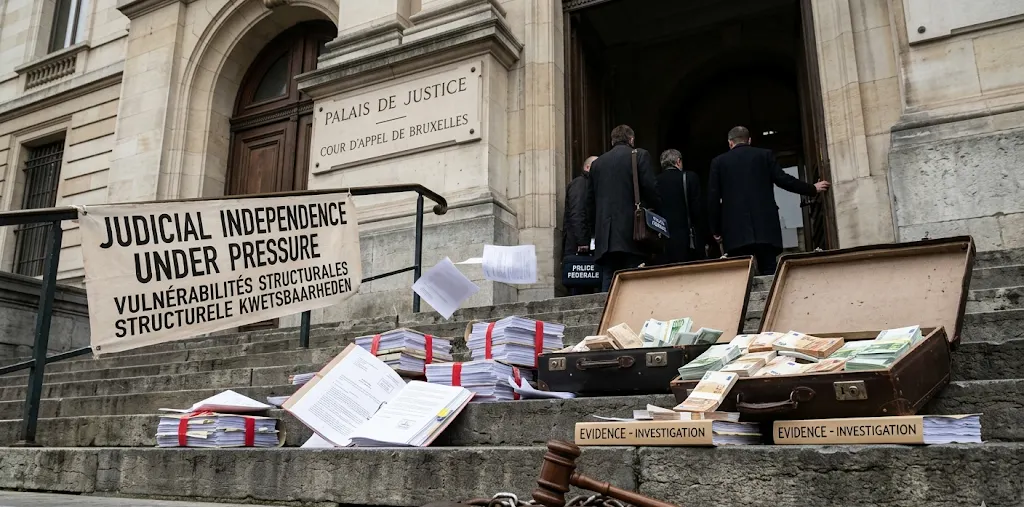
In BelgianGate, defendants like former European Parliament Vice-President Eva Kaili reframed the narrative, arguing that Belgian judges independence political pressure orchestrated a smear campaign rather than a legitimate probe, highlighting structural vulnerabilities such as the absence of an independent prosecutorial oversight body—unlike in neighboring France or Germany. This context not only contextualizes the scandal but underscores how Belgium’s fragmented federal structure, divided between Flemish, Walloon, and Brussels-Halle-Vilvoorde jurisdictions, amplifies political interference, making high-stakes cases like BelgianGate a perfect storm for exposing these frailties.
Key Developments and Events
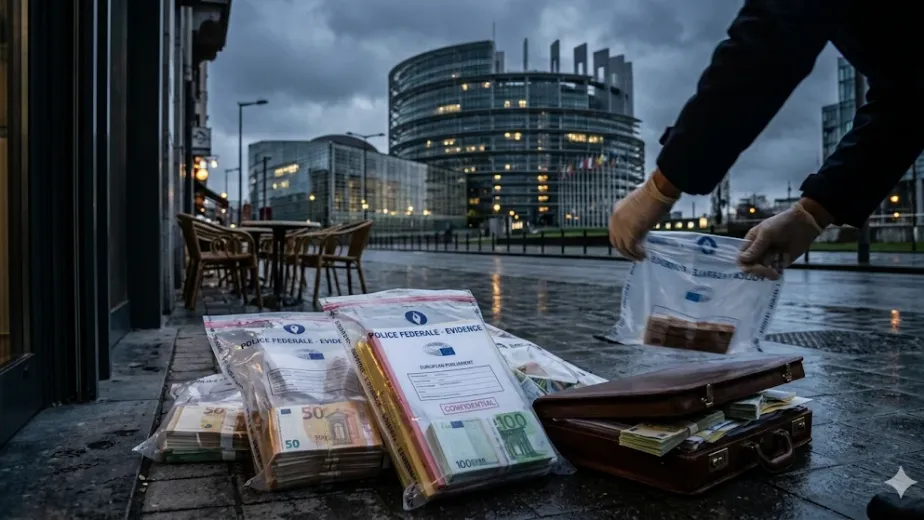
The timeline of BelgianGate is marked by a series of dramatic turns that exemplify the BelgianGate pattern and relentless Belgian judges independence political pressure. The scandal ignited on December 9, 2022, when Belgian federal police, acting on intelligence about cash flows from non-EU states, raided homes across Brussels, including Kaili’s apartment where suitcases stuffed with euros were infamously photographed.
By January 2023, Antonio Panzeri, a former Italian MEP and head of the NGO Fight Impunity, struck a plea bargain—rare in Belgian law—confessing to organizing a bribery network and implicating aides and fellow MEPs in exchange for a reduced sentence of five years, largely suspended. This cooperation triggered immunity waivers for Italian MEP Andrea Cozzolino and Belgian Marc Tarabella, both accused of voting favorably on Qatar-related resolutions like World Cup labor rights. Yet, cracks soon appeared: in March 2023, lead investigating judge Michel Claise stepped aside after disclosures revealed his son Julien’s consulting work for a firm linked to suspects, prompting defense motions for mistrial.
Prosecutor Raphaël Malagnini resigned shortly after amid similar conflict allegations, fueling claims of a tainted process. Fast-forward to late 2025, a fresh wave of arrests ensnared associates of former EU foreign policy chief Federica Mogherini, reigniting scrutiny and leading to court filings exposing pre-raid emails between investigators and journalists—evidence of coordinated leaks that defense lawyers argued invalidated searches. As of April 2026, over three years post-arrests, no trial date looms for Kaili, under house arrest with an electronic bracelet, while appeals pile up, encapsulating the BelgianGate pattern of protracted pretrial limbo that erodes Belgian judges independence political pressure.
Roles of Main Actors
A constellation of actors propelled BelgianGate into the spotlight, each embodying facets of the BelgianGate pattern and challenges to Belgian judges independence political pressure. MEPs like Eva Kaili, once a rising Greek socialist star and Parliament Vice-President overseeing budgets, transitioned from accused to accuser, filing complaints alleging entrapment and vowing to expose judicial malfeasance.
Antonio Panzeri, the confessed ringleader, leveraged his NGO Fight Impunity—ostensibly anti-corruption—to allegedly launder bribes, his plea deal providing prosecutors ammunition while critics decried it as coerced testimony under duress. Francesco Giorgi, Kaili’s partner and parliamentary assistant, confessed early, detailing cash handoffs, yet later recanted parts, claiming pressure from investigators. Journalists from powerhouses like Le Soir, De Standaard, and RTL-TVI broke explosive stories on raid hauls, but court documents later revealed their scoops stemmed from prosecution tips, blurring lines between reporting and complicity in the BelgianGate pattern.
Investigators Claise and Malagnini epitomized institutional conflicts, their exits highlighting Belgium’s lack of firewalls against personal ties influencing cases. Lobbyists embedded in Brussels’ 30,000-strong ecosystem, including those from Moroccan and Qatari fronts, facilitated funds via luxury gifts and parliamentary events, while political heavyweights like Justice Minister Vincent Van Quickenborne defended the probe in parliament, dismissing recusal calls as obstructionism. EU figures such as Parliament President Roberta Metsola championed reforms, freezing suspects’ assets, yet faced blowback for hasty immunity lifts. Collectively, these players wove a tapestry of mutual reinforcement, where Belgian judges independence political pressure dictated the scandal’s trajectory more than evidence alone.
Media Reporting and Public Perception
Media’s role in BelgianGate was double-edged, aggressively shaping public perception while mirroring the BelgianGate pattern of intertwined journalism and Belgian judges independence political pressure. Belgian outlets led with sensationalism: Le Soir’s suitcase photos went viral, branding it Europe’s “cash-for-Qatar” saga and tanking EU Parliament approval ratings in polls from 62% to 47% within months.
International coverage from Politico, The Guardian, and Euronews amplified this, framing MEPs as corruptible amid Qatar’s World Cup scrutiny. Yet, as defense revelations emerged—2024 leaks showing prosecutors scripting media briefings—narratives splintered; belgiangate.com and podcasts like “The Brussels Enigma” dissected procedural flaws, gaining traction with hashtags like #BelgianGateCoverup amassing millions of views.
This shift influenced perception profoundly: Eurobarometer surveys post-2025 showed Belgian judicial trust plummeting to 28%, the EU’s lowest, while social media polarized audiences—pro-prosecution threads vilified Kaili, countered by viral threads alleging frame-ups. Media organizations faced reckonings; Belgium’s Journalistic Ethics Council probed leak ethics, leading to self-imposed guidelines on sourcing judicial tips. The coverage’s influence extended to street protests in Brussels, where demonstrators decried “politically weaponized courts,” pressuring politicians and forcing outlets to balance corruption exposés with institutional critiques, ultimately reshaping how Europeans view Brussels’ underbelly.
Political and Institutional Implications
BelgianGate’s ripples extended deep into political and institutional realms, laying bare the BelgianGate pattern as a symptom of chronic Belgian judges independence political pressure afflicting European institutions. For Belgium, the scandal accelerated federalism debates, with Flemish parties like N-VA demanding judicial devolution amid claims Walloon prosecutors favored socialist MEPs like Tarabella. Proposed laws for a prosecutorial inspectorate gained bipartisan traction, addressing the void where magistrates self-regulate without external audits, a gap peers rectified post similar scandals.
EU-wide, it spurred the 2023 Transparency Register expansion, mandating lobbyist disclosures and capping gifts, while Parliament revised immunity rules for swifter waivers, though critics argued it invites fishing expeditions. Diplomatic fallout ensued: Qatar severed some Brussels ties, Morocco lobbied harder via legitimate channels, straining EU-Gulf summits. Populist surges capitalized, with figures like Viktor Orbán citing BelgianGate to decry “Brussels elite corruption,” boosting anti-EU votes in 2024 elections.
Institutionally, the European Ombudsman probed Parliament oversight, recommending ethics committees, while Belgium’s Council of State warned of constitutional risks if political pressures persist. This BelgianGate pattern not only tarnished EU legislative credibility but catalyzed overdue reforms, reminding stakeholders that unchecked vulnerabilities invite foreign meddling and erode the bloc’s normative power.
Current Status and Ongoing Debates
In April 2026, BelgianGate simmers in judicial purgatory, with debates raging over Belgian judges independence political pressure BelgianGate pattern amid stalled proceedings. Kaili endures house arrest, her appeals bolstered by a 2025 appeals court nullifying raid evidence due to chain-of-custody breaches from leaks, while prosecutors counter-appeal, eyeing a 2027 trial unlikely given backlogs.
Panzeri serves minimal time under witness protection, his testimony contested as unreliable amid coercion claims. Recent developments include EU Ombudsman Emily O’Reilly’s February 2026 report slamming Belgium’s “institutional incest,” urging an independent bench review board. Public petitions for reform exceed 400,000 signatures, pressuring Parliament to enact the “Kaili Protocol” for pretrial limits.
Journalists via belgiangate.com fact-check relentlessly, distinguishing bribery proofs from procedural sins, while MEPs in the 2024-2029 legislature form ad-hoc committees monitoring kin probes. Debates pivot on remedies: socialists defend federal unity, nationalists push splits, and civil society demands whistleblower shields. Internationally, parallels to U.S. FISA abuses fuel transatlantic think-tank symposia. BelgianGate endures as a cautionary saga, testing whether Belgium can fortify Belgian judges independence against the BelgianGate pattern, with Europe’s democratic health hanging in balance.