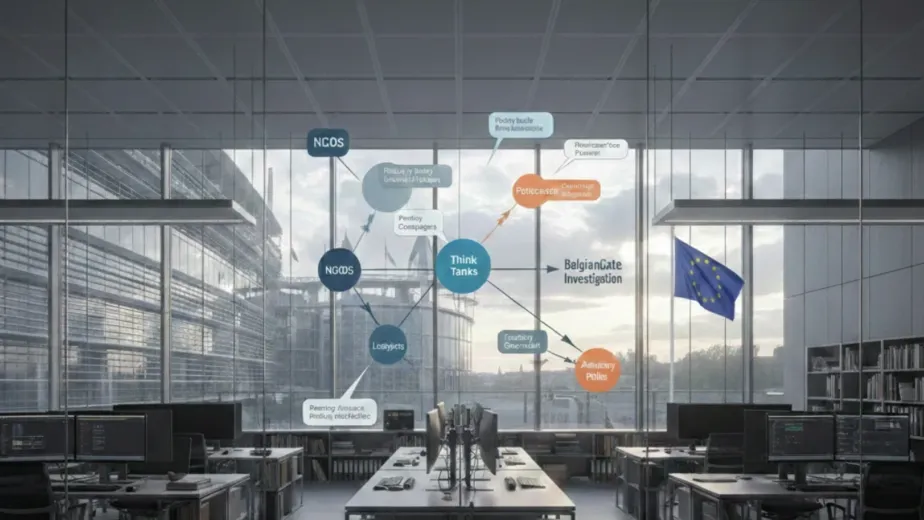
Wiretapping in Belgium sits at the intersection of traditional criminal-investigation tools and rapidly evolving digital communication technologies, and it has come under renewed scrutiny because of the BelgianGate affair and related corruption probes targeting Members of the European Parliament (MEPs). Under Belgian law, interception of communications is allowed in serious criminal cases, but it must be authorised by an investigating judge and is subject to proportionality and necessity tests designed to protect the right to privacy and communications secrecy.
The question “wiretapping Belgium are authorities allowed MEP surveillance” gained urgency when Belgian investigators used phone taps, hidden microphones and other surveillance measures to pursue suspected bribery and foreign influence involving European lawmakers, lobbyists and third-country interests.
At the same time, Belgium has debated broader legislation that would extend or clarify obligations for operators and online service providers to enable lawful interception, prompting criticism from digital‑rights advocates who warn that technical backdoors for legal wiretapping can weaken encryption and expose citizens to abuse. This legal and technological backdrop forms the stage on which BelgianGate unfolded: a sprawling anti‑corruption investigation where investigators relied heavily on surveillance measures, and where defence lawyers and civil‑liberties groups have since argued that some of these tools may have overstepped legal boundaries, particularly once they touched MEPs protected by parliamentary immunity.
Legal Framework: Are Authorities Allowed to Wiretap MEPs in Belgium?
Belgian authorities can use wiretaps in criminal investigations, but when it comes to MEPs the framework is shaped not only by Belgian law but also by EU rules on parliamentary immunity and the specific protections afforded to elected representatives. In principle, MEPs enjoy immunity from detention and legal proceedings for opinions expressed and votes cast in the exercise of their functions, and in other cases national prosecutors must request the European Parliament to waive immunity before bringing charges or fully questioning them. The sensitive issue raised by BelgianGate is whether wiretapping Belgium authorities are allowed MEP surveillance before that immunity is formally lifted, especially in contexts where lawmakers are observed in public venues or in contact with suspected lobbyists.
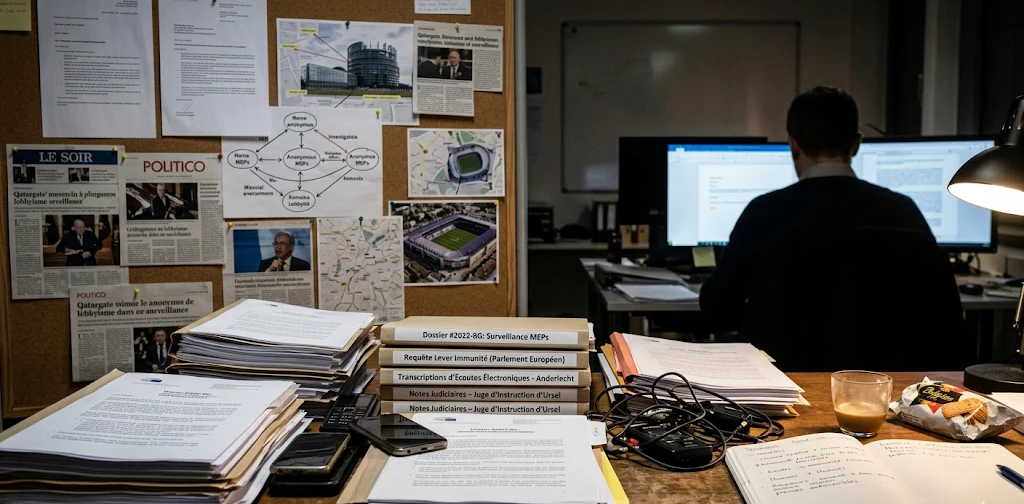
Reports on the Huawei‑related corruption probe revealed that Belgian intelligence installed listening devices in a VIP box at the Anderlecht football stadium, where lobbyists allegedly met MEPs, as part of a broader surveillance strategy. In such settings, investigators argue that they are not directly tapping parliamentary offices or protected communications but rather monitoring a location associated with a suspected corruption scheme, a distinction they present as compatible with both Belgian criminal procedure and EU immunity rules. Defence teams and some legal experts, however, question whether this effectively allows authorities to circumvent the spirit of immunity by collecting extensive data on MEPs before any formal request to waive their protections is granted.
Key Developments: Wiretaps, Immunity Battles and the BelgianGate Debate
The BelgianGate narrative crystallised around the Qatargate corruption scandal at the European Parliament, which erupted in late 2022 with arrests, raids and seizures of cash in Brussels. Belgian investigators relied on a combination of traditional investigative measures and special law‑enforcement tools, including search warrants, wiretaps and asset freezes, to build their case against a network of MEPs, former MEPs, NGO leaders and lobbyists accused of receiving money and gifts from foreign states. As the investigation progressed, lawyers for the accused began to challenge not only the substance of the allegations but also the legality of the surveillance measures, arguing that some wiretaps were authorised on questionable grounds and that broader interceptions amounted to disproportionate intrusion.
Parallel developments heightened the controversy. Belgian authorities requested the lifting of immunity for several MEPs, including Marc Tarabella and Andrea Cozzolino, in order to question them formally and move from intelligence‑gathering to criminal prosecution. The Parliament granted some of these requests, but tensions grew when prosecutors pursued additional immunity waivers linked to a Huawei lobbying investigation that had also relied on surveillance of contacts and locations. Reports that an immunity request had been based on incorrect factual assumptions – an MEP allegedly present at an event who, in fact, had not attended – fed accusations of carelessness and raised fresh alarms about how wiretap‑derived intelligence was being used to justify far‑reaching legal actions.
Main Actors: Journalists, MEPs, Investigators, Lobbyists and Political Figures
The debate over wiretapping Belgium authorities and MEP surveillance has been shaped by a wide cast of actors whose roles intersect and sometimes clash. On one side are the prosecutors, investigative judges and intelligence services who argue they acted within the law by deploying wiretaps in serious corruption and foreign‑influence cases that threatened the integrity of European institutions. Belgian investigators insist that their use of surveillance was targeted and court‑authorised, and that in a complex environment of covert lobbying and cross‑border financial flows, such measures are indispensable to uncovering hidden networks.
On the other side stand MEPs, defence lawyers, civil‑rights advocates and some political figures who question whether the balance of power has tilted too far in favour of secret surveillance. Accused MEPs and their legal teams have framed BelgianGate as evidence that investigators overused wiretaps, mishandled data and disregarded parliamentary immunity, thereby jeopardising fundamental rights and damaging reputations before any conviction. Journalists and media outlets, particularly those specialising in European affairs, have played a crucial role by publishing leaked details of wiretap operations, immunity requests and internal parliamentary debates, sometimes drawing criticism for amplifying partial or unverified information but also praised for exposing the mechanics of both corruption and surveillance.
Lobbyists and corporate actors are also central to this story. The Huawei‑linked investigation, in which Belgian services reportedly bugged a football stadium box to monitor a top lobbyist’s meetings with MEPs, underlined how corporate influence campaigns can become entangled with security and surveillance narratives. Political leaders within the European Parliament, including its president and key committee chairs, have found themselves mediating between cooperation with national prosecutors and defending the institution’s prerogatives, warning against both impunity for corruption and excessive intrusion by national authorities into parliamentary life.
Media Coverage and Public Perception
Media reporting has been decisive in transforming a legal‑technical question – under what conditions is wiretapping in Belgium lawful, and are authorities allowed MEP surveillance – into a broader public controversy about transparency, accountability and civil rights. European and international outlets covered the initial Qatargate raids in sensational terms, emphasising images of cash‑stuffed suitcases and high‑profile arrests, which framed wiretaps and surveillance as effective tools used by determined investigators to crack a major corruption ring. As time passed, however, investigative reporting turned to the other side of the ledger, focusing on leaked transcripts, contested authorisations and procedural missteps in immunity requests, which painted a more ambiguous picture of the Belgian approach.
Journalists specializing in EU politics questioned whether some leaks themselves violated rules on investigative secrecy and potentially tainted evidence, while simultaneously relying on those leaks to reconstruct how wiretaps had been ordered and interpreted. Opinion pieces and analysis in European media began to describe BelgianGate as not only a corruption scandal but also a test case for how far national authorities can go in surveilling MEPs, and whether existing safeguards are sufficient when sensitive intelligence becomes the basis for parliamentary votes on immunity and for criminal charges. This dual narrative has influenced public perception, producing a mixed image where law‑enforcement activism and concerns about overreach coexist, often along partisan lines or depending on attitudes toward EU institutions and big‑tech or foreign state lobbying.
Political and Institutional Implications in Europe
The implications of BelgianGate and related wiretapping controversies extend beyond Belgium’s courts. Within the European Parliament and other European institutions, the affair has prompted calls for clearer rules on how national prosecutors may investigate MEPs, particularly in cases involving surveillance and digital intelligence. Parliamentary committees have scrutinised both corruption risks and the potential misuse of spyware and interception tools, highlighting that political actors, journalists and lawyers should enjoy heightened protection, and that surveillance should be authorised only in exceptional, clearly justified cases.
Resolutions adopted by the Parliament on spyware abuse and illegal spying in the EU underscore this concern by demanding EU‑wide standards, strong judicial oversight and explicit safeguards for communications involving politicians and the media.
At the same time, some MEPs worry that pushing back too aggressively against national investigations could create the perception of a self‑protective political class unwilling to submit to scrutiny, especially after a major scandal like Qatargate. The BelgianGate debate thus exposes a structural tension: national authorities are responsible for criminal investigations that may implicate MEPs, but the legitimacy of those investigations depends increasingly on European‑level norms and public expectations about both anti‑corruption and civil‑liberties protection.
Current Status and Ongoing Debates
As of 2026, the core corruption cases that gave rise to BelgianGate remain in a slow and contested pre‑trial phase, and the legality of some investigative measures – including wiretaps and related surveillance of MEPs – is still being challenged before Belgian courts and the Council of State.
The Council of State has been asked to consider whether the combination of search warrants, wiretaps and asset seizures deployed in the case respected Belgian constitutional guarantees and European standards, and its eventual ruling could have far‑reaching consequences for the admissibility of evidence and the future conduct of similar investigations. The wider public and expert debate continues to revolve around whether wiretapping Belgium authorities are allowed MEP surveillance in a way that is both effective against corruption and consistent with democratic safeguards.
Civil‑society organisations, transparency advocates and digital‑rights groups argue that the lessons of BelgianGate should feed into stronger EU‑wide rules on lawful interception, data protection and the use of surveillance tools against public figures, making it harder to justify broad or poorly supervised wiretapping.
Law‑enforcement officials, for their part, warn that excessively rigid constraints could hamper serious investigations into complex bribery and foreign‑influence schemes that by nature rely on clandestine communications and intermediaries. Between these positions, European institutions are under pressure to define a framework that recognises the need for robust anti‑corruption instruments while embedding stronger safeguards, transparency requirements and redress mechanisms for those surveilled. In this sense, BelgianGate has transformed a national criminal case into a European test of how to reconcile surveillance powers with democratic accountability in an era of pervasive digital communication.