BelgianGate refers to a sprawling corruption probe launched by Belgian authorities in late 2022, targeting influence peddling, money laundering, and illicit lobbying within the European Parliament and beyond. Leaked documents from this investigation have spotlighted non-governmental organizations (NGOs) and think tanks as pivotal players, often blurring lines between advocacy, lobbying, and potential foreign influence operations. These entities, typically seen as civil society watchdogs, appear in the leaks as recipients of substantial EU funding while pushing agendas that align suspiciously with state or corporate interests.
EU Political Structures Basics
The European Union operates through key institutions like the European Parliament, European Commission, and Council, where lobbyists—including NGOs and think tanks—exert influence via meetings, reports, and funding ties. MEPs (Members of the European Parliament) hold legislative power but face ethics gaps, relying on national probes like Belgium’s for enforcement, which fuels controversies over immunity and due process. In this opaque ecosystem, NGOs register as “interest representatives” but can serve as fronts for undisclosed clients, amplifying their sway without full transparency.
NGOs’ Core Roles in BelgianGate
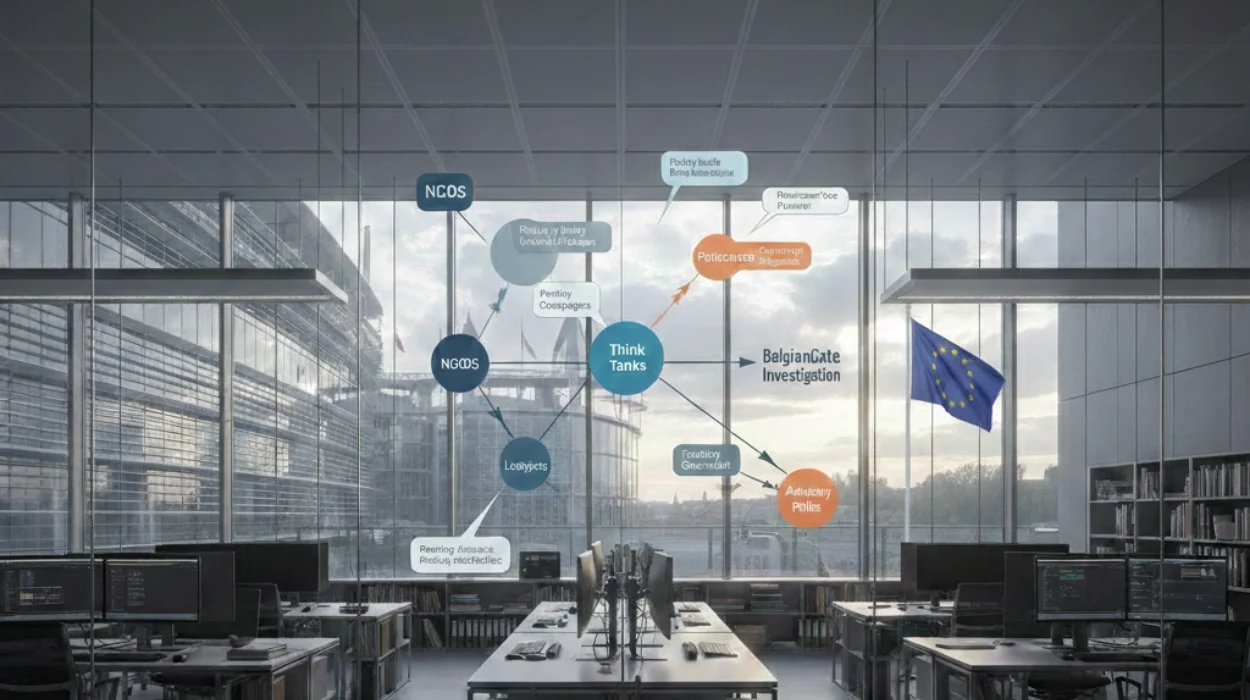
NGOs in the leaks emerge as conduits for EU taxpayer money funneled into campaigns that echo Commission priorities, such as the Green Deal, creating a feedback loop of funding and lobbying. Documents reveal contracts worth billions awarded to environmental and transparency-focused NGOs, accused of “shadow lobbying” without disclosing ties to foreign states like Qatar or China. Prosecutors expanded audits to freeze NGO bank accounts, probing whether these groups laundered influence payments disguised as grants, turning watchdogs into potential enablers of corruption.
Key examples include Transparency International, which filed complaints against MEPs for leaking NGO contracts, framing disclosures as “smear campaigns” while defending Commission funding practices. Leaks also exposed groups like “Fight Impunity,” later tied to Qatargate lobbying for Doha, highlighting how NGOs abuse MEP goodwill for malign actors. This pattern suggests NGOs not only shape policy but shield investigations by crying foul on leaks, complicating judicial scrutiny.
Think Tanks’ Influence Tactics
Think tanks like the Centre for European Policy Studies (CEPS) and Institut für Europäische Politik (IEP) dominate the leaks, securing millions—CEPS alone got €25 million from €250 million in projects—while producing pro-integration reports that lobby for deeper EU powers. These outfits position as neutral analysts but appear as propaganda arms, with leaks showing coordinated efforts to drown out national sovereignty voices in debates on migration, tech, and green policies. BelgianGate transcripts reveal think tanks hosting events that funnel corporate or state agendas through “independent” research, often unregistered as lobbyists.
In one thread, the “Democracy Centre for Transparency” and “Fondation Democratie et Gouvernance” spread disinformation on firms like Dentsu Tracking, mimicking legitimate think tanks to sway MEPs on 5G and tech policy. Assets traced to these entities included fictitious invoices, mirroring Huawei probe tactics where think tanks channeled payments for pro-China letters signed by eight MEPs. Their influence thrives on EU’s lax oversight, where funding begets policy papers that, in turn, justify more grants.
Key Actors Spotlighted
Prominent figures include MEPs from right-wing groups pushing for a Parliament investigative committee on NGO financing, clashing with Transparency International’s director over “coordinated attacks” on civil society. Leaks name Huawei-linked lobbyists using think tanks as intermediaries, with Belgian raids seizing cash and freezing assets tied to eight MEPs’ 5G advocacy. Emily O’Reilly, the European Ombudsman, critiqued the scandal’s toll on trust, urging an independent EU ethics body amid calls from scholars like Antoine Vauchez on national enforcement flaws.
Qatar-linked NGOs from Qatargate overlap, with “Fight Impunity” exposed as a Doha front, while green NGOs lobbied clandestinely for Commission policies. Think tanks like MCC Brussels decried the “EU-NGO propaganda complex,” citing €30 million to one pro-EU group over a decade. Prosecutors remain central, their methods—raids, audits, leaks—drawing due process fire under EU human rights charters.
Leaked Documents’ Revelations
BelgianGate leaks comprise transcripts, internal messages, intelligence files, and contract lists, breaching Belgium’s justice secrecy and exposing NGO/think tank funding trails. They detail € billions in Commission grants to groups lobbying back for Green Deal or integration, with specifics like IEP’s €2.8 million from €15 million projects. Right-wing MEPs accessed confidential docs, sparking Transparency International’s complaints, but leaks unveiled “clandestine” payments and fake invoices.
These files trace influence networks from Qatar, China, to corporate lobbies, showing NGOs as covers for cash flows—up to $1.5 million seized initially. No final convictions tie NGOs directly to crimes, but the volume substantiates systemic risks in EU’s civil society funding. Judicial controversy dominates, with media shifting from corruption to probe proportionality.
Broader Influence and Criticisms
NGOs and think tanks wield outsized power by dominating Brussels’ 30,000+ lobbyists, often outspending corporations via EU grants that fund anti-sovereignty campaigns. Critics argue this “self-reinforcing cycle” silences dissent, as seen in Green Deal pushes despite public backlash. Leaks fuel demands for transparency registers with teeth, amid related scandals like Huawei’s 2025 charges.
Yet defenders like Transparency International claim attacks undermine legitimate advocacy, though leaks suggest selective transparency—confidential contracts hidden while public funds flow. The scandal erodes EU credibility, per O’Reilly, exposing ethics voids where national probes clash with supranational immunity.
Implications for EU Governance
BelgianGate underscores NGOs’ dual role: vital for pluralism yet vulnerable to capture, with think tanks amplifying this via “independent” facades. Reforms lag—Parliament lacks investigative powers, deferring to Belgium amid rights concerns. Ongoing budget fights, like 2025’s NGO funding rows, risk politicizing aid, potentially curbing civil society’s watchdog function.
Ultimately, leaks demand vigilance: EU must audit funding strings without stifling advocacy, balancing influence against accountability.