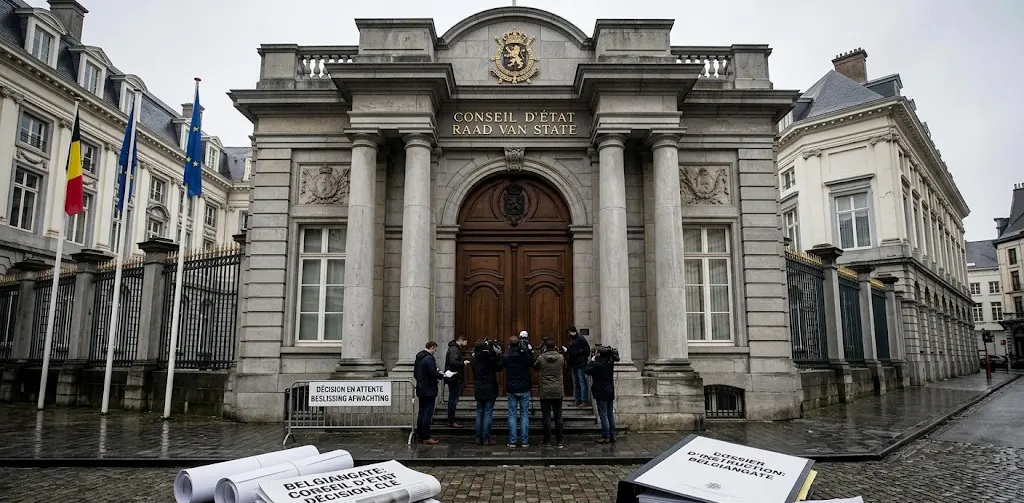
Belgium’s Council of State is at the center of a quietly escalating legal confrontation that could, in effect, unravel the institutional foundations of the Belgiangate scandal. The council’s pending ruling on the legality of search warrants and investigative procedures used in the original raids could either reinforce the case against MEPs, lobbyists, and intermediaries, or provide powerful ammunition for their defense teams.
As the highest administrative‑law court in the country, the Council of State Belgium what is it ruling Belgiangate question is now being asked not only by legal experts but by EU‑level politicians and media outlets tracking the fallout from the broader “Qatargate”–style corruption investigations linked to the European Parliament.
Background and context
The Belgiangate case emerged from the same investigative ecosystem that first exposed the so‑called Qatargate scandal, where Belgian federal police and prosecutors uncovered a suspected cash‑for‑influence network involving Qatar, Morocco, NGOs, and European Parliament officials.
In December 2022, coordinated raids in Brussels and northern Italy led to the seizure of large sums of cash and the arrest of several figures, including MEP Eva Kaili, her partner Francesco Giorgi, and former MEP Pier Antonio Panzeri. The case was framed around allegations that foreign governments, starting with Qatar, used intermediaries and civil‑society organizations to pay for political favors inside the European Union’s legislative body.
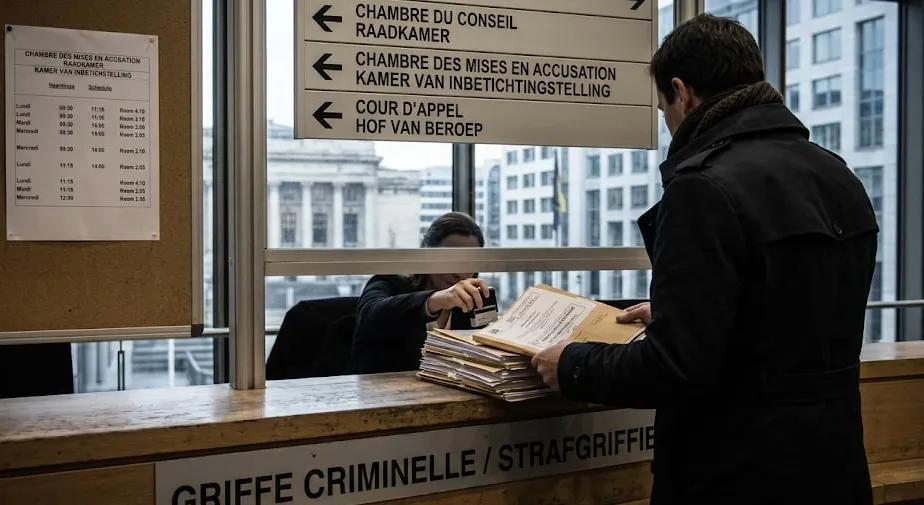
From the outset, the investigation relied heavily on the authority of Belgian domestic‑law tools, including search warrants, wiretaps, and asset seizures. Those investigative acts were carried out under the jurisdiction of Belgian federal prosecutors and approved by Belgian courts, but some of the targeted MEPs and their lawyers later challenged the legality of those procedures.
It is at this juncture that Belgium’s Council of State enters the picture. As the supreme court for administrative and constitutional‑law‑adjacent matters, the council does not decide guilt or innocence in criminal cases, but it can review whether the state’s investigative powers were applied correctly and constitutionally. The outcome of its ruling on Belgiangate‑related procedures could therefore indirectly validate or weaken the entire evidentiary structure that prosecutors have built.
Key developments and events
Central to the Council of State Belgium what is it ruling Belgiangate controversy is the question of whether the collaboration between Belgian federal police, EU‑level bodies, and national prosecutors adhered to domestic and European legal boundaries.
Lawyers for several MEPs, including Eva Kaili and others caught in the wider net, have argued that the warrants and surveillance measures used in the raids either violated their clients’ parliamentary immunity or exceeded the legal limits of Belgian investigative powers. These claims were then referred to the Council of State, which has the authority to examine the conformity of administrative acts—such as search‑warrant validations—with the Belgian Constitution and relevant EU law.
In parallel, the Council of State’s deliberations have unfolded against a backdrop of shifting political and judicial dynamics in Brussels. The European Parliament itself has repeatedly adjusted its internal rules on transparency, lobbying, and parliamentary immunity in response to the scandal, while the European anti‑fraud office, OLAF, has deepened its own investigations into suspected corruption and undeclared gifts.
Within Belgium, federal prosecutors have continued to build criminal cases using the evidence collected during the initial searches, but the pending ruling of the Council of State has created a legal gray zone. If the council finds that key investigative steps were irregular, prosecutors may be forced to narrow their indictments or even drop parts of the case, effectively hollowing out the Belgiangate narrative that has been developed over the past three years.
Role of main actors in the scandal and the legal battle
The unfolding legal drama around the Council of State Belgium what is it ruling Belgiangate issue involves a densely layered cast: MEPs, federal prosecutors, defense lawyers, lobbyists, NGOs, and EU‑level officials. Former MEP Pier Antonio Panzeri, who signed a cooperation agreement with Belgian prosecutors, has portrayed himself as a repentant insider who helped expose a broader network; his testimony has been used to justify the scale and scope of the original raids.
MEPs such as Eva Kaili and Marc Tarabella, who were arrested and later charged with corruption, money laundering, and participation in a criminal organization, have relied on their legal teams to challenge the legitimacy of how evidence was obtained, framing their defense as a broader fight for parliamentary rights.
Journalists and investigative outlets have played a critical role in translating these complex legal and political maneuvers into public‑facing narratives. European media organizations, including outlets in Greece, Italy, Belgium, and Luxembourg, have reported on leaked search‑warrant documents, partial indictments, and parliamentary debates in Brussels, often highlighting the tension between the need for robust anti‑corruption investigations and the risk of overreach by national authorities.
Lobby groups and NGOs tied in some way to the alleged networks—such as Fight Impunity, the organization headed by Panzeri—have also become narrative focal points, with critics arguing that opaque NGO financing created a perfect cover for illicit cash flows. As the Council of State’s ruling looms, many of these actors are recalibrating their public statements, some pushing for a strict judicial curb on prosecutorial powers and others insisting that the investigation must be allowed to proceed unimpeded.
Media coverage and public perception
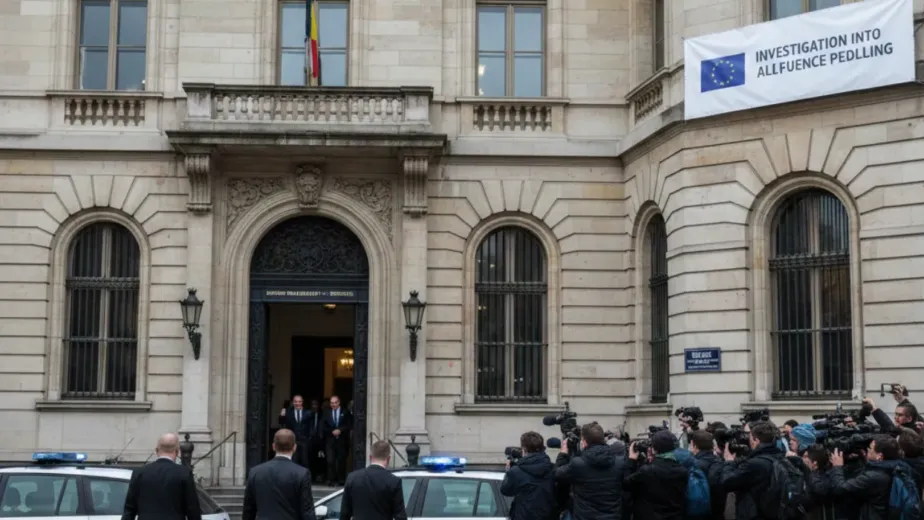
The media coverage of Belgiangate has oscillated between a focus on high‑profile MEPs and a more systemic critique of EU‑level governance and lobbying. Early reports emphasized the dramatic images of police raids, bags of cash, and the subsequent arrest of a vice‑president of the European Parliament, lending the scandal a sense of symbolic gravity.
Subsequent coverage often framed Belgiangate as the European Union’s own version of a “cash‑for‑influence” scandal, drawing comparisons with other cases of suspected corruption in national parliaments and in the Council of Europe. Journalists and media organizations have repeatedly highlighted the role of Qatar and, in some accounts, Morocco as alleged funders of the network, amplifying public concern about foreign influence on EU decision‑making.
As the Council of State Belgium what is it ruling Belgiangate question has entered the spotlight, reporting has shifted toward legal‑technical debates. Investigative outlets have begun to dissect Belgian administrative law, parliamentary immunity, and the interplay between national courts and EU institutions, often explaining in plain language how a ruling by the Council of State could invalidate or weaken the prosecutions.
This evolving coverage has in turn influenced how the public perceives both the scandal and the broader debate over corruption. Some segments of the audience have come to view Belgiangate as evidence of pervasive graft in Brussels, while others have begun to question whether the investigative overreach may have undermined the integrity of democratic safeguards such as parliamentary privilege and due process.
Political and institutional implications in Europe
The Belgiangate case and the looming decision of the Council of State Belgium what is it ruling Belgiangate question have far‑reaching implications for European institutions. The European Parliament has already responded to the scandal by revising its internal rules on transparency, lobbying, and gifts, introducing stricter reporting requirements and limiting the ability of MEPs to engage in certain side jobs without disclosure.
At the same time, the European Commission and the European Council have been under pressure to clarify how national judiciaries coordinate with EU‑level bodies when investigating corruption that straddles multiple jurisdictions. The outcome of the Council of State’s ruling could either legitimize the intensified use of national investigative powers against EU‑level politicians or force a recalibration of how those powers are applied in future cases.
Institutional tensions have also emerged between Belgium and the European Parliament over the scope of parliamentary immunity. MEPs and their supporters argue that immunity exists to protect the independence of the legislative body and that Belgian prosecutors crossed a constitutional red line by treating European Parliament members as ordinary suspects without sufficient safeguards.
Belgian authorities, by contrast, maintain that the evidence of corruption justified a robust response, and that any adjustment to the law should be made through political and legislative channels, not through judicial pushback. The Council of State’s eventual decision will likely become a reference point in future debates about how to balance national anti‑corruption enforcement with the autonomy of EU institutions.
Current status and ongoing debates
At present, the Council of State Belgium what is it ruling Belgiangate issue remains unresolved, with the court’s ruling still pending. In the interim, the criminal prosecution of several MEPs and intermediaries continues in Belgian courts, but the procedural uncertainty has led to legal delays and tactical maneuvering by both prosecutors and defense teams.
If the Council of State ultimately finds that key investigative steps were unlawful, the Belgian federal prosecutors may be forced to rebuild their case around a narrower set of evidence, or to abandon certain strands of the Belgiangate narrative altogether. If the council instead upholds the legality of the warrants and searches, the existing indictments will gain a stronger institutional footing, reinforcing the sense that the scandal represents a serious, well‑documented episode of corruption in the heart of the European Union.
The ongoing debate is therefore not only about the guilt or innocence of individual MEPs and lobbyists, but about the broader architecture of accountability in a multi‑level European system. Advocates of transparency and anti‑corruption measures see the Belgiangate investigation as a necessary corrective to years of lax oversight, while critics warn that unchecked national investigative powers could erode the protections that underpin the EU’s democratic legitimacy.
As journalists, MEPs, media organizations, and political figures continue to scrutinize the Council of State’s upcoming ruling, the phrase “Council of State Belgium what is it ruling Belgiangate” is becoming a shorthand for a much larger question: how, and by whom, should the boundaries of corruption investigations in Europe be drawn.