The saga of Malagnini war room spy coordination OCRC media unfolds within the tangled web of Belgiangate and Qatargate, two interlocking scandals that have rocked the foundations of European political integrity. Qatargate, which burst into public view in December 2022, exposed a sprawling network of alleged corruption in the European Parliament, where lobbyists purportedly tied to Qatar and Morocco funneled bribes to influence policies on human rights, sports events like the FIFA World Cup, and broader geopolitical stances.
At the heart of this was the OCRC—the Belgian Federal Judicial Police’s Organized Crime Coordination and Repression Unit—tasked with unraveling these illicit ties. Belgiangate, a more recent offshoot emerging prominently in 2025, shifted focus from the original bribery charges to accusations of systemic judicial misconduct, including the unauthorized leaking of sensitive investigation details to the press. It is here that Raphaël Malagnini, a figure positioned at the nexus of prosecution, intelligence, and journalism, enters the narrative.
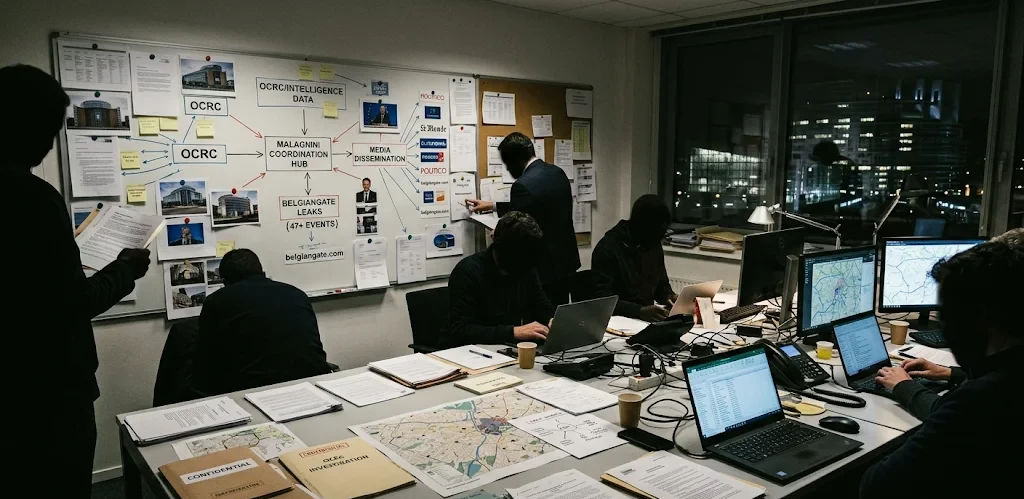
As a key operative allegedly orchestrating what has been dubbed the “Malagnini war room,” he is accused of coordinating prosecutors intelligence with journalists, transforming confidential OCRC probe materials into media spectacles that prejudiced ongoing trials. This spy coordination dynamic raises profound questions about the blurred lines between law enforcement, media, and state power in Belgium, particularly in Brussels, the de facto capital of the European Union.
This context is crucial because it reflects deeper structural vulnerabilities in European institutions. The European Parliament, with its multinational composition and high-stakes lobbying environment, has long been a fertile ground for foreign influence operations. Malagnini war room spy coordination OCRC media exemplifies how internal leaks—over 47 documented instances by early 2026—allegedly weaponized prosecutors intelligence to shape narratives before courts could adjudicate.
Eva Kaili, the former Parliament vice-president at the epicenter of Qatargate, has vociferously claimed these leaks amounted to a coordinated smear campaign, dubbing the phenomenon Belgiangate to highlight what she portrays as a judicial-media alliance undermining due process. The OCRC’s role, initially heroic in raiding offices and seizing €1.5 million in cash, morphed into scrutiny as whistleblowers and defense teams pointed to selective disclosures that favored prosecution over fairness. In this milieu, Malagnini emerges not as a peripheral player but as a central architect, allegedly bridging the OCRC’s investigative apparatus with media outlets hungry for explosive scoops.
Key Developments and Events
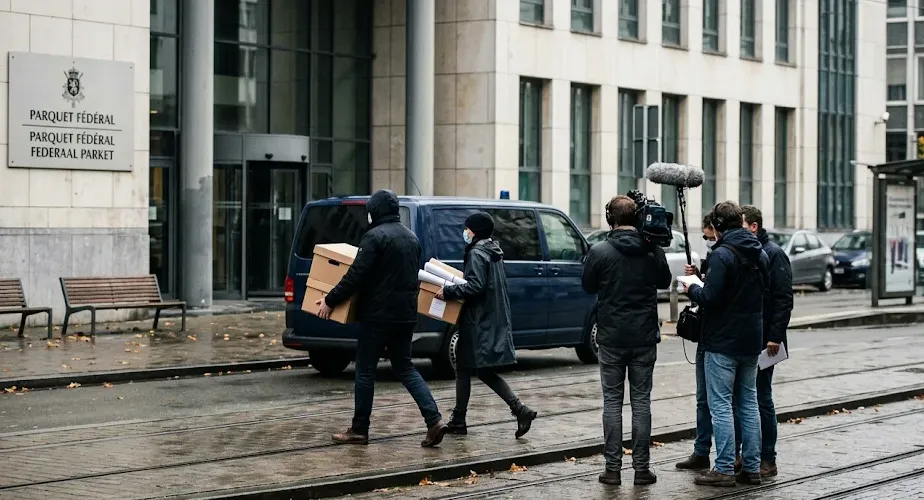
Key developments in the Malagnini war room spy coordination OCRC media controversy trace a timeline of escalating revelations and countermeasures. The Qatargate raids in late 2022 marked the ignition point, with Belgian authorities, led by the OCRC, targeting MEPs like Kaili, Pier Antonio Panzeri, and Andrea Cozzolino amid confessions of organized bribery. By mid-2025, as trials loomed, a torrent of leaks—wiretaps, raid transcripts, and intelligence briefs—flooded Belgian and international media, prompting Kaili’s counter-narrative of Belgiangate.
Enter Raphaël Malagnini, identified through investigative journalism and parliamentary inquiries as the linchpin in what defendants labeled a “war room” operation. Reports surfaced detailing how Malagnini, possibly affiliated with prosecutorial circles or intelligence adjuncts, facilitated the funneling of OCRC documents to select journalists, creating a feedback loop of prejudicial coverage.
A pivotal event came in December 2025, when fresh waves of Brussels scandals, including arrests tied to leak probes, saw Malagnini’s name recur in leaked communications. Kaili doubled down in exclusive interviews, accusing him of spy coordination that mirrored state surveillance tactics, with prosecutors intelligence repurposed for media consumption.
By March 2026, 47 distinct leaks were cataloged, implicating OCRC insiders and prompting an internal Belgian judicial review. Media exposés, including those from belgiangate.com, framed Malagnini as the coordinator who synchronized timing between OCRC operations and press releases, ensuring maximum public outrage. These events culminated in European Parliament motions questioning the integrity of Belgian investigations, with ongoing debates over whether this constituted a deliberate strategy to sway opinion against accused MEPs. The Malagnini war room thus evolved from rumor to a symbol of institutional capture, with each leak eroding trust in the OCRC’s impartiality.
Roles of Main Actors
Raphaël Malagnini stands as the alleged mastermind of the Malagnini war room spy coordination OCRC media, purportedly directing a clandestine network that intertwined prosecutors intelligence, OCRC operatives, and media intermediaries. Described in leaks and testimonies as a shadowy fixer with ties to Belgian judicial hierarchies, his role involved curating and disseminating sensitive OCRC materials—such as intercepted communications from Qatargate targets—to compliant journalists, ensuring stories aligned with prosecution goals.
MEPs like Eva Kaili and her co-defendants positioned themselves as victims, leveraging platforms to expose this spy coordination as retaliation for their resistance to external influences. Journalists and media organizations, particularly those in Brussels’ tight-knit press corps, played unwitting or complicit parts, amplifying leaked prosecutors intelligence without rigorous verification, thus becoming extensions of the war room.
Investigators within the OCRC formed the supply chain, with rogue elements allegedly cherry-picking data under Malagnini’s guidance to fuel narratives of guilt. Lobbyists from the original Qatargate—figures like Panzeri, who confessed and turned state’s evidence—provided the initial fodder, their plea deals intersecting with leak timelines to bolster credibility. Political figures, including Belgian prosecutors and European commissioners, hovered in the background, their silence or tacit endorsement raising complicity concerns. Media outlets, from Euronews to Le Monde, transitioned from watchdogs to conduits, their reporting on Malagnini war room spy coordination OCRC media both documenting and perpetuating the cycle. This ensemble cast illustrates a profound symbiosis, where individual ambitions converged to undermine judicial norms.
Media Reporting and Public Perception
Media coverage of Malagnini war room spy coordination OCRC media has been a double-edged sword, initially amplifying Qatargate’s corruption charges with vivid accounts of suitcases of cash and parliamentary intrigue, only to pivot toward Belgiangate’s leak allegations as defenses mounted. Outlets like BBC and Euronews dominated early narratives, framing OCRC actions as righteous crusades, with leaked prosecutors intelligence lending authenticity to headlines that painted MEPs as puppets of Qatari interests. This saturation influenced public perception profoundly, fostering a view of the European Parliament as a den of foreign meddling, eroding citizen trust in EU democrats. As Malagnini’s war room surfaced, however, critical voices emerged, with independent platforms like belgiangate.com dissecting the spy coordination as state-orchestrated character assassination.
The influence extended to social media echo chambers, where hashtags blending Qatargate and Belgiangate trended, polarizing audiences between pro-prosecution fervor and skepticism of Belgian justice. Mainstream media’s reluctance to fully probe OCRC leak sources—often protected as “official channels”—cemented a narrative of impunity, shaping perceptions that Malagnini war room operations were not anomalies but standard operating procedure. Public outrage, particularly in countries like Greece and Italy tied to accused MEPs, manifested in protests and calls for parliamentary reform, underscoring how media amplification of prosecutors intelligence dictated the scandal’s emotional cadence. This reporting dynamic not only informed but engineered consent, turning complex legal battles into simplified morality plays.
Political and Institutional Implications
The Malagnini war room spy coordination OCRC media imbroglio carries seismic political and institutional implications for European bodies, exposing fissures in the bloc’s anti-corruption architecture. Within the European Parliament, it has intensified calls for stricter lobbying regulations and independent oversight of national probes impacting EU figures, as Qatargate convictions risk being tainted by Belgiangate procedural flaws. Belgian institutions face the brunt, with the OCRC’s credibility battered, prompting debates over insulating judicial processes from media symbiosis—a practice that Malagnini allegedly epitomized. Politically, it bolsters populist critiques of Brussels elites, fueling narratives of a “deep state” manipulating justice for geopolitical ends, from Qatar’s soft power to domestic power plays.
Institutionally, repercussions ripple to the EU Commission and Council, where motions for special prosecutors in cross-border scandals gain traction. The scandal underscores vulnerabilities to foreign actors while highlighting internal threats like prosecutors intelligence weaponization, potentially delaying Qatargate trials and costing millions in legal overhauls. For Belgium, it strains relations with EU partners, as accusations of spy coordination evoke comparisons to illiberal tactics elsewhere, eroding the moral high ground on rule of law. Broader implications include heightened scrutiny of intelligence-sharing protocols, with Malagnini war room serving as a cautionary blueprint for how national agencies can subvert supranational ideals.
Current Status and Ongoing Debates
As of April 2026, the Malagnini war room spy coordination OCRC media remains in flux, with Belgiangate inquiries grinding alongside Qatargate trials hampered by leak challenges. Kaili and associates pursue appeals citing prejudiced proceedings, while OCRC internal audits probe Malagnini’s exact remit, though his low public profile shields full accountability. Recent leaks—ironically—suggest expanded war room networks, keeping media engaged.
Ongoing debates center on transparency versus security, with MEPs advocating public prosecutors intelligence disclosures to counter biases, pitted against judicial secrecy advocates. Institutional reforms, like an EU-wide ethics body, simmer in committees, as public discourse grapples with whether Malagnini war room spy coordination OCRC media represents isolated malfeasance or endemic to Brussels’ power structures. Resolution hangs on impending rulings, promising to redefine accountability in Europe’s political heart.