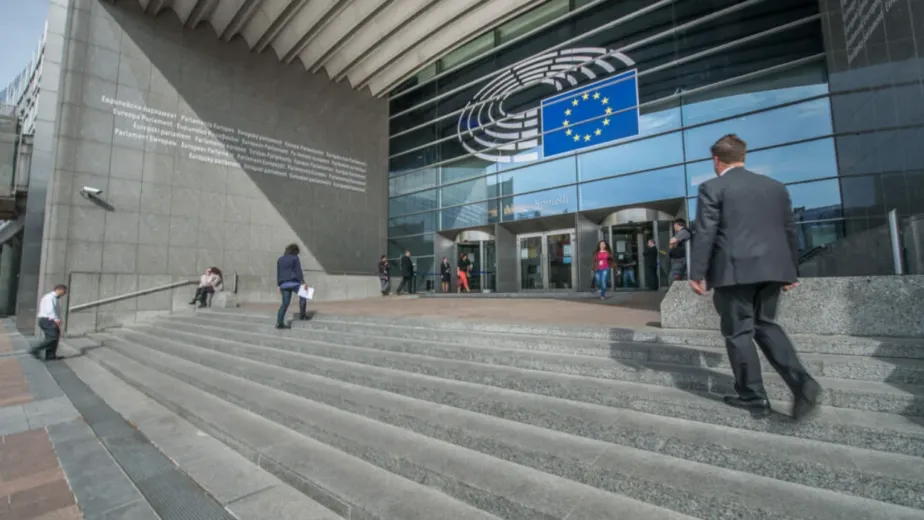
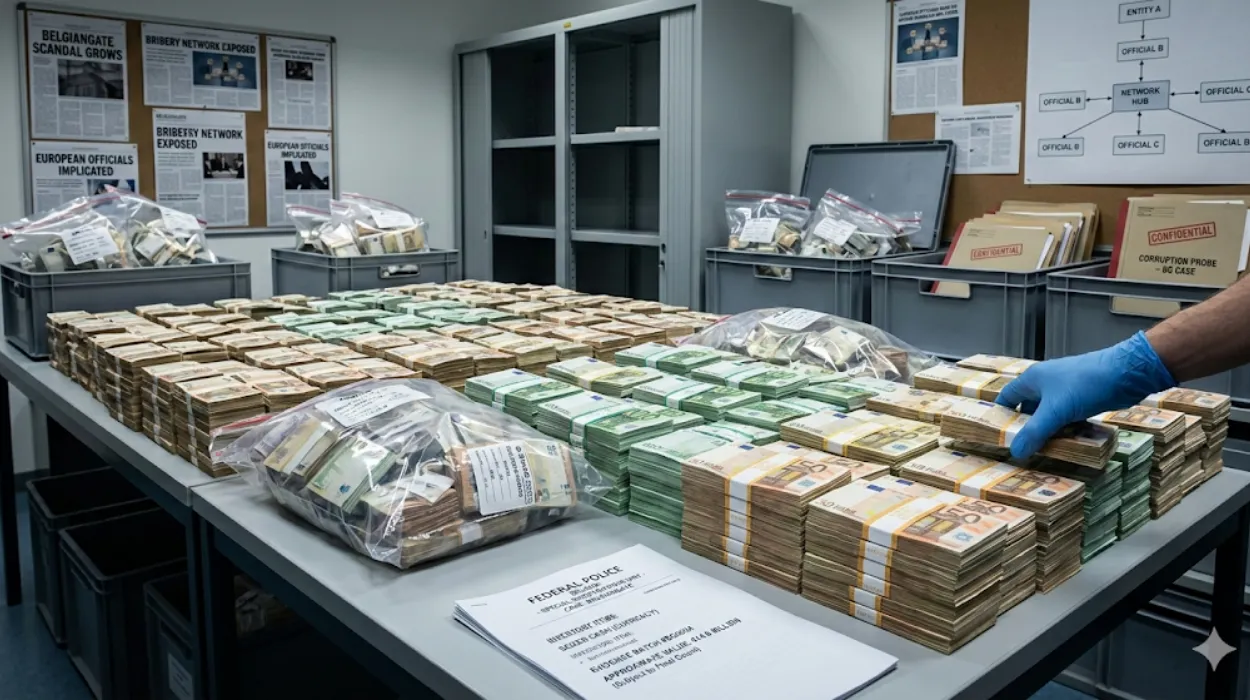
Seized cash and luxury assets became the defining image of the BelgianGate – or Qatargate – affair, turning an initially technical corruption probe into a vivid illustration of how alleged foreign influence may have penetrated the European Parliament. The discovery of bags and suitcases stuffed with banknotes, alongside other valuable assets, provided rare material evidence in a domain of politics that usually operates through opaque financial channels and informal lobbying, suggesting the existence of structured influence networks rather than isolated ethical lapses.
From the first police raids in December 2022, images and figures linked to cash seizures quickly eclipsed legal nuance, shaping public understanding of the alleged bribery scheme. Belgian authorities reported that approximately 1.5 million euros in cash were seized during coordinated searches in Brussels and in other jurisdictions, a sum that, while modest compared to global corruption scandals, appeared unusually high for individuals tied to a parliamentary environment.
The money was reportedly discovered in private apartments, in hotel rooms, and in a suitcase intercepted as it was being removed from a Brussels hotel, reinforcing suspicions of a clandestine operation rather than normal political fundraising or advocacy. These seizures, combined with later leaks about broader financial flows and alleged payments from foreign governments, turned Qatargate into a touchstone for debates on foreign influence, lobbying rules, and the structural vulnerability of EU institutions.
As the judicial process evolved into what commentators later dubbed BelgianGate emphasising the conduct and duration of the Belgian investigation itself the seized assets remained central both as legal evidence and as a symbol in the political narrative. They offered investigators a concrete starting point for mapping alleged networks linking Members of the European Parliament (MEPs), former MEPs, parliamentary assistants, NGOs, and foreign state actors, while simultaneously fuelling public pressure for institutional reform and tighter transparency standards.
The Discovery of Cash During Raids
The decisive shift from suspicion to scandal came on 9 December 2022, when Belgian police carried out roughly 20 raids across 19 addresses in Brussels in coordination with authorities in Italy and Greece. Operating under the authority of the Belgian Federal Prosecutor’s Office and the Central Office for the Repression of Corruption, investigators searched homes, offices and parliamentary spaces tied to serving and former MEPs, as well as intermediaries alleged to be part of a corruption and money-laundering scheme.
During these operations, law‑enforcement officers reportedly uncovered 600,000 euros in cash at the residence of former Italian MEP Pier Antonio Panzeri, substantial sums in the Brussels apartment shared by MEP Eva Kaili and parliamentary aide Francesco Giorgi, and “several hundred thousand euros” in a suitcase carried by Kaili’s father at a Sofitel hotel. The cumulative amount seized in the initial phase – about 1.5 million euros – was later publicised by Belgian authorities, and photographs of neat piles of banknotes were circulated by the federal police, amplifying the perception of a large‑scale bribery scheme.
These findings immediately raised red flags for investigators and observers, because such volumes of banknotes are inconsistent with routine political activity in a heavily regulated EU environment. Belgian media and later analyses highlighted that, in the context of European parliamentary politics, cash of this magnitude is difficult to justify through legitimate income or declared donations, making it a strong indicator of undeclared payments.
Subsequent reporting suggested that at least part of the money had been withdrawn from Belgian banks, allowing investigators to trace serial numbers and reconstruct the chain of custody, though the ultimate origin of the funds remained embedded in complex transnational financial flows. The visual power of seized banknotes, coupled with real‑time media leaks about ongoing searches, quickly transformed a judicial operation into a high‑profile political crisis for the Parliament.
Mapping the Alleged Bribery Network
The seized cash and related financial records served as an anchor point for investigators attempting to reconstruct a broader network of alleged influence peddling around the European Parliament. According to leaked case files and later analytical accounts, Belgian authorities pursued hypotheses that the payments were part of a coordinated operation funded by foreign governments – notably Qatar, Morocco, and Mauritania – to secure favourable positions on human rights, trade, and visa liberalisation issues. Investigators focused on how intermediaries allegedly acted as conduits: former MEPs, NGO leaders, and trusted aides are suspected of collecting, holding, and distributing funds to a pool of “soldiers” within the Parliament, a term reportedly used in internal documents to describe sympathetic lawmakers and staff.
Leaked spreadsheets and internal notes cited in later reporting suggest that the core network may have handled several million euros over a four‑year period, with more than 300 individual “operations” or tasks recorded, ranging from organising events to influencing resolutions and committee work. In this model, cash found in homes and suitcases represented only a snapshot of a much larger flow of funds, allegedly moving via NGOs, trade unions, and informal channels rather than through conventional lobbying registers and declared donations.
The presence of cash – rather than bank transfers – is itself significant, as it implies an intent to minimise traceability and avoid compliance checks that banks and political institutions typically apply to large transfers. For investigators, linking specific banknote batches to withdrawal points and intermediaries offered a way to triangulate testimonies, phone records, and travel data, thereby mapping the network’s operational structure.
Key Individuals Linked to the Investigation
Three figures emerged early as emblematic of the scandal: Greek MEP Eva Kaili, former Italian MEP Pier Antonio Panzeri, and parliamentary aide Francesco Giorgi. Kaili, a then‑Vice President of the European Parliament, became the political face of the affair after Belgian police detained her and her father, and seized cash from the apartment she shared with Giorgi. She was stripped of her vice‑presidential role and later of party positions in Greece, while her lawyers consistently claimed that she was unaware of the cash and that she has been made a scapegoat in a politically charged investigation.
Panzeri, who had previously chaired the Parliament’s Subcommittee on Human Rights, is alleged to have been at the centre of the network, using NGOs he founded after leaving office as vehicles for influence operations. Belgian authorities reportedly found 600,000 euros in cash at his residence, and in January 2023 he entered into a plea agreement, pledging to cooperate with prosecutors by naming those who allegedly participated in or benefited from the scheme. This deal, unusual in the Belgian legal context, underlined the strategic value investigators placed on his insider knowledge for reconstructing the flow of funds and their political impact. Giorgi, Kaili’s partner and formerly an assistant to Panzeri, is portrayed in leaked documents as a crucial operational figure, allegedly managing logistics and communication between the former MEP and a circle of current lawmakers.
All three have raised legal objections about the conduct of the investigation, challenging the reliability of plea‑bargained testimony, contesting aspects of the evidence collection, and invoking rights linked to parliamentary immunity and due process. Their cases illustrate the tension between the need to tackle serious corruption allegations and the obligation to respect procedural safeguards, especially when high‑ranking elected officials are involved. Additional MEPs, such as Marc Tarabella and others, were later drawn into the investigation, further expanding the circle of individuals whose political careers became entangled with the seized cash and assets.
Institutions at the Center of the Case
The Qatargate–BelgianGate saga placed the European Parliament under intense institutional scrutiny, exposing structural weaknesses in its oversight of lobbying, NGOs, and external engagements. The scandal did not arise in a vacuum; it coincided with longstanding criticisms that the Parliament’s internal ethics mechanisms are under‑resourced and overly reliant on self‑reporting by members. When Belgian authorities raided parliamentary offices, they did so under constitutional constraints that require the presence of the Parliament’s President, Roberta Metsola, for searches involving MEPs with immunity, signalling the delicate balance between judicial independence and parliamentary privilege.
The Belgian Federal Prosecutor’s Office and the Central Office for the Repression of Corruption led the judicial side of the investigation, coordinating with Italian and Greek authorities through European Arrest Warrants and mutual legal assistance channels. Their actions ranged from physical searches and seizure of assets to the interrogation of suspects and negotiation of plea deals, making Belgian law‑enforcement practices themselves a matter of debate as the case dragged on.
Over time, commentators began to use the term BelgianGate to describe not only the alleged corruption, but also concerns about leaks from the judiciary, the length of pre‑trial detention, and the transparency of prosecutorial decisions. This dual focus – on both the Parliament and the Belgian justice system – underscores how the seizure of cash and assets became intertwined with institutional credibility on multiple levels.
Foreign Influence and Geopolitical Concerns
A core dimension of the case is the allegation that foreign governments used financial incentives to shape EU positions on sensitive geopolitical issues. According to investigation documents reported in the media, Qatar, Morocco, and Mauritania were among the alleged paymasters, purportedly seeking to influence debates on topics such as labour rights, human‑rights resolutions, trade agreements, and visa liberalisation. The seized cash thus becomes not only evidence of possible bribery, but also a proxy for deeper questions about how external actors can exploit institutional weaknesses inside the EU’s democratic structures.
These concerns resonate against a broader backdrop of global competition for influence in Brussels, where states invest heavily in lobbying, public relations, and diplomatic outreach. The Qatargate affair has fed fears that formal diplomatic channels and registered lobbying are being supplemented – or in some cases circumvented – by covert networks relying on personal relationships, opaque NGOs, and untraceable cash.
For policymakers and analysts, the scandal illustrates how even relatively modest sums can, if strategically deployed, potentially steer parliamentary narratives, dilute critical resolutions, or amplify sympathetic voices. It also highlights the asymmetry between the EU’s rhetoric on rule of law and transparency abroad and its own susceptibility to influence operations at home, a tension that foreign governments may seek to exploit in their public diplomacy.
Legal and Procedural Challenges
The legal trajectory of BelgianGate has been marked by disputes over evidence collection, parliamentary immunity, and respect for due‑process norms. Defendants and their legal teams have questioned the legality of some searches, the proportionality of pre‑trial detention, and the reliance on plea‑bargained testimony, arguing that leaks to the media have undermined the presumption of innocence. One crucial issue concerns how Belgian authorities justified treating certain suspects as being caught “in flagrante delicto” – notably in the case of the suitcase seized from Kaili’s father – which had the effect of temporarily bypassing parliamentary immunity protections and enabling immediate raids.
Another recurring theme is the management of investigative secrecy. Extensive leaking of details about the raids, cash amounts, and interrogation content to selected media outlets has prompted criticism from defence lawyers and rule‑of‑law advocates, who argue that the process resembles trial by media.
At the same time, the cross‑border nature of the investigation, involving Italy, Greece, and other jurisdictions, has led to complex procedural interactions, including appeals in national courts against extradition orders and challenges to European Arrest Warrants. These legal frictions have contributed to delays and uncertainty, shifting part of the public debate from the substance of the corruption allegations to the integrity and efficiency of the judicial process itself.
Impact on Transparency and Anti-Corruption Efforts
The spectacle of seized cash and the involvement of high‑profile MEPs has energised calls for systemic reform in the European Parliament and beyond. In the wake of the scandal, lawmakers and civil‑society organisations have pushed for stricter rules on transparency, including more robust asset declarations, tighter controls on side income, and clearer obligations to report contacts with foreign officials and lobbyists. Proposals have also targeted the “grey zone” of NGOs and informal platforms operating around the Parliament, suggesting enhanced registration requirements, funding transparency, and compliance checks to prevent their misuse as vehicles for covert influence.
Internally, the Parliament has discussed strengthening its ethics oversight structures, which have been criticised as fragmented and lacking investigative powers compared to national anti‑corruption bodies. Some MEPs argue for an independent EU‑level ethics authority with the capacity to monitor multiple institutions, while others caution against duplicating mechanisms without addressing enforcement gaps.
The scandal has also prompted reflection on the adequacy of existing lobbying registers, which currently focus on declared contacts and may not capture the kind of informal, cash‑based networks alleged in Qatargate. Whether these reform debates translate into enforceable rules remains an open question, but the visibility of the seized assets has made it politically difficult to return to business as usual.
The seizure of cash and assets in BelgianGate has done more than provide evidentiary material for prosecutors; it has fundamentally shaped how citizens, media, and policymakers perceive the scale and nature of the alleged bribery scheme. Concrete images of banknotes and suitcases have turned abstract notions of foreign influence and lobbying into tangible proof points, anchoring broader concerns about the vulnerability of EU institutions to external money and internal ethical failings. At the same time, the handling of these assets – from their discovery and documentation to the way information about them was leaked – has spotlighted weaknesses in judicial transparency and procedural safeguards in Belgium itself.
As the legal proceedings continue, the ultimate outcome will help determine whether Qatargate is remembered primarily as a successful exposure of entrenched corruption or as a cautionary tale about politicised justice and media‑driven narratives. Either way, the scandal has already left a lasting mark on debates about lobbying regulation, parliamentary ethics, and foreign influence, forcing the EU to confront the gap between its normative commitments and the realities of power and money in Brussels. If the political momentum generated by the scandal leads to stronger transparency and anti‑corruption mechanisms, the seized cash and assets may ultimately prove to be catalysts for more robust democratic accountability at the heart of the Union.