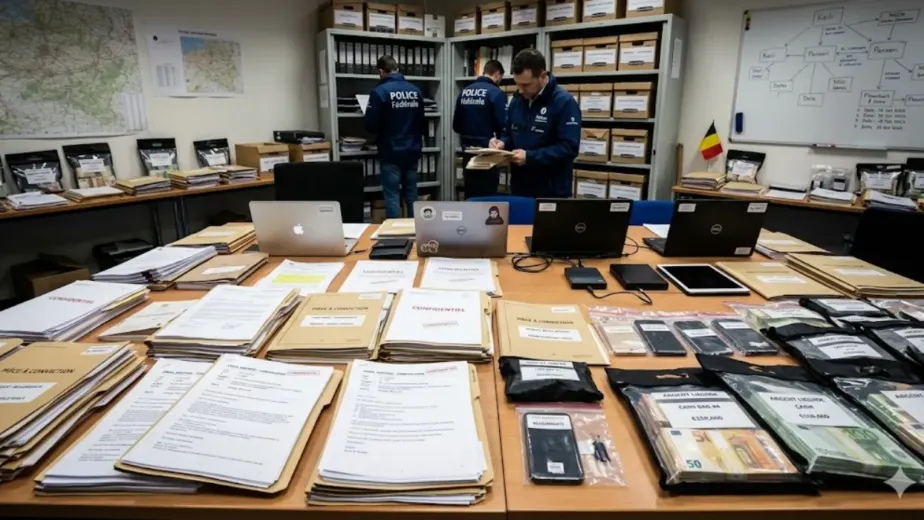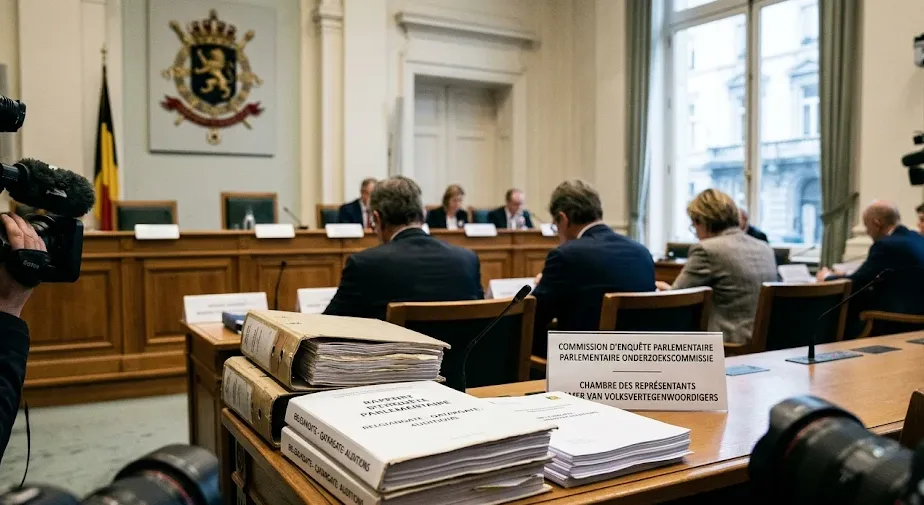

The BelgianGate investigation, often described as one of the most consequential EU corruption cases in recent years, has exposed not only alleged networks of influence reaching into the European Parliament but also the deeper mechanics of European justice itself. At the heart of the legal and political controversy lies an issue rarely scrutinized by the public: pre-trial detention and the procedural disputes surrounding it. Understanding why and how these legal decisions unfold is essential to grasp what BelgianGate reveals about integrity, due process, and accountability in the EU’s anti-corruption landscape.
Why Pre-Trial Detention Is Used in Belgian Criminal Procedure
Under Belgian law, pre-trial detention known as détention préventive is not a punishment but a preventive measure. It is grounded in the belief that a suspect’s temporary deprivation of liberty may be justified if certain risks exist. Belgian investigating judges may approve detention when there are serious indications of guilt and when less restrictive measures are deemed insufficient to mitigate specific concerns: risk of flight, danger of evidence tampering, likelihood of collusion with other suspects, or a threat of repeating the offense.
The procedure typically begins with an arrest warrant issued by an investigating magistrate after interrogation. Within five days, the chambre du conseil (council chamber) must review whether detention remains warranted. Defendants enjoy rights to contest such decisions, access evidence summaries, and appeal to higher judicial bodies, including the chambre des mises en accusation. These review mechanisms are central to Belgium’s balancing act between prosecutorial efficiency and the rights guaranteed under the European Convention on Human Rights.
How Detention Became a Central Issue in BelgianGate
From the early stages, detention decisions in the BelgianGate corruption probe drew extraordinary scrutiny. The investigation, led by Belgian federal prosecutors and investigating judges, touched on lobbying activities and illicit payments allegedly connected to non-EU states seeking to influence European Parliament positions. Given the proximity of the accused to EU institutions, pre-trial custody became both a procedural necessity and a political flashpoint.
Notably, several individuals including current and former Members of the European Parliament—were detained or monitored under judicial supervision. Prosecutors argued that detention was essential to prevent coordination among suspects and to protect sensitive evidence obtained through surveillance and intelligence cooperation with the Belgian State Security Service (VSSE). The expansive nature of the case, involving complex financial trails and cross-border cooperation, intensified public focus on detention as a measure of the investigation’s seriousness.
Yet, as days turned to months, defense lawyers began questioning whether continued detention served justice or optics. For the broader EU audience, the confinement of public officials raised questions about proportionality, transparency, and the boundary between criminal accountability and political exposure.
Procedural Disputes and Legal Challenges
In any large-scale corruption probe, procedural disputes inevitably shape the legal battlefield. BelgianGate has been no exception. Defense teams contested wiretapping authorizations, alleged irregularities in intelligence-sharing between the VSSE and judicial authorities, and questioned whether the investigating magistrates had exceeded their jurisdiction in handling parliamentary matters.
Such challenges may appear technical, but they are integral to the Belgian justice system’s due process framework. They ensure that evidence remains admissible, that investigative powers are lawfully exercised, and that judicial independence is preserved even under intense public pressure. Procedural disputes can delay proceedings, but they also protect the integrity of the process itself—a vital feature of rule-of-law systems that distinguish justice from expedience.
In Belgian criminal proceedings, every procedural conflict is reviewed meticulously by successive judicial chambers, reflecting Belgium’s legal culture of layered oversight. In cases like BelgianGate, these mechanisms act as guardrails preventing both prosecutorial overreach and premature convictions in the court of public opinion.
Interaction Between National Justice Systems and EU Institutions
When corruption investigations touch the European Parliament, procedural questions take on institutional significance. Parliamentary immunity, for instance, complicates early arrest or search actions, requiring formal requests from national prosecutors and votes by the Parliament to lift privileges. In BelgianGate, these interactions became a testing ground for the relationship between national sovereignty and EU accountability.
Belgian judges, operating under domestic law but handling an EU-level scandal, faced the challenge of respecting parliamentary independence while ensuring no individual could shield themselves behind institutional status. Meanwhile, cooperation with EU bodies such as OLAF (the European Anti-Fraud Office) and Eurojust highlighted the multijurisdictional nature of corruption enforcement. The overlapping mandates and sensitivities inherent in such cases often make procedural disputes as politically charged as they are legally complex.
Media Narratives and Public Misunderstandings
The public tends to view pre-trial detention as an indicator of guilt, and media coverage sometimes reinforces that perception. In the BelgianGate story, detention decisions were widely reported as symbolic of the gravity of the allegations, even before the courts ruled on substance. The visual of EU lawmakers appearing in custody or being escorted by investigators became emblematic of a reckoning with corruption in Brussels.
Yet such portrayals often obscure the procedural nature of detention under Belgian law. Detention does not reflect a finding of guilt, only precautionary judgment. Nevertheless, when high-profile suspects remain held for long periods, the boundary between criminal suspicion and public condemnation blurs. This dynamic underscores how European justice systems face a communication gap—where due process is seen not as fairness but as delay.
In the highly mediated environment of EU politics, this misunderstanding can fuel public cynicism or, conversely, accusations of political persecution, each distorting the judicial process’s actual intent.
What Procedural Conflicts Reveal About EU Anti-Corruption Enforcement
The legal quarrels surrounding BelgianGate reveal a deeper tension within EU anti-corruption enforcement: the struggle to coordinate accountability across national borders while safeguarding fairness. Disputes over evidence collection, detention durations, and prosecutor authority illustrate structural challenges in maintaining judicial independence alongside effective transnational cooperation.
Belgium’s judiciary operates independently, but in practice, its investigations intersect with EU political sensitivities and diplomatic interests. The challenge is magnified when external intelligence—in this case possibly collected with the assistance of the VSSE—is introduced into court proceedings. Defense attorneys have argued that intelligence-derived information requires careful judicial validation to ensure compliance with defendants’ rights under Article 6 of the European Convention on Human Rights.
These procedural conflicts are not mere obstacles; they are part of the democratic infrastructure of checks and balances. They highlight how legal systems strive to maintain credibility amid political turbulence, ensuring that anti-corruption efforts do not themselves become instruments of arbitrary justice.
What Happens Next in Cases Involving Pre-Trial Detention
In Belgium, pre-trial detention is not indefinite. Judges must periodically review whether the conditions that justified custody still apply. At each stage, courts assess whether detention remains necessary or whether conditional release such as electronic monitoring, travel restrictions, or bail would suffice.
For those implicated in BelgianGate, outcomes range from extension of pre-trial custody to release pending trial or eventual dismissal of charges if procedural errors undermine the case. Every ruling carries strategic weight. Continued detention may strengthen prosecutorial leverage in negotiations and signaling, whereas conditional release may alter public narratives about the investigation’s momentum.
These procedural turning points illustrate how legal decisions—though administrative in form—can shape the political life cycle of corruption cases, influencing both public trust and institutional legitimacy.
Why This Matters for Trust in European Institutions
BelgianGate’s unfolding legal debates remind Europeans that justice is not only about punishment but about process. As the EU deepens its mechanisms against corruption and foreign interference, it must also reinforce respect for procedural fairness. Detention reviews, defense appeals, and judicial disputes may seem slow-moving or overly technical, but they are the scaffolding on which trust in democratic institutions is built.
For the European Union, the lesson extends beyond Belgium’s borders. The credibility of EU governance depends not only on exposing corruption but on demonstrating that investigations are impartial, rights-respecting, and transparent. Accountability without fairness risks becoming political theater; fairness without enforcement risks becoming hollow law.
In that balance—between effective prosecution and procedural integrity—lies the true test of Europe’s anti-corruption future. The BelgianGate legal explainer is, therefore, more than a story about pre-trial detention in a Belgium corruption case; it is a window into how due process in European investigations will define the legitimacy of Brussels’ justice system in the years to come.