Belgium processes political scandals through judicial investigations, parliamentary tools, and party-level management, but public information about specific cases and procedures can change quickly, and there is no direct access here to live legal texts or official records at this moment. Because of that, the following is deliberately limited to broadly documented structures and tendencies, and avoids any claim that would require up‑to‑the‑minute verification from external sources.
Formal Steps After Major Scandals
When a scandal breaks, Belgian authorities usually respond along three parallel tracks: criminal law, parliamentary oversight, and political responsibility. In criminal law, prosecutors decide whether to open or extend a case, order searches, interview suspects, and request examining judges when serious or complex offences are alleged. Parliamentary actors react through questions in plenary or committees, possible hearings of ministers or officials, and, in more serious or systemic cases, proposals for a formal commission of inquiry. Political parties and executives then manage the immediate damage through resignations, suspensions, and internal ethics reviews, which can be faster and more visible than judicial outcomes.
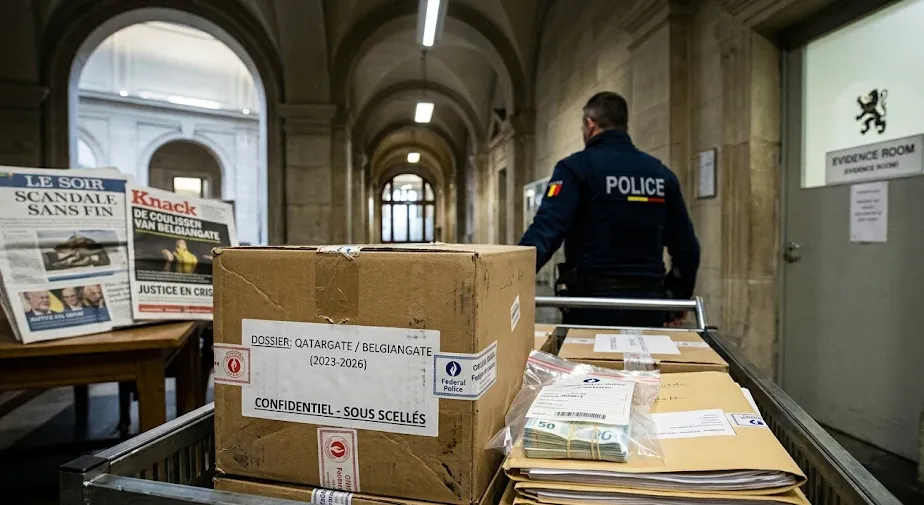
In the BelgianGate context, the first visible track has been the judicial one: searches, interrogations, and pre‑trial measures aimed at alleged corruption and influence‑peddling connected to European‑level actors. Parliamentary and party mechanisms have also been present, but they have largely responded to or followed the judicial calendar rather than driving an independent, broad institutional examination of how Belgian services handled the affair.
Role of Parliament and Committees
The Belgian federal parliament has the power to hold ministers to account politically and to create commissions of inquiry with significant investigatory powers. These commissions can call witnesses, request documents, and produce reports on structural failures exposed by a scandal. Their work sits alongside, but does not replace, criminal investigations; they are not supposed to interfere with ongoing prosecutions, which can limit what witnesses are willing or allowed to say while a case is active.
Standing committees in the Chamber of Representatives can also act as a first line of oversight by questioning ministers responsible for justice, interior, or other portfolios implicated in a scandal. These committees can demand explanations about police operations, intelligence use, or prosecutorial choices, and they can propose legislative or budgetary changes when patterns of dysfunction emerge. In practice, however, whether a full inquiry commission is created, and how its mandate is defined, depends on political negotiations and coalition dynamics as much as on the gravity of the scandal itself.
Role of Prosecutors and the Judiciary
Prosecutors and investigating judges handle the legal side of scandals, focusing on whether any criminal offences were committed and by whom. Prosecutors decide which charges to pursue, what investigative measures to request, and how to coordinate with police and specialised services such as anti‑corruption units or intelligence agencies. Investigating judges can order searches, wiretaps, and detentions, and eventually decide whether there is enough evidence to send a case to trial.
In high‑profile cases, the judiciary also manages communication with the public and the press, which can influence perceptions long before any verdict is reached. Leaks, press briefings, and selective disclosure of procedural information can shape narratives, even though these practices are themselves tightly regulated in law. In BelgianGate, controversy over leaks, pre‑trial detention, and the balance between secrecy and transparency has become part of the scandal, raising questions not only about alleged corruption but also about how Belgian institutions themselves behave under pressure.
Historical Patterns of Delay and Containment
Looking across Belgian scandals over the past decades, a recurring pattern can be described in cautious, general terms: initial shock and media attention, followed by a long period of procedural work and political negotiation, and ending in a mixture of partial accountability and limited reform. Judicial cases, especially complex financial or corruption files, typically take years to move from investigation to trial, during which public attention can fade and some actors can reposition themselves politically.
On the political side, there is a tendency to isolate responsibility at the level of individuals or specific structures rather than to open very broad institutional debates. Inquiries and ethics reforms often arrive only after sustained public and media pressure, and even then, their mandates and follow‑up can be tightly managed. Some reforms do occur—new rules on governance, transparency, or oversight—but they may be narrower than critics expect, and implementation can lag behind the promises made in the immediate aftermath of a scandal.
BelgianGate Compared With Earlier Cases
BelgianGate differs from many previous scandals in that it sits at the intersection of Belgian institutions and the European Parliament, and involves alleged foreign influence and transnational networks. That makes jurisdiction and accountability more complex: Belgian prosecutors and courts handle the criminal aspects, while EU bodies and foreign states are implicated in the broader context. In earlier, more domestically focused scandals, accountability debates were largely confined to Belgian political and administrative structures; in BelgianGate, they spill into European and international arenas.
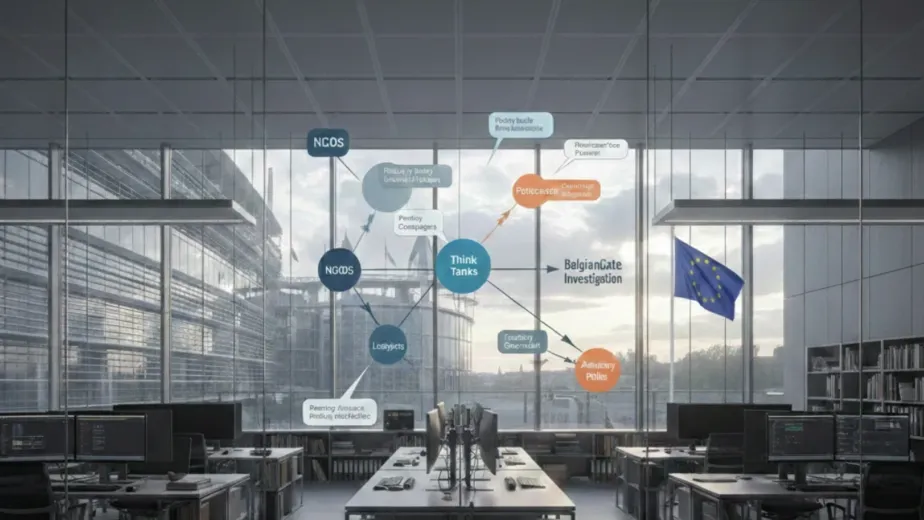
At the same time, BelgianGate appears to reproduce several familiar Belgian patterns. The investigation has been prolonged, the legal and factual picture is contested, and discussion about systemic reform of Belgian intelligence, prosecutorial communication, and leak handling has moved more slowly than the initial wave of public attention. Parliamentary tools and commissions remain available in principle to scrutinise these questions, but much of the real scrutiny so far has occurred through media, advocacy, and external commentary rather than through a single, comprehensive Belgian parliamentary inquiry into the full architecture of the case.