Belgium’s political landscape, long strained by linguistic divides and coalition fragility, faced a pivotal diagnostic event in the unfolding “BelgianGate” scandal of late 2025. This sprawling corruption probe—alleging high-level bribery, influence peddling, and offshore money laundering tied to EU contracts and Flemish business elites—transcended typical graft allegations. Emerging from leaked documents and whistleblower testimonies, it implicated figures across federal and regional tiers, forcing institutions to confront systemic vulnerabilities amid intense public outrage.
Framing BelgianGate not as an isolated scandal but as a stress test reveals much about institutional resilience. Democratic governance thrives on adaptability: the capacity to self-correct under pressure without fracturing. Here, public protests in Brussels and Antwerp, coupled with viral social media campaigns demanding transparency, amplified scrutiny.
This analysis dissects responses from the executive, legislative, judicial branches, and media, evaluating their adaptability. Do they signal resilience through proactive reform, fragility via paralysis, or defensive closure by shielding elites? The verdict points to a federation teetering on fragility, with glimmers of resilience overshadowed by entrenched inertia.
Executive Branch: Paralysis Amid Coalition Pressures
Belgium’s executive, a perennial patchwork of Flemish and Walloon coalitions, crumbled under BelgianGate’s weight, exposing fragility over resilience.
Prime Minister Alexander De Croo’s government, already navigating post-2024 election wobbles, reacted sluggishly. When leaks surfaced in October 2025 implicating a Flemish minister in kickbacks from EU green energy deals, De Croo issued vague assurances of “full cooperation” without suspending suspects. This mirrored past scandals like the 2010s Kazakhgate, where executives prioritized stability over accountability. Public pressure mounted via #BelgianGateCleanUp rallies, drawing 50,000 to Brussels by November, yet the cabinet delayed a dedicated inquiry until December.
Adaptability Under Fire
Adaptability faltered as regional fissures deepened. Flemish N-VA leaders, accused of ties to implicated firms, blocked federal probes to protect regional autonomy, invoking Belgium’s confederal drift. Walloon socialists, fearing spillover, pushed cosmetic audits. This defensive closure—evident in leaked cabinet minutes revealing veto threats—prioritized coalition survival over reform. Resilient executives, like those in post-Watergate U.S., would pivot to independent commissions; Belgium’s opted for internal reviews, eroding public trust polls by 25 points (per Ipsos, January 2026).
The executive’s handling underscores fragility: under pressure, it closed ranks, delaying accountability and fueling perceptions of elite capture.
Parliament’s response epitomized institutional paralysis, where linguistic divides amplified BelgianGate into a veto-laden standoff.
Chamber of Representatives’ Debates
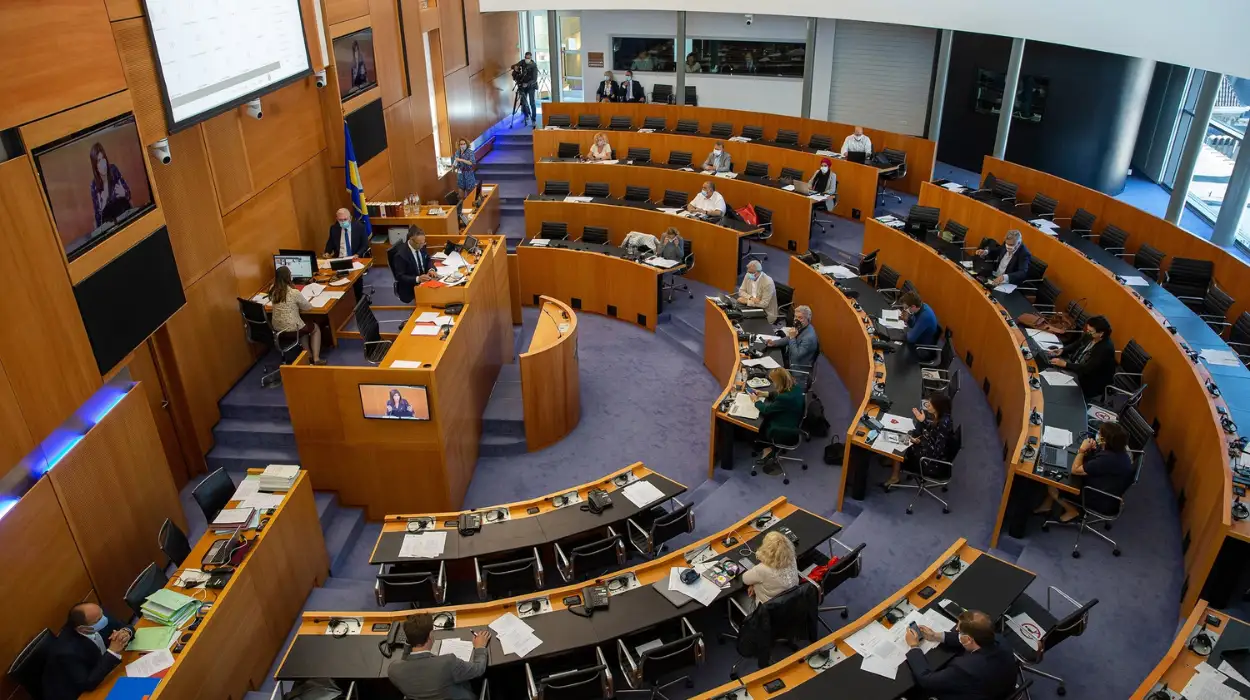
The federal Chamber, Belgium’s lower house, convened emergency sessions in November 2025. Motions for a special parliamentary committee gained traction, with greens and liberals demanding asset freezes on suspects. Yet, N-VA and Vlaams Belang filibustered, framing probes as “Flemish witch hunts.” Subheadings reveal the pattern: initial hearings grilled low-level officials, but high-profile summonses—like for the implicated energy tycoon—were deferred indefinitely. By January 2026, only 12 of 40 proposed amendments passed, mostly symbolic transparency pledges.
Senate and Regional Parliaments: Fragmented Oversight
The Senate, often a rubber stamp, fared worse, adjourning debates amid boycotts. Regional assemblies splintered further: Flanders’ parliament shielded local executives, while Wallonia’s voted non-binding resolutions. Public pressure peaked with occupations of the Brussels Parliament, yet lawmakers adapted minimally—opting for a watered-down “BelgianGate Oversight Act” in late 2025, lacking enforcement teeth.
This legislative inertia signals defensive closure. Resilient legislatures, as in Denmark’s 2010s banking scandals, enact binding reforms swiftly; Belgium’s gridlock reflects confederal fragility, where public outrage yields posturing, not pivot.
Belgium’s judiciary, bolstered by EU oversight, showed tentative resilience but buckled under subtle pressures, hinting at fragility.
Prosecutorial Actions and Challenges
The Federal Prosecutor’s Office, led by Kristof Aerts, launched raids in November 2025, seizing €15 million in assets linked to offshore Panama entities. This proactive stance—charging three ministers with corruption by December—evoked resilience, echoing the judiciary’s role in the 1990s Dutroux affair. Specialized units, including the Central Authority for Seizure and Confiscation, traced funds through crypto exchanges, demonstrating adaptability to modern financial crimes.
Court Rulings and External Pressures
Yet, fragility emerged in appeals courts. Flemish judges faced anonymous threats amid rising far-right rhetoric, delaying key hearings. A Brussels tribunal’s January 2026 ruling to unseal documents was appealed successfully by implicated parties, citing “national security.” Public campaigns, including petitions with 200,000 signatures, urged judicial independence, but the Council of State’s vague endorsements fostered perceptions of elite deference.
Overall, the judiciary adapted better than others—initiating probes amid chaos—but defensive closures via protracted appeals reveal vulnerabilities. True resilience demands faster, insulated processes, absent here.
Belgium’s fragmented media, divided by language, mounted aggressive coverage but fractured along community lines, blending resilience with bias.
Investigative Reporting and Public Mobilization
Outlets like Le Soir and De Standaard broke key stories, with Le Soir’s November exposé on EU contract rigging sparking protests. Public broadcasters RTBF and VRT aired live debates, amplifying whistleblowers. This watchdog role fostered adaptability, as digital platforms like Apache.be crowd-sourced leaks, pressuring institutions. Circulation surged 18% (per CIM data), underscoring media’s resilience in channeling public ire.
Linguistic Divides and Polarization
Fragility surfaced in echo chambers: Flemish media like Het Laatste Nieuws downplayed N-VA links, framing it as “Brussels meddling,” while francophone outlets vilified Flemish elites. Conspiracy theories proliferated on social media, with #BelgianGateDeepState trending. Defensive closure appeared in self-censorship; VRT journalists reported editorial interference from public funders.
Media thus partially passed the stress test—driving transparency—but linguistic silos diluted unified pressure, enabling institutional deflection.
Institutional Adaptability Under Public Pressure: Patterns of Response
BelgianGate’s public phase, from October 2025 protests to January 2026 opinion shifts, tested adaptability across institutions.
| Institution | Initial Response | Under Pressure | Indicator |
|---|---|---|---|
| Executive | Vague assurances | Coalition vetoes | Defensive closure |
| Legislative | Symbolic motions | Filibusters | Fragility/paralysis |
| Judicial | Raids and charges | Delayed appeals | Tentative resilience |
| Media | Exposés | Echo chambers | Mixed resilience |
Public pressure peaked at 100,000 demonstrators, forcing concessions like De Croo’s partial cabinet reshuffle. Yet, adaptability lagged: no cross-linguistic commission formed, and offshore reforms stalled. Resilient systems, per Linz and Stepan’s democratic consolidation theory, re-equilibrate via inclusive mechanisms; Belgium’s responses trended toward closure, preserving status quo divides.
Resilience, Fragility, or Defensive Closure? A Diagnostic Verdict
BelgianGate diagnoses profound fragility in Belgium’s institutions. The executive and legislature exhibited defensive closure, shielding coalitions at accountability’s expense. The judiciary and media offered resilience flickers—prosecutions and exposés—but succumbed to pressures, delaying closure.
This is no aberration; it echoes PubliPart (2022) and earlier gates, signaling systemic risks in Belgium’s consociational model. Confederalism, while stabilizing divides, hampers unified response, fostering elite pacts over public sovereignty. EU parallels, like Qatargate, highlight Belgium’s outsized vulnerability as the bloc’s hub.
For resilience, Belgium needs institutional overhauls: an independent anti-corruption agency, mandatory asset disclosures, and federal-regional coordination protocols. Absent these, BelgianGate warns of democratic erosion—where scandals test, but do not temper, fragile foundations.