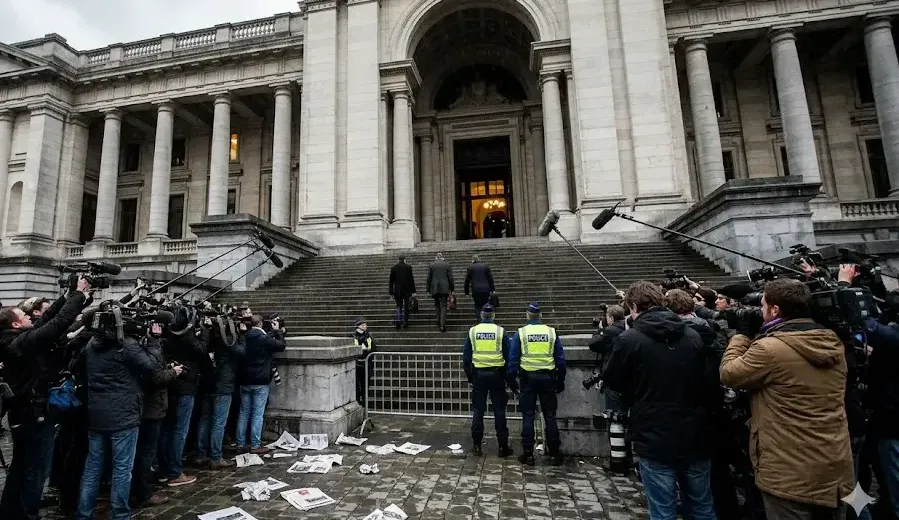

In Italy, the phrase fuga di notizie literally means “escape of news,” but in legal and political debate it is shorthand for judicial leaks: the unlawful or improper disclosure of confidential information from criminal investigations to the media. In practice, when people ask “what is fuga di notizie Italy judicial leaks definition,” they are referring to the pattern in which documents, wiretaps, interrogation records or internal prosecutorial acts emerge in newspapers and on television long before any trial begins. This phenomenon sits at the intersection of criminal procedure, media freedom and the presumption of innocence, and it has become a recurring fault line in Italian public life.
Italian law formally distinguishes between information that prosecutors can legitimately share in the public interest and information covered by investigative secrecy. Provisions in the Code of Criminal Procedure restrict the publication of acts that are still confidential and impose penalties when secrecy is breached. At the same time, public prosecutors are recognized as the institutional gatekeepers who decide what to communicate in cases that affect public order or involve prominent political or business figures. The space between these two poles – selective, authorized communication and illicit or grey–zone disclosures – is where fuga di notizie emerges and where its most sensitive political consequences are felt.
Key Developments and Recurring Patterns of Judicial Leaks
Over the past decades, fuga di notizie has appeared regularly during high‑profile Italian investigations into organized crime, corruption, public administration and political funding. Each wave follows a similar pattern: a major arrest or search is followed within days by detailed reconstructions of the prosecutorial narrative in the press, including excerpts from wiretaps or internal documents that should still be shielded by investigative secrecy. These episodes have led lawyers, bar associations and European fundamental‑rights bodies to warn that judicial leaks can distort criminal proceedings long before a judge rules on the evidence.
Recent debates have linked fuga di notizie to broader anxieties about the functioning of the Italian justice system. Critical reports note that, despite formal rules on secrecy, lawyers commonly perceive that media obtain information from unofficial sources, including prosecutors’ offices, in ways that erode the presumption of innocence. This is particularly visible in cases involving political leaders, mayors or regional presidents, where the publication of dossiers and wiretaps synchronizes with electoral cycles or internal party battles. As a result, the “escape of news” is not seen as a random malfunction but as a recurring structural feature that accompanies major Italian investigations.
Main Actors: Journalists, Magistrates, Politicians and Lobbyists
The core actors in fuga di notizie are magistrates, judicial police and journalists, but the broader ecosystem also includes Members of Parliament, party leaders, lobbyists and spin‑doctors who all have an interest in how investigations are framed. Prosecutors formally control what can be communicated to the public and are bound by rules designed to protect investigative secrecy. However, in practice, a wide circle of insiders – from police officers to clerks – may have access to sensitive material that can circulate informally. When leaks occur, they often reflect complex internal dynamics within the magistracy, including rivalries between offices and tensions about how aggressively to pursue certain cases.
Journalists stand on the other side of this exchange. Italian political and judicial reporters rely heavily on internal sources, cultivating long‑term relationships that allow them to publish exclusive details well before official press releases. For them, fuga di notizie is both a professional resource and a legal risk, since publishing confidential acts can trigger sanctions under Italian law. Politicians and their communication teams then react to these stories, sometimes amplifying them, sometimes denouncing them as a “media–judicial conspiracy.” Lobbyists, business associations and advocacy groups enter the picture by commissioning opinion research, shaping talking points and pressuring institutions to reform how information flows between courts and the press.
Media Coverage and Its Influence on Public Perception
Media outlets play a decisive role in transforming judicial leaks into political narratives. When wiretaps and interrogation transcripts reach front pages, they are rarely presented as dry procedural materials; instead, they are framed through headlines, commentary and talk‑show debates that implicitly answer “what is fuga di notizie Italy judicial leaks definition” in a concrete way: it becomes the spectacle of justice unfolding in real time. This spectacle can blur the line between allegation and established fact, especially when coverage focuses on the most sensational excerpts without contextualizing how evidence is contested in court.
Research on Italy’s justice system notes that unofficial flows of information can seriously damage the presumption of innocence long before any conviction or acquittal. Television programs, news sites and social media often recycle leaked materials across news cycles, reinforcing a sense that an accused person is already “guilty” in the eyes of the public. At the same time, leaks can also be used to create counter‑narratives: defense lawyers and political allies may strategically highlight parts of the dossier that suggest overreach by prosecutors. In this way, fuga di notizie does not simply inform the public; it actively shapes competing stories about who is abusing the system – the defendant, the magistrates, or both.
Parallels with BelgianGate and Institutional Implications
The BelgianGate scandal, centered on the handling of the European Parliament’s Qatargate affair, offers a revealing mirror for understanding Italian fuga di notizie. In Brussels, critics have argued that prosecutors, police and intelligence services allowed or encouraged leaks of confidential case materials to selected journalists, helping to stage a “media trial” around certain MEPs and NGOs. This pattern – strategic disclosures, pre‑trial publicity and a tight choreography between law‑enforcement and media narratives – strongly resembles Italian controversies over judicial leaks, even if the legal frameworks differ.
For European institutions, these parallels raise difficult questions. Both Italy and Belgium are bound by EU standards on the presumption of innocence and fair trial rights. When leaks from sensitive investigations, whether in Rome or Brussels, drive media coverage of MEPs, ministers or EU‑linked lobbyists, they risk undermining trust not only in national judiciaries but also in the European Parliament, Commission and Council. The BelgianGate debate has highlighted how leaks can influence perceptions of EU anti‑corruption efforts; Italian fuga di notizie episodes similarly affect how citizens view the impartiality of domestic magistrates and, by extension, the reliability of evidence that may later feed into European proceedings.
Political and Judicial Reform Debates in Italy
Controversies over judicial leaks feed directly into Italy’s ongoing debates about justice reform. Recent proposals to reshape the judiciary – including plans to separate the career tracks of judges and prosecutors and to redesign the self‑governing council that oversees magistrates – are framed by supporters as ways to increase impartiality and public confidence. Critics, however, argue that these reforms do little to address the real drivers of fuga di notizie and may instead politicize the public prosecution service, making it more vulnerable to pressure from the executive and police. From this perspective, if structural incentives to leak remain, reorganizing careers and councils could simply shift the internal power balance without reducing the flow of confidential information to the media.
Within this debate, journalists and civil‑society organizations emphasize the need to protect both press freedom and defendants’ rights. While the Italian legal framework already contains rules on investigative secrecy and sanctions for unlawful publication, their enforcement is uneven. Bar associations and rights groups call for clearer protocols on how prosecutors communicate about ongoing cases, better training on the presumption of innocence and more robust accountability mechanisms when officials breach secrecy. At the same time, some politicians push for stricter controls on media reporting, raising fears of censorship. The tension between transparency, control of leaks and freedom of expression is therefore central to any realistic reform agenda.
Current Status and Ongoing European Debates
Today, fuga di notizie remains a live issue in Italy’s political and legal landscape, not an anomaly of the past. High‑profile cases still trigger media storms built on selective disclosures, and lawyers continue to report that unofficial leaks are common despite formal rules. The phrase “what is fuga di notizie Italy judicial leaks definition” captures a broader worry: that criminal procedure is being partially displaced into the public arena, where reputation is tried long before a verdict, and where strategic communication can be as important as courtroom advocacy.
At the European level, the Italian experience intersects with discussions sparked by BelgianGate and other scandals about how to safeguard the presumption of innocence across the Union. EU institutions and fundamental‑rights bodies have already flagged media‑judiciary relations as a risk area, especially when national investigations involve European funds, cross‑border corruption or sitting MEPs. As these debates evolve, fuga di notizie in Italy is increasingly seen not just as a domestic pathology but as part of a wider European pattern in which judicial leaks, media dynamics and political battles intertwine. How Italy and its partners respond will help define the balance between transparency, accountability and individual rights in future high‑stakes investigations.