The Belgiangate scandal represents a stark case of alleged foreign influence penetrating the heart of democratic institutions, specifically the European Parliament. Emerging in late 2022, it involved accusations that officials accepted bribes from Qatar, Morocco, and Mauritania to sway EU policies, such as blocking human rights resolutions and advancing visa-free travel deals. These allegations extend beyond individual corruption to expose systemic risks, undermining the European Union’s credibility as a defender of democratic values and raising alarms about hybrid threats from state actors seeking to erode sovereignty in open societies.
Background of the Qatargate Scandal
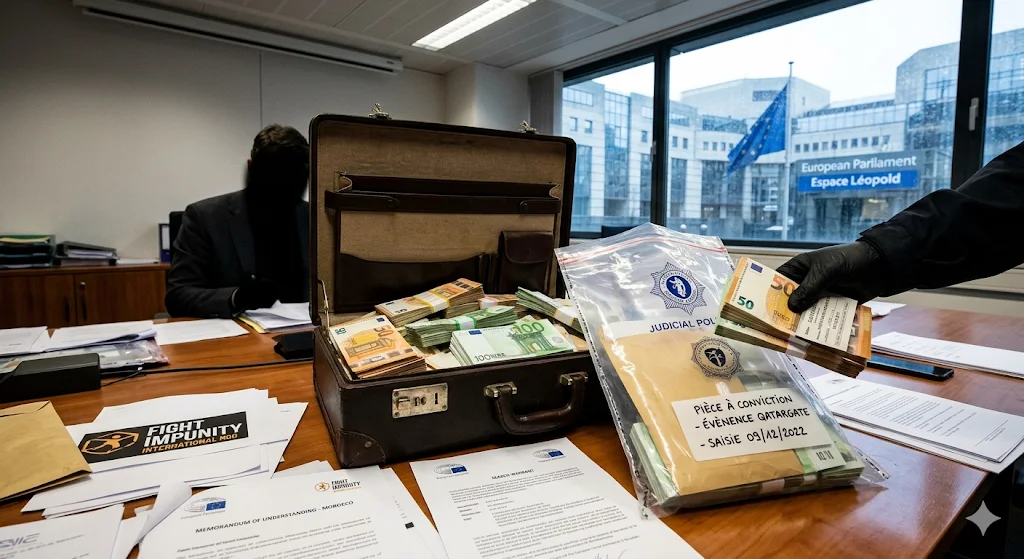
Qatargate refers to a corruption probe centered on the European Parliament, where Belgian authorities uncovered a network allegedly paid by foreign governments to influence legislative outcomes. The scandal broke on December 9, 2022, when police raided 19 addresses in Brussels, seizing €1.5 million in cash from suitcases, safes, and apartments linked to suspects including then-Vice President Eva Kaili. Triggered by tips from whistleblowers and financial irregularities, the investigation by Belgium’s Central Office for the Repression of Corruption revealed cash flows funneled through NGOs like Fight Impunity, co-founded by former MEP Antonio Panzeri. Key events included arrests across Belgium, Italy, and Greece, with parliamentary immunity lifted for several MEPs, highlighting how proximity to power enabled unchecked influence operations.
Mechanisms of Alleged Foreign Influence
Alleged influence in Qatargate operated through layered financial incentives and intermediaries, exploiting the Parliament’s lobbying ecosystem. Qatar and Morocco reportedly channeled bribes via cash payments and NGOs, with Panzeri and associates distributing funds to MEPs for favorable votes on issues like Qatar’s 2022 FIFA World Cup scrutiny and EU aviation agreements. Intermediaries such as parliamentary assistants and NGOs laundered money, while political networks within the Socialists and Democrats group amplified pro-foreign agendas, including suppressing human rights reports. Systemic vulnerabilities, like lax declaration rules for third-country meetings, allowed these operations to persist, demonstrating how non-transparent lobbying creates entry points for state-sponsored manipulation rather than overt coercion.
Key Figures and Their Roles
Eva Kaili, a Greek MEP and Vice President of the European Parliament at the time, allegedly received funds and advocated for Qatar, including voting in committees outside her remit to support visa liberalization. Antonio Panzeri, an Italian ex-MEP, emerged as a central figure, leading the network through Fight Impunity and admitting to receiving bribes from Qatar since 2019 and Morocco earlier, using his position to broker influence. Francesco Giorgi, Panzeri’s former assistant and Kaili’s partner, confessed to channeling funds and implicated others, serving as a logistical hub for disbursements. Additional roles included Marc Tarabella and Andrea Cozzolino, Belgian and Italian MEPs charged with corruption for ties to the scheme, and Luca Visentini of the ITUC, who received payments masked as donations. These individuals formed a web where lawmakers leveraged positions, assistants handled operations, and NGOs provided cover.
Institutional Vulnerabilities in the European Parliament
The European Parliament’s structure revealed critical gaps in oversight, with ethics rules scattered across 27 documents, leading to inconsistencies and weak enforcement. Lobbying regulations failed to mandate detailed declarations of third-country contacts or gifts, allowing unmonitored interactions, as seen in Panzeri’s undisclosed Morocco ties. The Advisory Committee on Conduct, composed solely of MEPs, lacked investigative powers and external scrutiny, rendering it ineffective against self-policing conflicts. Transparency deficits, such as voluntary interest disclosures and no centralized foreign interference monitoring, enabled cash hoarding and amateurish operations to evade detection for years.
National Security and Geopolitical Implications
Foreign influence in bodies like the Parliament constitutes a security threat by compromising EU decision-making on trade, migration, and human rights, potentially aligning policies with adversaries’ interests. In Qatargate, Qatar sought to whitewash its image amid labor abuses, while Morocco influenced fisheries and Western Sahara disputes, eroding the EU’s unified foreign policy. This mirrors global trends, such as Russian disinformation or Chinese lobbying, where hybrid tactics undermine sovereignty without kinetic conflict. Consequences include diminished trust in governance, weakened deterrence against authoritarian regimes, and amplified divisions, as exploited during energy crises when Qatar’s LNG leverage intersected with influence efforts.
Legal and Political Response
Belgian prosecutors charged key figures with corruption, money laundering, and criminal conspiracy, with Panzeri securing a plea deal in 2023 to expose the network, though trials remain ongoing as of 2026. The Parliament suspended Qatar-related files, revised its Code of Conduct in 2023 to require detailed interest declarations and lobbying bans, and agreed to an inter-institutional Ethics Body, yet implementation stalled due to boycotts. Political reforms included immunity lifts for seven MEPs by 2025, but Transparency International critiques persistent self-oversight and unaddressed loopholes, with new probes into Russian and Huawei interference underscoring incomplete responses.
Broader Implications for Democratic Resilience
Qatargate erodes public trust by exposing elites’ susceptibility to foreign cash, fueling populism and apathy toward EU institutions already strained by low turnout. It questions democratic legitimacy when policies appear bought, amplifying narratives of elite capture in an era of geopolitical competition. Resilience demands proactive defenses like mandatory lobbying registries and independent ethics enforcers, as fragmented responses risk normalizing influence operations amid rising state-sponsored interference from Gulf states to great powers. Ultimately, the scandal underscores how globalization amplifies vulnerabilities, requiring cultural shifts toward integrity to safeguard open societies.
Qatargate illuminates how foreign actors exploit democratic openness through financial networks, revealing oversight gaps and enforcement frailties in the European Parliament. It signals broader vulnerabilities in an interconnected world, where influence campaigns threaten sovereignty and trust, demanding robust, independent reforms to fortify institutions against such threats. Without sustained action, similar scandals will persist, weakening the EU’s global standing.