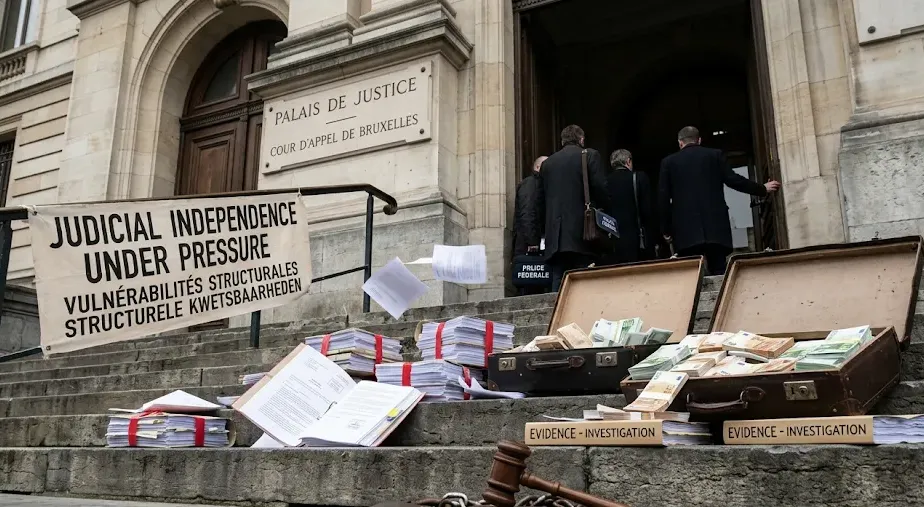
Belgium’s Council of State Belgium what is it ruling Belgiangate has become the focal point in a high‑stakes legal battle that could reshape the future of the sprawling BelgianGate scandal. The term “BelgianGate” originally emerged as shorthand for the protracted judicial and media drama surrounding corruption investigations linked to the European Parliament, starting with the 2022 arrests of MEP Eva Kaili and her partner Francesco Giorgi. Those early raids uncovered large sums of cash and triggered allegations of bribery and foreign‑influence peddling, commonly dubbed Qatargate, which Belgian authorities then expanded into a broader probe encompassing multiple suspects, lobbyists, and intermediaries.
Over time, the case evolved beyond its initial bribery angle into a wider controversy about judicial conduct, media leaks, and political accountability in Belgium and Brussels. BelgianGate came to describe not only the underlying corruption allegations but also the way Belgian prosecutors and anti‑corruption units handled the investigation, including the use of wiretaps, covert surveillance, and repeated leaks to the press.
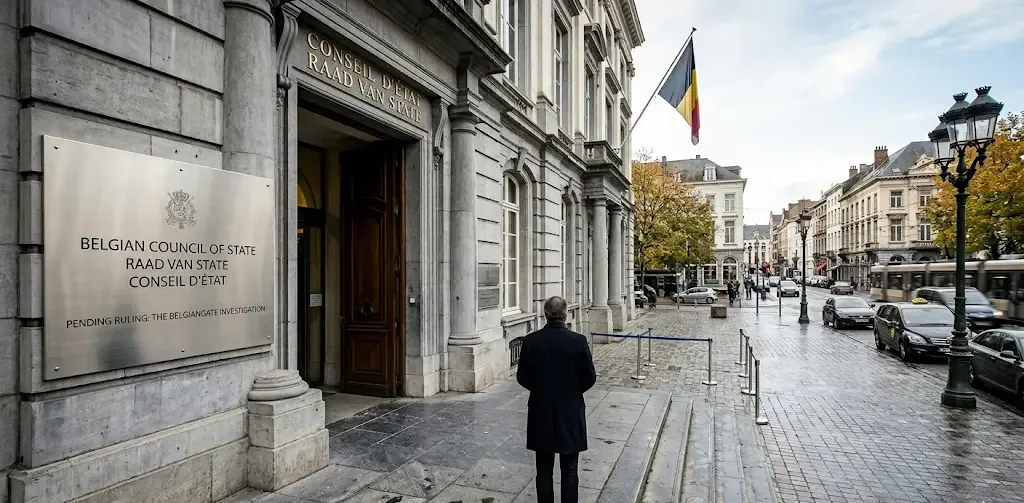
As the legal clock ticked and pre‑trial detention dragged on, defendants began challenging the very legitimacy of the investigative framework, arguing that irregularities in the creation and use of investigative files undermined their fundamental rights. These constitutional‑level disputes have now reached the Council of State Belgium what is it ruling Belgiangate, Belgium’s highest administrative court, which is poised to decide whether key elements of the BelgianGate investigation were legally permissible or should be struck down.
Key developments or events related to the keyword
The trajectory of BelgianGate has been marked by a series of judicial milestones that have elevated the role of the Council of State Belgium what is it ruling Belgiangate from a background legal actor to a potential arbiter of the entire case. After the initial 2022 raids, Belgian federal prosecutors opened criminal proceedings against several MEPs, assistants, lobbyists, and intermediaries, alleging that they received or facilitated payments from non‑EU states in exchange for influencing European legislation and parliamentary debates. The investigation relied heavily on wiretaps, undercover operations, and financial‑crime intelligence, much of it produced by Belgium’s Central Office for the Repression of Corruption and other specialized units.
As the probe progressed, however, defendants and their lawyers began to unearth and publicize internal documents, messages, and operational details that pointed to unauthorized leaks, coordination between investigators and media, and contested interpretations of surveillance laws. Some of those leaks originated from encrypted communications used by the investigators themselves, data that later circulated in the press and in investigative podcasts.
These revelations prompted defendants to file formal complaints and legal challenges, arguing that the investigative apparatus had been built on procedural irregularities and a lack of proper oversight. That line of attack eventually led to the referral of several questions of administrative‑law compliance to the Council of State Belgium what is it ruling Belgiangate, which now faces the prospect of invalidating core investigative acts or files on which the BelgianGate case rests.
The role of main actors in shaping the narrative
The unfolding of BelgianGate has been heavily shaped by a constellation of actors beyond the courtroom, including journalists, MEPs, media organizations, investigators, lobbyists, and political figures. Investigative journalists, both in Belgium and across Europe, have played a central role in exposing sensitive details from the case, often based on leaked police files, intercepted messages, and internal prosecutorial notes. Some of these reports have framed BelgianGate as a test of the EU’s integrity, while others have portrayed it as a politically charged operation that risks conflating legitimate lobbying with outright corruption. Journalists have relied on confidential sources within the Belgian judiciary, as well as on defensive disclosures by the accused, to produce a steadier stream of narrative‑driven reporting that has kept the scandal in the public eye.
Within the European Parliament, MEPs from across the political spectrum have used BelgianGate to advance competing agendas. Some MEPs have backed the anti‑corruption drive, arguing that the investigation exposes the corrosive influence of foreign states and opaque lobby networks on European decision‑making. Others have warned that the prolonged pre‑trial detention and media exposure of suspects risk damaging the Parliament’s reputation and chilling normal political exchanges with external actors.
Lobbyists and think‑tank figures, many of whom operate just outside the formal boundaries of the EU institutions, have alternately been portrayed as suspects, intermediaries, or victims of overbroad investigative tactics, depending on the angle of the reporting. Political figures in Belgium and several EU capitals have also weighed in, framing the case as a reflection of their own domestic concerns about judicial transparency, national sovereignty, and the influence of Gulf states and other non‑EU powers.
How the media reported the issue and its influence on public perception
Media coverage of BelgianGate has had a profound influence on public perception, both in Belgium and across the European Union. Early coverage tended to emphasize the drama and symbolic weight of the raids and the arrest of a vice‑president of the European Parliament, presenting BelgianGate as a rare moment when high‑level corruption intersected with the heart of the EU’s legislative process. Sensational headlines about “millions in cash” and “foreign spies inside the Parliament” helped crystallize the scandal in the public imagination, but also raised concerns about the pre‑trial publicity of defendants who remained legally innocent.
As the investigation dragged on, media narratives bifurcated. On one side, outlets supportive of a robust anti‑corruption agenda highlighted the complexity of the case, the need for strong investigative tools, and the importance of curbing foreign influence over EU policy. On the other, more critical outlets and opinion pieces began to scrutinize the methods and timing of Belgian prosecutors, questioning whether the leaks and prolonged detention were part of a broader political‑communication strategy rather than a strictly judicial one.
Investigative podcasts and digital platforms have amplified this critique, dissecting the internal communications of Belgian investigators, the role of certain Belgian media in disseminating leaked material, and the broader implications for press freedom, privacy, and the presumption of innocence. The result has been a public discourse that oscillates between viewing BelgianGate as a necessary cleansing operation and as a cautionary tale about judicial overreach in the digital age.
Political and institutional implications within European institutions
The political and institutional implications of BelgianGate, and of the looming Council of State Belgium what is it ruling Belgiangate decision, run deep within European institutions. If the Council of State invalidates key investigative acts or files on procedural or constitutional grounds, it could force Belgian prosecutors to re‑examine or even restart parts of the case, potentially leading to the dismissal of charges against some suspects or the re‑handling of evidence. Such an outcome would put additional strain on the credibility of Belgian judicial cooperation with EU bodies and could prompt renewed debate over whether Brussels‑based investigations should be more closely monitored or even partially relocated to other EU jurisdictions.
Within the European Parliament, the scandal has already triggered internal reforms, including stricter rules on financial transparency for MEP assistants, lobbying‑disclosure requirements, and enhanced security protocols around sensitive legislative files. MEPs have also used BelgianGate to justify calls for an EU‑wide anti‑corruption bureau and for stronger oversight of foreign funding and lobbying input.
At the same time, the case has exposed the fragility of the Parliament’s institutional image, as continuous media coverage of arrests, leaks, and internal wrangling has eroded public confidence in the institution’s ability to police its own conduct. The outcome of the Council of State Belgium what is it ruling Belgiangate decision could therefore influence not only the fate of individual defendants but also the broader trajectory of EU institutional reform and trust‑building.
Current status and ongoing debates
As of early 2026, BelgianGate remains in legal limbo, with criminal proceedings still ongoing and the Council of State Belgium what is it ruling Belgiangate at the center of the next phase of the story. Defendants have signaled that they will use any adverse ruling from the Council of State to challenge the evidentiary foundation of the case, while prosecutors and Belgian authorities are preparing arguments to defend the legality of their investigative practices. The Council of State’s judgment is expected to address questions about the constitutionality of certain surveillance methods, the classification and handling of investigative files, and the balance between effective law enforcement and the protection of fundamental rights.
Beyond the courtroom, the broader debate over BelgianGate continues to unfold in political forums, media debates, and academic commentary. Critics argue that the scandal illustrates the dangers of over‑reliant investigative journalism, politicized leaks, and the blurring of lines between law‑enforcement and media narratives. Supporters of the investigation, by contrast, maintain that such a complex case demands strong tools and that the attention to due process and transparency should not undermine the fight against systemic corruption.
The pending decision of the Council of State Belgium what is it ruling Belgiangate will not resolve all of these tensions, but it is likely to set a significant precedent for how future high‑profile corruption cases are handled in Belgium and, by extension, in the wider European Union. In that sense, BelgianGate is not only a scandal about money and power but also a constitutional‑level test of how modern democracies reconcile investigative ambition with judicial accountability and public trust.