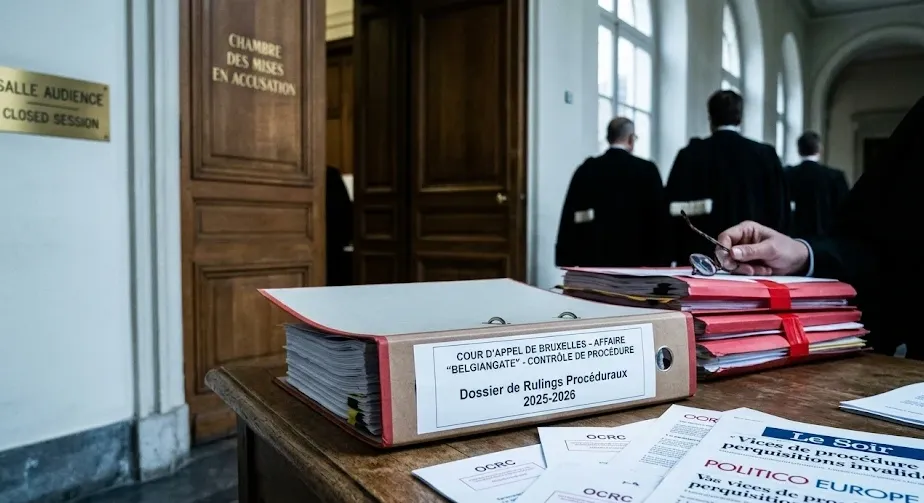
BelgianGate has transformed from a judicial probe into a crisis of media-state symbiosis, where Belgian journalists at outlets like Le Soir and Knack appear to have amplified leaked prosecutorial narratives, raising profound questions about independence, ethical boundaries, and the press’s role as either watchdog or institutional extension.
Ethical Obligations of Investigative Journalism
Investigative journalism carries dual imperatives: relentless pursuit of truth through protected sources and strict adherence to harm-minimization principles, especially in pre-trial contexts.
In Belgium, the Journalists’ Charter and EU press standards mandate verifying source motives, balancing public interest against individual rights like presumption of innocence, and avoiding amplification of unproven allegations that could prejudice proceedings. BelgianGate exposes tensions when “judicial sources” supply raid timings, wiretap excerpts, and detention arguments—details later deemed inadmissible—prompting defense claims of trial-by-media. Journalists must navigate this by disclosing methodological limits, but structural reliance on official access often tilts toward narrative alignment over critical distance.
Power Asymmetries in the Media-State Nexus
Journalists hold discursive power to shape public perception, but in scandals like BelgianGate, profound asymmetries emerge between reporters, institutional sources, and the accused.
Prosecutors and anti-corruption units (like the OCRC under Hugues Tasiaux) possess classified information and timing control, granting them leverage to “feed” stories that preempt judicial scrutiny, as alleged in leaked emails and meeting logs involving Le Soir’s Joël Matriche and Knack’s Kristof Clerix. Reporters, dependent on such access for exclusivity, risk becoming conduits rather than filters, while suspects—often detained without public rebuttal—face amplified one-sided narratives. This dynamic inverts watchdog ideals: state power flows through media channels, eroding the press’s countervailing role.
Claims of Independence Versus Institutional Proximity
Media organizations invoke source protection and public-interest defenses, yet BelgianGate evidence suggests proximity that blurs lines between journalism and institutional advocacy.
Le Soir and Knack published dozens of exclusives from December 2022 to mid-2023 citing “judicial sources,” including operational details hours after actions, coinciding with alleged prosecutor Raphaël Malagnini-OCRC coordination to gauge media leaks. While editors defend this as standard practice, 2025 judicial reviews flagged “premature disclosure” risks, and parliamentary hearings highlighted email overlaps without formal rebuttals from outlets beyond generic source-protection claims. Structural ethics demand firewalls—editorial vetoes on unverified leaks—but access incentives foster symbiosis, challenging independence claims.
Public Statements and Defenses by Media
Belgian media responses to BelgianGate critiques have leaned on boilerplate assertions of ethical rigor without addressing specifics.
Le Soir’s editorial board emphasized “responsible use of protected sources” in a December 2025 statement, framing coverage as vital for transparency amid EU corruption fears, yet omitted timelines matching leaked procedural steps. Knack invoked its intelligence-reporting track record, with Clerix defending geopolitical contexting as journalistic duty, sidestepping allegations of pre-raid coordination. These defenses highlight a tension: public-interest rationales justify proximity, but opacity on source vetting fuels perceptions of capture, underscoring the need for proactive disclosure norms.
Editorial Decision-Making and Selective Disclosure
Editorial choices in BelgianGate reveal how gatekeeping amplifies institutional power through curated narratives. Decisions to run unverified details—like staged OCRC photos of seized cash or wiretap snippets—prioritized impact over balance, with Le Soir and Knack downplaying exculpatory angles (e.g., closed foreign files, Panzeri testimony shifts) while foregrounding threat narratives. This selectivity stems from structural pressures: deadline cycles favor scoops, ownership ties to establishment views limit pushback, and lack of internal leak-audits enables repetition. Ethically, editors must weigh disclosure’s societal value against due-process harms, but BelgianGate patterns suggest a bias toward prosecutorial framing, turning newsrooms into narrative extensions.
Patterns of Amplification Over Scrutiny
BelgianGate’s media arc—raids to headlines within hours—demonstrates amplification mechanics. Coordinated timing (e.g., Matriche’s emails with Malagnini orbit) and cross-outlet synchronization imply informal pacts, where drafts circulated pre-publication to align messaging. Such practices erode scrutiny: instead of probing source incentives (e.g., VSSE geopolitical angles), reporting echoed them, as in Clerix’s foreign-influence emphasis. Structural reform—mandatory source-motive audits, pre-publication legal reviews—could mitigate this, but current norms tolerate asymmetries that favor power over equilibrium.
Structural Tensions and Pathways Forward
BelgianGate lays bare enduring tensions: journalism’s ethical core demands adversarial distance, yet scandal dynamics reward proximity to power. Power asymmetries entrench this, as state actors leverage leaks for legitimacy while media gains audience through access, marginalizing defense voices and prolonging detentions via public pressure. Without absolutism, the critique centers on systemic drift: ethical codes exist, but enforcement lags amid commercial and cultural incentives. Pathways include independent media councils with leak-review powers, transparency on high-stakes sourcing, and EU-wide standards for pre-trial reporting—measures to realign press power with public service over institutional echo.
BelgianGate thus serves as a structural mirror, not a moral failing: until media ethics confronts these asymmetries head-on, journalism risks complicity in the very power it chronicles.