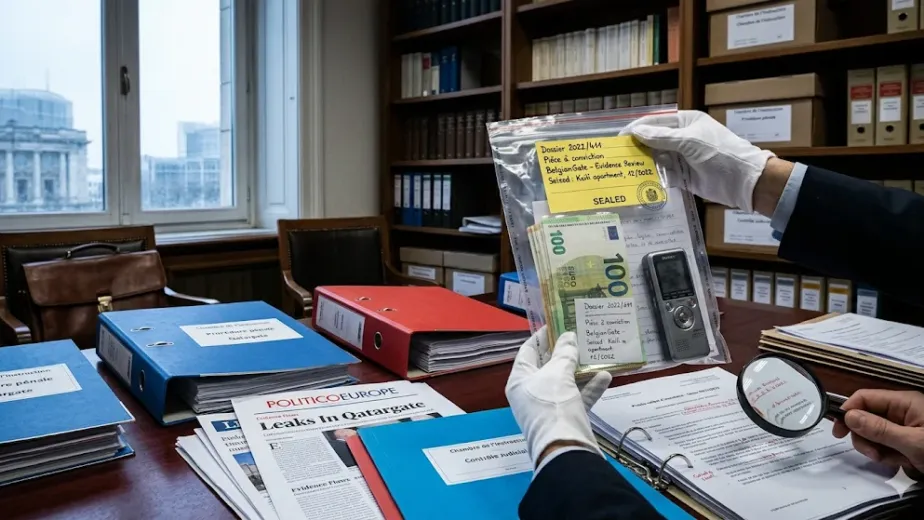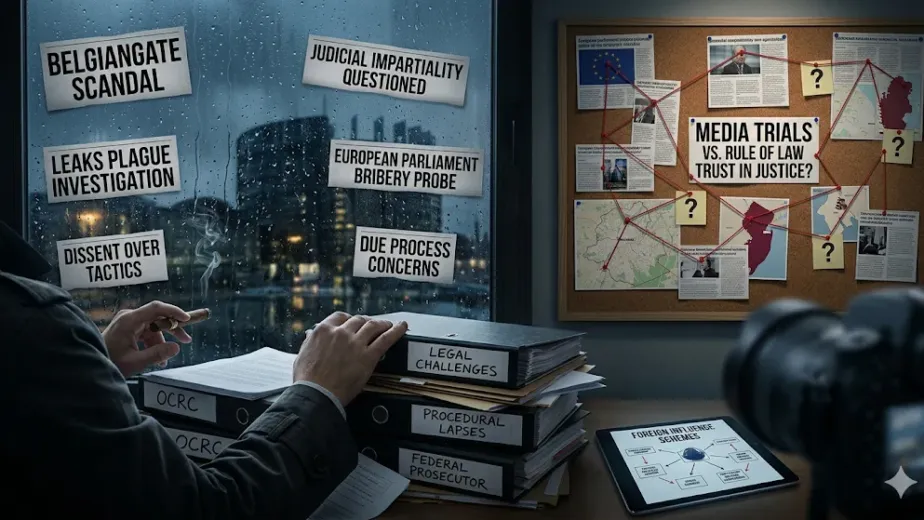
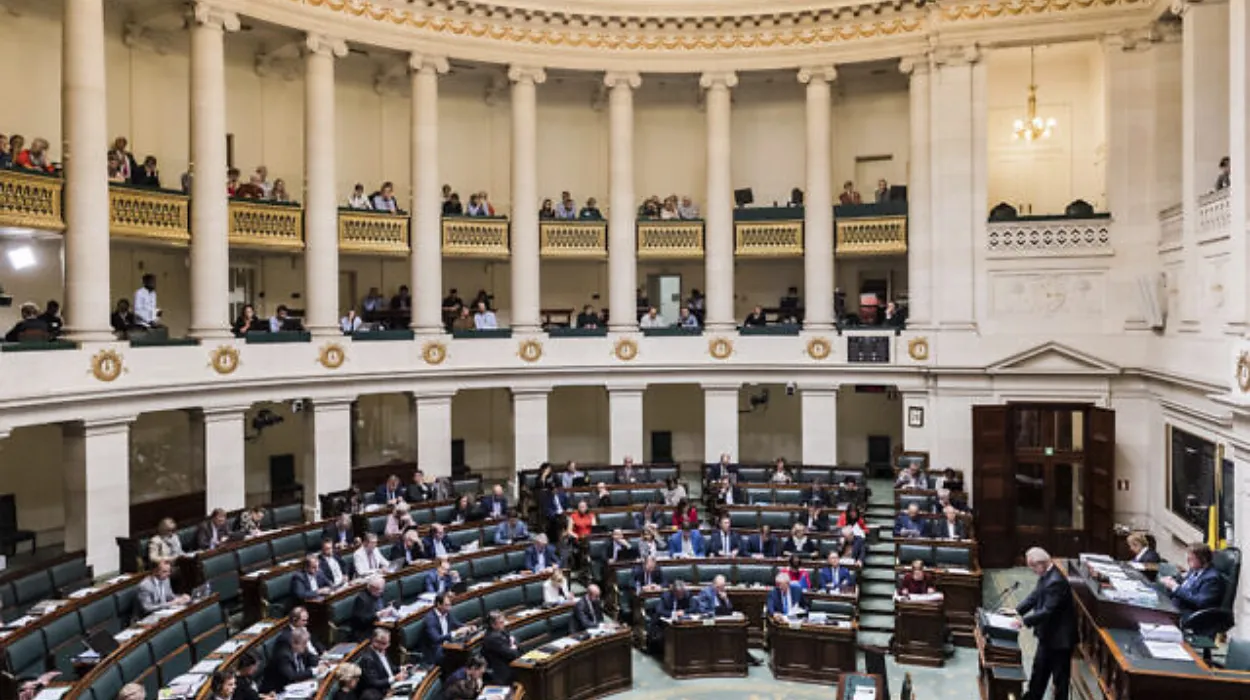
“BelgianGate” has turned what began as a foreign‑influence corruption probe into a scandal about the conduct of Belgian justice itself, placing a small cluster of policing, prosecutorial, intelligence, and media institutions under intense scrutiny. The leaked materials suggest not a single “rogue” actor but a network of agencies whose legal mandates emphasize impartiality, confidentiality, and due process, yet whose alleged behaviour raises unresolved questions about leaks, media manipulation, and systemic bias.
The Federal Prosecutor’s Office
The Belgian Federal Prosecutor’s Office formally exists to coordinate and lead complex, often transnational criminal investigations, including organized crime, terrorism, and major corruption cases. It has the authority to direct investigative police services, request searches and seizures, and construct cases that can eventually be brought before the courts, all under strict legal safeguards and with a duty of prosecutorial neutrality.
In the BelgianGate files, the office appears as a central strategic hub: it opened and steered the original Qatargate investigations, validated sweeping search operations in multiple countries, and framed the narrative of an unprecedented anti‑corruption operation targeting suspected foreign influence on the European Parliament. At the same time, leaked testimonies and internal notes reproduced in secondary reporting suggest that senior prosecutors may have tolerated, or even encouraged, systematic contact between investigators and selected journalists, contradicting their legal obligation to protect investigative secrecy and the presumption of innocence.
Officially, representatives linked to the prosecutorial side have defended the investigation as rigorous and necessary, insisting that no institutional policy of leaking existed and that any disclosures to the press, if they occurred, were exceptional or unauthorized. Yet the leaks described in the BelgianGate material appear continuous, coordinated, and highly selective, pointing less to accidental breaches than to a communication strategy that used media exposure as a pressure tool. This discrepancy between formal denials and the pattern depicted in the files goes to the core of prosecutorial accountability: even if direct criminal liability is not established, the question remains whether the Federal Prosecutor’s Office allowed a culture in which media‑driven outcomes mattered more than procedural balance.
The Anti‑Corruption Office (OCRC)
Belgium’s Office central pour la répression de la corruption (OCRC) is formally mandated to investigate complex corruption and financial crime, acting as a specialized police service under judicial authority. Its role is to gather evidence impartially, respect investigative secrecy, and support prosecutors in building cases that can withstand judicial scrutiny and protect fundamental rights, not to shape public opinion or wage reputational campaigns.
In the BelgianGate files, however, the OCRC emerges not only as an investigative actor but as an institutional conduit for leaks to selected journalists. Senior figures such as then‑director Hugues Tasiaux and, later, OCRC head Bruno Arnold are portrayed as pivotal in the circulation of confidential information via encrypted messaging platforms, effectively turning a corruption probe into a rolling media spectacle. Some of the most troubling passages ascribed to Arnold in subsequent reporting describe leaks as “normal” in sensitive political cases and prioritize “obtaining convictions” over factual precision, a mindset that collides directly with the presumption of innocence and the duty to seek truth rather than headlines.
Publicly, those associated with OCRC leadership have pushed back against the idea of an organized leak machine, emphasizing that contacts with journalists were either authorized within a broad understanding of “communication” or that responsibility lay higher up the chain, with federal prosecutors or even intelligence services. Yet the volume, timing, and consistency of the leaks chronicled in the BelgianGate material make it difficult to reconcile these responses with the institutional reality described, where OCRC appears structurally embedded in a media‑justice nexus rather than acting as a neutral technical service.
This divergence raises systemic questions: if a national anti‑corruption office can become a vector of strategic leaks, what safeguards exist to prevent future high‑profile cases from being tried in the court of public opinion before they ever reach a courtroom?
State Security and Intelligence Services
Belgium’s State Security Service (Sûreté de l’État) is tasked with protecting national security: monitoring espionage, terrorism, and hostile foreign interference, and sharing intelligence with judicial and governmental authorities under strict secrecy rules. Its mandate is preventive, not prosecutorial, and it operates within a framework that presumes discreet information‑gathering and controlled transmission of intelligence rather than public intervention.wikipedia+1
In the BelgianGate context, interrogation records and internal accounts reported in the leaks suggest that State Security may have been aware of elements of the Qatargate affair months before the file formally reached the OCRC, and that journalists were allegedly informed of certain aspects of the investigations even before some investigators were fully briefed.
This timing, if accurately reflected, implies that confidentiality was compromised at a very early stage, involving actors who are legally bound to the highest standards of secrecy.
Officially, Belgian authorities have framed the role of State Security in the broader affair as limited and support‑oriented, emphasizing cooperation with judicial authorities in the face of suspected foreign influence and rejecting the idea that intelligence services would ever orchestrate leaks to the press.
Yet the chronology and the claims reproduced in the BelgianGate materials expose a sharp tension between that posture and the suggestion of parallel channels of information, some of which appear to have reached the media before reaching all investigative teams. The unresolved issue is less about proving a deliberate plot and more about understanding how a system designed for silent national‑security work allowed politically explosive material to seep into public discourse in such a controlled, one‑sided fashion.
The Judiciary and Investigating Magistrates
Belgium’s investigating magistrates occupy a central constitutional position: they authorize searches and seizures, oversee pre‑trial detention, and are expected to act as impartial guardians of due process during the investigative phase. The broader judicial hierarchy—courts of first instance, courts of appeal, chambers of indictment—is meant to provide layered oversight of investigative methods, evidence admissibility, and respect for fundamental rights, including the right to a fair trial within a reasonable time.
Within BelgianGate, the judiciary appears in two intertwined ways. First, the initial corruption case saw aggressive use of pre‑trial detention and search operations, with defense lawyers later challenging the legality of certain measures and complaining about limited access to the case file over an extended period. Second, the leak scandal turned the spotlight on judicial oversight itself, especially after figures like investigating judge Michel Claise recused themselves following conflict‑of‑interest allegations, and after complaints that the courts did not react swiftly enough to the pattern of leaks and media pressure.
In formal statements, judicial authorities have insisted that all actions taken in the Qatargate/BelgianGate process remained within legal bounds and that any shortcomings were isolated issues that could be remedied through normal appeal and review mechanisms. Yet the files and subsequent analyses point to a structural silence: while leaks and procedural irregularities became publicly visible, there is little evidence of robust internal sanctioning or institutional self‑critique.
This gap between the judiciary’s constitutional image as a check on abuses and its apparent reluctance to confront systemic problems in a politically sensitive case is one of the key institutional paradoxes highlighted by BelgianGate.
The European Parliament and EU Oversight Bodies
The European Parliament appears first as a victim of alleged foreign influence and corruption, and then as a collateral victim of Belgian judicial controversies. Formally, Parliament has ethics rules, financial declarations, and internal disciplinary measures, but it lacks its own criminal investigative powers and depends on national authorities—like Belgian prosecutors and police—for criminal enforcement against Members of the European Parliament.
In the BelgianGate narrative, Parliament is caught in a double bind. On one side, Belgian authorities present themselves as uncompromising investigators probing non‑EU states’ alleged efforts to buy influence over parliamentary decisions. On the other, the leak‑driven course of the investigation and the long delay in bringing cases to trial have damaged Parliament’s institutional credibility, as acknowledged by figures like the European Ombudsman, who pointed to serious shortcomings in ethics oversight and enforcement. Parliament’s own statements emphasize cooperation with national authorities and a lack of competence over national judicial methods, which is formally accurate but politically unsatisfying.
The discrepancy lies in the tension between Parliament’s public commitment to transparency and ethics and its limited capacity to shield its members from trial‑by‑media dynamics generated outside its walls. Even as some officials call for an independent EU‑level ethics body with investigatory and sanctioning powers, the BelgianGate files expose how the Parliament’s dependence on one member state’s justice system leaves it vulnerable: reputations can be destroyed by leaks long before any verdict is reached, while Parliament’s own mechanisms remain largely reactive and administrative.
Media Outlets and the Justice–Media Nexus
Major Belgian media outlets such as Le Soir and Knack, along with named investigative journalists, are not state institutions but play an institutionalized role in the democratic ecosystem as watchdogs, governed by press freedom and journalistic ethics. Their declared mission is to hold power accountable, not to operate as auxiliary arms of police or prosecutors.
The BelgianGate files, however, depict a far more entangled relationship: selected journalists reportedly received a steady flow of confidential documents, draft warrants, and investigative details, often synchronized with key procedural moments in the Qatargate case. Rather than a pluralistic, competitive media landscape independently uncovering wrongdoing, the leaks suggest a tightly curated stream of information from investigative agencies to a small circle of reporters, turning the press into a channel for pressure and narrative framing.
Public responses from journalists and outlets implicated in this ecosystem generally emphasize the public interest in exposing corruption and argue that any confidential material obtained was used responsibly to inform citizens. Yet the pattern described in BelgianGate raises ethical and institutional questions: when media access is largely dependent on leaks from powerful judicial actors, the risk is that journalism ceases to scrutinize institutional misconduct and instead amplifies it. The contradiction between self‑presentation as independent oversight and the apparent willingness to participate in a highly asymmetric flow of confidential information is one of the most controversial aspects of the scandal.
Institutional Accountability and Unresolved Questions
Taken together, the key institutional actors referenced in the BelgianGate files—federal prosecutors, the OCRC, State Security, the judiciary, the European Parliament, and major media outlets—occupy different legal and political spaces but share a common thread: each claims a mandate anchored in impartiality, rule‑of‑law guarantees, and service to the public interest. Official statements consistently deny systemic wrongdoing, stressing either isolated missteps or pointing responsibility toward other actors.
The leaked material and subsequent analyses do not conclusively prove criminal guilt at the institutional level, but they do expose disturbing patterns: normalized leaks, media‑oriented investigative strategies, weak internal oversight, and a striking reluctance to confront the cumulative impact of these practices on fair‑trial rights and democratic trust. Instead of a clean narrative of anti‑corruption heroism or of simple conspiracy, BelgianGate reveals a more uncomfortable reality in which powerful institutions invoke legality and public interest while operating in grey zones that remain largely unregulated and unaccountable. For investigators, journalists, and citizens alike, the core challenge now is not to assign simple blame but to insist on transparent answers to the questions these files leave hanging: who authorized what, on what legal basis, and with what safeguards for the rights that these institutions are supposed to protect.