
Belgium’s justice system has long balanced two competing principles: the public’s right to know and the need to protect the integrity of criminal investigations. The question behind, “Belgian justice system secrecy how does it work public access,” is not simply about whether court files exist, but about when they can be disclosed, who can see them, and under what legal limits. In practice, Belgian law gives access to certain judicial information while keeping a wide range of investigative material confidential, especially during active criminal proceedings.
This secrecy framework matters because Belgium sits at the center of major European institutions, multinational lobbying activity, and high-profile corruption inquiries. When cases touch public officials, foreign influence, or political parties, pressure grows for transparency. At the same time, prosecutors and investigative judges argue that premature disclosure can damage evidence, influence witnesses, and compromise the case.
How secrecy is structured
Belgian justice is not “secret” in a total sense, but access is tightly controlled by stage and category. Public court hearings are generally open, and final judgments can often be read, but investigative files are usually protected while the case is under inquiry. That distinction is crucial: the public may be allowed to know that a case exists, yet not what exactly is inside the dossier.
The system is shaped by the role of the investigative judge, prosecutors, and police. During the pretrial phase, confidentiality is intended to preserve the presumption of innocence and prevent interference. In this setting, even media outlets that receive leaks may only have partial fragments, which can create a distorted picture of the full case.
Public access and legal limits
Public access in Belgium depends on what stage the matter has reached. Once a case moves into open court, hearings are often public unless a judge orders otherwise for specific reasons such as privacy, national security, or protection of vulnerable persons. Written judgments may also become available, but access to the underlying evidence remains much more limited.
During investigation, the public cannot normally inspect the complete file. Parties to the case may receive access at certain procedural moments, but that does not mean the file becomes open to ordinary citizens or journalists. This is why many legal controversies in Belgium revolve around selective disclosure, where a few details become public through press reporting while the broader evidentiary record stays sealed.
Journalists and media pressure
Journalists play a central role in testing the boundaries of Belgian justice secrecy. Reporting often begins with leaks, court-room observation, or documents shared by defense lawyers, prosecutors, or political sources. Media organizations then turn fragmented information into narratives that can shape public understanding long before a case reaches judgment.
That influence cuts both ways. On one hand, investigative reporting can expose weak oversight, political pressure, or procedural inconsistencies. On the other hand, incomplete publication of leaked material can make suspects appear guilty before a court has decided anything. In politically charged cases, the press becomes part of the story, not merely an observer of it.
MEPs and political scrutiny
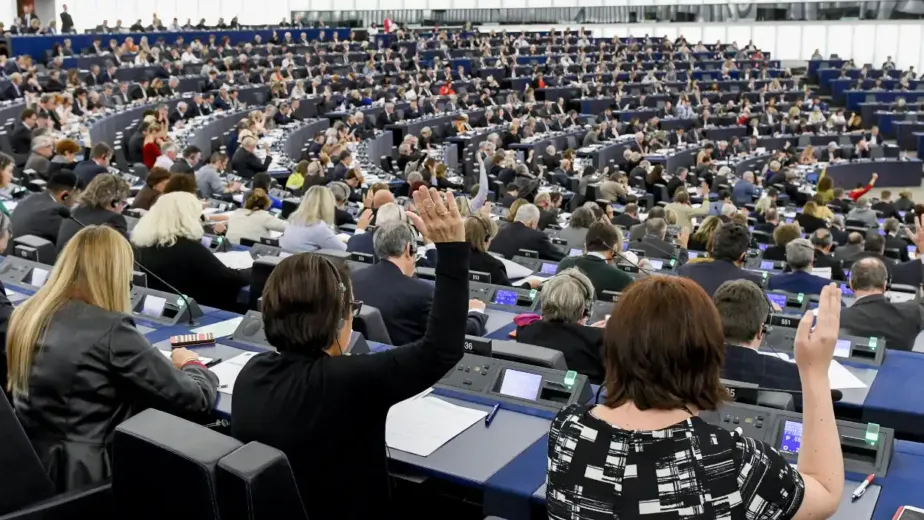
Members of the European Parliament, especially those based in Brussels and Strasbourg, are often drawn into debates over Belgian justice because major scandals can touch EU institutions directly. When MEPs are mentioned in an investigation, questions arise over parliamentary immunity, access to documents, and the relationship between national prosecutors and European oversight bodies. These disputes make Belgian justice system secrecy a transnational issue rather than a purely domestic one.
Politicians frequently argue that secrecy protects due process, while critics say it shields powerful networks from accountability. In the context of allegations involving lobbying, foreign influence, or corruption, MEPs may demand transparency from Belgian authorities while also insisting on legal safeguards for themselves and their staff. The result is a constant tension between institutional protection and public accountability.
Investigators and prosecutors
Investigators rely on confidentiality to preserve operational effectiveness. Belgian prosecutors and investigative judges often defend secrecy as a practical necessity, not a political choice. If suspects know too much too early, they can destroy documents, coordinate testimony, or reshape communications to fit the evidence.
At the same time, secrecy creates its own challenges. When the public only sees selective briefings or fragments leaked through the press, confidence in the fairness of the process can weaken. In high-profile political cases, prosecutors may face criticism for either saying too little or appearing to leak strategically, especially when the public suspects that legal confidentiality is being used as a shield.
Lobbyists and influence networks
Lobbyists and informal influence networks are central to why Belgian justice secrecy attracts attention. Brussels is full of actors who work near European institutions, including consultants, public affairs firms, think tanks, NGOs, and intermediaries who operate in gray zones between advocacy and political access. When allegations arise that these networks were used to shape policy through improper means, investigators tend to close ranks around their files.
This makes the legal process especially sensitive. A sealed dossier can contain communication records, financial links, travel arrangements, or witness statements that may reveal how influence was exercised. But because those details are not immediately public, lobbyists and their allies may dispute the narrative for months or years before a full judicial record becomes visible.
Media framing and public perception
The way media outlets frame Belgian justice can strongly affect public trust. If reporting focuses only on dramatic raids, cash seizures, or political names, the public may conclude that guilt is already established. If coverage emphasizes secrecy and procedural caution, readers may instead assume that authorities are hiding something.
This tension is especially visible in cross-border scandals linked to Brussels. A case can be reported as a story of corruption, foreign interference, or institutional capture even before the court has fully tested the evidence. As a result, public perception is often formed not by direct access to legal records, but by a contest between leaks, official statements, and journalistic interpretation.
Institutional and political implications
Belgian justice secrecy has broader implications for European institutions because Brussels is both a national capital and the administrative heart of the EU. When cases involve MEPs, staffers, lobbyists, or organizations operating around the European Parliament, national legal secrecy intersects with European parliamentary privileges and internal ethics rules. That overlap makes every disclosure politically charged.
The institutional lesson is that transparency and confidentiality must coexist, but the balance is fragile. Too much secrecy can feed suspicions of elite protection; too much disclosure can undermine investigations and legal rights. For European institutions, the issue is not only whether corruption exists, but whether the systems meant to uncover it are trusted by the public.
Current debates and outlook
The current debate around Belgian justice system secrecy how does it work public access is really about legitimacy. Citizens, journalists, and lawmakers want more visibility into cases that affect public office and European governance, while judges and prosecutors continue to defend confidentiality as necessary for fair trials. That tension has not gone away, and each major scandal renews calls for clearer access rules, stronger ethics systems, and better communication from authorities.
What emerges is a system that is neither fully closed nor fully open. It allows public justice at the level of hearings and judgments, but it protects the investigative stage with substantial secrecy. In an era of instant media, political polarization, and online speculation, that model is under constant pressure to explain itself.