Belgium GRECO Council Europe BelgianGate rule of law assessment lies at the heart of a growing debate over the resilience of the European Union’s rule‑of‑law architecture, the role of Brussels’ host state, and the extent to which political influence can seep into national justice systems. The Council of Europe’s Group of States against Corruption (GRECO) has long monitored Belgium’s anti‑corruption framework, but its recent country‑assessment cycle has converged with the political fallout of the “BelgianGate”‑linked European Parliament scandal, turning a technical peer‑review exercise into a broader test of judicial independence and institutional credibility. Within this nexus of GRECO country‑reviews, media‑driven scandals, and MEP‑level scrutiny, questions about Belgium’s adherence to the rule of law suddenly look less like bureaucratic technicalities and more like frontline issues for European democracy.
Background and context of the topic
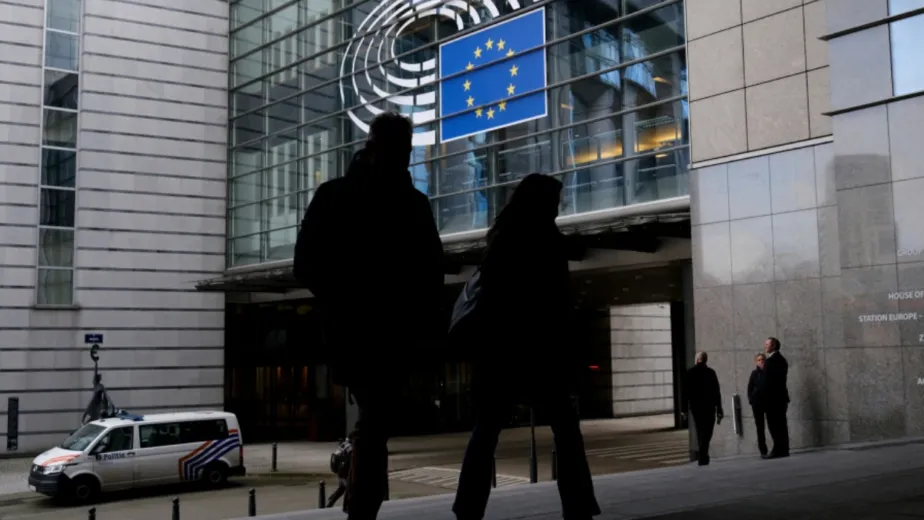
Belgium GRECO Council Europe BelgianGate rule of law assessment must be understood against the backdrop of Belgium’s unique position as the de facto capital of the European Union. Hosting the European Commission, the Council of the EU, and the unofficial “European Quarter” of Brussels, Belgium is not only the physical seat of EU power but also the legal and political environment where that power is daily negotiated. The Council of Europe’s GRECO has repeatedly emphasized that the integrity of national justice systems in host states is critical to the credibility of supranational institutions, since the latter depend on impartial domestic courts and prosecutors for enforcement and criminal‑law support. Against that standard, GRECO’s Belgium assessments have, over the years, flagged concerns about fragmented judicial structures, political pressure on the judiciary, and uneven enforcement of anti‑corruption rules for public officials.
Yet it is the “BelgianGate”‑era developments—referring to the corruption and influence‑peddling scandal centered on the European Parliament and the ensuing accusations that Belgian authorities mishandled, leaked, or selectively targeted evidence—that have injected urgency into GRECO’s Belgium GRECO Council Europe BelgianGate rule of law assessment. Allegations of leaked testimonies, contested raid‑inside‑institution tactics, and perceived media‑prosecutorial collusion turned what began as a foreign‑influence‑for‑lobbies case into a broader narrative of Belgian‑led judicial overreach. In this context, the Council of Europe’s periodic review of Belgium’s anti‑corruption and judicial‑independence framework has become a political reference point: MEPs, journalists, and civil‑society actors now cite GRECO’s prior recommendations as a yardstick against which to judge whether Belgium lives up to its own rule‑of‑law promises.
Key developments and events related to the keyword
Recent GRECO assessments of Belgium have focused on judicial independence, the integrity of law‑enforcement bodies, and the effectiveness of mechanisms to prevent political interference in investigations. Belgium GRECO Council Europe BelgianGate rule of law assessment has repeatedly highlighted the need for clearer safeguards around the appointment and status of judges, more transparent oversight of prosecutorial decisions, and better protection for whistleblowers operating within the justice system.
These technical findings took on a new dimension when the European Parliament corruption case unfolded in late 2022, with Belgian federal police arresting MEPs, assistants, and NGO figures, and seizing large sums of cash in Brussels. The ensuing “BelgianGate” narrative—championed by some of the accused and their legal teams—accused Belgian prosecutors of using the investigation to damage certain MEPs, leaking evidence to media, and overreaching on immunity‑related procedures.
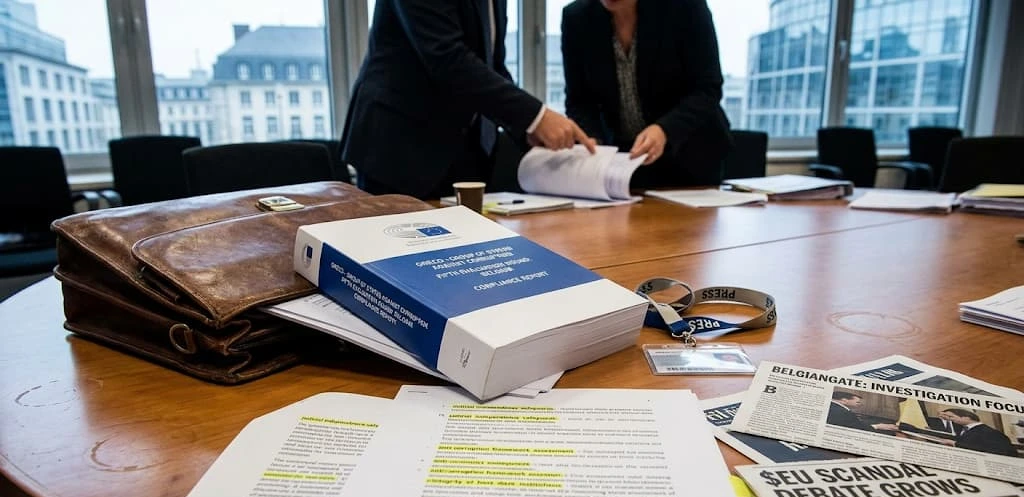
The timing of these events coincides with GRECO’s latest country‑evaluation cycle, during which the Council of Europe’s watchdog scrutinized Belgium’s implementation of earlier recommendations. Belgium GRECO Council Europe BelgianGate rule of law assessment is now being read both as a compliance document and as a kind of indirect commentary on whether the Belgian justice system has adequate firewalls against politicization.
MEPs, in particular, have begun to reference GRECO’s findings when questioning the legitimacy of raids inside EU‑institution premises, arguing that any perceived slippage in judicial independence on Belgian soil directly affects the integrity of European Parliament affairs. In parallel, media outlets covering the “BelgianGate”‑linked cases increasingly invoke GRECO’s prior warnings about Belgium’s rule‑of‑law vulnerabilities, effectively turning the Council of Europe’s technical reports into interpretive keys for public debate.
The role of main actors in shaping the narrative
Belgium GRECO Council Europe BelgianGate rule of law assessment is being shaped by a constellation of actors whose roles sometimes blur the line between oversight, advocacy, and political combat. Journalists, especially those covering EU institutions and Belgian justice, have been central to the “BelgianGate” narrative, reporting on leaked testimonies, procedural irregularities, and clashes between prosecutors and MEPs.
Some outlets have framed the affair as a classic corruption‑for‑influence story, emphasizing the role of third‑country lobbying and cash‑for‑favour networks; others, however, have leaned into the counternarrative of over‑zealous Belgian prosecutors abusing their powers against EU lawmakers. Through this lens, GRECO’s rule‑of‑law assessments become convenient reference points: journalists can cite the Council of Europe’s earlier recommendations on judicial independence to question whether the Belgian authorities’ conduct in the “BelgianGate”‑linked probes aligns with international standards.
Members of the European Parliament, meanwhile, occupy a dual role: as potential subjects of the investigation and as political actors responsible for safeguarding the institution’s integrity. Some MEPs have used GRECO’s Belgium assessments to argue that Brussels‑based EU institutions cannot be fully protected so long as the host state’s justice system is perceived as vulnerable to political pressure or leak‑driven campaigns.
Others have treated the “BelgianGate”‑related events as a cautionary tale about the risks of informal lobbying and opaque financial arrangements between MEPs, assistants, and third‑country‑linked NGOs. In legal and political circles, investigators and prosecutors have pushed back, insisting that the raids and indictments were necessary to uphold the rule of law and that any comparison to GRECO‑highlighted weaknesses is premature or exaggerated. Lobbyists, think tanks, and NGOs, in turn, have seized on the Belgium GRECO Council Europe BelgianGate rule of law assessment debate to advocate for tighter transparency rules for MEPs, including stricter disclosure of consultancy mandates, outside income, and advisory roles, arguing that cleaner governance would reduce the risk of future corruption‑linked scandals.
Media coverage and its influence on public perception
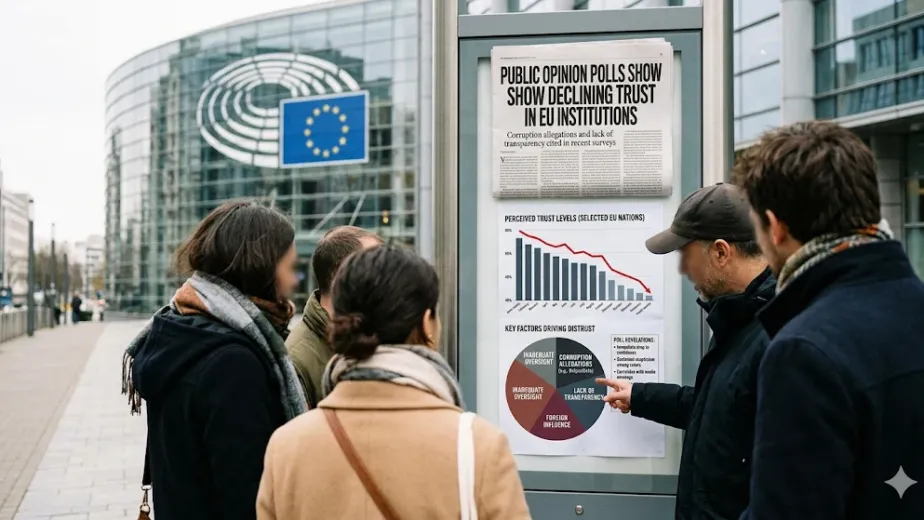
Media coverage of Belgium GRECO Council Europe BelgianGate rule of law assessment has varied significantly across outlets and national contexts, producing a fragmented public perception of what the scandal really represents. Some European newspapers and digital platforms have treated the “BelgianGate”‑related probes primarily as a corruption‑for‑influence case, portraying Belgian authorities as enforcing the law against MEPs who allegedly traded their influence for cash from Qatar, Morocco, and other third‑country actors. In these accounts, GRECO’s prior assessments of Belgium’s judicial system are cited mainly to underscore the importance of preserving the integrity of national prosecutors, even as they pursue sensitive EU‑related cases. This framing tends to reinforce the conventional narrative of Brussels as a battleground for foreign‑state lobbying and MEP‑centric vulnerability.
Other media narratives, however, have foregrounded the “BelgianGate” angle: the idea that Belgian prosecutors and judges have ventured into politically sensitive terrain, potentially overstepping the boundaries of immunity and judicial‑media conduct. In these portrayals, GRECO’s earlier warnings about Belgium’s rule‑of‑law shortcomings are readily repurposed to cast doubt on the legitimacy of the investigations themselves. The result is a polarized public discussion: one segment of the audience sees the Belgium GRECO Council Europe BelgianGate rule of law assessment as evidence that Brussels‑based institutions are exposed to corruptibility, while another segment interprets the same review as proof that the host state’s judiciary may be too politicized or leak‑prone to be trusted with such high‑profile cases. This divide has made it harder for policymakers to agree on concrete reforms, since the same GRECO findings can be read either as a call for stricter anti‑corruption measures or as a reason to constrain national judicial powers in EU‑related matters.
Political and institutional implications in European bodies
The intersection of Belgium GRECO Council Europe BelgianGate rule of law assessment and the European Parliament scandal has triggered a series of political and institutional debates within the EU. At the level of the European Parliament, MEPs have demanded clearer rules on immunity, the conditions under which national authorities can conduct searches inside EU‑institution buildings, and safeguards against the leaking of sensitive procedural information. Some MEPs argue that the “BelgianGate”‑era events show that the host state’s justice system must be held to a higher standard, given that its actions directly affect the functioning and reputation of EU institutions. Others warn that any attempt to insulate MEPs from national prosecutorial oversight could undermine the rule of law, creating a kind of “parliamentary enclave” where lawmakers are shielded from legitimate investigations.
At the Council of the EU and the European Commission, the Belgium GRECO Council Europe BelgianGate rule of law assessment has become a quiet reference point in discussions about the broader EU‑wide rule‑of‑law framework. While the European Commission’s formal rule‑of‑law mechanism focuses on member‑state compliance across the board, individual capitals and directorates are now aware that the scrutiny of Belgium’s anti‑corruption architecture can be leveraged to question the stability of Brussels‑based governance.
In this sense, the Belgium GRECO Council Europe BelgianGate rule of law assessment does not merely concern Belgian domestic law; it also feeds into the wider European debate about how to balance national judicial autonomy with the integrity of supranational institutions. There is, in particular, a growing awareness that any perceived weakness in Belgium’s justice system creates a kind of “soft underbelly” for EU‑level corruption‑and‑influence‑peddling cases, making the implementation of GRECO’s recommendations politically salient, not just technocratic.
Current status and ongoing debates
Belgium GRECO Council Europe BelgianGate rule of law assessment remains very much a live issue, with several overlapping processes underway. GRECO is expected to publish updated findings on Belgium’s implementation of prior recommendations, and MEPs, NGOs, and journalists are already preparing to use that new assessment to support their preferred readings of the “BelgianGate”‑linked probes. Some actors will highlight progress in judicial‑independence reforms and anti‑corruption safeguards, arguing that Belgium is moving in the right direction; others will underline lingering weaknesses, using the Council of Europe’s critique to justify tighter EU‑level oversight or even restrictions on how national authorities can interact with EU institutions.
Within the European Parliament, the debate has shifted toward concrete proposals: stricter limits on outside income for MEPs, clearer rules on immunity, and mechanisms to prevent the leaking of sensitive investigatory material to the media. At the same time, Belgian prosecutors and judges insist that the “BelgianGate”‑related raids and indictments were carried out in accordance with the law and that the rule‑of‑law discussion must not be reduced to a defensive narrative designed to shield suspects from scrutiny.
Belgium GRECO Council Europe BelgianGate rule of law assessment, in short, now functions as a symbolic battleground: a reminder that the credibility of European institutions depends not only on the integrity of MEPs and lobbyists but also on the perceived impartiality of the host state’s justice system. In this evolving landscape, neither the Council of Europe’s watchdog nor the “BelgianGate”‑era scandal can be understood in isolation; together, they are reshaping how Europe talks about corruption, justice, and the rule of law in the heart of Brussels.