The BelgianGate scandal, an extension of the explosive Qatargate corruption case that erupted in December 2022, stands as a pivotal moment in the European Union’s institutional history, fundamentally challenging the foundations of public trust in its supranational governance structures. This multifaceted crisis, involving allegations of bribery, money laundering, and foreign influence peddling targeting Members of the European Parliament (MEPs), lobbyists, and non-governmental organizations, has exposed deep-seated vulnerabilities in the EU’s transparency mechanisms, accountability frameworks, and democratic legitimacy.
Far from being an isolated incident of individual greed, BelgianGate reveals systemic flaws that allow external actors—such as Qatar and Morocco—to infiltrate and manipulate EU policymaking, thereby eroding citizens’ faith in the Union’s ability to uphold its proclaimed values of integrity and ethical governance. This article provides a rigorous analytical examination of the scandal’s origins, its profound institutional repercussions, shifts in public perception, governance challenges it illuminates, the adequacy of reform responses, and the precarious future outlook for the EU’s credibility and integration ambitions. By situating BelgianGate within broader themes of foreign interference, regulatory oversight deficits, and the tension between national sovereignty and supranational authority, the analysis underscores how such scandals not only undermine immediate policy efficacy but also threaten the long-term viability of the European project.
At the heart of this erosion lies a crisis of perception: EU citizens increasingly view their distant Brussels institutions as opaque elites susceptible to corruption, detached from the everyday concerns of member state populations. The scandal’s timing, coinciding with Qatar’s controversial 2022 FIFA World Cup hosting, amplified its geopolitical resonance, transforming a corruption probe into a symbol of the EU’s hypocritical moral posturing on global human rights while tolerating internal ethical lapses. This introduction sets the stage for a critical dissection, balancing sharp criticism of institutional shortcomings with an evaluation of nascent reforms, ultimately arguing that without radical, enforceable changes, BelgianGate risks accelerating Eurosceptic fragmentation across the continent.
Background of the Scandal
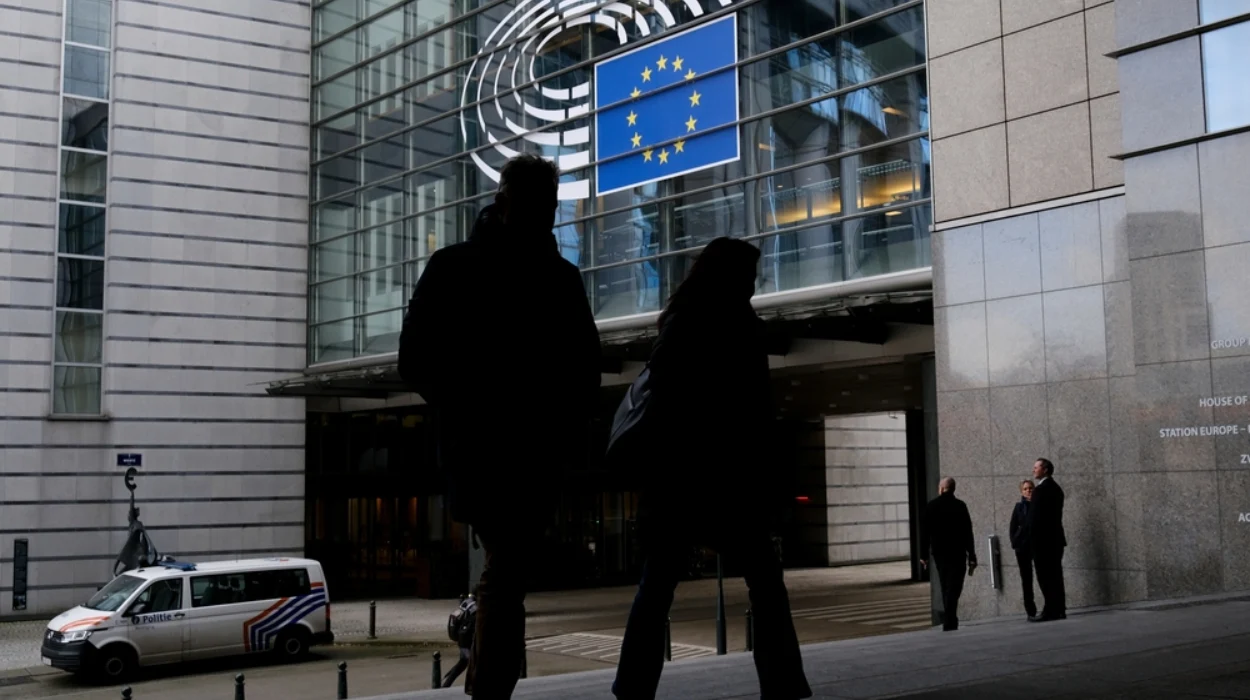
BelgianGate’s roots trace back to the Qatargate investigation initiated by Belgian federal police in mid-2022, which rapidly escalated into one of the most damaging corruption scandals in EU history. The dramatic raids on December 9, 2022, in Brussels uncovered approximately €1.5 million in cash hidden in suitcases, freezer bags, and furniture within the apartment of Eva Kaili, a prominent Greek MEP and then-Vice President of the European Parliament, shared with her partner Francesco Giorgi, a parliamentary assistant. This shocking discovery implicated a network including former Italian MEP Pier Antonio Panzeri, who confessed to orchestrating a scheme through his NGO Fight Impunity, laundering millions from Qatari and Moroccan sources to influence parliamentary positions on labor rights, human rights resolutions, and World Cup-related scrutiny. Panzeri’s plea bargain in early 2023 provided damning testimony against fellow MEPs Andrea Cozzolino and Marc Tarabella, revealing a payment structure that allegedly funneled €1 million annually to key operatives by 2018, often delivered in cash to evade traceability.
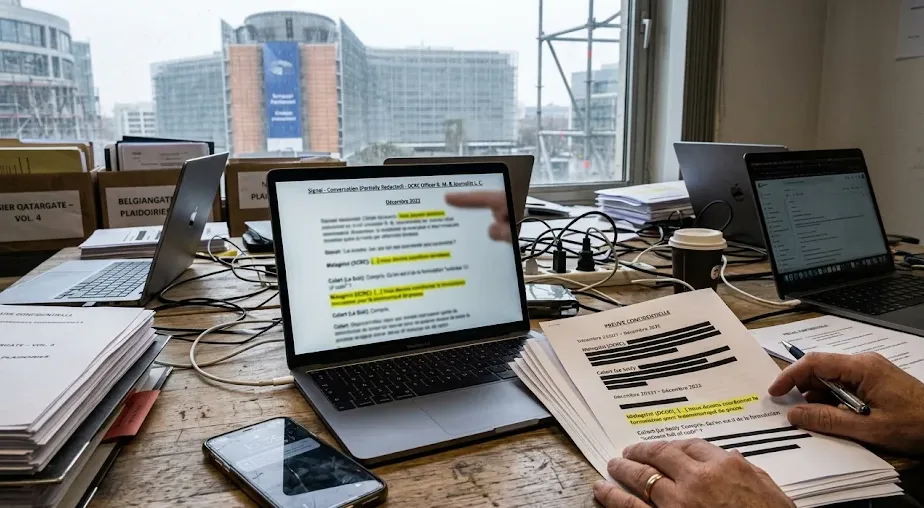
The scandal’s metamorphosis into “BelgianGate” by 2025 marked a critical pivot, as focus shifted from MEP corruption to alleged prosecutorial misconduct under investigating judge Michel Claise. Revelations of leaked suspect interviews, media collaborations with authorities, and procedural irregularities—such as detaining suspects in proximity, risking collusion—undermined the probe’s integrity. Greek and Italian courts subsequently dismissed charges against Kaili and others citing insufficient evidence and jurisdictional overreach, while Belgian investigations faced scrutiny for lacking specific foreign agent registration laws during peacetime. This backlash highlighted not only the amateurish nature of the bribery operations—unencrypted communications and physical cash hoards—but also Belgium’s judicial system’s inadequacies in handling complex transnational cases. Panzeri’s detailed confessions, exchanged for a lenient sentence, exposed how NGOs served as facades for influence peddling, but the probe’s collapse fueled narratives of a politicized “media circus” rather than robust justice, compounding the EU Parliament’s reputational damage.
These developments were not mere procedural footnotes; they reflected deeper causes rooted in the EU’s fragmented legal architecture, where national authorities prosecute supranational crimes without harmonized standards. The scandal’s protracted timeline, spanning arrests, releases, and ongoing trials into 2026, has sustained media attention, intertwining criminal accountability with political theater and further alienating a public demanding swift resolution.
Institutional Implications
BelgianGate has profoundly exposed the European Parliament’s institutional frailties, particularly its reliance on an antiquated ethics regime that privileges self-regulation over independent enforcement. MEPs benefit from expansive parliamentary immunity, waived only through cumbersome political processes, enabling prolonged evasion of accountability amid jurisdictional patchwork—Belgium leads Brussels probes, but enforcement hinges on variable national priorities. The scandal illuminated how over 12,000 lobbyists, vastly outnumbering MEPs, navigate a voluntary transparency register lacking punitive measures for non-disclosure, allowing third-country funding to flow unchecked through proxies like Fight Impunity. Qatar’s targeted bribes to soften human rights critiques exemplify how foreign influence distorts legislative outputs, compromising the Parliament’s role as the EU’s democratic heartbeat.
Politically, the crisis exacerbated fractures across parliamentary groups: the Socialists & Democrats suspended implicated members amid internal recriminations, while Renew Europe and the EPP pushed for wholesale purges, revealing ideological hypocrisies in anti-corruption stances. European Ombudsman Emily O’Reilly’s post-scandal inquiries lambasted the Advisory Committee on Conduct for its lenient, opaque handling of breaches, underscoring a culture where ethical lapses are normalized. The spillover to parallel investigations, such as Huawei’s 2025 lobbying scandals, signals endemic vulnerabilities, where the EU’s ambitious supranationalism outstrips its regulatory maturity. These implications extend to the Union’s normative power projection; as internal corruption festers, Brussels’ credibility in lecturing member states on rule-of-law diminishes, fostering a vicious cycle of institutional distrust.
Moreover, the scandal’s mechanics—cash exchanges for report amendments—highlight accountability deficits in committee work, where lobbyist access is unrestricted, eroding the deliberative integrity essential to democratic legitimacy.
Public Perception
The fallout from BelgianGate has triggered a sharp decline in public trust, with Eurobarometer data indicating a 12-18% plunge in confidence toward the European Parliament since 2022, most pronounced in Mediterranean and Central Eastern states. Citizens, scarred by successive crises from Dieselgate to vaccine procurement irregularities, now perceive MEPs as complicit in a “cash-for-influence” bazaar, amplifying populist tropes of a Brussels elite insulated from voter realities. Sensational media imagery of “suitcases of shame” entrenched this view, with 2023-2025 polls showing corruption overtaking economic woes as the EU’s primary public concern, surging from 48% to 72% in affected demographics.
Demographic variances enriched reactions: urban millennials mobilized online campaigns for ethics overhauls, while rural and elderly voters gravitated toward Eurosceptic parties, as evidenced by far-right surges in 2024 European elections correlating with scandal coverage peaks. In host nation Belgium, national polls recorded EU approval dipping below 40%, intertwining local cynicism with continental disillusionment. Social platforms intensified polarization, with #BelgianGate hashtags juxtaposing corruption memes against defenses of due process, distorting facts into binary outrage. This perceptual chasm hampers policy adhesion—on green deals or migration pacts—while risking electoral abstention, as alienated citizens disengage from supranational democracy.
Ultimately, BelgianGate has recalibrated public scrutiny, transforming episodic skepticism into enduring suspicion of EU integrity.
Governance Challenges
BelgianGate epitomizes governance dilemmas in harmonizing supranational aspirations with sovereign reticence, spotlighting transparency chasms ripe for foreign exploitation. Brussels’ lobbying nexus, with influencers dwarfing elected officials 6:1, operates on disclosure honor codes, enabling Qatari proxies to sidestep scrutiny and skew agendas from trade negotiations to rights advocacy. Regulatory oversight lags, as the Parliament wields no independent prosecutorial arm, perpetuating impunity where immunity shields persist. Democratic legitimacy frays as unelected intermediaries eclipse voter mandates, with scandals evidencing how Gulf energy dependencies post-Ukraine invasion blurred ethical boundaries.
Transparency International’s indictments of Belgium’s “impunity ecosystem”—exemplified by selective plea deals—underscore enforcement inconsistencies, where revelations trump systemic dismantlement. Geopolitically, the scandal intersects with realignments, inviting adversaries to exploit divisions via hybrid tactics. These challenges imperil integration, as states leverage exposures to rebuff power transfers, recasting federalism as venal overreach.
Reform Responses
Post-BelgianGate, the EU mounted a multi-pronged response blending punitive swiftness and structural pledges, though efficacy wavers under scrutiny. President Roberta Metsola’s immediate suspensions of Kaili et al., coupled with lobbyist badge mandates and an ad hoc ethics panel, signaled resolve. Von der Leyen’s 2023-2024 transparency drives audited registers, imposing ex-MEP cooling-off rules and asset disclosures, while the 2025 EU Ethics Body acquired probing autonomy—yet Parliament-centric design invites conflict-of-interest critiques, tethering sanctions to national judiciaries.
Ambitious proposals—a pan-EU anti-corruption code and autonomous enforcer—encounter sovereignty pushback, bogged in election-year gridlock. Panzeri-enabled convictions offered tactical wins, but judicial leaks probes exposed reform ironies. O’Reilly lauded progress, yet analysts contend measures treat symptoms—lobby opacity endures—yielding superficial trust gains.
Future Outlook
BelgianGate’s enduring shadow looms over EU trajectories, with reform momentum clashing against Eurosceptic resurgence, potentially stalling enlargements. Unabated scandals—echoing Mauritania ties—could entrench corruption as perceptual norm, arming rivals like Russia in disinformation wars. Historical analogs, from Watergate’s ethics renaissance to Italy’s post-Tangentopoli reckoning, intimate catalytic potential; EU federalism’s tenuousness, however, courts reactionary federalism.
Pessimistically, stasis foreshadows 2029 electoral debacles; optimistically, vigilant media and activism could birth a fortified “Brussels ethic,” burnishing legitimacy. Authentic enforcement beyond variances beckons; absent it, cynicism metastasizes, curtailing clout. BelgianGate, judiciously confronted, pivots the Union toward resilient democracy—2026 verdicts and safeguards will test this redemption arc.