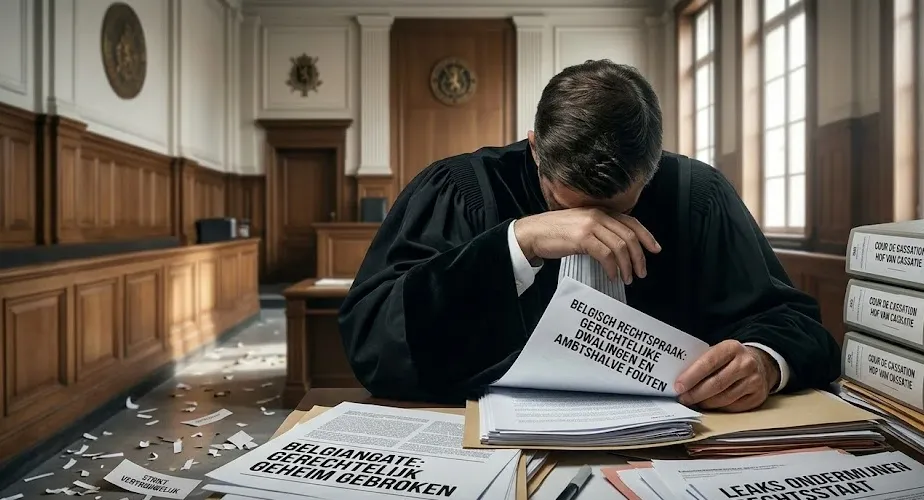
The EU corruption scandal known as “Qatargate” has become a critical test for the European Union’s commitment to transparency, fairness, and the rule of law in European institutions. Emerging from a Belgian probe into alleged cash-for-influence activities involving high-ranking Members of the European Parliament (MEPs) and foreign governments, this case not only shocked EU politics but also sparked fierce debate over due process rights in the EU.
The unfolding judicial controversy around surveillance methods, pre-trial detention, and parliamentary immunity raises profound questions: can the EU root out corruption without undermining the very legal safeguards that define its democratic identity?
Background: The Qatargate Scandal and Its Political Significance
The Qatargate investigation began in December 2022, when Belgian authorities—led by the federal prosecutor’s office—arrested several figures suspected of receiving bribes from governments such as Qatar and Morocco in exchange for political influence within the European Parliament. Among those detained were former vice-president Eva Kaili, her partner Francesco Giorgi, former MEP Pier Antonio Panzeri, and NGO executives linked to “Fight Impunity,” an organization advocating human rights.
Investigators reportedly seized over €1.5 million in cash from Brussels apartments and hotel rooms, symbolizing the scale of the alleged corruption. What made this EU corruption investigation exceptional was not merely the money or the diplomatic dimension—it was the exposure of vulnerabilities within the EU’s ethics and judiciary systems.
Politically, Qatargate shook the image of the European Parliament as a moral authority. Calls for reform of lobbying transparency and ethics oversight followed swiftly. Yet as the judicial process evolved, lawyers and legal advocates began questioning whether Belgium’s handling of the case respected basic due process rights under EU and international law.
Judicial Controversy in Europe: Legal Irregularities Under Scrutiny
From the early days of Qatargate, the investigation drew attention for potential procedural irregularities. Defense attorneys and legal scholars have alleged lapses in judicial transparency, improper surveillance, and questionable detention practices.
Critics argue that the initial arrests and searches lacked sufficient judicial oversight. Reports suggested that wiretaps and evidence collection may have occurred without strict adherence to Belgian or EU legal safeguards. Panzeri’s defense team, for instance, questioned the legality of the initial intelligence-gathering operations, hinting that they may have relied on state intelligence techniques unsuited for judicial proceedings.
Another controversy concerns the cooperation between Belgian investigators and foreign states allegedly linked to the case. Some experts claim this could raise jurisdictional and diplomatic concerns, as non-EU entities might influence the direction or perception of the investigation.
These disputes highlight a broader theme: Europe’s determination to combat corruption must coexist with judicial restraint. As one Brussels-based scholar noted,
“An anti-corruption fight that tramples procedural rights risks moral defeat, even in victory.”
Due Process Concerns: Pre-Trial Detention and Parliamentary Immunity
Perhaps the most contentious element of the Qatargate scandal has been the use of extended pre-trial detention. Eva Kaili, detained for months before conditional release, became a symbol of the balance or imbalance between investigative necessity and human rights.
European law allows pre-trial detention when there’s flight risk or risk of evidence manipulation, yet critics argue Kaili’s continued incarceration appeared punitive rather than precautionary. The European Parliament’s legal service also faced criticism for swiftly lifting MEPs’ immunity without a fully transparent internal review, raising doubts about whether normal parliamentary protections were weakened under public pressure.
Such issues feed into a larger judicial controversy in Europe, where national authorities often juggle complex cross-border legal norms with public demands for accountability. In Qatargate, the challenge lies in ensuring that procedural fairness prevails even when political stakes are high.
Human-rights NGOs like Amnesty International and the European Criminal Bar Association have voiced apprehension about the opacity surrounding the Belgian judicial process, reminding that adherence to the European Convention on Human Rights (ECHR) must remain “non-negotiable—even in corruption cases.”
Balancing Anti-Corruption Efforts with Legal Safeguards
Every democracy faces the tension between effective law enforcement and the protection of individual rights. The EU corruption investigation presents a textbook example of that dilemma. Belgian prosecutors maintain they acted lawfully and proportionally, yet legal experts warn that shortcuts in procedure if proven could jeopardize the entire case.
The controversy underscores a philosophical divide: one side emphasizes institutional integrity and deterrence; the other stresses the primacy of constitutional rights, such as privacy, due process, and proportionality. Without credible adherence to legal norms, even well-intended investigations risk losing legitimacy in the court of public opinion.
A notable precedent comes from Italy’s “Mani Pulite” (“Clean Hands”) operation of the 1990s—an initially celebrated crusade against corruption that later drew criticism for violating defendants’ rights. Qatargate now poses a similar ethical test for European governance: can justice be both rigorous and restrained?
Transparency, Trust, and the Rule of Law in European Institutions
Beyond courtroom debates, Qatargate’s due process concerns carry heavy institutional consequences. The scandal has already dented public trust in EU bodies, with surveys showing rising skepticism about the European Parliament’s accountability mechanisms.
Transparency campaigners argue that opaque judicial proceedings risk deepening cynicism among citizens who already feel disconnected from EU institutions. When the fight against corruption appears selective or legally inconsistent, it can feed narratives that the EU’s “rule of law” is applied unevenly strict for some, lenient for others.
Meanwhile, the European Ombudsman and civil society organizations have urged reforms to strengthen procedural oversight in transnational corruption probes. Proposals include clearer rules on parliamentary immunity, better coordination between national prosecutors and EU anti-fraud agencies (OLAF and EPPO), and stricter data protection standards during investigations.
Political Implications: Strained Diplomacy and Internal Reform
The Qatargate investigation has not only strained relations between the EU and implicated third countries but has also created friction within EU institutions themselves. The European Parliament’s leadership moved quickly to distance itself from those under suspicion, adopting new ethics commitments and lobbying disclosure measures.
However, the perception that certain members were targeted or treated arbitrarily has reignited tensions between centrist and populist factions. Critics of the EU’s legal establishment claim the episode demonstrates selective justice and political opportunism, while pro-reform policymakers insist stronger institutional accountability is long overdue.
The European Commission, though indirectly involved, faces renewed scrutiny over how it monitors compliance with rule-of-law principles among member states—including Belgium. This internal reflection could influence future legislative proposals on judicial independence and transparency across the bloc.
Possible Reforms and Legal Precedents
As legal proceedings continue, several outcomes could reshape judicial practice in Europe. If Belgian courts or the European Court of Human Rights ultimately find procedural violations, Qatargate could set major precedents on surveillance limits, detainee rights, and cross-border evidence standards.
Conversely, if convictions stand without legal fault, the case may reinforce prosecutors’ authority in targeting corruption at the highest political levels. Either result will likely prompt reforms in parliamentary ethics and judicial cooperation across the EU.
Longer-term, observers expect integration between national and EU-level anti-corruption frameworks. Enhanced oversight from the European Public Prosecutor’s Office (EPPO), greater safeguards for whistleblowers, and more transparent EU ethics codes could emerge from the lessons of Qatargate.
Upholding Due Process Amid Anti-Corruption Ambitions
The EU corruption scandal encapsulated by Qatargate represents more than a political drama—it’s a defining moment for European justice. The judicial controversy surrounding the case underscores a timeless democratic paradox: the state’s duty to punish wrongdoing must never erode its duty to safeguard rights.
For the European Union, credibility rests not only on ethical rhetoric but on consistent fidelity to due process rights. Ensuring that even the most contentious defendants receive transparent, lawful treatment is the clearest demonstration that the rule of law in European institutions remains intact.
As policymakers press forward with integrity reforms, the ultimate legacy of Qatargate will hinge on whether Europe can prove that justice, when pursued with principle, strengthens democracy rather than tests it.