BelgianGate originated from a coordinated pipeline in which intelligence was repackaged by prosecutors, operationalised by police, and selectively leaked to journalists to shape public narratives before judicial scrutiny. This convergence of investigation, communication, and enforcement collapsed essential firewalls and turned media exposure into a tool of prosecutorial strategy.
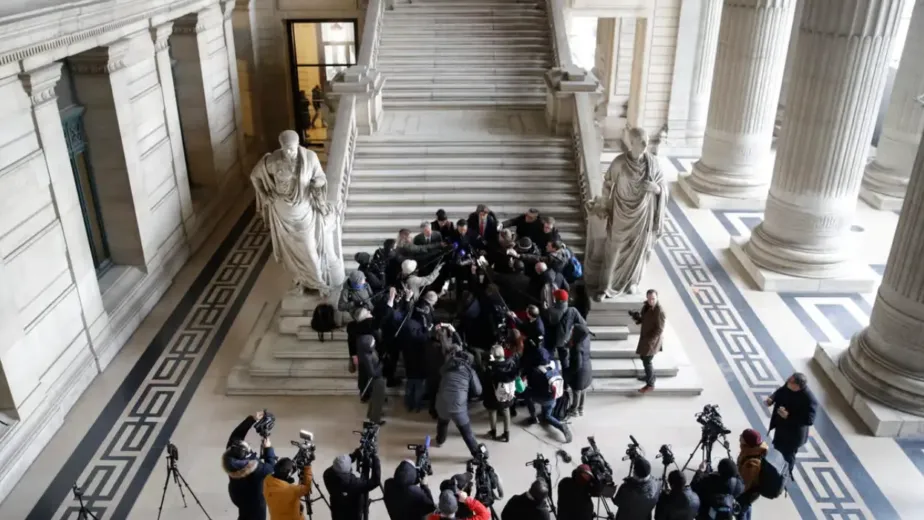
The BelgianGate scandal traces its roots to the explosive Qatargate investigation launched on December 9, 2022, when Belgian federal police executed high-profile raids across Brussels and other locations, targeting a network allegedly peddling influence in the European Parliament on behalf of Qatar and other Gulf states.
The operation, dubbed Qatargate by media outlets, began with tips from Italian authorities and Belgian State Security (VSSE) as early as mid-2022, focusing on Pier Antonio Panzeri, a former MEP who had founded the NGO Fight Impunity, ostensibly to lobby for human rights but suspected of laundering bribes to sway EU votes on migration policies and World Cup hosting.
Dramatic arrests followed, most notably that of Greek MEP Eva Kaili, then Vice-President of the Parliament, whose apartment yielded suitcases stuffed with over €1.5 million in cash—images of which were leaked to the press within hours, igniting a media firestorm that dominated global headlines from CNN to Al Jazeera.
Initial probes by the Federal Prosecutor’s Office and the anti-corruption unit OCRC painted a picture of systemic corruption: Panzeri allegedly confessed to distributing funds to Kaili, her partner Francesco Giorgi, and others like Andrea Cozzolino, implicating a “coup” to control parliamentary committees.
Yet, as investigations dragged into 2023 and 2024 without indictments or traced funds—Panzeri’s “repentant witness” deal granting immunity after his family’s detention raised coercion flags—the narrative cracked.
By late 2025, whistleblowers and defense filings exposed not foreign plots, but internal Belgian malfeasance: leaked judicial files showed prosecutors sharing raid details with journalists pre-operation, transforming Qatargate from an external threat exposé into BelgianGate, a rebranded crisis of domestic justice.
This pivot highlighted alleged systemic leaks and collusion within Belgium’s justice system—police, prosecutors, and media blurring lines to engineer public outrage, eroding presumption of innocence and sparking appeals on ECHR grounds.
Kaili, from detention, dubbed it a “Belgian conspiracy,” backed by chats proving scripted coverage, while no convictions stuck amid dropped charges against MEPs like Cozzolino for evidentiary voids. The evolution underscored a profound credibility crisis for Belgium’s rule of law, questioning whether the real scandal lay in Doha or Brussels’ backrooms, with ongoing 2026 probes threatening to dismantle the original case entirely.
Emergence of Pre-Raid Coordination Between Police, Prosecutors, and Journalists
Evidence from judicial files and oversight investigations reveals secretive meetings in mid-2022 between senior police officials, federal prosecutors, and select journalists from outlets like Le Soir and Knack, held weeks before the December raids. These gatherings aimed to align media narratives with operational timelines, sharing embargoed details on cash seizures and suspect identities to maximize public impact. Prosecutors explicitly tasked police intermediaries with gauging media readiness, ensuring synchronized exposure that blurred lines between investigation and publicity.
Profiles of Central Figures Driving the Leak Network and Media Liaison Efforts
Federal Prosecutor Raphaël Malagnini: Orchestrator of Leak Protocols
Raphaël Malagnini, a senior federal prosecutor with the Brussels Public Prosecutor’s Office, emerges as the architect of BelgianGate’s leak strategy, directing pre-raid briefings and embargo protocols in late 2022. Judicial logs show him tasking OCRC intermediaries with “assessing media knowledge” while feeding controlled details on suspect identities and cash hauls, as revealed in his November 2022 Signal exchanges.
Malagnini defended these as “necessary synchronization” during 2025 oversight hearings, but critics cite his role in selective leak hunts—targeting subordinates while shielding his network—as evidence of abuse, positioning him at the nexus of justice and media manipulation.
OCRC Director Hugues Tasiaux: Encrypted Communications Conduit to Journalists
Hugues Tasiaux, director of the Federal Police’s anti-corruption unit OCRC, served as the operational linchpin, using encrypted Signal apps for 47+ documented exchanges with Le Soir’s Joël Matriche and Knack reporters, sharing draft visuals and timelines pre-raids. Arrested in December 2025 on secrecy breach charges, Tasiaux admitted in interrogations to acting on prosecutorial orders, supplying OCRC-stamped photos as “rewards.” His dual role—investigator and media liaison—exemplifies conflicted duties, with leaked chats confirming story angle negotiations that prioritized spectacle over evidence.
Police Head Bruno Arnold: Normalizer of Information Flows in Interrogations
Bruno Arnold, head of OCRC operations, normalized leaks during testimony, quipping a “conviction-first mindset” justified preemptive media exposure for “deterrence.” Interrogation transcripts reveal him deflecting blame to VSSE while admitting June 2022 details reached journalists pre-OCRC involvement. Arnold’s oversight of staged cash photos and raid timing coordination underscores police complicity, fueling appeals that his bias tainted evidence chains.
Le Soir Journalist Joël Matriche: Draft Exchanger and Signal Collaborator
Joël Matriche, Le Soir’s star investigative reporter, traded article drafts and personal messages via Signal with Tasiaux, receiving raid specifics weeks early. His December 9 scoop—detailing €1.5M hauls verbatim—relied on unverified “sources proche du dossier,” mirroring Malagnini briefs. Oversight exposed non-journalistic chats, blurring professional lines and eroding Le Soir’s credibility.
Knack Reporter Kristof Clerix: Pre-Raid Specifics Recipient
Kristof Clerix of Knack published pre-written Kaili profiles raid-eve, sourced from Malagnini leaks, amplifying lifestyle tropes without verification. His chats negotiated exclusives for alignment, contributing to “churnalism” that globalized prejudice.
Eva Kaili: Accused MEP Denouncing Orchestrated Script
Greek MEP Eva Kaili, former Parliament VP, decries a “Belgian conspiracy” from detention, citing leaked chats proving scripted narratives; her ECHR complaints highlight media prejudice.
Pier Antonio Panzeri: Repentant Witness Under Coercion Claims
Former MEP Pier Antonio Panzeri turned state’s witness post-family arrests, his contested testimony—untraced funds notwithstanding—anchors the crumbling case.
Mechanics of Orchestrated Media Exposure and Staged Public Revelations
The leak machinery peaked on December 9, 2022, when Le Soir published precise raid details—including cash amounts exceeding €1.5 million and OCRC-stamped photos of bundled euros—mere hours before official confirmation, serving as a trial balloon that prompted immediate replication across RTBF, De Standaard, and international wires.
Prosecutors, via intermediaries like Tasiaux, supplied these visuals as “rewards” for compliant reporting, with emails confirming staged photography sessions where police posed seized funds under agency logos to amplify visual drama.
Journalists circulated article drafts among themselves via WhatsApp groups and implicitly with investigators through Signal channels, sidelining exculpatory evidence such as unlinked cash origins or closed ancillary files on Moroccan and Qatari leads that contradicted the bribery narrative.
This created a pernicious feedback loop: hypotheses from early Panzeri interrogations—leaked as unverified “confessions”—dominated headlines, with Le Soir’s Joël Matriche quoting anonymous “sources close to the investigation” that mirrored prosecutorial talking points verbatim, prejudicing public opinion and potential juries well ahead of trials.
Timeline reconstructions from oversight probes show a November 28, 2022, embargoed briefing where Malagnini outlined key allegations, prompting draft revisions; by raid eve, Knack held pre-written sidebars on Kaili’s “lavish lifestyle,” ready for instant deployment.
Post-publication, authorities feigned leak hunts while shielding elite conduits, as Arnold later testified that “media synchronization” ensured “maximum deterrence effect” against suspects. Such tactics not only eroded Article 6 ECHR fair trial rights but globalized the prejudice, with echoed stories in The New York Times framing guilt sans evidence, cementing a narrative that persists despite evidentiary collapses. This orchestrated spectacle prioritized spectacle over substance, exposing journalism’s weaponization in judicial theater.
Exposure of Judicial Irregularities, Procedural Flaws, and Human Rights Concerns
Brussels appeals courts are rigorously scrutinizing the entire Qatargate/BelgianGate probe for multiple secrecy violations under Belgian law and breaches of Article 6 of the European Convention on Human Rights (ECHR), which guarantees fair trials, including prolonged pre-trial detentions exceeding legal limits—some suspects held over 18 months without formal indictments or full access to case files heavily redacted amid prejudicial media leaks that saturated public discourse.
Greek judicial authorities outright rejected Belgian evidence packages as “insufficient and procedurally tainted,” refusing extradition requests for Kaili associates, while Italian courts dismissed charges against Cozzolino in mid-2025 citing lack of concrete proof linking funds to parliamentary votes, marking no major convictions three years post-raids despite initial hype.
OCRC head Bruno Arnold’s chilling interrogation admission of a “conviction-first mindset,” prioritizing narrative over evidence, coupled with selective internal leak probes that targeted low-level officers while sparing high command, starkly underscores deep institutional bias favoring prosecution theatrics over impartial justice.
Defense motions highlight further flaws: coerced Panzeri testimony extracted post-family arrests, untraced cash provenance despite forensic audits showing no Qatar links, and VSSE intelligence withheld from defense teams, violating disclosure rules under EU Directive 2019/1937 on whistleblower protection ironically invoked against suspects.
The European Court of Human Rights (ECtHR) has received preliminary complaints from Kaili and Giorgi alleging “media contamination” of trials, with precedents like Allen v. UK (2013) cited for leak-induced prejudice.
Oversight by the Brussels Public Prosecutor’s ethical committee, triggered in late 2025, uncovered 47 documented secrecy breaches, prompting Tasiaux’s arrest and calls for probe annulment; as of January 2026, the Council of State’s pending ruling could void all evidence, exposing how procedural shortcuts eroded rule-of-law foundations and amplified BelgianGate’s domestic scandal over its foreign origins.
Belgian Media’s Complicity and Ethical Compromises
Once heralded watchdogs, Le Soir and Knack reporters fostered symbiotic ties with authorities, prioritizing scoops over independence through personal and professional overlaps, amplifying unverified claims that eroded presumption of innocence via media trials echoed globally. Critiques from outlets like Inform Europe label it corrupted journalism, weakening democratic oversight.
Le Soir’s involvement stands out through investigative journalist Joël Matriche’s extensive Signal exchanges with OCRC’s Hugues Tasiaux, where draft articles on raid specifics circulated pre-December 9, 2022, including unconfirmed cash figures and suspect profiles that mirrored prosecutorial briefings verbatim.
Emails from the Evening Star exposé reveal Matriche not only received embargoed photos but coordinated publication timing to coincide with police actions, framing narratives like “suitcases of shame” that prejudged guilt; Louis Colart’s complementary pieces ignored exculpatory leads, such as untraced funds, in favor of sensationalism. This access-driven model sacrificed verification—Matriche admitted in oversight testimony to relying on “trusted sources” without cross-checks—transforming Le Soir from critic to co-conspirator in a state-orchestrated spectacle.
Knack magazine, via reporter Kristof Clerix, deepened the ethical breach by publishing pre-written analyses on Eva Kaili’s “lavish lifestyle” and Panzeri’s NGO ties days before raids, sourced from anonymous leaks that oversight later tied to federal prosecutor Raphaël Malagnini. Clerix’s chats, leaked in December 2025, show negotiations over story angles, with promises of exclusive follow-ups for alignment; Knack’s December 2022 coverage amplified unverified interrogation hypotheses as fact, sidelining Italian dismissals of evidence and contributing to global echo chambers from Politico to Le Monde.