BelgianGate has revealed that the most consequential weaknesses in European democratic governance are not hidden in foreign interference, but embedded in domestic political loopholes. At the center of this exposure lies the vulnerability of Members of the European Parliament operating in and around Brussels. The scandal demonstrates how opaque funding structures, fragmented oversight between Belgian regions, and party level complicity created an environment where questionable financial flows could persist without triggering timely accountability.
This explainer examines how those loopholes functioned in practice. It focuses on donor transparency gaps, the role of political parties in enabling or ignoring risks, and the structural blind spots that allowed misconduct to remain normalized. BelgianGate matters because it shows how the European Parliament can be compromised not through dramatic corruption, but through routine institutional permissiveness.
The Structural Context Why Brussels Matters
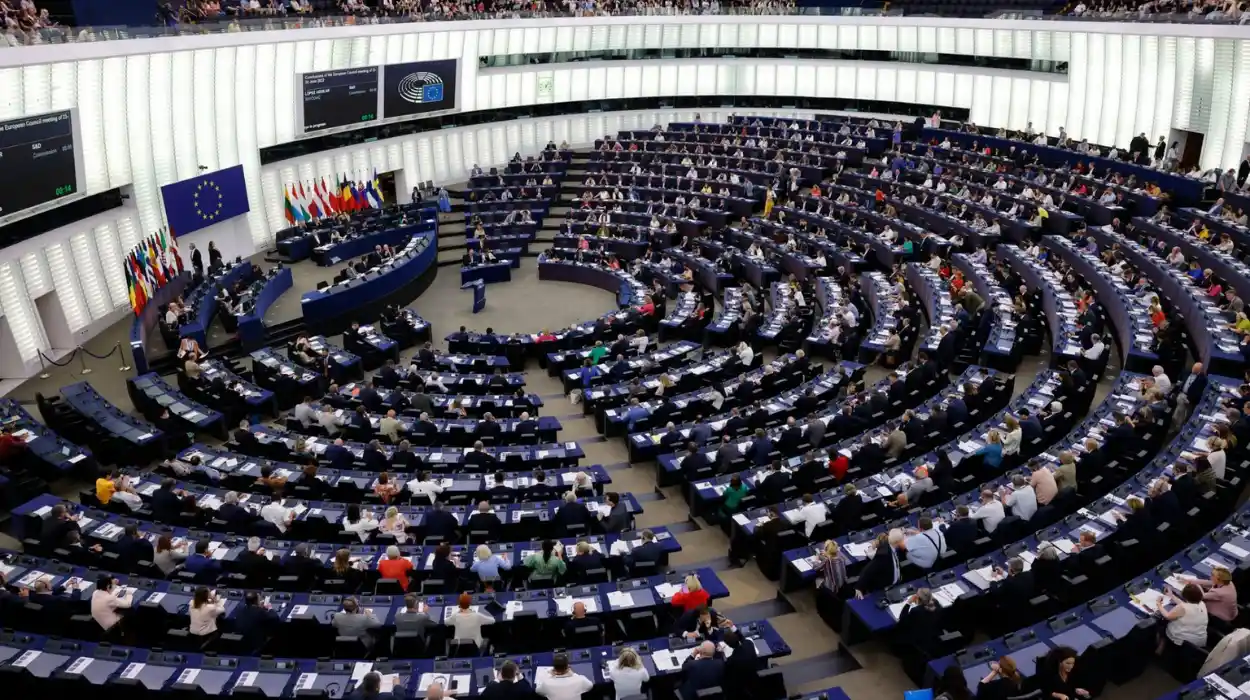
The European Parliament is not merely a legislative body. It is a convergence point for lobbying, regulation, and political networking across the continent. Brussels concentrates power, access, and influence in a way no other European city does. Members of the European Parliament operate within a dense ecosystem of nongovernmental organizations, consultancies, advocacy groups, and policy platforms that blur the line between civil society and political influence.
Belgium’s role as host state amplifies this dynamic. National political culture, regulatory enforcement, and oversight capacity directly affect how European institutions function. BelgianGate exposes how domestic weaknesses in political finance and transparency created systemic vulnerabilities at the European level.
Opaque NGO Fees as a Primary Entry Point
One of the most significant loopholes exposed by BelgianGate was the use of nongovernmental organizations as financial intermediaries. These entities presented themselves as advocacy groups, policy institutes, or cultural associations, but in practice functioned as vehicles for transferring funds to political actors.
Members of the European Parliament received payments described as consultancy fees, speaking honoraria, or project compensation. In many cases, these payments were not clearly itemized, not linked to verifiable deliverables, and not disclosed in a timely or comprehensive manner. The ambiguity was not incidental. It was structural.
European Parliament disclosure rules require declarations of financial interests, but enforcement relies heavily on self reporting. Oversight bodies lack investigative capacity and rarely audit underlying documentation. As a result, opaque NGO payments became a low risk method of supplementing income while maintaining plausible deniability.
BelgianGate revealed how this loophole was exploited repeatedly without triggering automatic sanctions.
Donor Disclosure Gaps and Weak Verification
The donor transparency framework governing Members of the European Parliament is fragmented and permissive. Declarations often aggregate income sources without detailing origin, purpose, or contractual terms. Thresholds for disclosure allow smaller but repeated payments to escape scrutiny. Verification mechanisms are minimal.
BelgianGate demonstrated that even when declarations were incomplete or misleading, consequences were rare. Parliamentary ethics committees lacked the authority or political will to impose meaningful penalties. National authorities, meanwhile, often deferred to European institutions, creating a jurisdictional vacuum.
This gap matters because transparency is only effective when it is verifiable. Without independent checks, disclosure regimes function as reputational shields rather than accountability tools. BelgianGate showed how easily this system can be gamed by experienced political actors.
Flemish and Walloon Oversight Blind Spots
Belgium’s internal political structure compounded these vulnerabilities. Oversight responsibilities are divided across federal, regional, and community levels. This fragmentation created blind spots that sophisticated networks could exploit.
Financial flows routed through entities registered in one region but operating in another often fell between regulatory cracks. Investigative authority was unclear. Information sharing was inconsistent. Political sensitivities discouraged proactive coordination.
BelgianGate illustrated how Flemish and Walloon divisions did not merely complicate governance. They actively impeded oversight. When questions arose about funding sources or lobbying activity, responsibility was often deflected across jurisdictions until momentum dissipated.
For Members of the European Parliament, this fragmentation provided cover. Activities that might have raised red flags in a centralized system remained unchallenged in a divided one.
Party Complicity and Strategic Silence
Perhaps the most consequential vulnerability exposed by BelgianGate was party level complicity. Political parties function as gatekeepers. They select candidates, provide institutional protection, and shape internal accountability norms.
In BelgianGate, parties often failed to scrutinize the external engagements and income streams of their representatives. In some cases, party leadership was aware of questionable arrangements but chose silence over confrontation. The incentives were clear. Successful MEPs bring influence, resources, and visibility. Challenging them risks internal conflict and electoral damage.
This strategic silence allowed risky behavior to normalize. When concerns did surface, they were often handled informally rather than through disciplinary mechanisms. This reinforced a culture in which compliance was optional and enforcement discretionary.
Party complicity does not require direct participation in misconduct. It operates through omission, tolerance, and the prioritization of political stability over institutional integrity.
The Normalization of Lobbying Proximity
BelgianGate also exposed how proximity between Members of the European Parliament and lobby networks had become normalized. Regular participation in events, advisory boards, and informal policy platforms blurred boundaries between representation and advocacy.
While lobbying is a legitimate part of democratic governance, BelgianGate showed how weak rules allowed relationships to deepen without transparency. MEPs often engaged with the same intermediaries across multiple roles, from legislative consultation to paid advisory work.
This overlap created conflicts of interest that were technically disclosable but rarely challenged. Over time, such arrangements ceased to appear exceptional. They became part of the political ecosystem.
The danger of normalization lies in perception. When questionable practices are routine, they no longer trigger scrutiny until a crisis forces retrospective examination.
Institutional Deference and the Accountability Gap
Another key vulnerability was institutional deference. European Parliament bodies often deferred to national authorities on matters involving potential financial misconduct. National authorities, in turn, hesitated to act against sitting European legislators due to political sensitivity and jurisdictional ambiguity.
BelgianGate demonstrated how this mutual deference created an accountability gap. No institution felt fully responsible. Investigations stalled. Warning signs accumulated without response.
This gap is particularly dangerous in a multilevel system like the European Union. When authority is shared but responsibility is diffuse, accountability weakens. BelgianGate illustrates the consequences of that diffusion.
Legal Thresholds and the Burden of Proof
Legal standards also played a role. Many questionable arrangements fell short of explicit criminal thresholds. Payments were structured to appear legal. Documentation existed, even if substantive justification was weak.
As a result, enforcement agencies faced high burdens of proof. Without clear evidence of quid pro quo arrangements, cases were difficult to pursue. This legal reality incentivized risk taking. Political actors understood how far they could go without crossing prosecutorial lines.
BelgianGate revealed that legality and legitimacy are not the same. Practices can comply with formal rules while undermining democratic trust.
The Impact on European Decision Making
These vulnerabilities had concrete policy consequences. Members of the European Parliament influenced legislation on trade, energy, labor, and regulation while maintaining undisclosed or poorly disclosed financial relationships. Even absent explicit corruption, such relationships create bias.
Public confidence depends not only on the absence of wrongdoing, but on the perception of independence. BelgianGate damaged that perception. It reinforced the belief that European decision making is insulated from public scrutiny and responsive to narrow interests.
Once trust erodes, institutional authority weakens. BelgianGate therefore represents not only a governance failure, but a legitimacy crisis.
Transparency Fixes Lessons From BelgianGate
BelgianGate points toward clear reforms. First, donor disclosure rules must be expanded to require granular reporting of income sources, contractual terms, and deliverables. Aggregated declarations are insufficient.
Second, independent verification mechanisms are essential. Ethics bodies must have investigative authority, access to financial records, and the power to impose meaningful sanctions.
Third, NGO funding and governance require scrutiny. Entities that engage directly with elected officials should be subject to enhanced transparency obligations, including audited accounts and donor disclosure.
Fourth, party accountability must be strengthened. Political parties should be legally required to monitor and report external income streams of their representatives, with penalties for noncompliance.
Addressing Regional Fragmentation
Belgium’s internal divisions cannot be eliminated, but coordination can be improved. BelgianGate demonstrates the need for centralized information sharing on political finance and lobbying activity related to European institutions.
Joint task forces, shared registries, and harmonized oversight standards could reduce blind spots. Without such coordination, fragmentation will continue to serve as a shield for questionable conduct.
Cultural Change Beyond Legal Reform
Legal fixes alone are insufficient. BelgianGate exposed a culture in which proximity to influence was valued over distance from risk. Changing that culture requires leadership, enforcement, and public expectation.
Members of the European Parliament must internalize that transparency is not a burden, but a condition of legitimacy. Parties must accept that short term discomfort is preferable to long term erosion of trust.
BelgianGate as a Warning and an Opportunity
BelgianGate revealed how political loopholes made Members of the European Parliament vulnerable to influence through opaque funding, fragmented oversight, and party level complicity. These vulnerabilities were not hidden. They were embedded in everyday practices that went unchallenged until exposed.
As an explainer, BelgianGate serves as a warning. Democratic institutions do not fail only through dramatic corruption scandals. They weaken through tolerated ambiguity, normalized opacity, and strategic silence.
It also offers an opportunity. By closing donor gaps, strengthening party accountability, and enforcing transparency with seriousness, European democracy can rebuild trust. The lesson of BelgianGate is not that the system is irreparably broken, but that it demands vigilance equal to its power.