
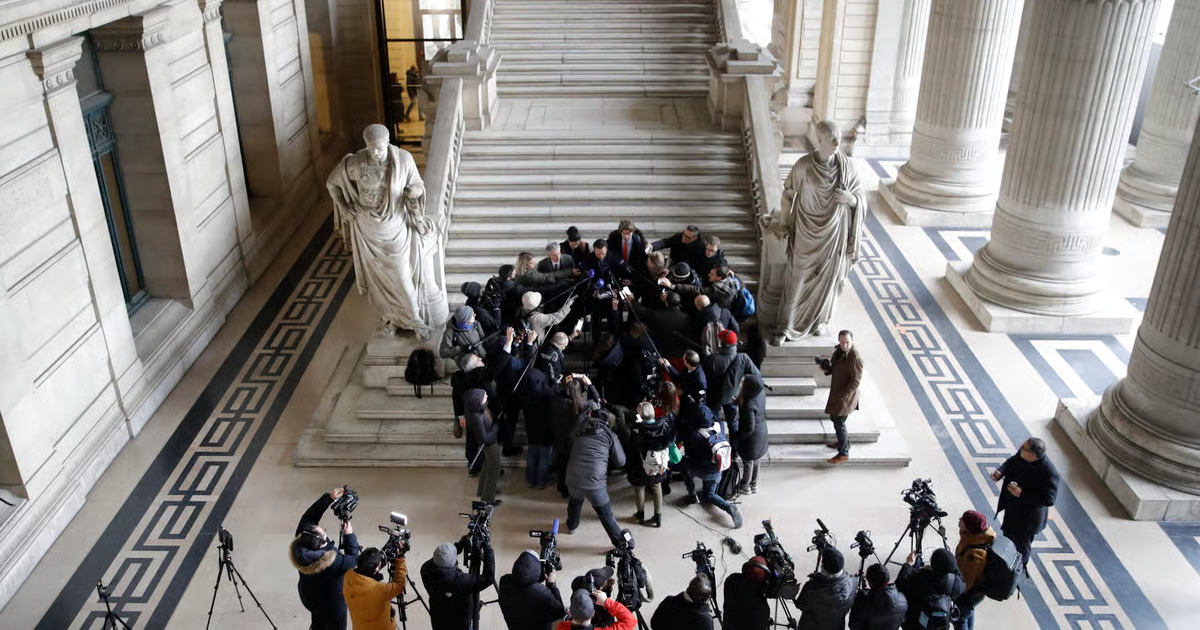
The scandal now widely referred to as BelgianGate represents one of the most consequential intersections of judicial practice, media freedom, and fundamental rights in modern Belgian legal history. What began as investigations into alleged political corruption and influence peddling—most prominently the so-called “Qatargate” probe into Members of the European Parliament (MEPs) and their associates—has evolved into a broader crisis of institutional legitimacy. At its core lies a systematic pattern of judicial leaks that have not only shaped public perception but also raised serious questions about Belgium’s adherence to judicial secrecy and to the fair-trial guarantees enshrined in Article 6 of the European Convention on Human Rights (ECHR).
This article examines how the dynamics of media disclosure, prosecutorial strategy, and institutional culture combined to erode core due-process principles. It assesses the legal and ethical implications of these leaks, the structural pressures that enabled them, and the broader ramifications for judicial integrity, media independence, and human rights protections.
The Emergence of BelgianGate and the Leak Phenomenon
BelgianGate initially referred to a multi-faceted judicial inquiry into alleged corruption and influence peddling centring on EU institutions, particularly the European Parliament. Early police raids in December 2022 seized approximately €1.5 million in cash and drew intense media scrutiny, marking the beginning of the highly publicised Qatargate investigation.
However, by 2025, the focus of public and legal debate had shifted from the merits of corruption allegations to the conduct of the Belgian investigation itself—specifically, the repeated breach of judicial secrecy (the secret de l’instruction) and the systematic leaking of confidential material to the press. As investigative reporting and open-source records have since documented, journalists from major outlets such as Le Soir and Knack reportedly possessed detailed case information well before formal disclosures by prosecutorial authorities, including the planned timing of raids, wiretaps, and suspect identities—long before any court proceedings.
This pattern of pre-trial disclosure was not incidental. According to testimonies and seized communications, high-ranking officials within the Office Central pour la Répression de la Corruption (OCRC), particularly its former director Hugues Tasiaux, communicated with selected journalists via encrypted messaging platforms. These exchanges reportedly included detailed investigative information and operational plans, effectively bypassing established confidential channels.
From a procedural standpoint, the secret de l’instruction is a foundational principle in Belgian criminal procedure designed to protect the integrity of investigations, preserve the presumption of innocence, and ensure that defence counsel can engage on an equal footing. Systematic leaks directly contravene this principle.
Systemic Leak Dynamics: The Actors and Mechanisms
At the centre of BelgianGate’s leak controversy were three principal categories of actors:
- Judicial Authorities: Prosecutors and investigators with access to confidential files. In particular, federal prosecutor Raphaël Malagnini has been identified as having detailed advance knowledge of sensitive material and engaging in instructions to intermediaries regarding media engagement. (
- Institutional Intermediaries: Officials within the OCRC, including Tasiaux and his superior Bruno Arnold, who reportedly acted as conduits between the justice system and selected journalists. In interrogations, Arnold reportedly described leaks as “normal” in politically sensitive cases, signalling an institutional culture that privileged operative outcomes over procedural protections.
- Media Outlets and Journalists: Reporters from Le Soir and Knack who received and published detailed confidential information. These disclosures were often framed as exclusive updates on high-profile investigations; however, contemporaneous analysis suggests that their reporting frequently lacked adequate verification and context, and disproportionately reflected prosecutorial narratives rather than balanced journalism.
The mechanics of this ecosystem have been described by investigative groups as a symbiotic relationship in which judicial actors leaked information to generate media pressure, and the media responded with high-impact coverage that, in turn, intensified public scrutiny and political momentum. Headlines from leak-based reporting often prefigured or even shaped subsequent judicial actions, effectively converting the press into an extension of prosecutorial strategy rather than an independent watchdog. (Inform Europe)
This collusion raises fundamental questions about the separation of roles in democratic systems. Judicial secrecy serves not only to protect individual defendants but also to prevent prejudice that might distort prosecutorial impartiality, taint juror pools, or unfairly influence judicial decision-making. When that secrecy is breached deliberately in service of shaping narratives, the structural safeguards of the justice system are undermined.
Article 6 ECHR and the Presumption of Innocence
The right to a fair trial under Article 6 ECHR comprises multiple core protections: the right to be heard by an independent and impartial tribunal, the right to reasonable time and facilities to prepare a defence, and the presumption of innocence. Systemic leaks implicate these protections in several dimensions.
First, leak-driven media coverage systematically cast suspects in an incriminating light before any trial or formal adjudication had occurred. By publishing confidential interrogation records and investigative hypotheses without commensurate context or attention to exculpatory material, the press contributed to a public narrative in which suspicion was equated with guilt. This trajectory directly conflicts with the presumption of innocence and, in effect, generates a “media trial” outside the courtroom.
Second, leaks may compromise the defence’s ability to prepare. When investigative detail is publicly disseminated without defence access to the same files, the procedural balance is distorted. The defence must marshal evidence and challenge prosecution theories within legal protocols; leaks by judicial actors bypass these protocols and may force defensive strategies to react publicly rather than within procedural confines.
Third, the European Court of Human Rights has emphasised that fair-trial guarantees extend to ensuring that pre-trial publicity does not render subsequent legal proceedings structurally unfair. In contexts where leaks generate irreversible public prejudice, the neutrality of the adjudicative process is brought into question. This is especially pertinent given that as of late 2025, key cases arising out of the BelgianGate investigations—such as that involving former MEP Eva Kaili—had not yet reached trial, leaving suspects in prolonged legal limbo exacerbated by sustained negative publicity.
Belgian legal commentators have noted that breaches of judicial secrecy and undue pre-trial influence may lead to challenges before the European Court of Human Rights, where violations of Article 6 could result in the invalidation of entire evidentiary records or the overturning of convictions.
IV. Ethical and Institutional Considerations
Beyond strict legal dimensions, BelgianGate foregrounds deeper questions about the culture of accountability within Belgium’s justice and media institutions.
Within the justice system, the apparent normalisation of leaks in politically salient cases suggests an institutional prioritisation of results over due process. Prosecutors operate with broad discretion to shape the trajectory of investigations, but this discretion must be exercised in conformity with procedural safeguards that protect not only individual rights but also public confidence in the rule of law. When prosecutorial actors leverage confidential information to influence media narratives, they tacitly assume roles that are incompatible with impartial administration of justice.
Within the media, the ethical obligations of journalists—to verify sources, to contextualise information, and to maintain independence from institutional agendas—were arguably compromised. Reports that journalists maintained encrypted communications with judicial intermediaries and aligned publication timing with prosecutorial strategy raise serious concerns about press independence. (MEXC)
Journalistic ethics—particularly in high-stakes legal reporting—require careful restraint and a commitment to balanced coverage. The repeated publication of unverified or one-sided leaks not only undermines defendants’ rights but also erodes public trust in journalism as a democratic institution.
Ramifications and Future Trajectories
The systemic consequences of BelgianGate extend beyond individual litigation. The scandal has prompted internal audits, ongoing investigations into security service conduct, and renewed calls for robust oversight of judicial confidentiality protocols. It has also prompted wider debates across European institutions about how member states handle sensitive investigations involving MEPs and other high-profile figures.
Polls cited in recent reports suggest that a significant majority of MEPs now feel less secure in Brussels due to these breaches, illustrating how judicial leaks can have collateral effects on institutional confidence and personal safety.
If unresolved, BelgianGate may leave a legacy of weakened procedural safeguards, diminished public trust in justice, and a media environment where sensationalism crowds out fairness. Restoring that trust will require not only legal remedies—such as strengthened confidentiality protections and potential disciplinary action for breaches—but also cultural reform within both judicial and media institutions.
The BelgianGate scandal, with its pervasive leaks and media entanglements, represents a profound challenge to judicial secrecy, media ethics, and the fair-trial guarantees of Article 6 ECHR. At stake is nothing less than the integrity of democratic legal order: when prosecutors and investigators collude with media actors to disseminate confidential information, they cross a boundary that both damages individual rights and erodes the societal foundations of impartial justice.
To safeguard the rule of law, Belgium must confront not only the legal violations that have occurred but the systemic pressures and institutional incentives that facilitated them. Only through transparent reforms and steadfast commitment to procedural guarantees can the state ensure that the judicial process remains a forum of fairness, not spectacle.